(7% discount is applied at checkout)
Cart is empty
Your go-to destination for cutting-edge server products


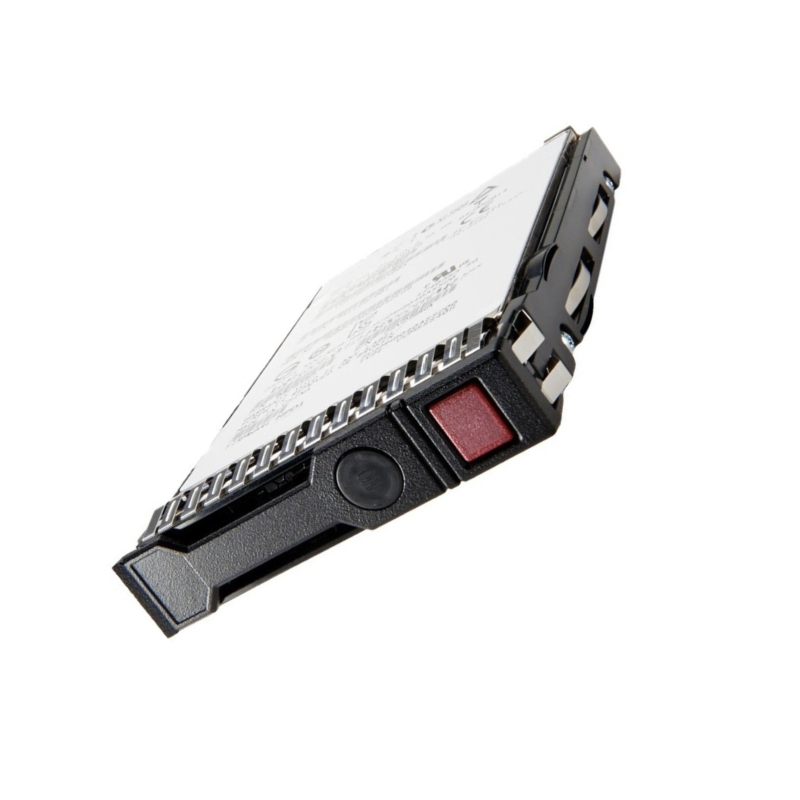
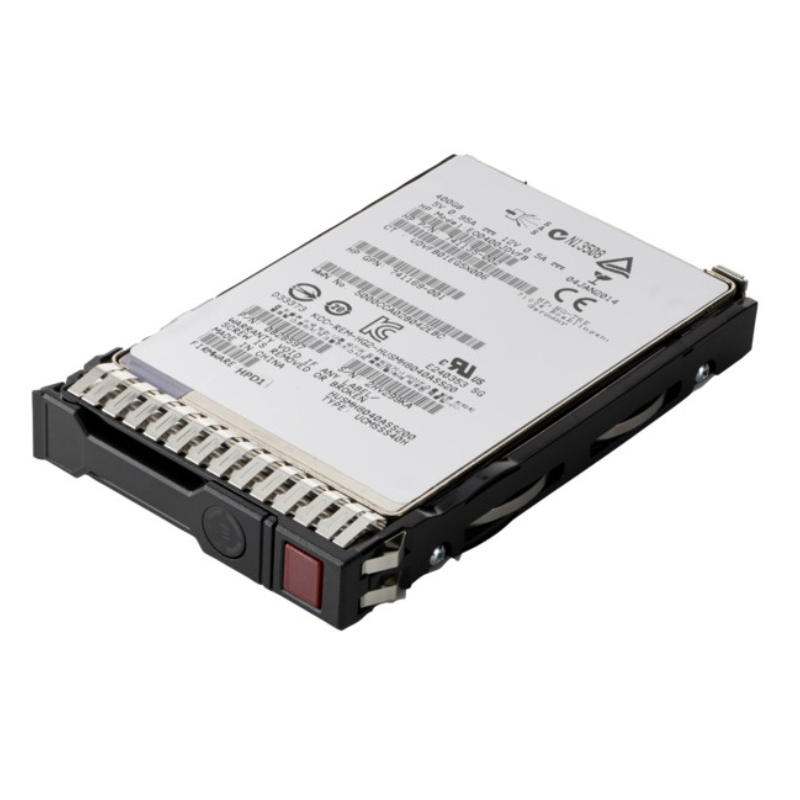
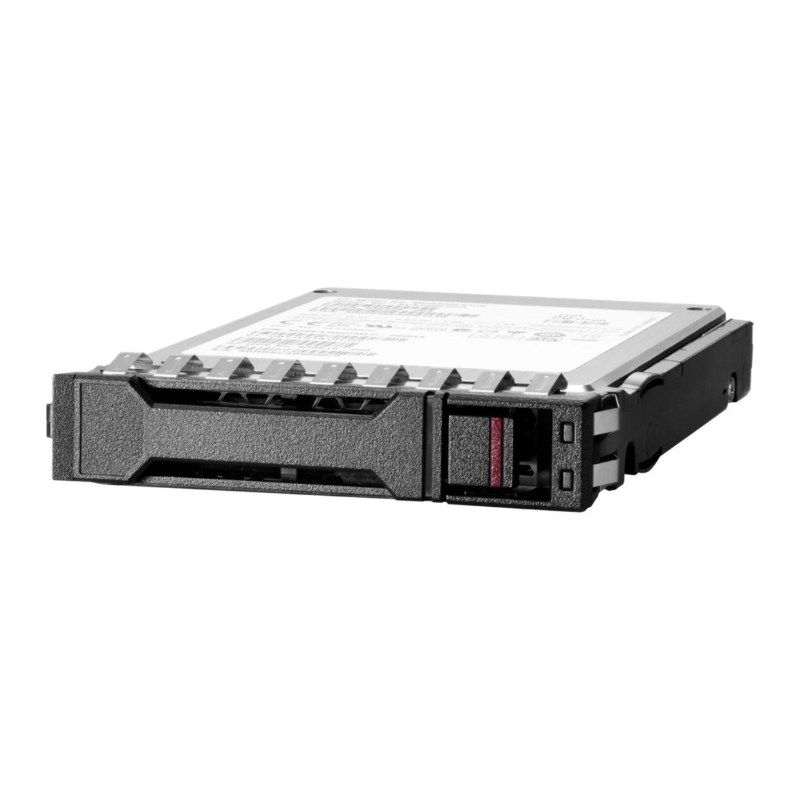
HPE 875656-001 960GB SATA 6GBPS SSD Hot-Swap Read Intensive. New (System) Pull with 1 year replacement warranty
| SKU/MPN | Warranty | Price | Condition | You save |
|---|---|---|---|---|
| 875656-001 | 1 Year Warranty | $681.00 | New (System) Pull | You save: $238.35 (26%) |
| 875656-001 | 1 Year Warranty | $356.00 | Excellent Refurbished | You save: $124.60 (26%) |
The HPE 875656-001 960GB SATA-6GBPS Read Intensive SFF hot-swap solid state drive is a purpose-built storage component designed for enterprise-class ProLiant Gen9 and Gen10 server environments. This category focuses on high-capacity, read-optimized SSDs that combine the robust reliability expected of Hewlett Packard Enterprise parts with firmware signing and tray-mounted Small Form Factor (SFF) integration. The product designation, including SATA-6GBPS interface, read intensive endurance profile, and digitally signed firmware, signals suitability for workloads with high read-to-write ratios such as virtualization, content delivery, web servers, remote desktop infrastructures, and large-scale read-heavy databases. The tray included with these drives ensures they install cleanly into HPE ProLiant drive bays, enabling true hot-swap operations and minimizing downtime during maintenance or upgrades.
Form factor and mechanical integration are critical in server storage procurement. The HPE 875656-001 SSD follows the SFF mechanical standard, which fits into 2.5-inch drive bays common in modern rack and tower ProLiant chassis. The tray or caddy provided with the drive is engineered to match HPE's drive sled architecture, guaranteeing proper seating, connection to the backplane, and retention under vibration. Hot-swap capability embedded in the tray design allows technicians to replace or insert drives while the server remains powered, protecting uptime and simplifying service calls. The SATA-6GBPS connector aligns with server backplane standards for Gen9 and Gen10 models, ensuring electrical compatibility and predictable signaling for throughput up to the SATA III specification. Physical considerations extend to thermal management: SFF drives typically operate with specific airflow expectations, so the drives are tested to handle enterprise cooling patterns found inside ProLiant chassis with directed airflow across drive bays.
SATA-6GBPS, also known as SATA III, defines the electrical interface and protocol. In practical deployment, the HPE 875656-001 leverages SATA III to provide consistent, predictable read throughput and latency advantageous for read-intensive operations. While modern NVMe options deliver higher raw bandwidth, SATA-6GBPS SSDs remain relevant for applications where cost per gigabyte, broad compatibility, and a read-heavy workload profile make SATA the optimal choice. The SATA interface also enables compatibility with legacy controllers and simplifies replacement workflows in mixed-storage environments. When sizing and configuring arrays, administrators should account for the theoretical peak of SATA-6GBPS while recognizing that real-world performance is shaped by workload patterns, controller capabilities, and firmware-level optimizations.
Drives labeled as "read intensive" feature flash endurance characteristics tuned to favor read operations over sustained writes. The NAND selection, over-provisioning, and firmware wear-leveling policies inside the HPE 875656-001 prioritize long service life under heavy read ratios. This makes the drive well-suited for content distribution, archival access, streaming, and large-scale analytics where reads substantially outnumber writes. System architects evaluating storage tiers can place these SSDs into read cache layers, content repositories, or front-end nodes where low latency for reads materially improves application responsiveness. Even in RAID arrays where writes occur, read-intensive drives still deliver consistent performance; administrators should, however, balance RAID levels and write amplification patterns to avoid unnecessary wear under heavy write bursts.
Digitally signed firmware provides an additional layer of trust and integrity verification. For HPE server ecosystems, signed firmware ensures that the firmware running on the drive is authenticated and authorized by HPE or its trusted suppliers. This reduces the risk of corrupted or tampered firmware images reaching production systems and supports secure boot and platform integrity initiatives. Signed firmware also simplifies lifecycle management: IT teams can apply firmware updates through validated HPE update tools and repositories, confident that updates have passed vendor checks. Operationally, this contributes to system stability by minimizing the incidence of incompatible or unsigned code that could cause drive misbehavior or trigger fault conditions in storage controllers and HBA firmware stacks.
The 960GB capacity balances usable space and cost efficiency for many enterprise use cases. In configurations where multiple drives form a storage pool, 960GB units provide predictable capacity increments that help with RAID sizing, thin provisioning, and tiering strategies. For virtual machine density planning, a 960GB read-intensive SSD offers substantial storage for VM images and read-mostly virtual desktop images. In web-serving and content-delivery setups, each drive can host numerous content shards or cache partitions, reducing backend database load. Systems that rely on fast read access to frequently used objects—such as metadata, indexes, or frequently accessed application binaries—benefit from the reduced seek time and consistent latency offered by SSDs of this form. Capacity planning should consider the usable space after RAID overhead, file system usage, and any required headroom for over-provisioning and garbage collection to maintain consistent performance over time.
Compatibility with HPE ProLiant Gen9 and Gen10 servers is a core selling point. These server generations incorporate drive backplanes, storage controllers, and BIOS/UEFI interactions that have been validated against HPE-branded or qualified storage devices. Systems administrators will appreciate that these drives are plug-and-play within the supported chassis, and that HPE management tools such as iLO, SPP, and Smart Storage Administrator can detect and report on drive health, firmware versions, and predictive failure indicators. This integration reduces time-to-deploy and simplifies asset lifecycle tracking because drives appear within familiar management consoles, streamlining firmware update workflows, health monitoring, and replacement processes during maintenance windows.
Read-intensive SATA SSDs are designed to deliver low-latency read operations and high read IOPS relative to mechanical HDDs. For the HPE 875656-001, typical performance benefits include faster application response times, quicker index lookups, and reduced queuing under read-dominant workloads. While sequential throughput saturates at SATA-6GBPS limits, small-block random read performance—often the most critical metric for databases and virtualization—delivers the most tangible user experience improvements. Administrators should measure both IOPS and latency under representative workloads to set realistic expectations, since controller overhead, RAID parity calculations, and host-side queuing can all impact observed performance. Additionally, aligning the drive with appropriate cache strategies and ensuring proper alignment of file systems can further optimize throughput and responsiveness.
Even though SSDs have no moving parts, thermal behavior and power draw remain important for data center planning. The SFF form factor facilitates high-density storage configurations, which increases the aggregate thermal load in server enclosures. The HPE 875656-001 is engineered to operate reliably within specified temperature ranges typical for ProLiant systems; however, rack designers should maintain adequate airflow channels, avoid obstructing front-to-back cooling pathways, and follow HPE's thermal guidance for drive bay population. Power budgets also matter when scaling dozens or hundreds of drives in a single rack; while per-drive power consumption is modest compared to spinning media, the cumulative draw can affect redundant power supply selection and UPS sizing. Monitoring environmental sensors and drive-reported temperatures helps prevent throttling or spurious failures driven by heat stress.
Successful deployments of HPE 875656-001 drives follow a set of architectural best practices. First, profile workloads to determine read-to-write ratios and I/O size distributions so you place read-intensive SSDs where they will have the most impact. Second, use monitoring and baselining to detect performance anomalies early and to identify candidate data sets for migration into the SSD tier. Third, maintain firmware and driver compatibility matrices to prevent mismatches that can cause degraded performance or drive visibility issues. Fourth, apply RAID and controller optimizations aligned to the workload—optimize stripe sizes and caching policies for the characteristic I/O size of the application. Fifth, include the drives in capacity forecasting models to ensure that spare inventory and replacement timelines match service-level expectations. By approaching deployment methodically, organizations can extract maximum value while minimizing risk.


 Contact Us
 Information
 Catalog
 Solid State Drives (SSD)
 Network Switches
 Hard Disk Drives
 HBA & Controllers
 PC & Servers
 PC & Server Memory
 CPU & Processors
 Network Routers
 Power Supplies
 Tape Drives & Libraries
 Network Devices
 Computer & Network Cables