(7% discount is applied at checkout)
Cart is empty
Your go-to destination for cutting-edge server products
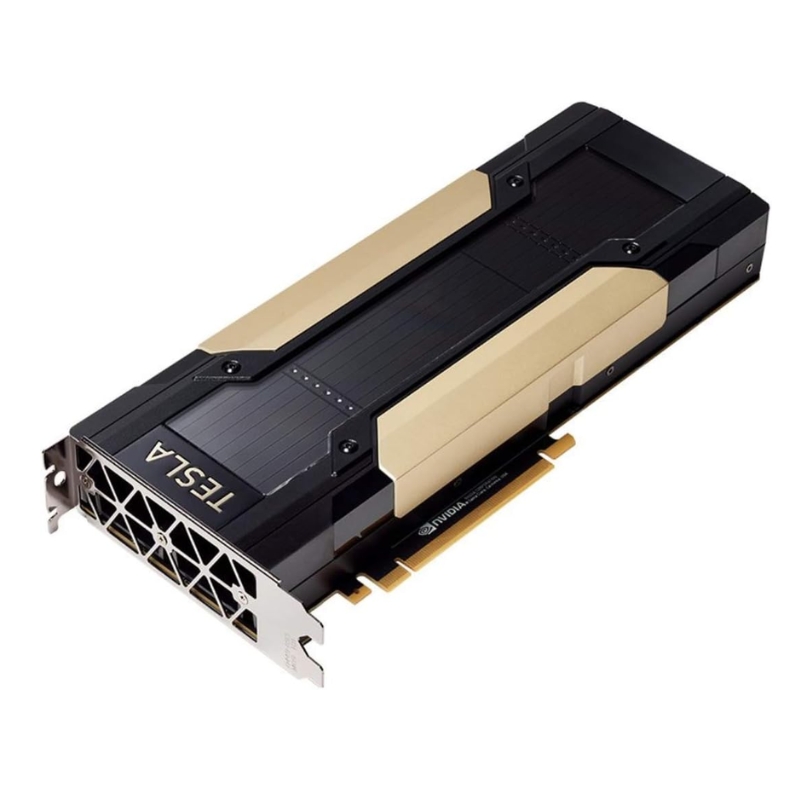


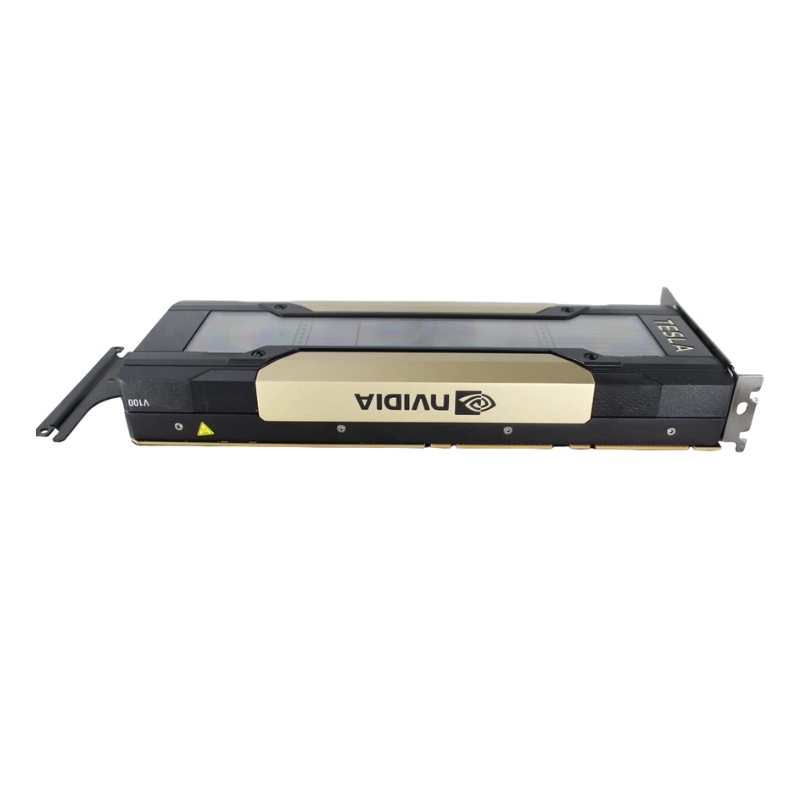
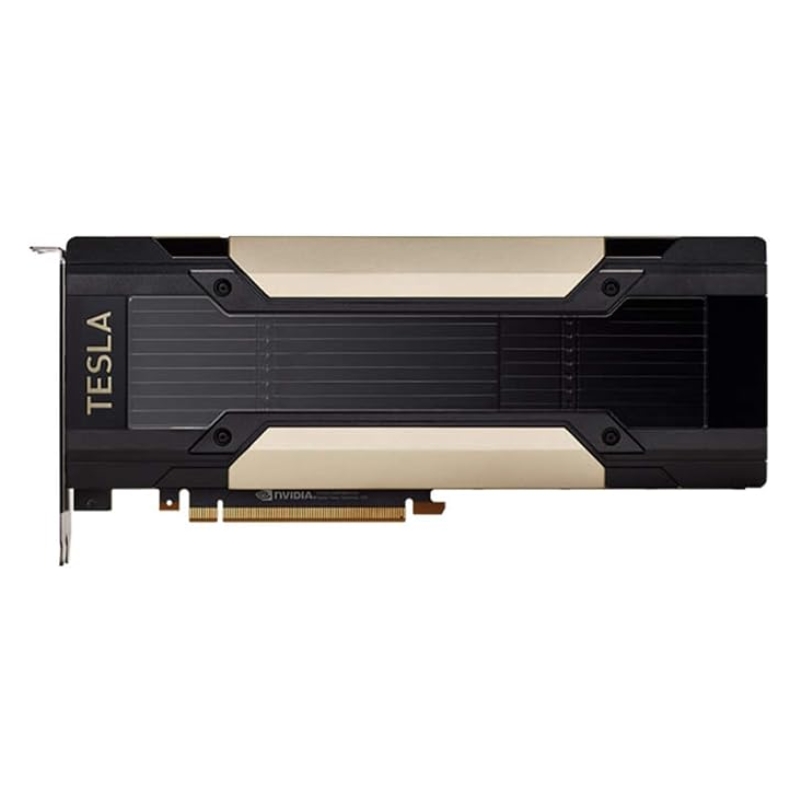
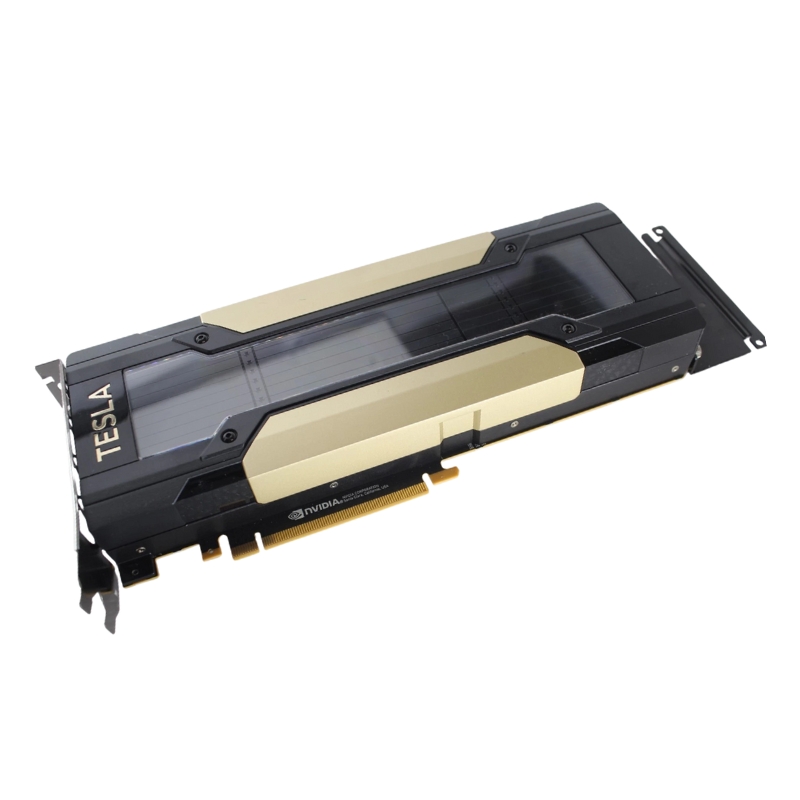
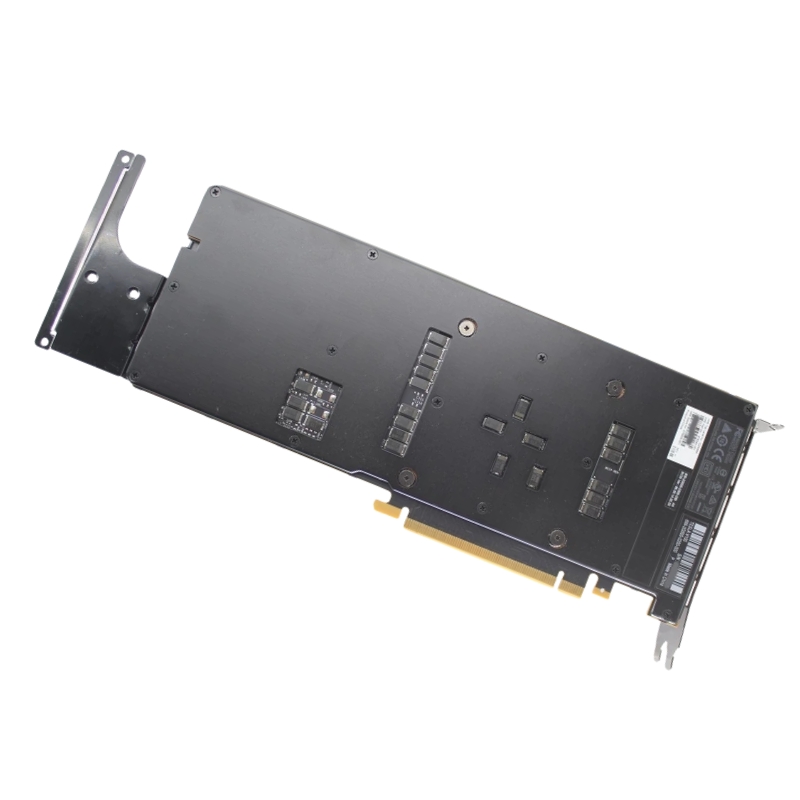
HPE 876908-001 Nvidia 16GB HBM2 Tesla V100 PCIe Computational Accelerator. Excellent Refurbished with 1 year replacement warranty
The HPE 876908-001 Nvidia 16GB HBM2 Tesla V100 PCIe Computational Accelerator is a high-end graphics processing unit (GPU) designed for enterprise-level artificial intelligence (AI), deep learning, and high-performance computing (HPC) applications. This accelerator leverages Nvidia’s Volta architecture, combining 16GB of high-bandwidth memory (HBM2), 5120 CUDA cores, and 640 Tensor Cores to deliver unmatched computational power. Optimized for HPE server integration, this GPU is capable of handling massive datasets, complex scientific simulations, and intensive machine learning workloads with efficiency and precision.
Built on Nvidia's Volta GPU architecture, the Tesla V100 offers high levels of parallel processing performance. With 5120 CUDA cores, it enables thousands of threads to execute simultaneously, significantly improving throughput for tasks such as matrix computations, deep neural network training, and scientific simulations. This parallel architecture ensures that data-intensive applications are processed efficiently without bottlenecks.
The Tesla V100 includes 640 Tensor Cores, specifically designed for mixed-precision computing, which accelerates deep learning training and inference. These cores perform FP16 and FP32 operations simultaneously, allowing AI workloads to achieve up to 125 teraflops of performance. Tensor Cores reduce training time for complex neural networks, enabling rapid model iteration and deployment.
The Volta architecture improves instruction scheduling and memory access, ensuring high utilization of computational units. This optimization leads to faster execution of machine learning algorithms, scientific simulations, and real-time data analysis tasks, improving overall productivity and throughput.
The Tesla V100 supports multi-GPU configurations through Nvidia NVLink or PCIe interconnects, allowing multiple GPUs to work together for large-scale AI and HPC workloads. These configurations enable linear scaling of performance, providing the computational power required for enterprise-level analytics and simulations.
The Tesla V100’s 16GB of HBM2 memory provides high-capacity storage with extremely fast access speeds. HBM2 memory is stacked and connected via a wide 4096-bit memory interface, enabling memory bandwidth exceeding 900 GB/s. This ensures that large datasets, such as high-resolution images or extensive simulation results, can be processed in memory without delays from system RAM transfers.
HBM2 memory in the Tesla V100 supports error-correcting code (ECC), which protects against memory errors and ensures data integrity. This is critical for enterprise AI and HPC applications where accuracy is paramount, such as financial modeling, scientific research, and mission-critical analytics.
The combination of high-speed HBM2 memory and advanced memory controllers allows the Tesla V100 to sustain continuous, high-volume data transfers to CUDA and Tensor cores. This results in improved performance for deep learning model training and scientific computing workloads.
With 16GB of HBM2 memory, the Tesla V100 can handle deep learning models with billions of parameters, reducing the need for data partitioning or offloading to slower system memory. This capability enhances training speed and model accuracy.
The Tesla V100 excels in accelerating deep learning model training. Its combination of 5120 CUDA cores and 640 Tensor Cores allows the GPU to handle convolutional neural networks (CNNs), recurrent neural networks (RNNs), and transformer-based models efficiently. It supports FP16, FP32, and FP64 precision, making it suitable for a variety of AI tasks.
In HPC workloads, the Tesla V100 delivers high double-precision (FP64) performance, enabling accurate simulations for molecular dynamics, climate modeling, and computational fluid dynamics. The GPU's massive parallelism allows these simulations to run faster and with higher resolution than traditional CPU-based systems.
Tensor Cores in the Tesla V100 accelerate mixed-precision calculations, which combine FP16 and FP32 operations. This provides a balance between speed and numerical accuracy, significantly reducing training time while maintaining the precision needed for critical computations.
The Tesla V100 supports all major deep learning frameworks, including TensorFlow, PyTorch, MXNet, Caffe, and Theano. Pre-optimized libraries such as cuDNN and TensorRT enable accelerated training and inference, reducing development cycles and improving model deployment speed.
The Tesla V100 excels at low-latency AI inference, handling high-throughput workloads required for applications like natural language processing, recommendation systems, video analytics, and autonomous driving. Its Tensor Cores allow high-speed matrix calculations for predictive analytics in real time.
Using Nvidia TensorRT, developers can optimize AI models for inference on the Tesla V100, achieving significantly faster execution while maintaining accuracy. This capability is essential for deploying AI in real-time applications across industries.
The Tesla V100 supports Nvidia vGPU technology, enabling multiple virtual machines to share a single GPU. This allows organizations to maximize GPU utilization in cloud and enterprise environments, supporting multiple users without requiring dedicated hardware for each workload.
The Tesla V100 includes hardware-accelerated NVENC and NVDEC engines, allowing efficient encoding and decoding of multiple 4K or 8K video streams simultaneously. This is ideal for video analytics, streaming services, and media processing applications.
Multiple Tesla V100 GPUs can be deployed in parallel to handle high-volume video transcoding and AI-driven video analytics, ensuring efficient processing for enterprise media applications and cloud services.
While primarily designed for computation, the Tesla V100 can also accelerate professional graphics workloads in rendering, visualization, and simulation, providing enterprise users with a versatile GPU solution.
The HPE 876908-001 Tesla V100 is fully certified for HPE ProLiant and Apollo servers, ensuring seamless installation and compatibility. The GPU leverages optimized firmware and HPE server cooling systems to deliver reliable and high-performance operation for enterprise workloads.
Deploying multiple Tesla V100 GPUs in a single server allows linear scaling for AI training, HPC simulations, and large-scale analytics tasks. NVLink interconnects enhance inter-GPU communication, minimizing latency and improving throughput.
HPE-certified servers provide robust monitoring, thermal management, and power distribution, ensuring stable operation for continuous AI and HPC workloads. ECC memory and voltage protections further enhance reliability.
The Tesla V100’s compact form factor and HPE integration make it suitable for both single-node high-performance setups and large-scale data center deployments, offering organizations flexibility in hardware planning and infrastructure scaling.
Scientific research, climate modeling, molecular simulations, and financial risk analysis benefit from Tesla V100 acceleration, delivering higher computational throughput and reduced processing times compared to CPU-only systems.
In genomics, drug discovery, and medical imaging, the Tesla V100 accelerates data analysis, enabling researchers to process massive datasets quickly and derive actionable insights for patient care and clinical research.
Video processing, rendering, and AI-driven post-production tasks can be accelerated using the Tesla V100, improving productivity and reducing turnaround time for content creation.


 Contact Us
 Information
 Catalog
 Solid State Drives (SSD)
 Network Switches
 Hard Disk Drives
 HBA & Controllers
 PC & Servers
 PC & Server Memory
 CPU & Processors
 Network Routers
 Power Supplies
 Tape Drives & Libraries
 Network Devices
 Computer & Network Cables