(7% discount is applied at checkout)
Cart is empty
Your go-to destination for cutting-edge server products
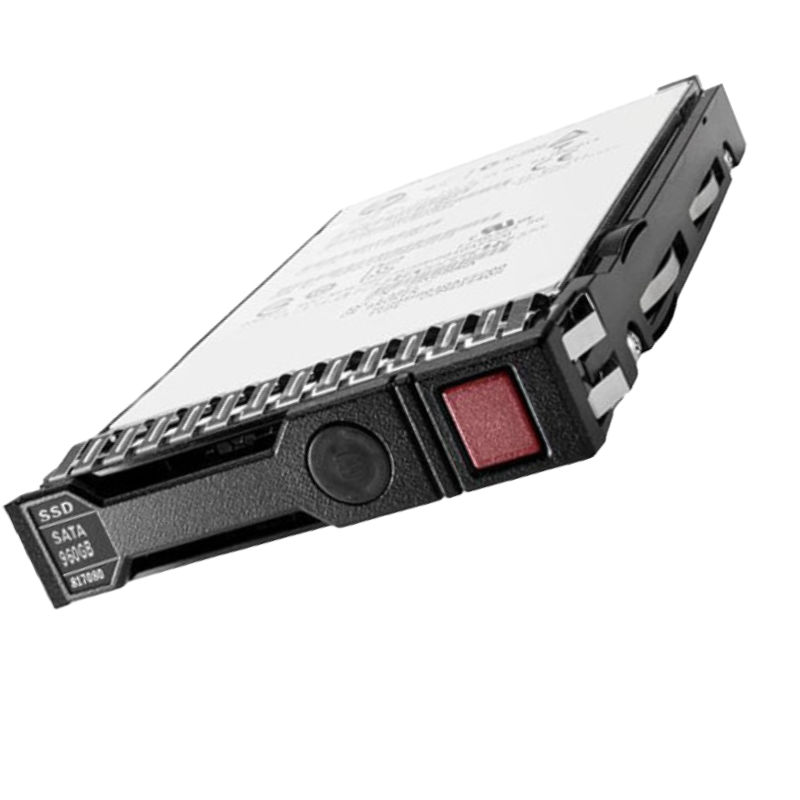


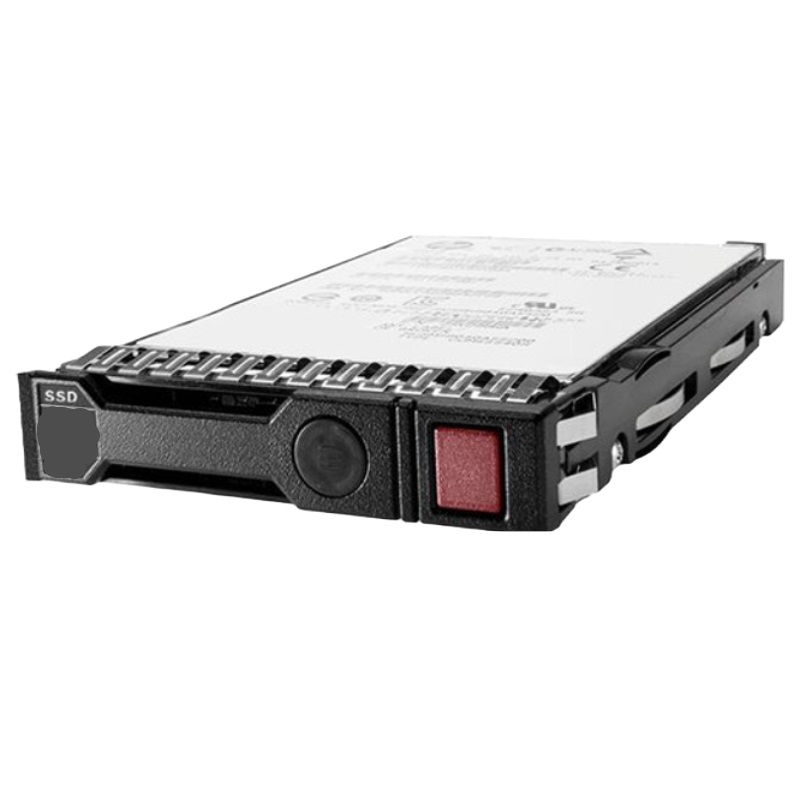
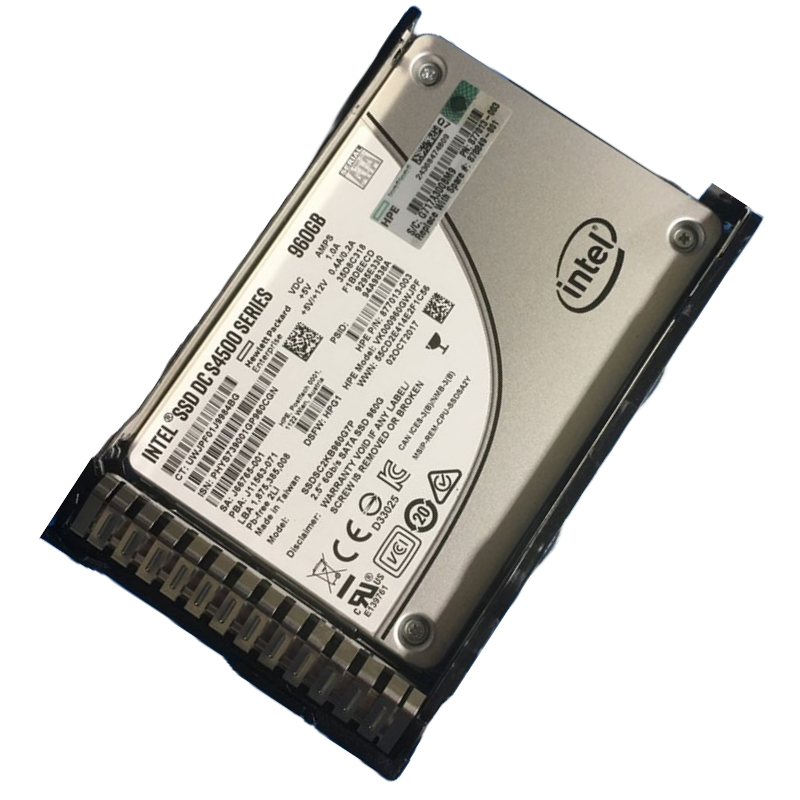
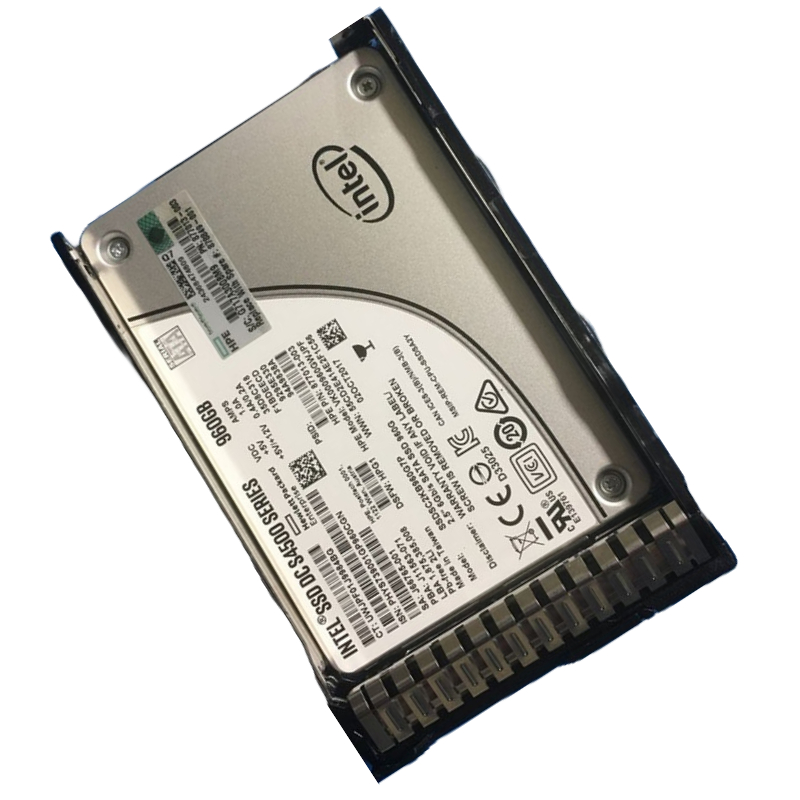
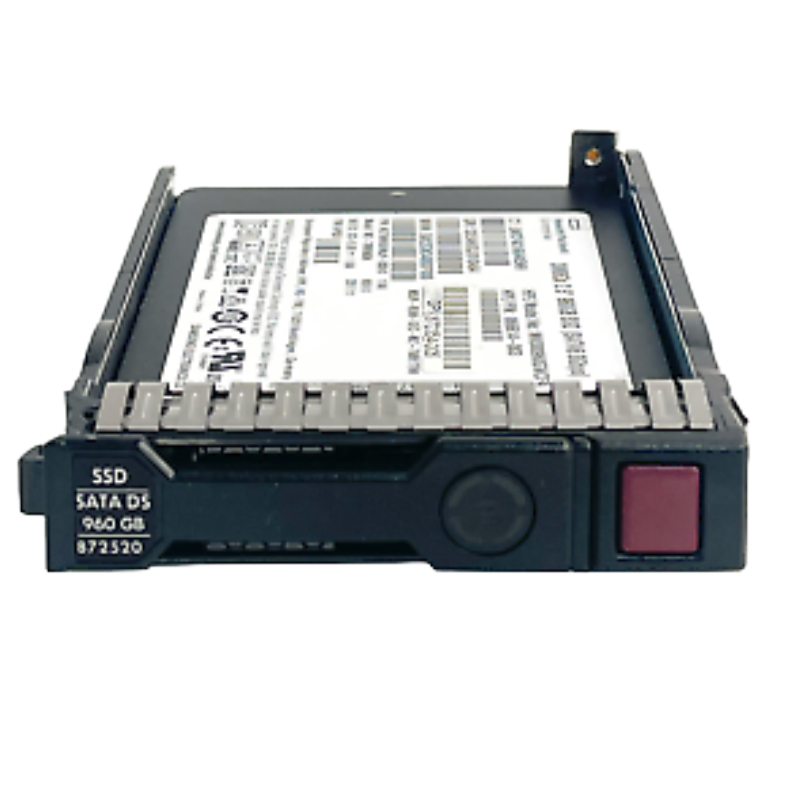
HPE 877752-B21 960GB SATA-6GBPS Internal SSD SFF Hot-Swap TLC M.2. New (System) Pull with 1 Year Replacement Warranty
| SKU/MPN | Warranty | Price | Condition | You save |
|---|---|---|---|---|
| 877752-B21 | 1 Year Warranty | $380.00 | Excellent Refurbished | You save: $133.00 (26%) |
| 877752-B21 | 1 Year Warranty | $679.00 | New (System) Pull | You save: $237.65 (26%) |
The HPE 877752-B21 960GB SFF DS SATA-6GBPS SC Read Intensive Solid State Drive represents a focused product category within enterprise-grade storage solutions designed for read-heavy workloads, high-availability server environments, and dense rack deployments. This category emphasizes a compact 2.5-inch small form factor (SFF) design, SATA-6Gb/s interface compatibility, and a 960GB capacity tier that balances price-per-gigabyte and performance for use cases where sequential and random read throughput matter more than maximum write endurance. The descriptive elements below are tailored to surface the most relevant technical, operational, and procurement details that site visitors, IT buyers, and systems integrators look for when narrowing choices in solid state drives for HPE ProLiant and compatible server families.
At the heart of the category is the drive’s hardware profile: a 2.5-inch small form factor (SFF) physical footprint that supports higher drive density in server chassis and storage enclosures compared to 3.5-inch form factors. The SATA-6Gb/s (also referred to as SATA III) host interface provides broad backward and forward compatibility with standard server SATA backplanes and many legacy controllers, while delivering the throughput ceiling that typical read-intensive enterprise workloads require. The “SC” designation in the product string often denotes a specific vendor internal model or a performance class, and within HPE’s catalog it helps buyers identify firmware and compatibility guarantees tied to HPE server platforms and management tools.
The 960GB capacity places this drive in the popular mid-capacity tier that is commonly chosen for system boot volumes, read-cached database indexes, content delivery caches, and virtual machine templates. A 960GB SSD provides a balance between cost and usable storage. Performance characteristics are optimized for read-intensive usage patterns: higher random read IOPS, lower access latency under read-dominant workloads, and predictable sustained throughput for sequential reads. While write endurance is purposely calibrated for less aggressive write patterns, the drive supports enterprise features such as power-loss protection and advanced wear-leveling to ensure predictable operation across its service life.
This category is purpose-built for compatibility with HPE ProLiant servers, HPE storage enclosures, and HPE Smart Array controllers. Buyers should expect vendor-validated firmware, drive microcode that cooperates with HPE system management agents, and qualified part numbers that appear on HPE compatibility matrices. The SFF design allows the drive to fit into 2.5-inch bay backplanes used in modern ProLiant blade and rack configurations, and the SATA-6Gb/s interface ensures straightforward integration with standard SAS/SATA controllers when configured for SATA mode. For teams managing large fleets of HPE hardware, selecting HPE-branded or HPE-qualified drives minimizes the risk of unsupported firmware interactions, simplifies warranty handling, and often streamlines procurement through existing HPE channels.
Read-intensive drives like the HPE 877752-B21 are particularly well-suited to workloads where read operations significantly outnumber writes. Examples include web serving and content delivery, read-cached database index files, virtualization templates, analytics lookups and OLAP query accelerators, and cold-tier content where reads are frequent but writes are rare. In hybrid storage architectures, these SSDs often form a hot read tier in front of larger capacity HDD arrays, delivering dramatic improvements in response time for user-facing services while keeping total cost of ownership under control. Because these drives focus on read performance, system architects frequently pair them with higher-endurance write-optimized SSDs in the same storage stack to balance longevity with I/O needs.
Enterprise-class SSDs in this category include features that enhance reliability and simplify lifecycle management. SMART reporting standards are fully supported, enabling health checks and predictive failure analysis through HPE management utilities. Power-loss protection technologies preserve in-flight data during unexpected power events, reducing the risk of corrupted metadata or incomplete writes. Firmware-level error mitigation mechanisms, including background garbage collection and advanced wear-leveling, support consistent performance over the drive’s rated life. For customers operating at scale, centralized monitoring via HPE tools or third-party monitoring stacks allows administrators to detect degrading performance trends and schedule non-disruptive replacements before service impact occurs.
While read-intensive models are not tuned for the highest write endurance ratings, they are engineered to provide predictable lifecycles under their intended workload envelope. Endurance is commonly expressed as drive writes per day (DWPD) over a specified warranty period; for read-intensive models, the DWPD figure will be conservative relative to mixed-use or write-intensive SSDs. Purchasing decisions should factor in workload write amplification and expected daily write volumes to ensure that the chosen drive meets operational longevity targets. HPE-qualified parts typically include manufacturer-backed warranties and support options, and when combined with proactive monitoring, these programs minimize downtime and replacement complexity.
The 2.5-inch SFF dimension delivers tangible benefits for modern datacenter design. SFF drives allow higher storage density per chassis, enabling administrators to provision greater aggregate capacity and IOPS within the same rack footprint. This density is especially valuable in converged infrastructure and hyperconverged cluster nodes where space and power per node are constrained. Additionally, a standardized SFF dimension simplifies hot-swap replacement procedures, reduces the number of spare drive SKUs required, and supports uniform drive caddies and trays across a diverse server fleet.
Compact SFF drives must be considered in the context of chassis airflow and thermal design. HPE-validated drives include firmware that monitors internal temperature sensors and may throttle performance to preserve reliability when thermal thresholds are exceeded. Proper rack airflow management, including blanking panels and directed cooling, helps maintain sustained performance in high-density environments. Administrators planning dense deployments should consult thermal and power budgets to ensure the entire system remains within vendor-recommended operating ranges.
Optimization of the HPE 877752-B21 category is achieved through careful consideration of controller settings, RAID configurations, and alignment with workload patterns. For read-dominant workloads, select RAID levels that maximize read throughput while offering acceptable redundancy, such as RAID 10 for low-latency read/write mixes or RAID 6 for higher capacity efficiency with fault tolerance. Where possible, enable read caching at the controller level and ensure filesystem block sizes align with the I/O characteristics of target applications. Avoid over-provisioning that forces unnecessary writes to the drives; instead, leverage controller-level caching or tiering to absorb write bursts while preserving the read-optimized drives for their intended function.
These SSDs integrate well with software-defined storage stacks and caching systems that transparently tier hot data onto faster media. In hyperconverged infrastructure, read-optimized SSDs are often allocated as a caching layer to accelerate VM boot storms and random read operations. When configuring software caches, monitor hit ratios and eviction policies to confirm that hot data resides on the SSD tier. This alignment ensures the drives deliver measurable performance improvements without being overburdened by write activity outside their design envelope.
Example deployments for this category include serving large-scale read-only content clusters for media delivery, accelerating database read replicas, and providing a hot cache tier in front of nearline object storage. In cloud-hosted private infrastructures, these drives are often used for VM template stores where fast provisioning and image cloning require strong read throughput. In analytics stacks, read-optimized SSDs can accelerate query performance by removing I/O wait on frequently accessed indices and dimension tables.
When comparing this SATA-based category to NVMe or SAS alternatives, consider trade-offs between cost, latency, and backend complexity. NVMe delivers lower latencies and higher parallelism, making it ideal for write-heavy, latency-sensitive workloads, but at a higher cost per gigabyte. SAS drives may offer enterprise-grade features and higher speeds with more complex controller requirements.


 Contact Us
 Information
 Catalog
 Solid State Drives (SSD)
 Network Switches
 Hard Disk Drives
 HBA & Controllers
 PC & Servers
 PC & Server Memory
 CPU & Processors
 Network Routers
 Power Supplies
 Tape Drives & Libraries
 Network Devices
 Computer & Network Cables