(7% discount is applied at checkout)
Cart is empty
Your go-to destination for cutting-edge server products
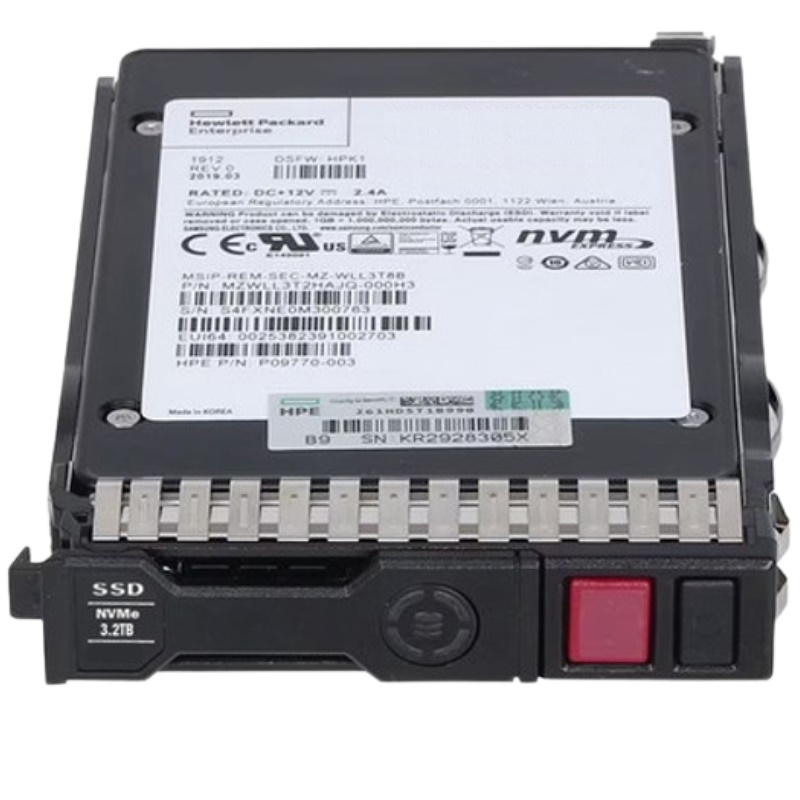


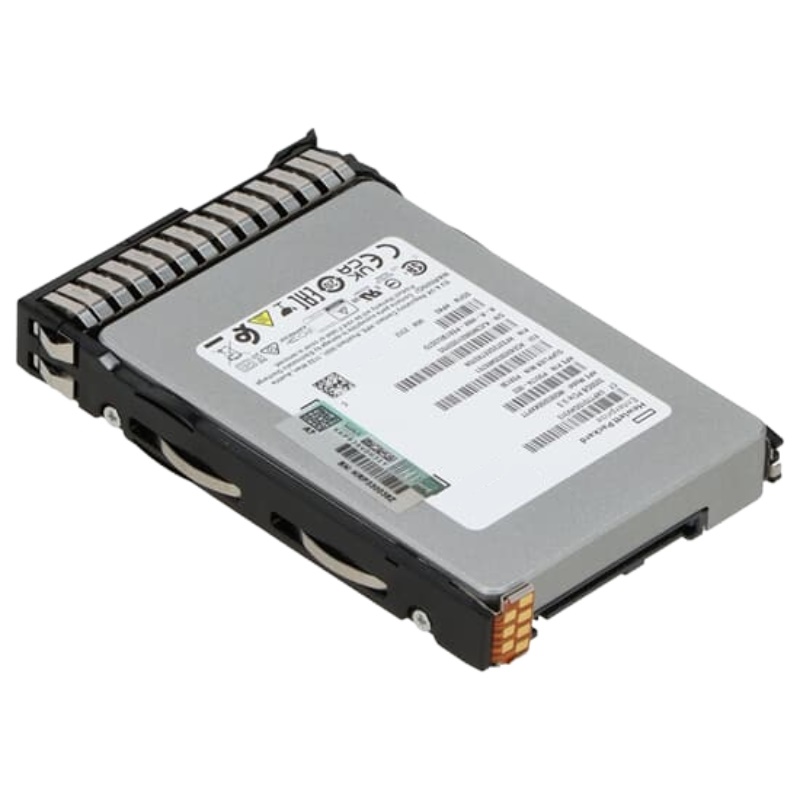
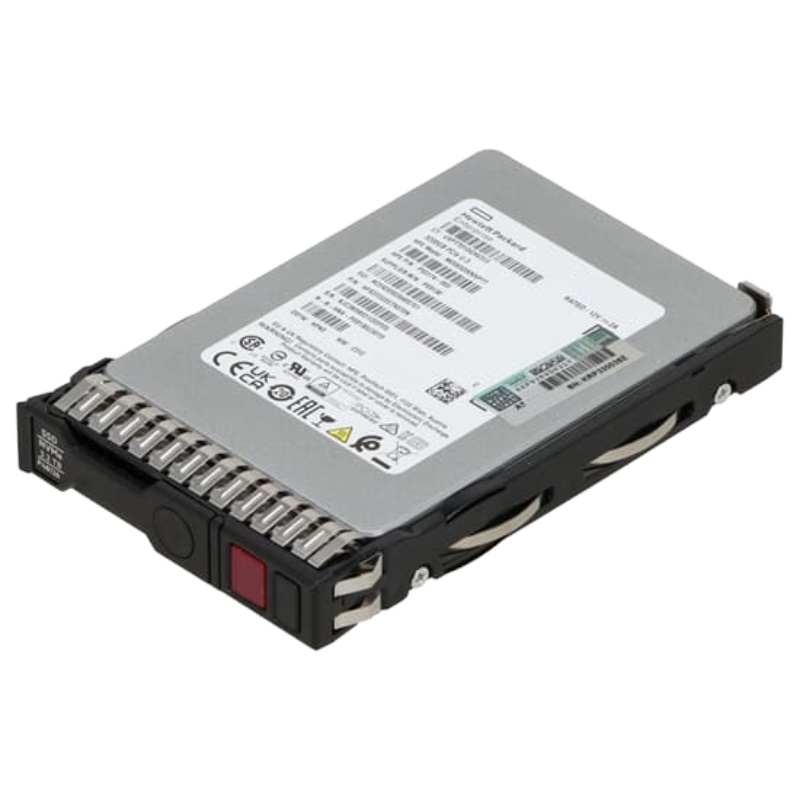
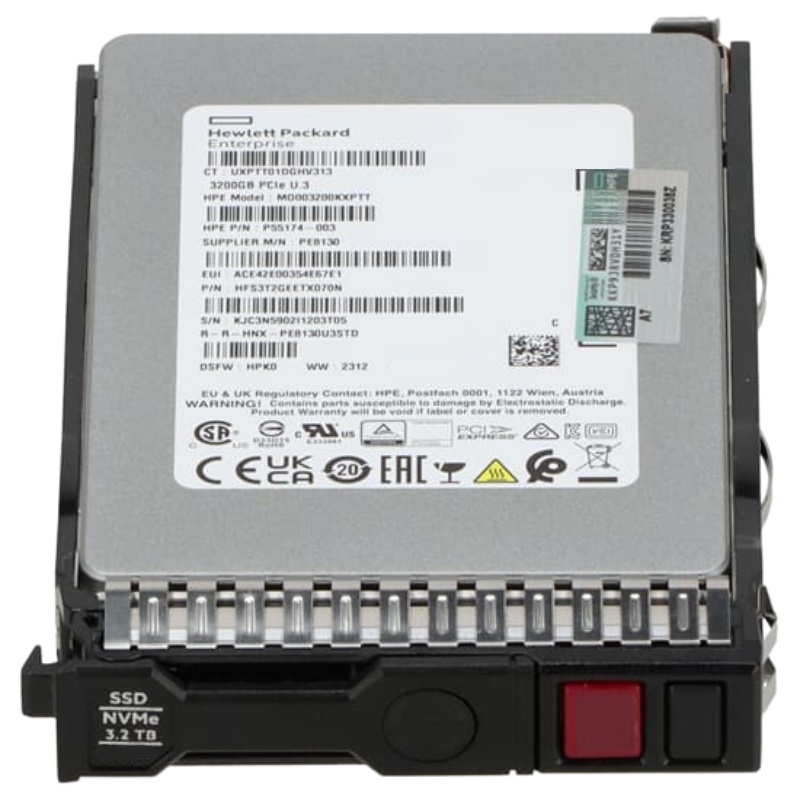
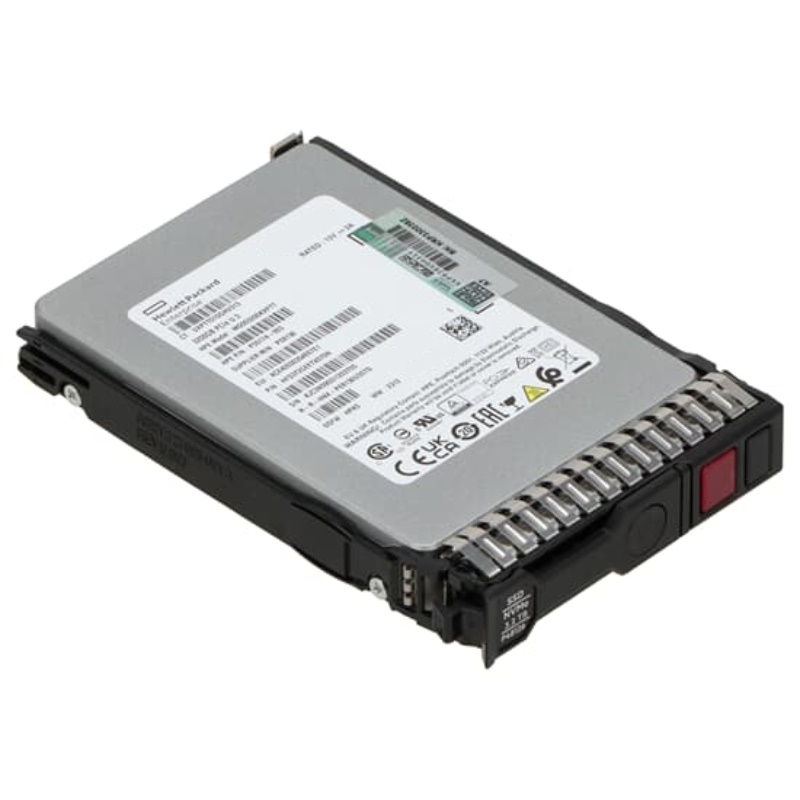
HPE 877998-B21 3.2TB NVMe Mixed Use U.2 SFF SCN Digitally Signed PCI-Express Internal Solid State Drive. New (System) Pull with 1-Year Replacement Warranty
| SKU/MPN | Warranty | Price | Condition | You save |
|---|---|---|---|---|
| 877998-B21 | 1 Year Warranty | $745.00 | Excellent Refurbished | You save: $260.75 (26%) |
| 877998-B21 | 1 Year Warranty | $958.00 | New (System) Pull | You save: $335.30 (26%) |
The HPE 877998-B21 3.2TB NVMe U.2 solid-state drive is engineered for mixed-use environments, delivering exceptional speed, reliability, and scalability for data-intensive operations.
This SSD is tailored for hybrid environments, balancing read/write operations to support virtualization, transactional databases, and cloud infrastructure.
Built on NVMe technology, this drive ensures ultra-low latency and high throughput, ideal for enterprise-grade deployments requiring consistent performance.
The HPE 877998-B21 is a 3.2TB enterprise NVMe solid state drive that arrives in a 2.5-inch small form factor (SFF) with a U.2 connector and a PCI-Express NVMe interface using four PCIe lanes. Designed and validated for server and data center environments, this Mixed Use drive balances durable write endurance and high IOPS to serve a wide variety of workloads that demand consistent low latency and strong quality-of-service characteristics. The drive is delivered with HPE’s digitally signed firmware, a firmware signing mechanism intended to reduce the risk of unauthorized firmware modifications and provide an additional layer of supply-chain and runtime integrity for data center deployments.
The physical format is the industry-standard 2.5" SFF U.2 mechanical profile, making the drive hot-pluggable in server sleds and enclosures that accept U.2 drives. The NVMe protocol over PCIe provides a direct, low-latency connection to the CPU and memory subsystem, leveraging four PCIe lanes for parallel command queues and superior small-block I/O performance compared with SATA-based SSDs. This configuration is particularly advantageous for applications that require many parallel I/O operations, such as virtualization platforms, database transaction logs, and high-concurrency web services.
HPE applies digitally signed firmware to these drives as a mitigation against tampering and to ease fleet management in environments that must enforce firmware provenance. Digitally signed firmware provides an authentication mechanism so that the system can verify firmware authenticity before installation or during runtime validation. For administrators, this can reduce operational risk by simplifying policies around firmware updates and ensuring firmware comes from authorized HPE channels. When deploying at scale, firmware signing also helps maintain consistent system states and reduces the probability of unexpected behavior caused by unauthorized or corrupted firmware images.
With 3.2 terabytes of usable capacity, this model supports dense data placement while still delivering the random and sequential performance expected from an NVMe device. The drive’s Mixed Use designation indicates it is engineered to tolerate regular write activity at a moderate to high level, offering a balanced endurance point between read-intensive and write-intensive classifications. Endurance is commonly expressed as Drive Writes Per Day (DWPD) or total terabytes written (TBW) over the warranty period; field documentation for this family of HPE drives lists DWPD/enterprise-class endurance metrics appropriate for mixed-use workloads, making the 3.2TB SKU suitable for a broad set of production tasks, including VM storage, database indices, and persistent caches.
NVM Express drives on PCIe lanes provide high IOPS and low latency compared with legacy interfaces. The 877998-B21 is optimized to maximize IOPS per watt and deliver predictable latency under mixed read/write patterns. Sequential throughput benefits from the NVMe architecture’s ability to stream high-bandwidth data over multiple lanes, while random IOPS are accelerated by NAND flash controllers tuned for parallelism and queue depth. In practical deployment scenarios, these characteristics translate into reduced application response times for read-heavy database queries, faster boot or provisioning times for virtual machines, and higher sustained throughput for logging and analytics ingestion. Deployers should expect notable improvements versus SATA SSDs and legacy SAS options in both single-drive and multi-drive arrays.
HPE markets this drive for ProLiant and other HPE server systems across multiple generations. Compatibility matrices from retailers and server vendors list this drive as validated for a wide range of HPE ProLiant Gen9 and Gen10 systems and several blade and rack configurations, ensuring that administrators can integrate the drive into existing HPE infrastructures with minimal compatibility concerns. For mixed fleets or heterogeneous infrastructures, compatibility lists and HPE QuickSpecs should be consulted to confirm support for firmware, hot-swap backplanes, and RAID controller or HBA configurations. Because NVMe devices can be presented to the OS either as bare NVMe namespaces or behind vendor-specific controllers and drivers, validation on the target server model is recommended before large-scale rollouts.
This Mixed Use NVMe drive fits many common enterprise use-cases. For virtualized environments, the drive can host multiple virtual machine images with relatively even read/write distributions. For database servers, it is ideal for primary datafiles and indexes where a balance of reads and writes exists. For content delivery and caching layers, the drive’s low latency and high random IOPS deliver snappy responses. For analytics ingestion or log retention that combine bursts of writes with occasional reads, the Mixed Use class provides a cost-effective balance of performance and longevity. In essence, the 3.2TB NVMe Mixed Use SKU is positioned as a versatile storage building block for medium-to-large scale deployments that want an upgrade path from SATA without jumping to the higher cost per GB of write-intensive NVMe.
Enterprise NVMe drives incorporate multiple layers of data protection: power-loss protection to reduce the risk of in-flight data loss, internal error-correction mechanisms in the NAND controller, and logical block management to minimize the impact of failed cells. HPE’s SSDs are tested and qualified to meet their enterprise reliability targets and typically include ECC, wear-leveling algorithms, and over-provisioning to extend usable life and maintain performance under heavy use. Integrators should also consider system-level redundancy—such as erasure coding, RAID, or distributed storage software—to provide additional protection against single-drive failures and to meet organizational RPO/RTO objectives. Monitoring SMART attributes and vendor-supplied telemetry can give early warning signs of wear or impending failure so that automated workflows can orchestrate preemptive replacement without service interruption.
Depending on the architecture, NVMe devices can be attached directly to the PCIe root complex or managed via NVMe-aware HBAs and controllers or presented through NVMe over Fabrics. When installed as U.2 drives in HPE ProLiant servers, these units can operate either as direct NVMe devices or behind vendor-specific adapters depending on server configuration. Administrators should confirm whether their RAID or HBA stack supports pass-through mode or NVMe RAID functionality, and consider software-defined storage alternatives that natively manage NVMe namespaces across multiple servers. For environments moving toward NVMe over Fabrics, the drive’s strong low-latency performance makes it a suitable candidate for disaggregated storage, where the device becomes part of a larger, networked NVMe pool.
Architects commonly adopt one of several deployment patterns for enterprise NVMe drives. Single-drive deployments are simple and fit use cases where local, low-latency storage is needed for a single service. Mirrored configurations provide redundancy and faster reads, making them useful for critical application data that requires both resilience and performance. Pooled configurations—using software-defined storage or distributed file systems—allow capacity and performance to be aggregated, enabling linear scaling and higher availability. The choice between these models depends on application RPO/RTO requirements, budget, and operations maturity. Because the 877998-B21 provides a balance of capacity and endurance, it is often used as a primary candidate for pooled performance tiers in converged and hyperconverged infrastructures.
To extract consistent performance from NVMe drives, operating system and application-level tuning is often required. Queue depth settings, interrupt coalescing, NUMA alignment, and proper driver versions influence latency and throughput. Filesystem choices, I/O scheduler settings, and database configuration parameters should be aligned with NVMe characteristics: increased parallelism, low latency, and high IOPS. For virtualization hosts, distributing vDisks across multiple NVMe devices and aligning virtual CPUs with storage I/O patterns can prevent bottlenecks and improve predictable performance for tenant workloads. Regular benchmarking in a staging environment with representative workloads helps calibrate tuning parameters before production rollout.
Compared to SATA SSDs, the 3.2TB NVMe Mixed Use drive offers markedly improved latency and IOPS, making it preferable for high-concurrency environments. Versus write-intensive NVMe SKUs, Mixed Use drives present a lower acquisition cost per TB while retaining reasonable endurance, which is often a favorable tradeoff for workloads with mixed read/write patterns. For cold storage or archival workloads, high-capacity HDDs remain cost-effective per TB, but they cannot match the random I/O performance and access times of NVMe devices. Decision-makers should match workload profiles to storage tiers: NVMe Mixed Use for active data and latency-sensitive tasks, write-intensive NVMe for heavy-write databases, and high-capacity HDDs for large sequential datasets and archives.
As server platforms adopt newer PCIe generations and denser NVMe form factors, the U.2 2.5" format remains widely supported in enterprise racks, providing a straightforward migration path from legacy SATA and SAS devices. The 877998-B21 can serve as a transitional performance tier for organizations moving toward all-NVMe infrastructures. Future-proofing deployments includes considering mixed-generation server fleets, ensuring firmware compatibility, and planning for potential adoption of NVMe over Fabrics and disaggregated storage models. Keeping an inventory of adaptable drive types simplifies migration and allows performance tiers to be rebalanced as application patterns evolve.


 Contact Us
 Information
 Catalog
 Solid State Drives (SSD)
 Network Switches
 Hard Disk Drives
 HBA & Controllers
 PC & Servers
 PC & Server Memory
 CPU & Processors
 Network Routers
 Power Supplies
 Tape Drives & Libraries
 Network Devices
 Computer & Network Cables