(7% discount is applied at checkout)
Cart is empty
Your go-to destination for cutting-edge server products
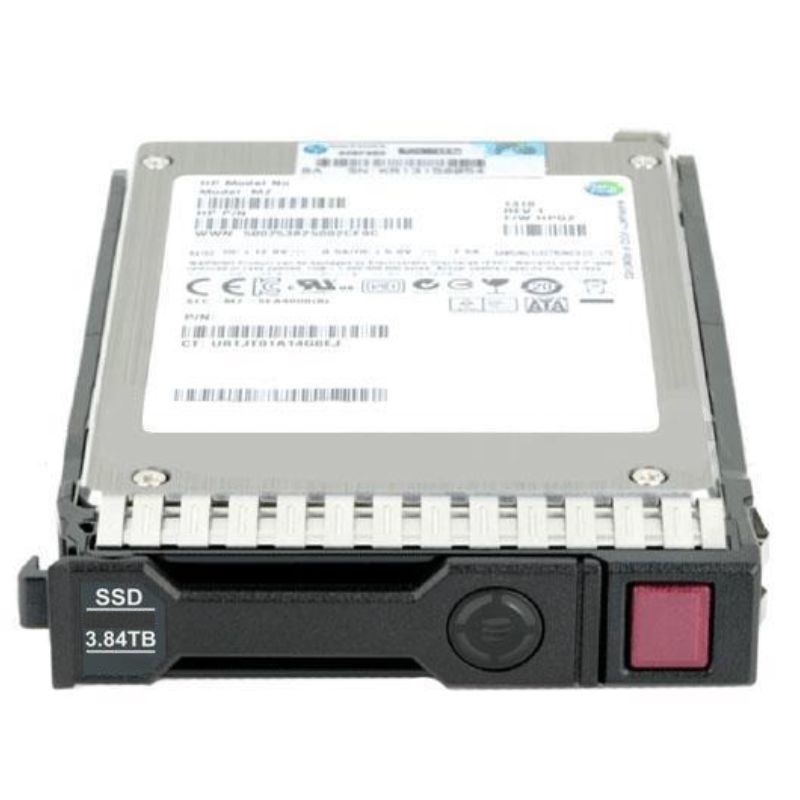


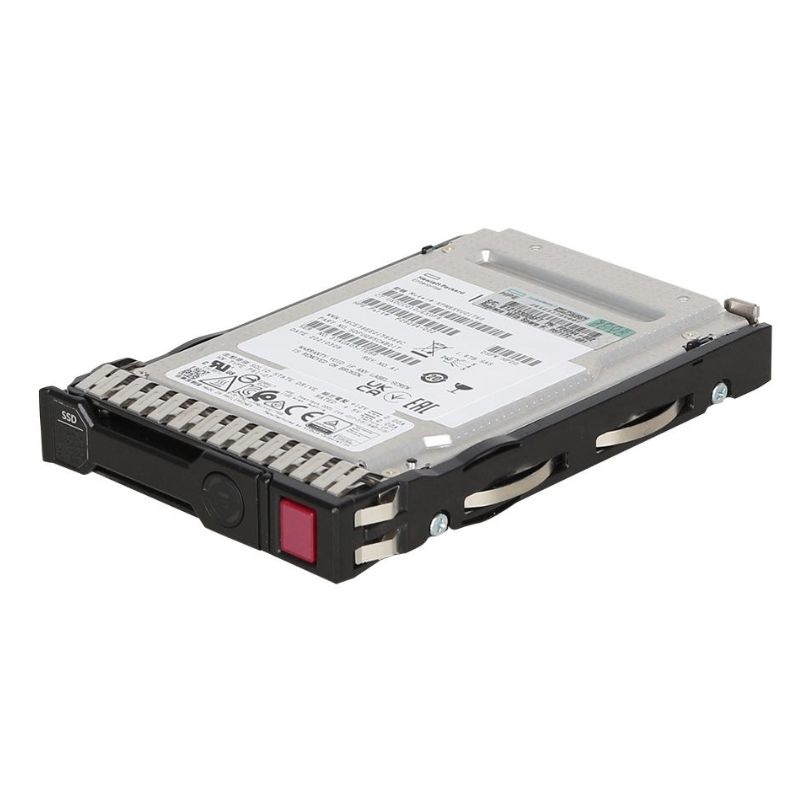
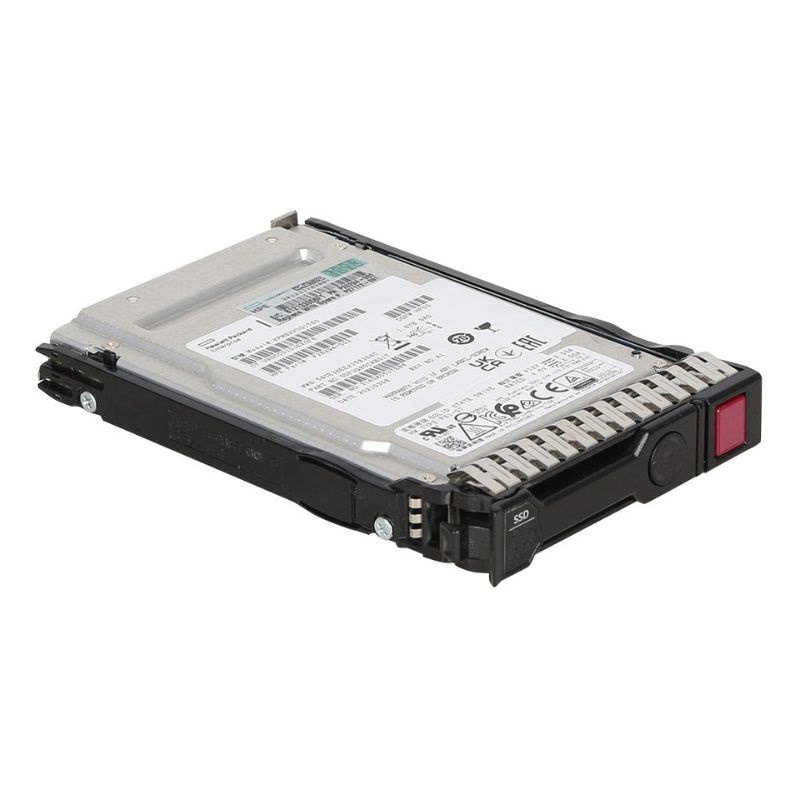
HPE 878856-001 3.84TB SATA 6GBPS Read Intensive 2.5-inch Internal Solid State Drive with Smart Carrier. New Sealed in Box (NIB) with 3 Years Warranty
Overview of HPE 878856-001 3.84TB SATA 6Gbps SFF SSD
The HPE 878856-001 3.84TB SATA 6Gbps Read Intensive Solid State Drive delivers outstanding storage efficiency, exceptional performance, and reliable operation for enterprise-grade environments. Designed to fit 2.5-inch small form factor bays and integrated with SmartDrive Carrier (SC Tray), this internal SSD ensures streamlined installation, simplified management, and compatibility with a wide range of HPE ProLiant Gen8 and Gen9 servers. Businesses looking for dependable read-intensive storage solutions benefit from improved application responsiveness, high throughput, and lower latency compared to traditional spinning drives.
Leveraging SATA 6Gbps connectivity, the HPE 878856-001 ensures a smooth balance of speed and efficiency. It is crafted to handle read-intensive workloads, making it ideal for applications such as:
Designed for seamless deployment, this SSD integrates with multiple HPE ProLiant Gen8 and Gen9 servers. The SmartDrive Carrier (SC Tray) design improves hot-swappable functionality, streamlines server upgrades, and reduces downtime during hardware refresh cycles. By leveraging HPE firmware optimization, this drive ensures smooth coordination with existing enterprise-level storage architecture.
The following HPE platforms are fully supported with the 878856-001 SSD:
This enterprise-grade SSD provides cost-effective storage options while delivering high performance for:
Hewlett Packard Enterprise designs its SSDs to support critical workloads with rigorous testing standards, enhanced firmware, and strong data protection features. The HPE 878856-001 provides:
Organizations adopting the HPE 878856-001 3.84TB SSD benefit from accelerated data accessibility, higher reliability, and cost savings in energy consumption. Its small form factor maximizes rack space utilization, while the SmartDrive Carrier ensures simplified deployment and management across server environments.
The HPE 878856-001 drive is a high-capacity, enterprise-class solid state drive offered with a Smart Carrier for easy insertion into HPE ProLiant server bays. Marketed as a 3.84TB SATA 6Gb/s Read-Intensive SSD, this unit is designed for read-dominant workloads where fast access times, low latency, and predictable performance are required. It is commonly deployed in database read-caching, content-delivery, virtualization read targets, and mixed-workload tiers where endurance requirements are lower than write-intensive enterprise flash but capacity and reliability remain crucial.
The physical drive core is available in a 2.5-inch Small Form Factor (SFF) SSD package, frequently sold together with an HPE Smart Carrier or a 3.5-inch Large Form Factor (LFF) carrier adapter depending on server slot requirements. That flexibility allows the same 3.84TB module to be used in Gen8, Gen9 and Gen10 ProLiant systems that accept either 2.5" SFF or 3.5" LFF hot-plug drive trays. Packaging choices—SFF with Smart Carrier or LFF with converter—simplify procurement and compatibility in mixed-fleet datacenters.
HPE’s Smart Carrier (or SmartDrive carrier) provides an integrated interface and LED/handle assembly that enables:
These features are especially valuable for on-premises server operators who require minimal service windows and fast field replacements.
The drive uses a SATA III (6.0 Gbit/s) host interface — a ubiquitous connection type across enterprise servers and storage trays. For many read-heavy applications, a SATA 6Gb/s SSD provides a balanced combination of raw throughput, wide compatibility, and predictable latencies compared with legacy HDDs or NVMe parts.
"Read-Intensive" (RI) is a classification that reflects the drive’s endurance and flash management tuning: the controller, firmware and NAND allocation are optimized to prioritize read throughput and longevity under read-dominant IO patterns rather than sustained write performance. This makes RI drives cost-effective alternatives to higher-endurance, write-optimized units when the application’s write amplification and daily writes are moderate. Typical RI use cases include:
Choosing an RI SSD helps control per-GB costs while still delivering dramatic latency and random-read improvements over mechanical disks.
HPE SSDs typically ship with Digitally Signed firmware (DS), which ensures that firmware updates and image loads are cryptographically verified and validated for HPE platforms. This reduces the risk of incompatible or malicious firmware being applied and helps maintain predictable behavior across ProLiant generations. HPE also periodically releases firmware updates and release notes to address issues or improve drive robustness; organizations should review HPE’s support bulletins and firmware advisories to stay current.
The following are the high-level, load-bearing characteristics that most buyers and implementers care about for the 878856-001 class:
Read-Intensive SSDs are tuned to deliver high random-read IOPS and consistent sequential read throughput. When benchmarking, pay particular attention to:
For real deployments, validate performance under the intended IO mix rather than relying on synthetic peak figures alone.
One of the chief advantages of enterprise SSDs is reduced latency and more deterministic IO timing. RI SSDs are an excellent fit where predictable read latencies improve application responsiveness — for example, database index scans or read-cache lookups. Measuring P99 and P99.9 latencies is advisable for latency-sensitive workloads.
Databases that have significant read amplification or heavy analytic reads (OLAP queries, BI dashboards) benefit from placing hot tables, indexes, or query working sets on RI SSD tiers. The high random-read throughput and low access times reduce query latencies and improve user experience across concurrent analytic sessions.
When many VMs boot concurrently or when the storage contains many read-heavy OS images, read-optimized flash reduces boot storms, accelerates cloning operations, and shortens template deployment windows. The capacity density of 3.84TB per bay also reduces the number of drives required for large image repositories.
Content distribution platforms or edge caches that primarily serve read traffic can use RI SSDs to lower latency to end users while keeping overall cost per GB lower than high-endurance write-optimized flash tiers.
In a tiered storage architecture, the 878856-001 is often used as a mid-tier: faster than spinning media and ideal for read-dominant hot data, but more cost-effective per-GB than the highest-endurance flash intended for heavy write workloads.
Although the drive is advertised as 3.84TB, usable capacity in a server depends on drive formatting, RAID overhead (mirroring, parity), file system allocation units, and any logical replication. For example:
Always factor in overhead and future growth when sizing arrays; the nominal 3.84TB should be treated as raw drive capacity.
Higher per-drive capacities reduce the number of drives needed for a given usable pool, which lowers cabling, bays, heat, and management overhead. For organizations with rack space constraints or with a desire to minimize the number of spindles/slots, a 3.84TB SSD provides immediate density advantages over smaller SSDs or HDDs.
HPE and authorized resellers may offer new, OEM, or refurbished inventory for this SKU. Warranty periods and service coverage differ between new OEM drives and refurbished stock; buyers should confirm:
Resellers often publish warranty notes and condition statements on the product page; examine these details to ensure expected SLAs and replacement timelines.
Integrating drive SMART telemetry with HPE iLO, Onboard Administrator, or your monitoring stack allows early detection of emerging issues (reallocated sectors, error counters, temperature excursions). This predictive monitoring enables scheduled replacements before catastrophic failure and reduces unplanned downtime.
The 878856-001 is often referenced alongside related HPE part numbers that denote packaging, carrier type and regional SKUs (for example, VK003840... or P06200...). Retailers and parts catalogs may display different SKU labels even though the underlying SSD core and firmware are functionally equivalent—confirm the exact part number and whether it includes a SmartCarrier or converter before ordering.
Larger shipments are commonly offered as multipacks (5-packs, 10-packs) for datacenter replenishment and integrator use. These bulk pack options often come with consolidated warranty or limited warranty periods specific to the reseller; inquire about serial tracking, burn-in, and inventory tagging for fleet deployments.
Choose RI SSDs like the 878856-001 when:
If your environment performs heavy sustained writes, logging, or high-frequency database updates, consider write-intensive or mixed-use SSDs that provide higher drive endurance (higher DWPD/TBW ratings) and more aggressive over-provisioning for write amplification control.
A cluster of blades or rack servers can use 3.84TB RI SSDs as a dedicated boot and OS image tier that holds VM templates and golden images. In such a design:
In a hybrid array, place the 878856-001 drives in the read cache layer so hot reads are accelerated, while larger HDD pools store colder, bulk data. This yields a cost-effective balance of capacity and performance.
For final validation of compatibility, firmware revisions and HPE support advisories, refer to HPE’s official documentation and trusted reseller listings where part numbers and packaging details are stated. Resellers often show condition (new/refurb) and exact packaging (SmartCarrier included or not) — check those fields carefully before purchase.


 Contact Us
 Information
 Catalog
 Solid State Drives (SSD)
 Network Switches
 Hard Disk Drives
 HBA & Controllers
 PC & Servers
 PC & Server Memory
 CPU & Processors
 Network Routers
 Power Supplies
 Tape Drives & Libraries
 Network Devices
 Computer & Network Cables