(7% discount is applied at checkout)
Cart is empty
Your go-to destination for cutting-edge server products
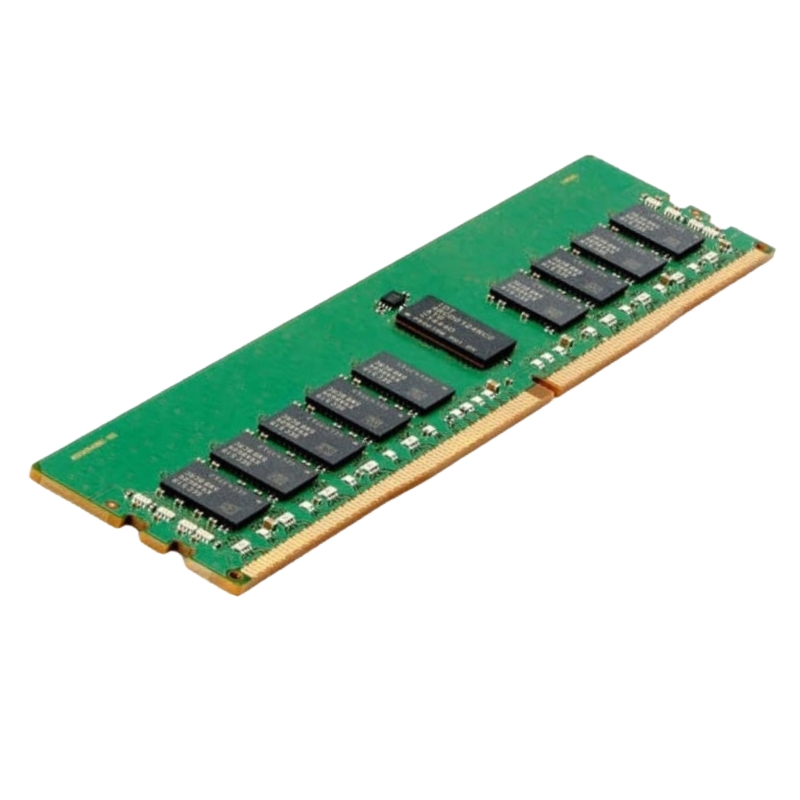


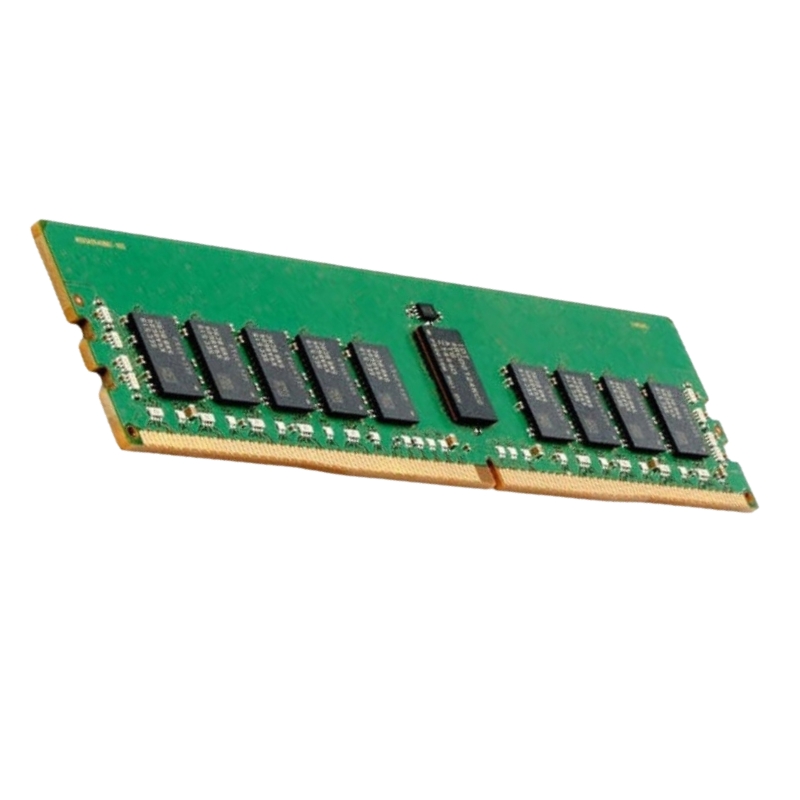
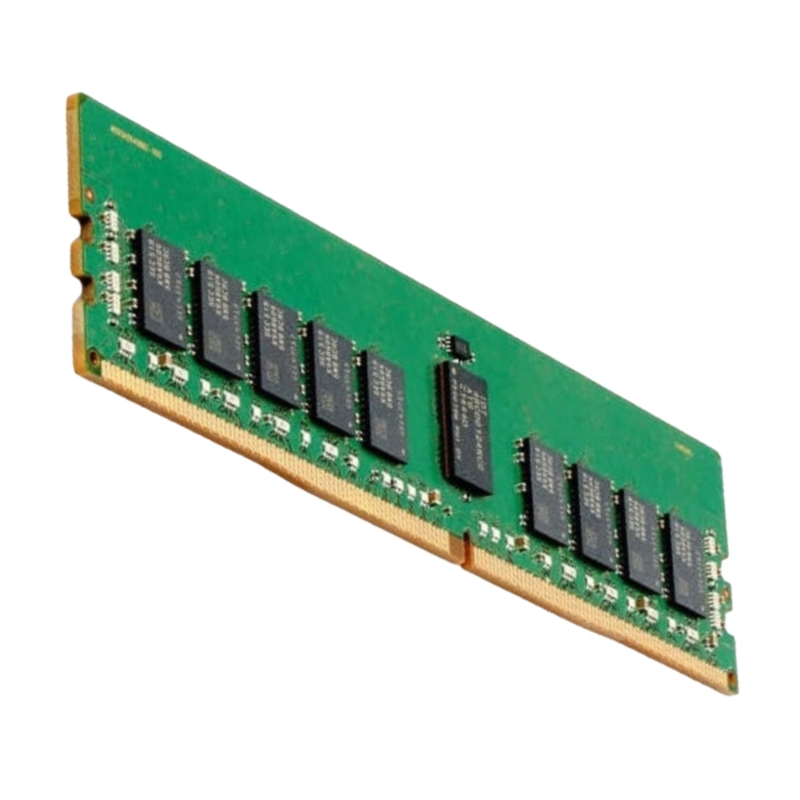
HPE 879526-091 8GB 1rx8 Single Rank X8 DDR4-2666MHz PC4-21300 CL19 288-Pin Unbuffered Standard for Proliant Server Memory. New (System) Pull with 1 year replacement warranty
Enhance the performance of your HPE ProLiant Gen10 servers with the HPE 879526-091 8GB DDR4 memory module. This single-rank, unbuffered DIMM offers reliable and efficient data management to optimize your server's capabilities.
The HPE 879526-091 8GB DDR4 memory module represents a widely used, industry-tested choice for deploying reliable server memory in HPE ProLiant environments. This module is specified as 8GB capacity, single rank (1Rx8) organization, x8 data width, running at DDR4-2666MHz (PC4-21300) with CAS Latency 19 (CL19) and the standard 288-pin DIMM form factor. As an unbuffered, non-registered ECC-capable part tailored for ProLiant servers, it balances cost-efficiency, power efficiency, and the error-correction technologies required by enterprise workloads. The module is engineered to meet HPE electrical, timing, and firmware requirements so that it integrates seamlessly into platform firmware, system management tools, and BIOS-level memory training routines found in Gen9, Gen10, and compatible ProLiant server families.
Understanding the architecture labeling 1Rx8 and x8 is essential when planning memory configurations. The designation single rank (1R) indicates memory chips are organized so that the DIMM presents a single rank to the memory controller; rank count influences how many modules can be populated per channel before hitting platform limits, and it affects interleaving and effective parallelism. The x8 notation refers to the data width per DRAM chip. In practice, a 1Rx8 module offers predictable electrical loading and compatibility benefits on many server motherboards because it places a moderate load on traces while supporting widely compatible rank-to-channel mapping. For systems sensitive to memory population rules or those balancing capacity and channel topology, single rank modules often allow higher populated slot counts while keeping signal integrity stable compared to higher-rank alternatives. For latency-sensitive workloads, differences between single rank and dual/triple rank may be measurable; however, in many ProLiant deployments the choice is driven by capacity planning and supported population density rather than raw single-thread latency.
DDR4-2666MHz represents a mid-to-high clock speed class for enterprise DDR4 memory. The module delivers a theoretical peak transfer rate consistent with PC4-21300 classification, enabling robust memory bandwidth for mainstream server tasks. Because DDR4-2666 runs at a higher base frequency than older DDR4-2133 or DDR4-2400 modules, a CL19 module at 2666MT/s may present comparable or better absolute latency than lower-frequency modules with smaller CL numbers. For multi-threaded server loads, memory bandwidth and effective concurrency are typically more critical than single-access latency, and the HPE 879526-091 module is optimized to contribute steady bandwidth to CPU cores across NUMA nodes in ProLiant architectures.
Error-Correcting Code (ECC) is a foundational reliability feature for server memory. The HPE 879526-091 functions within HPE server platforms that use ECC to detect and automatically correct single-bit errors and detect multi-bit errors, minimizing the risk of data corruption in volatile memory. ECC behavior integrates with system management and health monitoring, allowing administrators to see corrected error counts, set thresholds for alerts, and replace modules proactively. For mission-critical applications, database servers, virtualization hosts, and memory-backed caching layers, ECC is a non-negotiable safeguard. Choosing an HPE-qualified ECC module such as this part ensures that error reporting is compatible with Integrated Lights-Out (iLO) and other HPE monitoring tools so corrective maintenance can be planned with minimal disruption.
The physical standard 288-pin DIMM form factor used by this module is the common interface for DDR4 desktop and server-class memory. HPE validates this SKU specifically for ProLiant servers, aligning timing SPD (Serial Presence Detect) data and vendor firmware descriptors so the module is recognized during POST and memory training. Compatibility covers a broad set of ProLiant models that support unbuffered DIMMs and the DDR4-2666 speed grade, but final compatibility depends on server generation, processor family, and BIOS revision. Because HPE servers enforce strict memory population rules for optimal performance and reliability, administrators should reference platform-specific memory population guidance. When mixed populations of memory speeds are present, the system may downclock modules to the lowest matched JEDEC speed; therefore, aligning module speed across channels is recommended when peak bandwidth is required.
An 8GB capacity module fits use cases where moderate per-socket memory capacity is acceptable, or where greater numbers of DIMMs per system are used to scale total memory across many channels. Typical scenarios include small to medium virtualization hosts with light- to medium-weight VMs, web application tiers, caching layers with moderate working sets, and development or lab servers where replicating production behavior is required without the expense of higher-density modules. In cloud and virtualization clusters where nodes are numerous and per-node cost is a key factor, 8GB modules can be used to tune the balance between slot population and total cluster memory. They are also suitable for edge compute nodes where space, power, and cost constraints favor smaller per-module capacities while ECC protection preserves data integrity.
In virtualized environments, memory allocation patterns differ from bare-metal single-application servers. Memory oversubscription ratios, ballooning behavior, and the interplay between host kernel and hypervisor memory management determine how memory capacity is perceived by VMs and containers. An HPE 879526-091 module used to populate channel slots across nodes will supply consistent bandwidth and ECC protection that hypervisors rely on for stable guest memory. Because memory errors can propagate through virtual machines to application-level faults, using HPE-certified ECC memory in virtualized clusters reduces the incident rate tied to soft memory errors. When planning a virtualization host, administrators should test memory speed and interleaving performance with representative VM workloads to ensure expected throughput and latency characteristics under production loads.
Memory contributes to a server’s total thermal budget and power consumption. DDR4 modules, including the HPE 879526-091, are engineered for efficiency improvements over previous DDR generations; however, higher speed modules like DDR4-2666 may consume marginally more power than lower-frequency equivalents. Regular monitoring via iLO or system health tools can reveal increasing correctable error counts, unusual thermal conditions, or voltage-related anomalies, enabling preemptive maintenance actions. In datacenter contexts where mean time between failures (MTBF) and service level agreements are critical, using HPE-validated modules helps ensure predictable failure profiles and vendor-supported replacement procedures.
When planning upgrades, compare the cost-per-gigabyte and slot utilization tradeoffs between 8GB UDIMMs and higher density modules such as 16GB, 32GB, or 64GB RDIMMs or LRDIMMs. Higher density modules reduce the number of DIMMs required to reach target memory capacities but may impose registered or load-reduced requirements that change platform compatibility. For clusters that require frequent scaling of memory, using higher-density modules can reduce management overhead and thermal load per gigabyte, but the initial cost is higher. Migration strategies often involve a phased approach: validate higher-density module compatibility in a staging environment, verify BIOS and firmware behavior under mixed-population scenarios, and schedule rolling upgrades to minimize downtime. The HPE 879526-091 remains a strong option for environments where predictable per-slot capacity and lower per-module cost are priorities.


 Contact Us
 Information
 Catalog
 Solid State Drives (SSD)
 Network Switches
 Hard Disk Drives
 HBA & Controllers
 PC & Servers
 PC & Server Memory
 CPU & Processors
 Network Routers
 Power Supplies
 Tape Drives & Libraries
 Network Devices
 Computer & Network Cables