
(7% discount is applied at checkout)
Cart is empty
Your go-to destination for cutting-edge server products
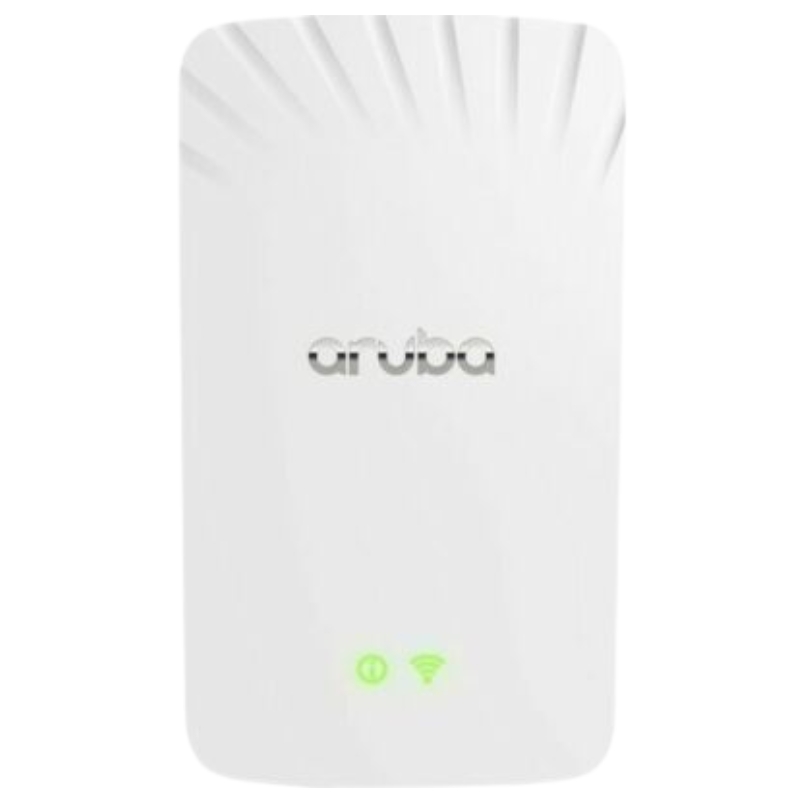
HPE AP-605H-RW Aruba Networking 2-radio 3-band PSE USB Hospitality Ap. Factory-Sealed New in Original Box (FSB) with 3 Years Warranty
The HPE AP-605H-RW is a high-performance tri-band wireless access point engineered for modern enterprise and indoor networking environments. Supporting IEEE 802.11 standards, it delivers ultra-fast combined wireless throughput of up to 3.6 Gbps. Operating across 2.4 GHz, 5 GHz, and 6 GHz frequency bands, this advanced networking solution ensures stable, high-capacity connectivity with seamless device handling. Equipped with internal MIMO technology, multiple RJ-45 network interfaces, PoE support, and Bluetooth 5 capabilities, it is ideal for flexible deployment in wall-mounted, desktop, or box-mounted setups.
The enterprise wireless access point category represents a high-performance segment of networking equipment designed to deliver stable, high-capacity, and low-latency connectivity across modern digital environments. Devices in this category are engineered to support dense user populations, bandwidth-intensive applications, and multi-device ecosystems that demand continuous and reliable wireless coverage. Within this space, advanced tri band architectures combined with next-generation wireless standards define the evolution of connectivity infrastructure for organizations that require scalable and future-ready network deployments.
This category is centered around advanced indoor access point solutions capable of operating across multiple frequency ranges, ensuring optimized traffic distribution and reduced congestion. The integration of 2.4 GHz, 5 GHz, and 6 GHz bands allows seamless adaptation to diverse network conditions, making these systems suitable for environments ranging from corporate offices to educational campuses and hospitality infrastructures.
The HPE AP-605H-RW wireless access point represents a sophisticated networking solution designed to meet the demands of modern enterprise connectivity. Built with tri band capabilities, it supports simultaneous operation across 2.4 GHz, 5 GHz, and 6 GHz frequencies, enabling enhanced throughput and minimized interference. This architecture allows for efficient load distribution, ensuring consistent performance even in high-density environments where multiple devices operate simultaneously.
At its core, the device leverages IEEE 802.11 standards, providing backward compatibility with legacy devices while supporting the latest WiFi 6 and WiFi 6E enhancements. This ensures seamless integration into existing infrastructures while offering a future-ready pathway for network expansion.
Tri band wireless technology is a defining feature of this category, enabling simultaneous communication across three distinct frequency ranges. The 2.4 GHz band provides extended coverage and penetration through physical obstacles, making it suitable for general connectivity and legacy device support. The 5 GHz band offers higher throughput and reduced interference, ideal for high-performance applications such as video conferencing and cloud computing.
The inclusion of the 6 GHz band introduces an expanded spectrum with significantly reduced congestion, allowing ultra-fast data transmission and improved latency performance. This enhancement is particularly valuable in environments where real-time communication and high bandwidth consumption are critical operational requirements.
Support for multiple IEEE wireless standards ensures that the access point maintains broad compatibility across diverse device ecosystems. The inclusion of WiFi 6 (802.11ax) introduces advanced modulation techniques, improved channel utilization, and increased efficiency in crowded network environments. Technologies such as orthogonal frequency division multiple access contribute to improved multi-user performance and reduced network bottlenecks.
Backward compatibility with previous standards ensures that legacy devices remain functional within the same network ecosystem, eliminating the need for immediate infrastructure replacement. This hybrid compatibility model enhances long-term scalability and investment protection.
With aggregate data transfer rates reaching up to 3.60 Gbit/s, this category of wireless access points is designed for high-demand digital environments. Such throughput enables seamless handling of large-scale data transfers, high-definition media streaming, cloud-based applications, and real-time collaboration tools.
The ability to manage multiple simultaneous connections without degradation in performance is a critical aspect of enterprise-grade networking. Advanced signal processing and spatial stream allocation ensure that bandwidth is distributed efficiently across connected devices, reducing latency and improving user experience.
Multiple Input Multiple Output technology plays a central role in enhancing wireless communication efficiency. By utilizing multiple antennas for transmission and reception, the system improves signal reliability, increases throughput, and reduces interference. This spatial multiplexing approach allows multiple data streams to be transmitted simultaneously, significantly boosting network performance.
In dense deployment scenarios, MIMO technology ensures stable connectivity by minimizing packet loss and optimizing signal paths. This is particularly important in environments with high device density such as conference halls, campuses, and enterprise offices.
The inclusion of multiple network interfaces, including 2.5 Gigabit Ethernet and Gigabit Ethernet ports, ensures high-speed wired connectivity for backhaul and device integration. These ports provide flexible deployment options, allowing integration with existing network infrastructures while supporting high-throughput requirements.
The availability of five network interfaces enables advanced networking configurations, including uplink redundancy, traffic segmentation, and optimized data routing. This enhances network resilience and ensures uninterrupted connectivity in critical operational environments.
Power over Ethernet support simplifies installation by allowing both power and data transmission through a single Ethernet cable. This eliminates the need for separate power sources and reduces installation complexity. It also enables flexible deployment in locations where traditional power outlets may not be readily available.
PoE capability is particularly beneficial in large-scale deployments, where centralized power management and simplified cabling infrastructure contribute to reduced operational costs and improved maintenance efficiency.
The integration of Bluetooth 5 technology expands the device's functionality beyond traditional wireless networking. It enables proximity-based services, IoT device communication, and enhanced location-based applications. Bluetooth 5 offers improved range, speed, and broadcasting capacity compared to previous versions.
This capability supports modern smart environments where interconnected devices communicate seamlessly within a unified ecosystem. Applications include asset tracking, smart building automation, and enhanced user engagement systems.
Deployment flexibility is a key characteristic of this category, with support for wall mounting, desktop placement, and box mounting configurations. This versatility allows integration into a wide range of architectural environments without compromising performance or aesthetics.
Indoor deployment scenarios benefit from compact design considerations that enable discreet installation while maintaining optimal signal coverage. This ensures that the access point blends seamlessly into professional environments such as offices, hotels, and educational institutions.
Security remains a fundamental aspect of enterprise wireless infrastructure. Advanced encryption protocols and authentication mechanisms ensure that data transmission remains secure across all connected devices. Network segmentation and access control features allow administrators to define user permissions and restrict unauthorized access.
Enhanced threat detection and mitigation capabilities contribute to maintaining network integrity in environments where sensitive data is transmitted. These features are essential for industries such as healthcare, finance, and government operations.
Modern enterprise environments often involve high device density, requiring advanced optimization techniques to maintain performance stability. Load balancing algorithms and adaptive channel selection ensure efficient distribution of network traffic.
This category of access points is engineered to handle simultaneous connections from numerous devices without performance degradation, making it suitable for auditoriums, conference centers, and multi-floor office buildings.
Centralized management systems enable administrators to monitor, configure, and optimize network performance from a unified interface. Cloud-based management platforms provide remote access capabilities, allowing real-time monitoring and troubleshooting.
This approach simplifies network administration and reduces operational overhead, particularly in large-scale deployments spanning multiple locations. Automated updates and configuration synchronization further enhance efficiency.
Quality of Service mechanisms ensure that critical applications receive priority bandwidth allocation. This is essential for maintaining performance consistency in environments where voice communication, video conferencing, and cloud applications operate simultaneously.
Traffic shaping and prioritization techniques help maintain smooth user experiences by reducing congestion and ensuring that latency-sensitive applications operate efficiently.
This category of wireless access points is widely applicable across multiple industries. In corporate environments, it supports collaborative workflows, cloud computing, and remote communication systems. In educational institutions, it enables digital learning platforms and campus-wide connectivity.
In hospitality environments, it enhances guest connectivity experiences by providing stable and high-speed internet access. Healthcare facilities benefit from secure and reliable wireless communication for medical systems, patient data management, and IoT-enabled medical devices.
Scalability is a critical design consideration in enterprise networking. This category supports seamless expansion through modular deployment strategies, allowing organizations to increase coverage and capacity as operational demands grow.
Future-ready architecture ensures compatibility with emerging wireless standards and evolving digital infrastructure requirements, protecting long-term investment value.
Designed for indoor environments, these access points maintain consistent performance under varying operational conditions. Thermal efficiency, signal stability, and interference resistance contribute to long-term reliability.
The robust construction ensures durability in continuous operation scenarios, making it suitable for mission-critical networking environments where downtime is not acceptable.
Advanced network intelligence features allow automatic optimization based on real-time traffic conditions. Adaptive channel management and dynamic frequency selection improve performance efficiency and reduce manual configuration requirements.
These intelligent systems continuously monitor network conditions and adjust parameters to maintain optimal connectivity performance across all connected devices.


 Contact Us
 Information
 Catalog
 Solid State Drives (SSD)
 Network Switches
 Hard Disk Drives
 HBA & Controllers
 PC & Servers
 PC & Server Memory
 CPU & Processors
 Network Routers
 Power Supplies
 Tape Drives & Libraries
 Network Devices
 Computer & Network Cables