(7% discount is applied at checkout)
Cart is empty
Your go-to destination for cutting-edge server products
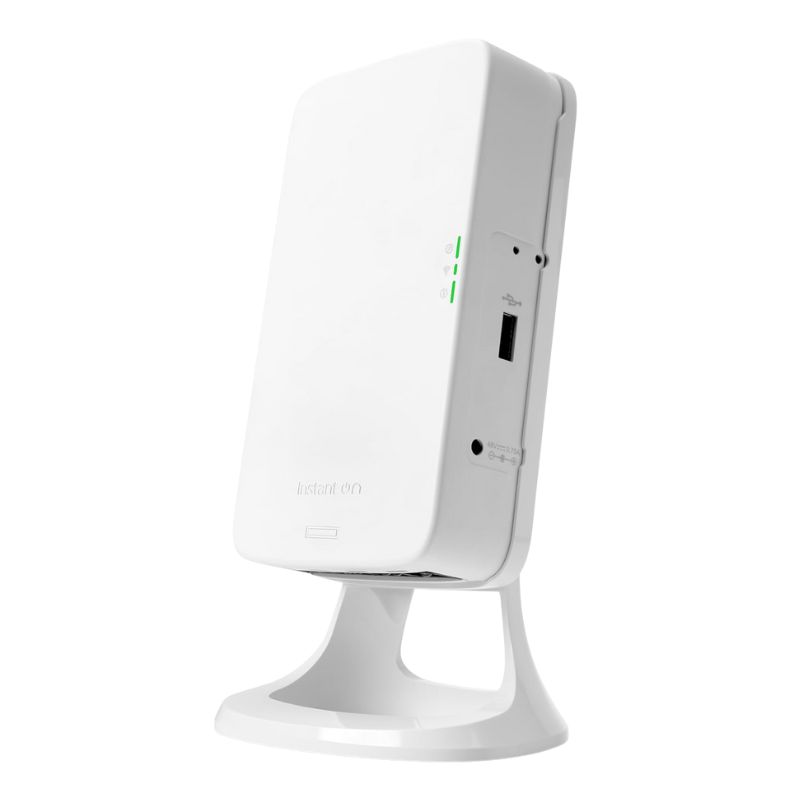


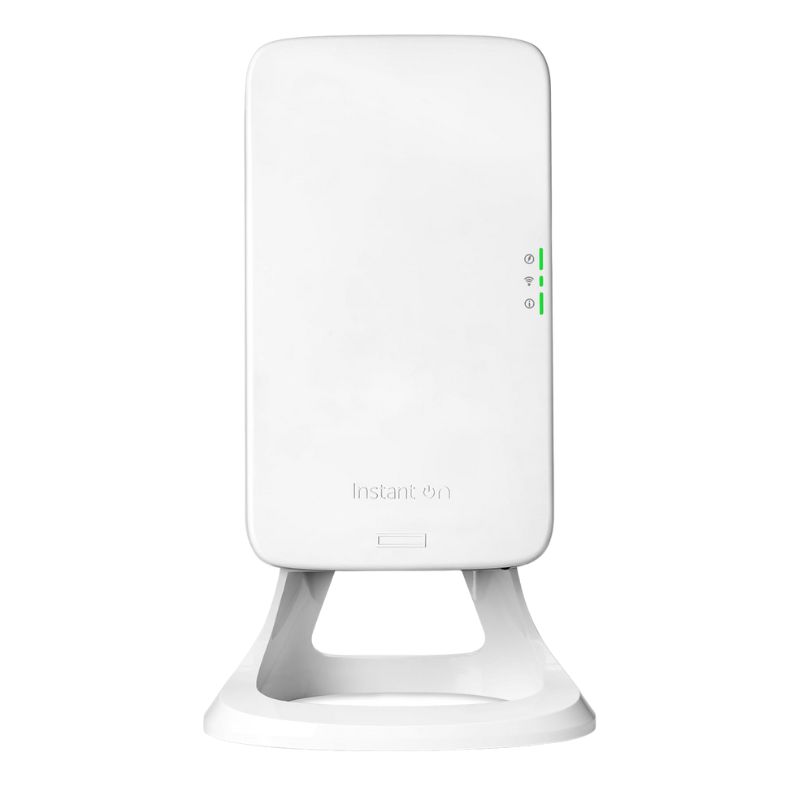
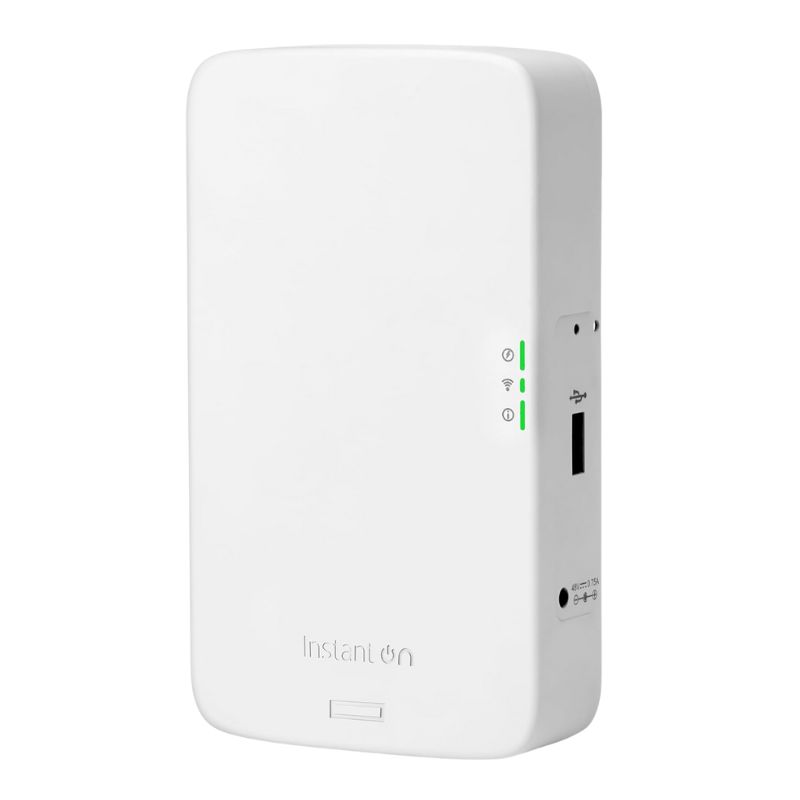
HPE AP22D-US Networking Instant On Access Point Dual Radio 2x2 Wi-Fi 6. Factory-Sealed New in Original Box (FSB) with 3 Years Warranty
The HPE AP22D-US is a high-performance networking solution designed for modern enterprises and small businesses seeking reliable Wi-Fi 6 connectivity. This dual-radio access point ensures robust coverage, seamless device management, and optimized wireless performance for dense environments.
This HPE access point is built with top-notch compliance and security features, ensuring reliable and secure wireless communication.
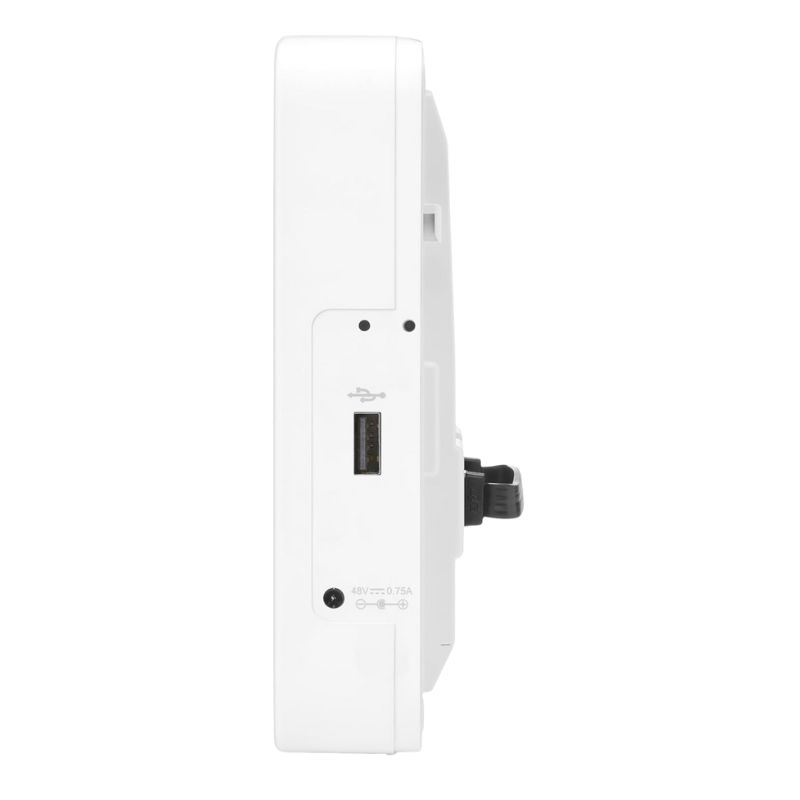
Designed for flexible deployment, the AP22D-US supports multiple powering options including PoE and DC input.
Featuring dual semi-directional antennas, this access point delivers strong signal coverage across 2.4 GHz and 5 GHz bands.
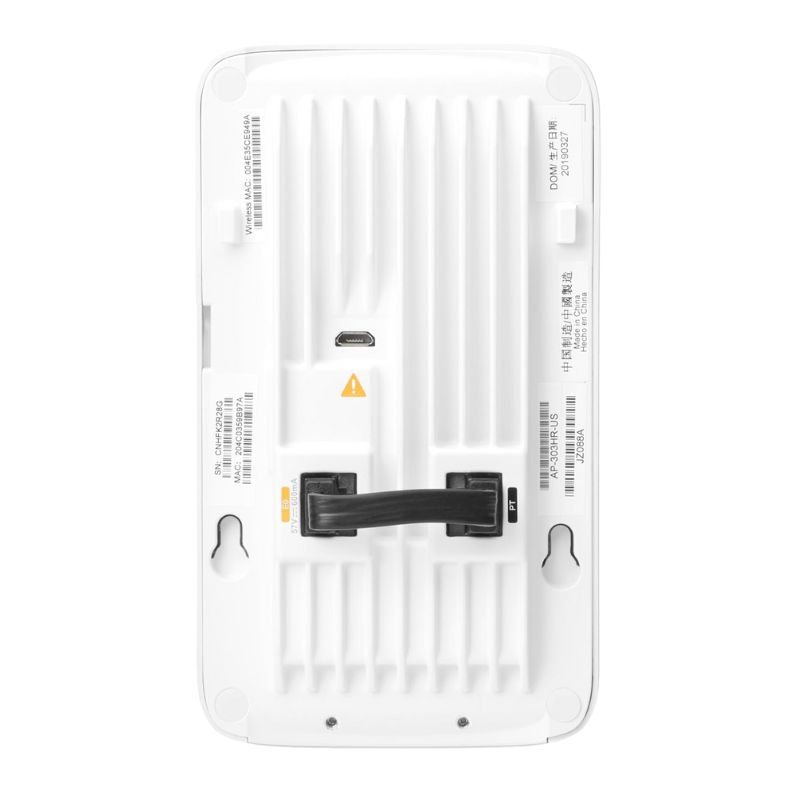
Equipped with multiple high-speed ports, the AP22D-US ensures fast uplink and downlink performance.
The HPE AP22D-US Networking Instant On Access Point Dual Radio 2x2 Wi-Fi 6 represents a class of compact, high-performance business-grade wireless access points designed to bring Wi-Fi 6 benefits to small and growing networks. In this category description we explore the technical capabilities, deployment scenarios, and buyer-focused considerations that make the AP22D and similar Instant On Wi-Fi 6 access points a compelling choice for small offices, retail spaces, cafes, branch locations, and mixed device environments. Emphasis is placed on throughput, latency, device density handling, and modern features such as OFDMA, MU-MIMO, and WPA3 security, all of which shape the value proposition of the AP22D family.
The defining attributes of the HPE AP22D-US category begin with the adoption of Wi-Fi 6 (802.11ax) dual-radio architecture. Dual radio 2x2 configurations typically provide dedicated 2.4 GHz and 5 GHz radios, each with two spatial streams. This balance allows the access point to deliver improved aggregate throughput and better per-client performance compared with previous generation devices. Features such as Orthogonal Frequency Division Multiple Access (OFDMA) reduce contention by allowing multiple devices to share the same channel more efficiently, while Multi-User Multiple Input Multiple Output (MU-MIMO) improves concurrent downlink capacity when multiple compatible clients are present. For administrators, these features translate to lower latency, higher device density support, and a more consistent user experience across mixed client populations including smartphones, tablets, and IoT devices.
Performance in this category is defined not only by peak data rates but by how the device behaves under load. AP22D-class access points are engineered to handle dozens of active clients, making them ideal for locations with moderate device density. Higher efficiency features in Wi-Fi 6 mean small business locations can host more simultaneous video calls, streaming sessions, point-of-sale transactions, and cloud backups without noticeable slowdowns. The AP22D’s 2x2 radios ensure that typical enterprise and mission-critical small business applications are supported while keeping power, cost, and thermal characteristics optimized for wall or ceiling mounting.
Coverage characteristics for the HPE AP22D category focus on indoor environments where signal propagation, wall attenuation, and client diversity matter. The AP22D’s antenna design and power characteristics provide reliable coverage for small to medium rooms, open office areas, and retail floor areas. RF planning for this category usually emphasizes placement near the center of the served space, avoidance of obstructions such as large metal structures, and channel planning to reduce co-channel interference in multi-AP deployments. When multiple AP22D units are deployed, seamless roaming and consistent channel assignment are key to delivering an uninterrupted user experience for real-time applications like VoIP and video conferencing.
Security is a leading concern for network owners, and the AP22D category addresses this through support for modern encryption and authentication standards. WPA3 authentication, enhanced management frame protection, and enterprise authentication via 802.1X radius integrations are typical in this product family. For smaller organizations without an on-premises controller, HPE Instant On simplifies management with an approachable cloud and local management interface that enables secure configuration of SSIDs, guest access workflows, access policies, and firmware updates. Centralized monitoring and time-scheduled updates help keep devices secure and compliant without imposing heavy administrative overhead.
One of the strongest selling points of Instant On APs is the management flexibility. The AP22D category supports both intuitive mobile app based provisioning and browser/cloud consoles for ongoing monitoring. For network administrators who prioritize quick deployment, the guided setup and zero-touch provisioning paths minimize manual configuration steps. For IT teams that require more control, the cloud console exposes granular configuration of VLANs, SSID schedules, client denial lists, and traffic shaping policies. This dual approach makes the AP22D family suitable for both non-technical small business owners and experienced network managers who need predictable configuration behavior.
Powering options are important when integrating an access point into existing infrastructure. AP22D devices typically support Power over Ethernet (PoE), enabling a single cable to provide network connectivity and power. PoE support simplifies installations in ceilings and walls and reduces the need for nearby electrical outlets. For sites that lack PoE switches, an injector or a small PoE switch can deliver the required power. This category of access points is generally engineered to be energy efficient so that PoE budgets remain reasonable even with multiple APs deployed.
Physically the AP22D family favors low-profile designs that blend into office and retail environments. Mounting options often include ceiling tile clips, wall brackets, and surface mounts. The choices in mounting accessories and orientation allow integrators to optimize coverage patterns while maintaining an unobtrusive aesthetic. Ethernet ports, LED indicators, and reset functions are placed for easy access during commissioning but out of the way for day-to-day operation. Cable management and labeling during installation will preserve a professional look while simplifying future maintenance.
Understanding the AP22D category is best achieved through concrete deployment use cases. For small offices and coworking spaces, the AP22D provides the throughput and client concurrency needed for video conferencing, cloud apps, and large file transfers. Retail locations benefit from improved guest Wi-Fi performance, secure segmentation between point-of-sale systems and customer networks, and stable connectivity for inventory scanners and mobile terminals. Healthcare clinics and dental offices gain from reliable connections for EHR systems, secure staff Wi-Fi, and patient guest networks that are separate from clinical devices. Education environments such as small classrooms and labs can support interactive learning tools and BYOD policies with reduced contention and better capacity planning.
Although an individual AP22D is targeted at small deployments, the product category scales well when multiple units are combined. For multi-AP networks, centralized management through the Instant On platform allows administrators to apply consistent SSID and security policies, monitor client counts and throughput across locations, and push firmware updates to many APs simultaneously. Proper channel planning and power budgeting become more important as the number of APs grows, but the management features in this product category are designed to simplify those tasks for IT staff.
Compatibility with existing network infrastructure is a frequent purchasing consideration. AP22D class access points operate seamlessly with standard Ethernet switches, firewalls, and routers, and support common VLAN tagging and QoS mechanisms used in modern LAN design. Many vendors in this category also provide APIs and integration hooks for third-party monitoring and helpdesk systems. Integration with HPE’s broader networking ecosystem enables uniform policy enforcement and reporting when paired with other Instant On switches and gateways, giving small networks a pathway to more managed, enterprise-grade capabilities without the complexity or cost of large controller-based systems.
Keeping firmware up to date is essential for security and performance. The Instant On family provides straightforward firmware management options that include automatic updates, scheduled updates, and manual control for IT teams that prefer a change window. The vendor’s lifecycle policies and support resources, including documentation, knowledge base articles, and firmware release notes, help administrators make informed decisions about update timing. Device warranties and support tiers vary by region and reseller, but this product category generally aims to offer clear upgrade paths and vendor support tailored to small and medium business needs.
Maximizing user experience with the AP22D class involves a combination of RF planning and modern configuration practices. Start by performing a basic site survey to identify dead zones, reflective surfaces, and potential interference sources. Place APs to avoid simultaneous heavy overlap of the 5 GHz channels and ensure 2.4 GHz channels are used judiciously only where legacy devices require them. Enable band steering so capable clients favor 5 GHz, and configure SSID and QoS policies to prioritize real-time traffic like voice and video. Where possible, segment guest traffic from internal resources using separate SSIDs and VLANs, and apply rate limits to guest networks to preserve capacity for business applications. Monitoring client counts and per-AP throughput over time will reveal patterns that guide adjustments in AP density and channel planning.
Common problems for small deployments include coverage blind spots, intermittent client disconnects, and unexpected throughput drops. Troubleshooting starts with verifying PoE power and Ethernet link status, reviewing AP LED indicators, and checking for firmware updates. Tools available in the Instant On console assist administrators by surfacing client associations, retransmission rates, and channel utilization metrics. Where interference is suspected, temporary channel reassignment or changes to the transmit power settings can isolate the issue. Documenting changes and maintaining a baseline of normal performance metrics accelerates root cause analysis when issues arise.
When choosing an AP22D-class access point, buyers should weigh several factors beyond headline throughput values. Consider the expected number of concurrent users, the types of applications that will run (for example, cloud collaboration vs simple web surfing), and the existing wired network’s PoE capacity. Evaluate management preferences: do you want a mobile app for occasional configuration or a cloud console for multi-site oversight? Think about future growth and whether the chosen product supports seamless scaling without requiring an entirely new management paradigm. Warranty coverage, support options, and the availability of local resellers or integrators are also practical considerations that influence total cost of ownership.
Cost of ownership encompasses not only upfront device cost but also installation, maintenance, and potential subscription fees for cloud management. AP22D devices are positioned to deliver attractive initial costs for small businesses while offering optional cloud management that may be either free or subscription-based depending on the vendor’s packaging. Evaluate the incremental cost of additional APs, PoE switches, and potential mounting accessories, and account for the time required to manage firmware updates and apply security best practices. A carefully planned deployment can minimize ongoing operational costs and extend the useful life of the hardware.


 Contact Us
 Information
 Catalog
 Solid State Drives (SSD)
 Network Switches
 Hard Disk Drives
 HBA & Controllers
 PC & Servers
 PC & Server Memory
 CPU & Processors
 Network Routers
 Power Supplies
 Tape Drives & Libraries
 Network Devices
 Computer & Network Cables