(7% discount is applied at checkout)
Cart is empty
Your go-to destination for cutting-edge server products


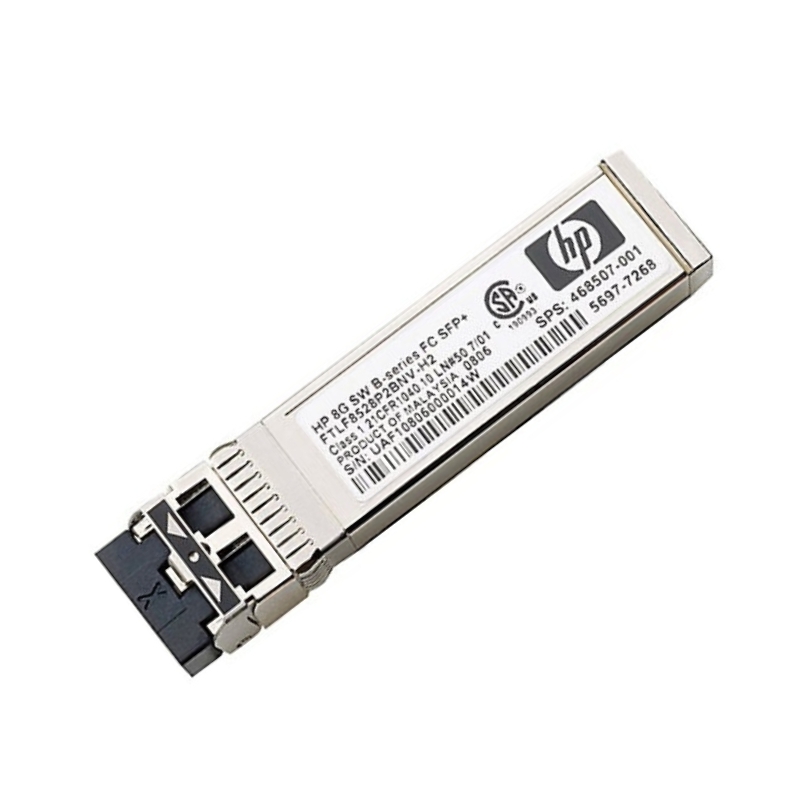
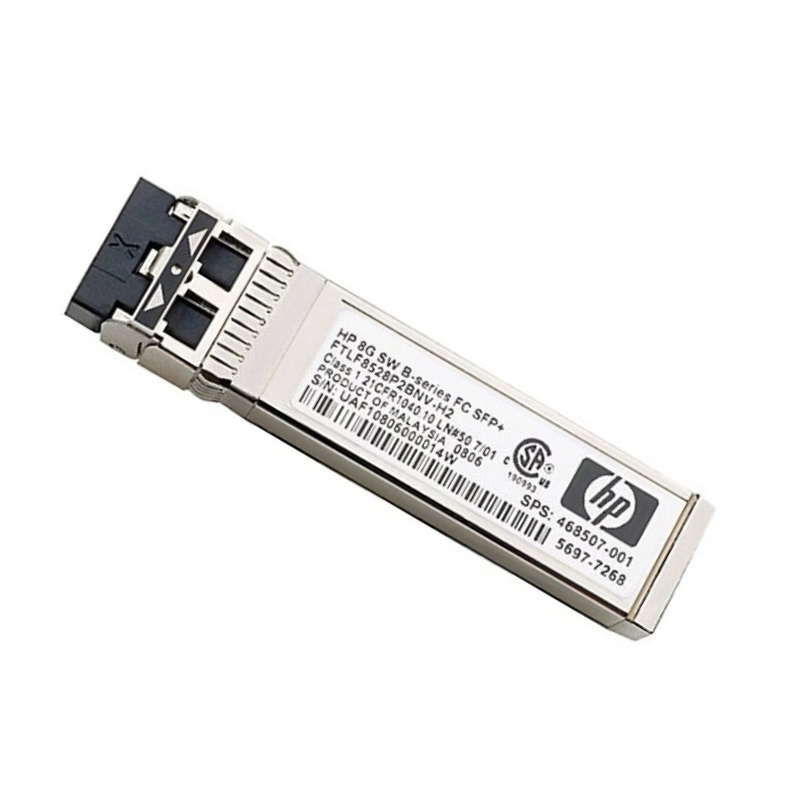
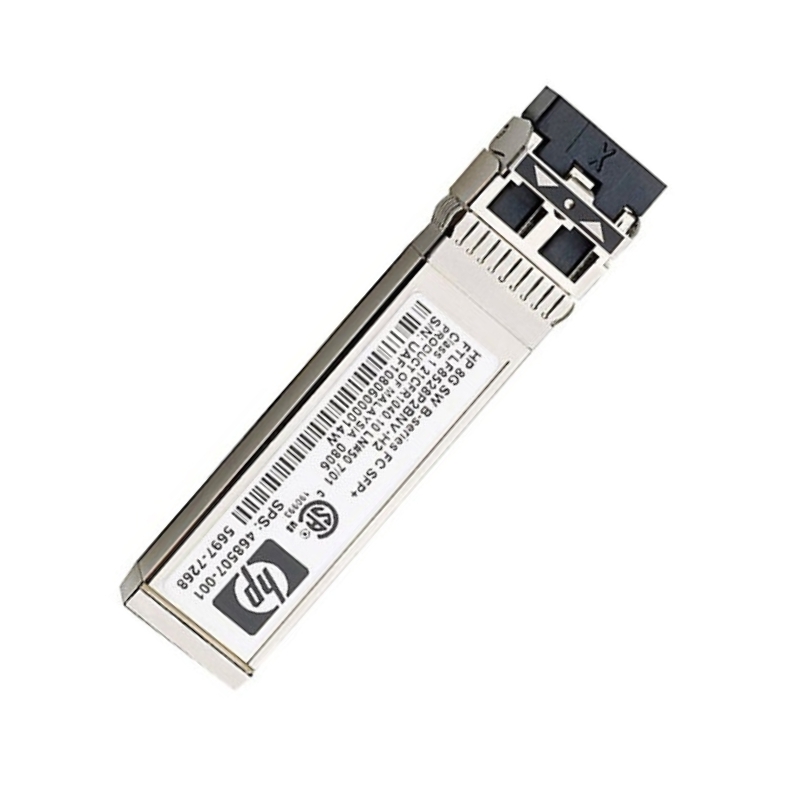
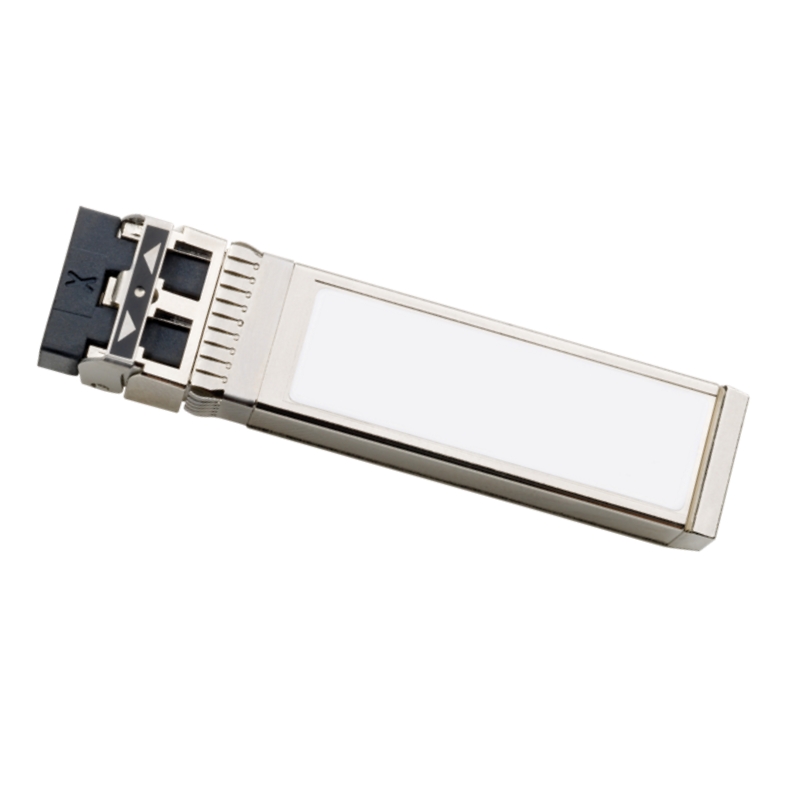
HPE C8R23A 8Gbps Multi-Mode Fiber Short Wave Fibre Channel SFP+ Transceiver with LC Connector. New Sealed with 1 year replacement warranty
The HPE C8R23A MSA 2040 8Gb SW FC SFP Transceiver is a high-performance fibre channel module designed to deliver reliable connectivity for enterprise storage and networking systems. With wired technology and advanced compatibility, it ensures seamless integration into modern infrastructures.
The HPE C8R23A 8Gbps Multi-Mode Fiber Short Wave Fibre Channel SFP+ Transceiver with LC Connector belongs to a critical class of high-performance optical networking components designed for Storage Area Networks (SANs) and enterprise-grade data center environments. It is engineered to deliver reliable 8Gbps data transmission over multi-mode fiber infrastructure, enabling efficient communication between servers, storage arrays, and Fibre Channel switches.
This category of SFP+ transceivers is widely recognized for its stability in mission-critical workloads, where consistent data flow and minimal signal loss are paramount. The short wave design, typically operating in the 850nm wavelength range, allows efficient short-distance transmission within data centers, making it ideal for rack-to-rack and intra-facility communication. The LC duplex connector interface ensures standardized connectivity and compatibility across a wide range of Fibre Channel hardware ecosystems.
The primary role of the HPE C8R23A class transceiver is to enable high-speed Fibre Channel communication at 8Gbps per channel. This level of throughput is essential for enterprise storage environments where large volumes of data must be transferred between storage arrays and compute nodes with minimal latency. The architecture supports synchronous data transfer that is highly optimized for storage traffic rather than general-purpose networking.
Latency reduction is a defining feature of Fibre Channel technology. The 8Gbps multi-mode short wave SFP+ transceiver minimizes delay by using optical signaling over fiber instead of electrical transmission over copper. This reduces interference, signal degradation, and bottlenecks in storage communication paths, ensuring that transactional databases, virtualization workloads, and backup systems operate efficiently.
Within SAN environments, these transceivers act as critical interconnect components linking servers, storage controllers, and switching fabrics. The design supports seamless integration into Fibre Channel networks where predictable performance and deterministic data delivery are required. This makes the category essential for industries such as finance, healthcare, telecommunications, and cloud infrastructure providers.
The short wave optical design typically utilizes an 850nm vertical-cavity surface-emitting laser (VCSEL). This wavelength is optimized for multi-mode fiber transmission, allowing efficient short-range data movement within data centers. The optical signal is modulated to ensure minimal loss and consistent performance over supported distances.
Multi-mode fiber infrastructure is commonly used within structured cabling systems inside data centers due to its cost efficiency and ease of deployment. The HPE C8R23A transceiver category is engineered specifically for multi-mode fiber, ensuring optimal alignment of light signals within the fiber core. This enables stable performance over typical enterprise distances without requiring long-range single-mode fiber solutions.
One of the key engineering challenges in multi-mode fiber transmission is modal dispersion. The transceiver design mitigates this through precise optical calibration, ensuring that multiple light paths within the fiber arrive within acceptable timing tolerances. This ensures signal integrity even in dense cabling environments where multiple fiber runs are deployed.
The LC connector interface is a compact, high-density fiber connector widely adopted in enterprise networking. Its duplex configuration allows simultaneous bidirectional communication, which is essential for Fibre Channel operations. The small form factor enables higher port density on switches and patch panels, making it suitable for modern high-capacity data center designs.
The HPE C8R23A transceiver category is designed to function seamlessly within a broad range of HPE storage and switching platforms. It is commonly deployed in Fibre Channel switches, storage arrays, and blade systems where consistent performance and interoperability are required. Integration within the HPE ecosystem ensures validated compatibility and optimized firmware support.
In a typical storage fabric, these transceivers serve as endpoints for optical communication between Fibre Channel switches and storage devices. They form part of a larger fabric architecture that enables scalable and resilient storage networking. This architecture supports zoning, multipathing, and load balancing across storage paths.
Each transceiver in this category undergoes rigorous validation testing within HPE-certified environments. This ensures compliance with Fibre Channel standards and guarantees reliable operation under enterprise workloads. The validation process includes optical performance testing, thermal stability assessment, and interoperability verification with supported HPE hardware platforms.
The 8Gbps data rate provides a balanced performance profile suitable for enterprise workloads that require high throughput without the complexity of newer higher-speed infrastructure upgrades. Full-duplex operation allows simultaneous transmission and reception of data, maximizing channel efficiency.
In storage-intensive environments, bandwidth utilization is critical for maintaining application performance. The HPE C8R23A class transceiver ensures that storage replication, virtualization traffic, and backup operations are handled efficiently without congestion. This makes it particularly suitable for legacy and hybrid SAN environments that still rely on 8Gbps Fibre Channel infrastructure.
Fibre Channel networks inherently support prioritized traffic flows, ensuring that mission-critical storage operations receive consistent bandwidth allocation. The transceiver contributes to this reliability by maintaining stable optical signal integrity, which is essential for predictable SAN behavior.
The Small Form-factor Pluggable Plus (SFP+) design allows high-density deployment in Fibre Channel switches and storage controllers. Its compact size enables administrators to scale port density without increasing physical rack space requirements. This is especially valuable in large-scale enterprise data centers where space optimization is critical.
Thermal management is a key consideration in transceiver design. The HPE C8R23A category is engineered to operate within strict power consumption limits, minimizing heat output while maintaining optical performance. Efficient power usage contributes to overall data center energy optimization.
The transceiver housing is designed to facilitate passive heat dissipation through optimized material selection and structural design. This ensures stable performance even in high-density switch environments where multiple transceivers operate simultaneously.
In enterprise SAN deployments, these transceivers provide the backbone for storage connectivity. They enable communication between storage arrays and compute clusters, supporting workloads such as database processing, virtualization platforms, and enterprise application hosting.
Virtualization environments require consistent and high-speed storage access. The 8Gbps Fibre Channel transceiver supports hypervisor-based workloads by ensuring that virtual machines have uninterrupted access to shared storage resources.
Backup systems rely heavily on sustained data throughput to complete scheduled operations within defined windows. The stability of multi-mode short wave fiber transmission ensures that large-scale data replication and backup processes are completed efficiently.
The HPE C8R23A category is designed to maintain stable optical output under continuous operational loads. This ensures that SAN environments experience minimal disruption even during peak usage periods.
Enterprise storage architectures often implement redundant paths to ensure high availability. These transceivers play a key role in enabling multipath connectivity, ensuring that alternate routes are available in the event of a link failure.
Fibre Channel fabrics are inherently resilient, and the use of reliable optical transceivers enhances this resilience. In the event of a path disruption, traffic can be rerouted without significant performance degradation.
Many enterprises continue to operate hybrid SAN environments where 8Gbps Fibre Channel infrastructure coexists with newer technologies. The HPE C8R23A category plays a vital role in bridging legacy systems with modern storage architectures.
Compared to higher-speed upgrades, 8Gbps transceivers provide a cost-effective solution for environments where existing infrastructure remains sufficient. This allows organizations to extend the lifecycle of their storage networks without immediate capital investment in new hardware.
The modular nature of SFP+ transceivers enables scalable expansion of SAN environments. Organizations can increase port density and connectivity without redesigning the entire storage architecture.
The HPE C8R23A transceiver category forms a foundational layer in enterprise storage communication systems. Its role in enabling stable, high-speed optical communication makes it indispensable for Fibre Channel SAN deployments.
This category adheres to established Fibre Channel standards, ensuring interoperability across multiple vendors and hardware platforms. This standardization is critical for enterprise environments that rely on heterogeneous infrastructure.
While newer generations of Fibre Channel offer higher speeds, 8Gbps systems remain widely deployed due to their reliability and stability. This ensures continued relevance for transceiver categories such as the HPE C8R23A in global enterprise networks.


 Contact Us
 Information
 Catalog
 Solid State Drives (SSD)
 Network Switches
 Hard Disk Drives
 HBA & Controllers
 PC & Servers
 PC & Server Memory
 CPU & Processors
 Network Routers
 Power Supplies
 Tape Drives & Libraries
 Network Devices
 Computer & Network Cables