(7% discount is applied at checkout)
Cart is empty
Your go-to destination for cutting-edge server products
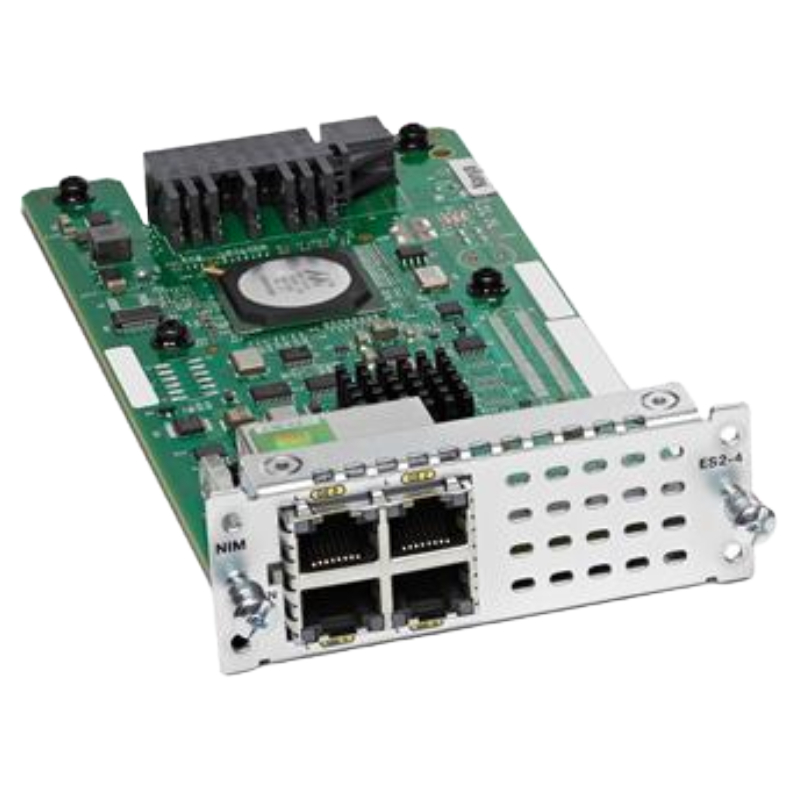


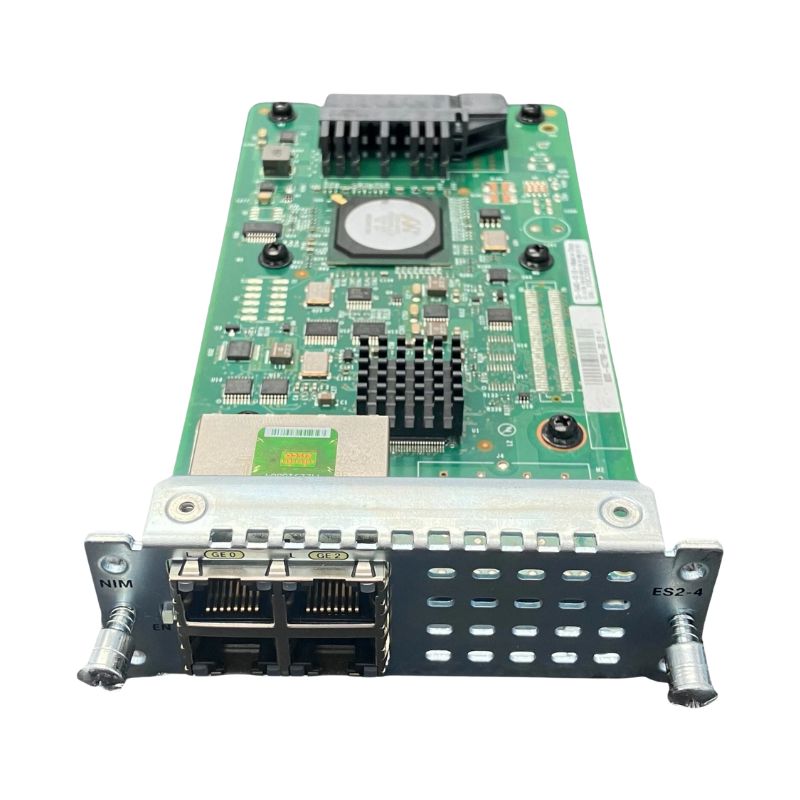
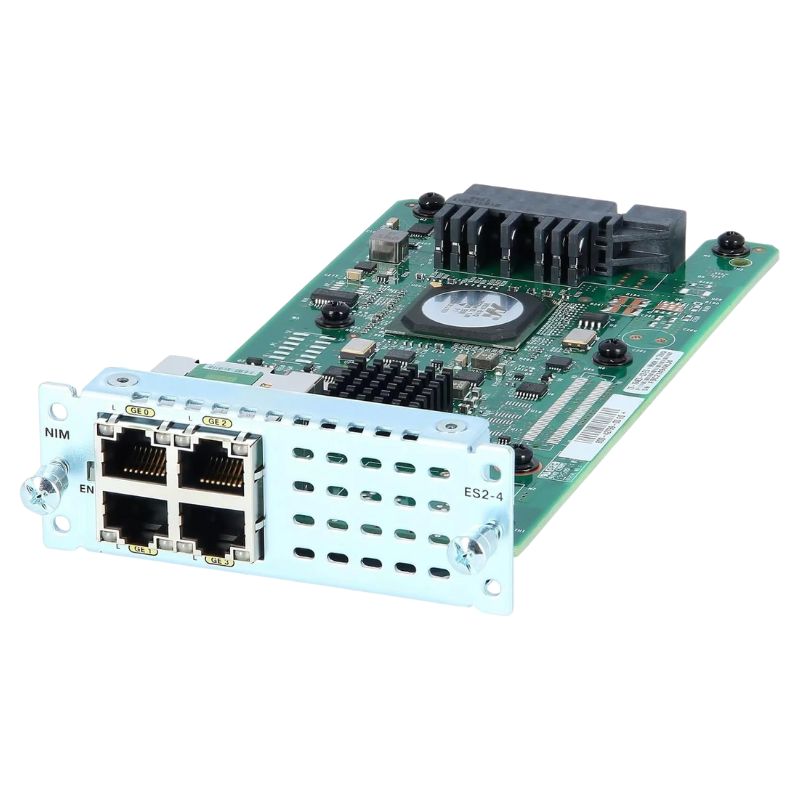
HPE JC719A FlexNetwork 7500 4-Port 10GBE XFP SD TAA-Compliant Module Network Switches. Excellent Refurbished with 1 year replacement warranty
The HPE JC719A FlexNetwork 7500 module is a performance-oriented expansion component designed to enhance optical and Ethernet connectivity within enterprise switching environments. Built for scalability and resilience, it strengthens high-bandwidth communication across modern IT infrastructures.
The HPE JC719A FlexNetwork 7500 4-Port 10GbE XFP SD TAA-Compliant Module Network Switches category represents a specialized class of high-speed switching modules designed for integration into the HPE FlexNetwork 7500 series chassis-based switching platforms. This module delivers four high-capacity 10 Gigabit Ethernet ports utilizing XFP optical transceiver technology, enabling robust uplink and aggregation capabilities for enterprise core networks, data center interconnects, and service provider backbones. Built with TAA-compliant manufacturing standards, it is also suitable for government and regulated environments requiring strict procurement compliance and security assurance.
The FlexNetwork 7500 architecture is designed around a modular switching framework that separates line card functionality, switching fabric operations, and control plane processing into distinct components. The JC719A module integrates into this architecture as a high-speed Ethernet interface card that expands chassis connectivity while maintaining seamless integration with the centralized switching fabric. This modularity allows organizations to scale network capacity incrementally without redesigning their entire infrastructure.
The module connects directly to the high-speed backplane of the HPE FlexNetwork 7500 chassis, enabling rapid internal communication between installed modules. This backplane architecture eliminates the need for external patching between line cards, reducing latency and improving signal integrity. The high-bandwidth internal switching fabric ensures that all ports on the JC719A module can operate simultaneously at full line rate without congestion.
The distributed forwarding architecture employed in the FlexNetwork 7500 system allows packet processing to occur at the module level while relying on the central fabric for inter-module communication. This reduces bottlenecks in the control plane and ensures that forwarding decisions are executed at wire speed. Each module contributes to the overall system throughput, making the platform highly scalable and efficient for large deployments.
The JC719A module utilizes XFP-based optical interfaces to deliver four independent 10 Gigabit Ethernet ports. XFP (10 Gigabit Small Form Factor Pluggable) technology supports high-speed optical transmission over both short and long distances depending on the transceiver type used. This flexibility allows network engineers to tailor connectivity options based on infrastructure requirements and deployment scenarios.
The use of XFP transceivers provides significant flexibility in network design. Operators can choose from a variety of optical modules that support different fiber types and transmission distances. This adaptability makes the JC719A module suitable for campus backbone connections, metropolitan area networks, and data center interconnect applications.
Each 10GbE port on the module is capable of delivering full-duplex throughput, enabling simultaneous sending and receiving of high-volume traffic streams. This ensures that applications such as virtualization, cloud services, and high-performance computing workloads can operate without network bottlenecks. The aggregate bandwidth of the module provides substantial uplink capacity for large-scale switching environments.
The Trade Agreements Act (TAA) compliance of the JC719A module ensures that it meets strict manufacturing and sourcing requirements for deployment in government and public sector environments. This compliance guarantees that the module is produced in approved regions and adheres to regulatory standards for secure and reliable procurement. It is widely used in federal, defense, and critical infrastructure networks where compliance is mandatory.
TAA compliance contributes to enhanced supply chain security by ensuring that components are manufactured under regulated conditions. This reduces risks associated with unauthorized sourcing and enhances trust in the hardware used within sensitive network environments. It also ensures alignment with procurement policies for government agencies and contractors.
The chassis backplane provides a high-speed communication pathway that connects all installed modules. The JC719A module leverages this backplane to transfer traffic efficiently between ports and other line cards. This internal architecture eliminates unnecessary external routing, reducing latency and improving overall system performance.
Scalability is a key advantage of the FlexNetwork 7500 platform. The JC719A module enables incremental expansion of network capacity by allowing additional 10GbE interfaces to be added as needed. This modular approach ensures that organizations can grow their infrastructure in alignment with business demands without replacing existing hardware.
Quality of Service (QoS) mechanisms integrated into the module allow for intelligent traffic prioritization. Network administrators can define policies that ensure critical traffic receives higher priority over less sensitive data streams. This guarantees consistent application performance across diverse network workloads.
In data center environments, the JC719A module serves as a high-speed aggregation interface that connects server clusters, storage systems, and virtualization platforms to core switching infrastructure. Its 10GbE capability ensures that large-scale data transfers occur efficiently without network congestion.
Enterprise campus networks rely on high-capacity backbone connections to interconnect multiple buildings, departments, and network segments. The JC719A module provides the necessary bandwidth to support these connections, ensuring reliable communication across geographically distributed enterprise environments.
Cloud computing environments benefit significantly from the high-speed connectivity provided by the module. Virtual machine migration, container orchestration, and distributed storage replication all require low-latency, high-bandwidth networking, which the JC719A delivers efficiently.
The module is installed directly into the FlexNetwork 7500 chassis, where it is automatically recognized by the system. This plug-in architecture simplifies deployment and reduces configuration complexity, enabling rapid scaling of network infrastructure.
Configuration of the JC719A module is handled through centralized network management systems that provide full control over interface settings, routing policies, and performance monitoring. These tools enable administrators to optimize network behavior based on operational requirements.
The JC719A module is engineered to deliver high performance while maintaining energy efficiency. Its optimized hardware design reduces power consumption per port, making it suitable for large-scale deployments where energy efficiency is a critical concern.
Power usage dynamically adjusts based on traffic load and port activity. During periods of low utilization, the module reduces energy consumption while maintaining readiness for rapid scaling under increased demand.
The modular nature of the JC719A module ensures that organizations can protect their infrastructure investments by expanding capacity without replacing existing systems. This supports long-term network evolution strategies.
The module integrates seamlessly into modern hybrid network architectures that combine traditional switching infrastructure with cloud-based and virtualized environments. This ensures continued relevance in evolving IT landscapes.


 Contact Us
 Information
 Catalog
 Solid State Drives (SSD)
 Network Switches
 Hard Disk Drives
 HBA & Controllers
 PC & Servers
 PC & Server Memory
 CPU & Processors
 Network Routers
 Power Supplies
 Tape Drives & Libraries
 Network Devices
 Computer & Network Cables