(7% discount is applied at checkout)
Cart is empty
Your go-to destination for cutting-edge server products
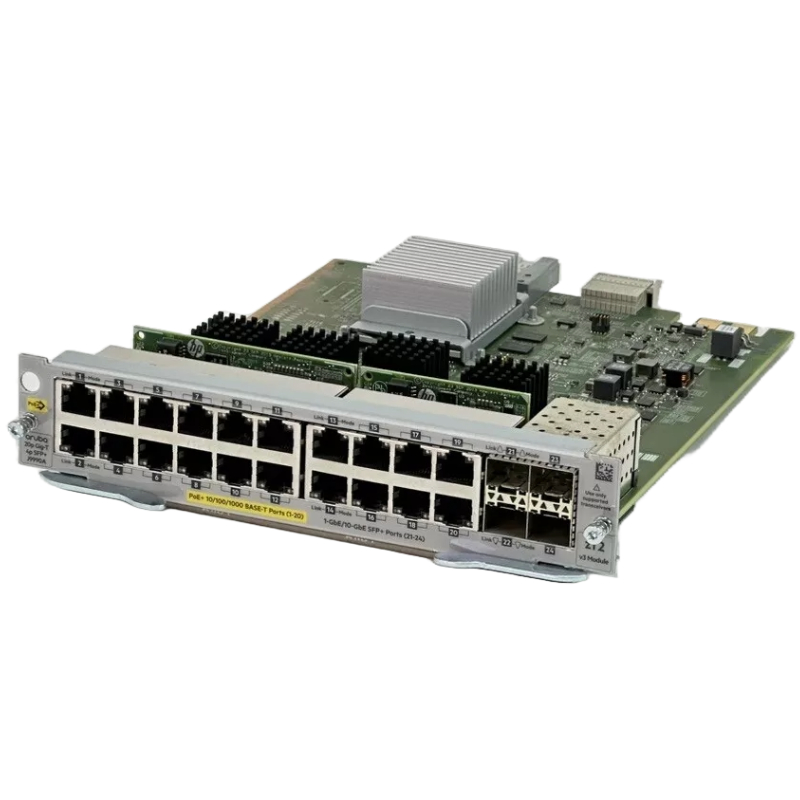


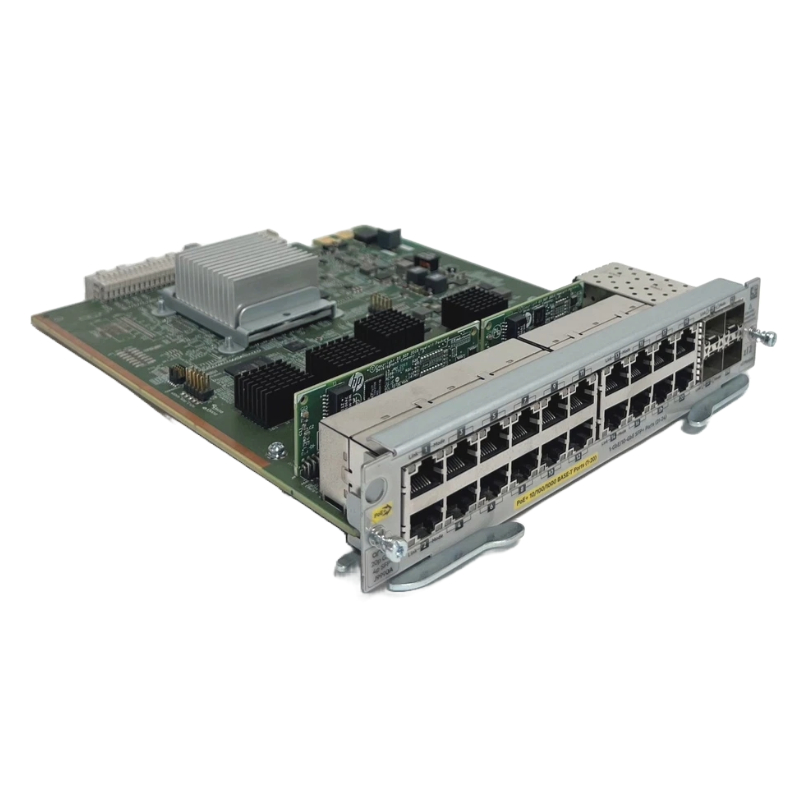
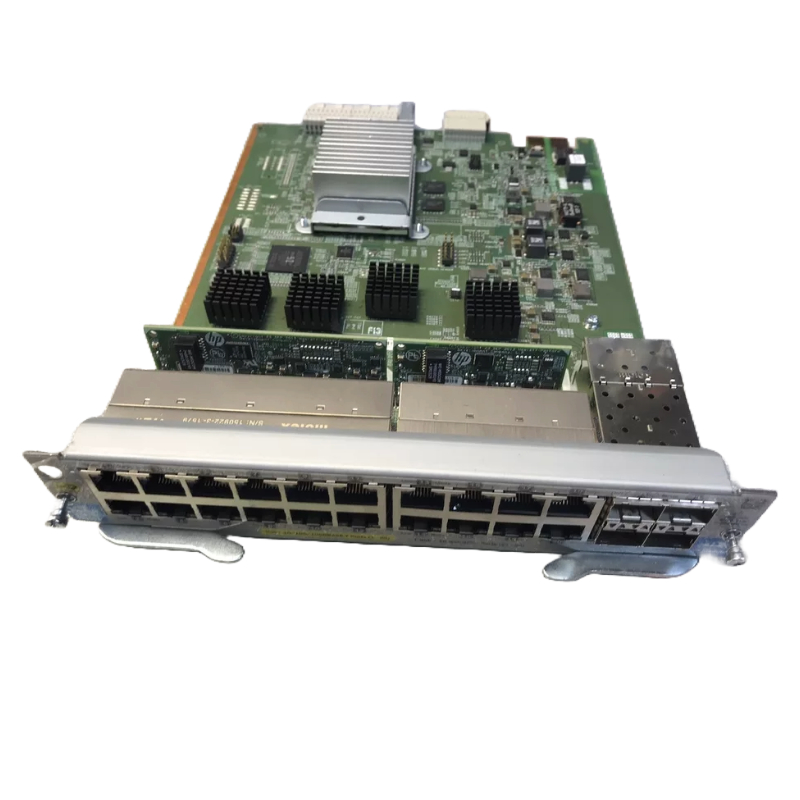
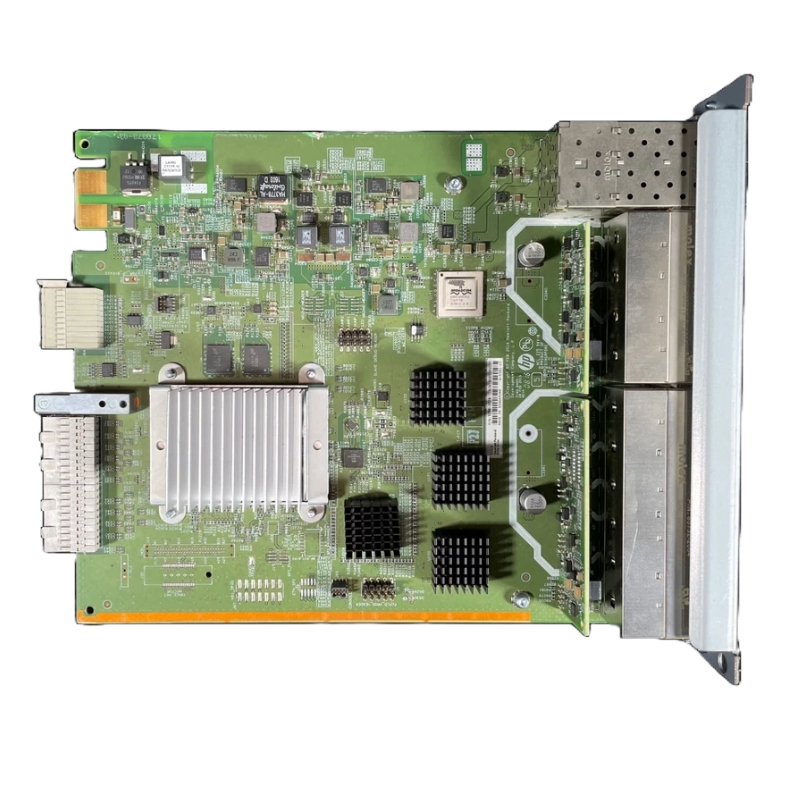
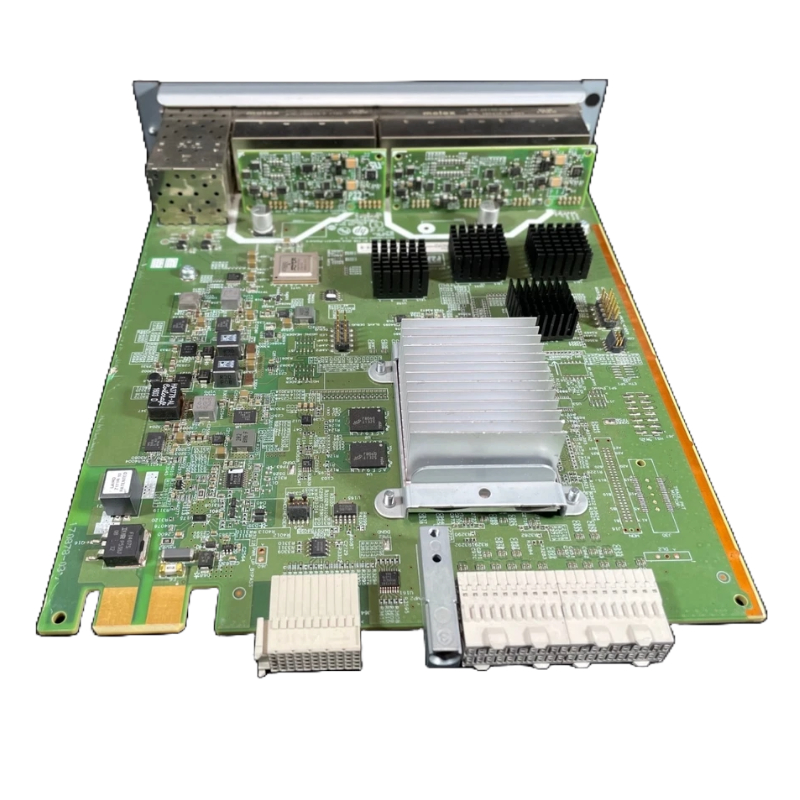
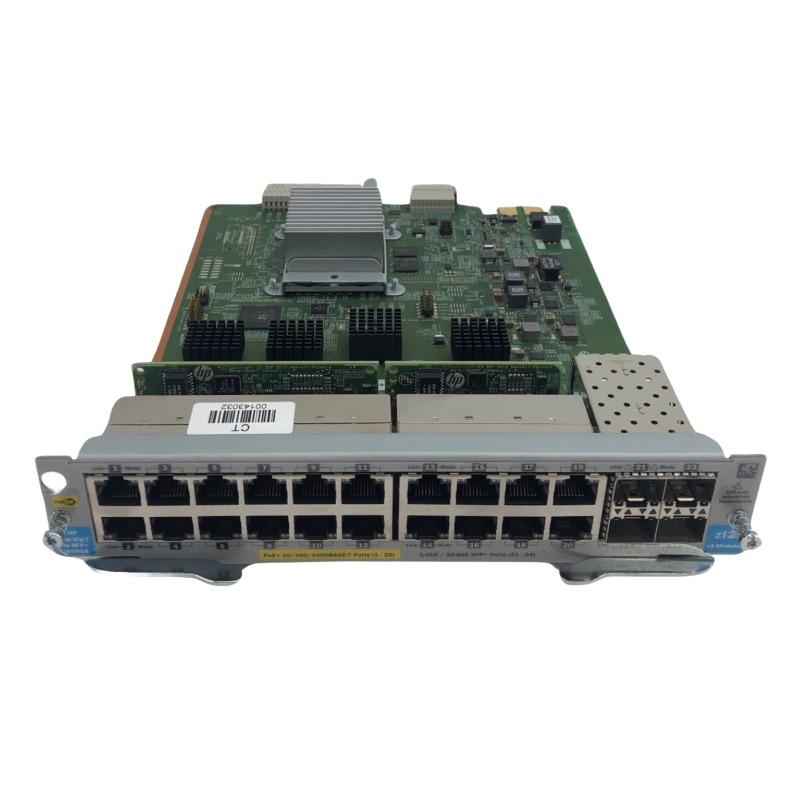
HPE J9991-61001 Expansion Module with 20-ports 10/100/1000base-t Poe+ and 4-ports 1/2.5/5/10Gbase-t Poe+. Factory-Sealed New in Original Box (FSB) with 3 Years Warranty
The HPE J9991-61001 is a high-performance network expansion module designed to enhance switching capacity with advanced Power over Ethernet (PoE+) capabilities and multi-gigabit Ethernet support. This plug-in networking solution is engineered for scalable enterprise environments requiring high-speed wired connectivity and flexible port configurations.
The HPE J9991-61001 Expansion Module with 20-ports 10/100/1000BASE-T PoE+ and 4-ports 1/2.5/5/10GBASE-T PoE+ represents a specialized category of high-performance network expansion hardware designed for modern enterprise, campus, and advanced small to medium business environments. This category focuses on delivering flexible copper-based connectivity, robust Power over Ethernet Plus capabilities, and multi-gigabit uplink options that support the growing demands of bandwidth-intensive applications, high-density device deployments, and evolving digital transformation initiatives. As organizations continue to adopt IP-based technologies such as VoIP phones, wireless access points, security cameras, and IoT sensors, the need for reliable, scalable, and power-efficient expansion modules like the HPE J9991-61001 becomes increasingly critical.
Within this category, the HPE J9991-61001 module is typically associated with compatible HPE switch platforms, enabling seamless integration into existing network architectures. It extends the switching capacity by adding twenty 10/100/1000BASE-T PoE+ ports for standard gigabit Ethernet connectivity and four 1/2.5/5/10GBASE-T PoE+ ports for multi-gigabit connections. This combination allows network administrators to support both legacy devices and next-generation equipment without compromising performance or manageability. The category emphasizes energy-efficient operation, intelligent power management, and advanced traffic handling features that align with modern networking best practices.
A defining characteristic of this category is the presence of twenty 10/100/1000BASE-T PoE+ ports, which provide flexible copper Ethernet connectivity for a wide range of devices. These ports support auto-negotiation across 10 Mbps, 100 Mbps, and 1000 Mbps speeds, allowing the network to adapt to the capabilities of connected endpoints. This versatility is essential in environments where older devices coexist with newer gigabit-capable hardware, ensuring that all equipment can be connected and powered without requiring separate switches or complex cabling strategies. The PoE+ functionality on these ports enables the delivery of up to 30 watts of power per port, depending on the overall power budget of the switch and module, making it suitable for powering advanced wireless access points, IP cameras with pan-tilt-zoom features, and other power-hungry devices.
The 10/100/1000BASE-T PoE+ ports in this category are designed to support IEEE 802.3af and IEEE 802.3at standards, ensuring broad compatibility with industry-standard PoE devices. This standards-based approach simplifies deployment and reduces the risk of interoperability issues. Network administrators can rely on automatic power negotiation, which allows the module to detect the power requirements of connected devices and allocate power accordingly. This intelligent power management helps prevent overload conditions and optimizes the use of available power resources. In addition, the gigabit capability of these ports ensures that connected devices can transmit and receive data at high speeds, supporting applications such as HD video streaming, real-time collaboration tools, and cloud-based services.
From a physical connectivity perspective, the 20-port 10/100/1000BASE-T PoE+ configuration supports standard RJ-45 connectors, making it easy to integrate with existing copper cabling infrastructures. Organizations that have invested in Cat5e, Cat6, or Cat6a cabling can leverage these ports without requiring extensive upgrades. This category is particularly attractive for environments that need to expand device density at the edge of the network, such as office floors, classrooms, retail spaces, and healthcare facilities. The ability to power and connect a large number of endpoints from a single expansion module simplifies cable management, reduces the need for separate power supplies, and contributes to a cleaner, more organized network deployment.
Another core element of the HPE J9991-61001 category is the inclusion of four 1/2.5/5/10GBASE-T PoE+ ports, which provide multi-gigabit connectivity for bandwidth-intensive devices and uplink scenarios. These ports support a range of speeds from 1 Gbps up to 10 Gbps over copper cabling, enabling organizations to take advantage of higher throughput without necessarily transitioning to fiber. Multi-gigabit Ethernet is particularly valuable in environments where wireless access points support Wi-Fi 6 or Wi-Fi 6E, as these devices often require more than 1 Gbps of backhaul capacity to fully utilize their capabilities. By offering 2.5 Gbps and 5 Gbps intermediate speeds, the module allows for incremental upgrades that match the performance needs of connected devices and the quality of existing cabling.
The 10GBASE-T capability on these ports provides a powerful option for connecting to core switches, aggregation layers, or high-performance servers. This enables the expansion module to function not only as an access layer device but also as a flexible component in more complex network topologies. Organizations can use these multi-gigabit ports to create high-speed uplinks that reduce bottlenecks and improve overall network responsiveness. The PoE+ support on these ports further extends the module’s utility, allowing even high-performance devices to be powered directly from the switch. This can be particularly useful for advanced wireless controllers, high-end IP cameras, or specialized IoT gateways that require both high bandwidth and reliable power delivery.
Multi-gigabit copper connectivity in this category is designed to work with modern cabling standards, often leveraging Cat6 or Cat6a cables to achieve stable performance at higher speeds. The ability to use existing copper infrastructure for 2.5 Gbps, 5 Gbps, and even 10 Gbps connections can significantly reduce upgrade costs compared to deploying new fiber runs. This makes the HPE J9991-61001 category appealing for organizations that want to enhance network performance while maintaining cost efficiency. The flexibility of speed negotiation also allows the network to adapt dynamically, ensuring that each link operates at the highest stable speed supported by both the device and the cabling.
Power over Ethernet Plus is a central theme in this category, as both the 20 standard gigabit ports and the 4 multi-gigabit ports support PoE+ capabilities. PoE+ allows the module to deliver up to 30 watts of power per port, depending on the overall power budget and configuration. This is essential for powering a wide variety of networked devices, including advanced wireless access points, IP surveillance cameras, VoIP phones, building automation controllers, and IoT sensors. By consolidating data and power delivery into a single Ethernet cable, PoE+ simplifies installation, reduces the need for separate electrical outlets, and enhances deployment flexibility in locations where power access may be limited or costly to install.
Intelligent power management features in this category help ensure that the available power is used efficiently and safely. The module typically supports dynamic power allocation, which automatically adjusts power delivery based on the requirements of connected devices. This prevents over-provisioning and helps avoid situations where the total power demand exceeds the available budget. Administrators can often configure power priorities, ensuring that critical devices such as wireless access points or security cameras receive power even in constrained conditions. Some implementations may also support scheduled power policies, allowing devices to be powered down during off-hours to save energy and extend equipment lifespan.
The PoE+ capabilities in this category are aligned with industry standards, which ensures compatibility with a broad ecosystem of devices. This standards-based approach reduces complexity during deployment and allows organizations to mix and match equipment from different vendors without sacrificing reliability. The ability to support both data and power over the same copper infrastructure also contributes to cleaner installations, with fewer cables and power adapters cluttering racks, ceilings, and workspaces. For many organizations, the PoE+ features of the HPE J9991-61001 category are a key enabler of digital transformation initiatives, supporting the rollout of smart building technologies, pervasive wireless coverage, and comprehensive IP-based security systems.
The HPE J9991-61001 Expansion Module category is closely tied to compatible HPE switch platforms, where it serves as an expansion option that increases port density and enhances connectivity capabilities. These modules are typically installed into designated expansion slots on HPE switches, allowing the base switch to be customized according to the needs of the deployment. This modular approach provides significant flexibility, enabling organizations to tailor their network hardware to match specific requirements such as the number of PoE+ ports, the presence of multi-gigabit uplinks, or the balance between copper and fiber connectivity. As a result, the category is well-suited for environments that anticipate growth or changes in device types over time.
Integration with HPE switching platforms also means that the expansion module benefits from the same management, security, and performance features as the base switch. Administrators can configure VLANs, quality of service policies, access control lists, and other advanced settings across both the base switch and the expansion module using a unified interface. This simplifies network operations and ensures consistent behavior across all ports. The module participates in the overall switching fabric, contributing to features such as link aggregation, redundancy, and load balancing. In many cases, the expansion module can be managed via HPE’s centralized management tools, allowing for streamlined monitoring, configuration, and troubleshooting.
From an architectural perspective, the HPE J9991-61001 category supports a variety of deployment models. In a traditional three-tier architecture, the module can be used at the access layer to connect end devices while providing high-speed uplinks to aggregation or core switches. In more modern designs such as leaf-spine architectures, the module can serve as a leaf device, connecting servers, storage, and edge devices while linking to spine switches via multi-gigabit ports. The flexibility of copper-based connectivity combined with PoE+ power delivery makes this category suitable for both wired and wireless-centric environments, supporting hybrid deployments where different types of devices coexist.
In enterprise networks, the HPE J9991-61001 category is often deployed to support high-density office environments where employees rely on wired and wireless connectivity for daily operations. The 20 gigabit PoE+ ports can power VoIP phones at each desk, wireless access points throughout the floor, and IP cameras in common areas, while the multi-gigabit ports provide uplinks to core switches or connect to high-performance servers. This configuration ensures that users experience reliable connectivity, low latency, and sufficient bandwidth for applications such as video conferencing, cloud collaboration, and virtual desktop infrastructure. The PoE+ capabilities also simplify moves, adds, and changes, as devices can be relocated without requiring new power outlets.
In campus networks, the category is well-suited for connecting buildings, classrooms, laboratories, and administrative offices. The expansion module can be installed in wiring closets to provide both data and power to a wide range of devices, including interactive whiteboards, IP cameras, wireless access points, and IoT sensors used for environmental monitoring or access control. The multi-gigabit ports can be used to connect to distribution switches or to link high-capacity wireless controllers that manage large numbers of access points. This ensures that the campus network can support modern teaching methods, digital signage, and secure surveillance while maintaining centralized control and visibility.
Retail environments benefit from the HPE J9991-61001 category by using the expansion module to power and connect point-of-sale terminals, digital signage, IP cameras, and wireless access points that provide guest Wi-Fi. The PoE+ ports simplify installation in locations where power outlets may be limited, such as ceilings or walls, and the gigabit connectivity ensures that transaction data, video streams, and customer analytics can be transmitted efficiently. The multi-gigabit ports can be used to connect to back-office servers or to create high-speed links between different areas of a store or shopping center, supporting centralized management and data aggregation.
In hospitality settings such as hotels and resorts, the category supports guest room IP phones, in-room entertainment systems, corridor cameras, and pervasive wireless coverage. The ability to deliver both power and data over a single cable reduces the complexity of installations in guest rooms and public areas, while the multi-gigabit ports can be used to connect to core network infrastructure that handles reservation systems, property management software, and high-bandwidth guest internet access. Healthcare environments similarly benefit from the category by using the expansion module to connect medical devices, nurse call systems, IP cameras, and wireless access points that support secure access to electronic health records. The reliability and performance of the module contribute to patient safety, staff efficiency, and regulatory compliance.
The HPE J9991-61001 category plays a significant role in IoT and smart building deployments, where large numbers of sensors, controllers, and actuators need to be connected and powered. The 20 PoE+ gigabit ports can support devices such as environmental sensors, access control readers, lighting controllers, and HVAC interfaces, while the multi-gigabit ports provide high-speed connectivity to building management systems or cloud gateways. By consolidating these connections into a single expansion module, organizations can create a centralized point of control for building automation, simplifying management and enhancing visibility into system performance.
Smart building deployments often require reliable power delivery and robust network connectivity to ensure that critical systems remain operational. The PoE+ capabilities of this category help meet these requirements by providing consistent power to devices even in challenging locations. Intelligent power management features allow administrators to prioritize essential systems, ensuring that they remain powered during periods of high demand or limited power availability. The gigabit and multi-gigabit connectivity options support real-time data collection and analysis, enabling advanced features such as predictive maintenance, energy optimization, and occupancy-based control.
Performance is a key consideration in the HPE J9991-61001 category, as the expansion module is designed to handle high volumes of traffic from numerous connected devices. The combination of 20 gigabit PoE+ ports and 4 multi-gigabit PoE+ ports ensures that the module can support both standard and high-bandwidth applications. Internal switching capacity and forwarding performance are typically engineered to prevent bottlenecks, allowing traffic to flow smoothly between ports and uplinks. This is essential for maintaining low latency and high throughput in environments where real-time applications such as voice, video, and interactive collaboration are common.
Reliability is another important aspect of this category. The expansion module is designed to operate in demanding environments, with features such as robust hardware construction, efficient cooling, and support for redundant power supplies when integrated into compatible switch platforms. These characteristics help ensure continuous operation and minimize downtime. In many cases, the module supports advanced features such as link aggregation, spanning tree protocols, and rapid failover mechanisms that enhance network resilience. This allows organizations to build networks that can withstand hardware failures, cable issues, or other disruptions without significantly impacting users.
Scalability is inherent in the modular design of the HPE J9991-61001 category. Organizations can start with a base switch configuration and add expansion modules as their needs grow, increasing port density and connectivity options without replacing existing hardware. This approach supports gradual growth and allows network infrastructure to evolve alongside business requirements. The presence of multi-gigabit ports also provides a path for performance upgrades, enabling organizations to increase uplink speeds or connect new high-bandwidth devices as they are introduced. This scalability makes the category suitable for long-term deployments where future-proofing is a priority.
Security is a critical consideration in modern networks, and the HPE J9991-61001 category benefits from the security features provided by the underlying HPE switch platforms. Administrators can implement access control lists, port security, and authentication mechanisms to control which devices can connect and how they can communicate. Features such as 802.1X network access control allow organizations to enforce policies that require devices to authenticate before gaining access to the network, helping prevent unauthorized connections and reducing the risk of security breaches. The expansion module participates fully in these security frameworks, ensuring that all ports are subject to the same protections.
Management features in this category are designed to simplify configuration, monitoring, and troubleshooting. The expansion module can be managed via command-line interfaces, web-based graphical interfaces, or centralized management platforms, depending on the capabilities of the base switch. Administrators can view port status, power usage, traffic statistics, and error conditions, allowing them to quickly identify and resolve issues. Support for features such as SNMP, syslog, and Flow enables integration with network monitoring and analytics tools, providing deeper insights into performance and behavior. This comprehensive management capability helps ensure that the network remains stable, secure, and efficient.


 Contact Us
 Information
 Catalog
 Solid State Drives (SSD)
 Network Switches
 Hard Disk Drives
 HBA & Controllers
 PC & Servers
 PC & Server Memory
 CPU & Processors
 Network Routers
 Power Supplies
 Tape Drives & Libraries
 Network Devices
 Computer & Network Cables