
(7% discount is applied at checkout)
Cart is empty
Your go-to destination for cutting-edge server products
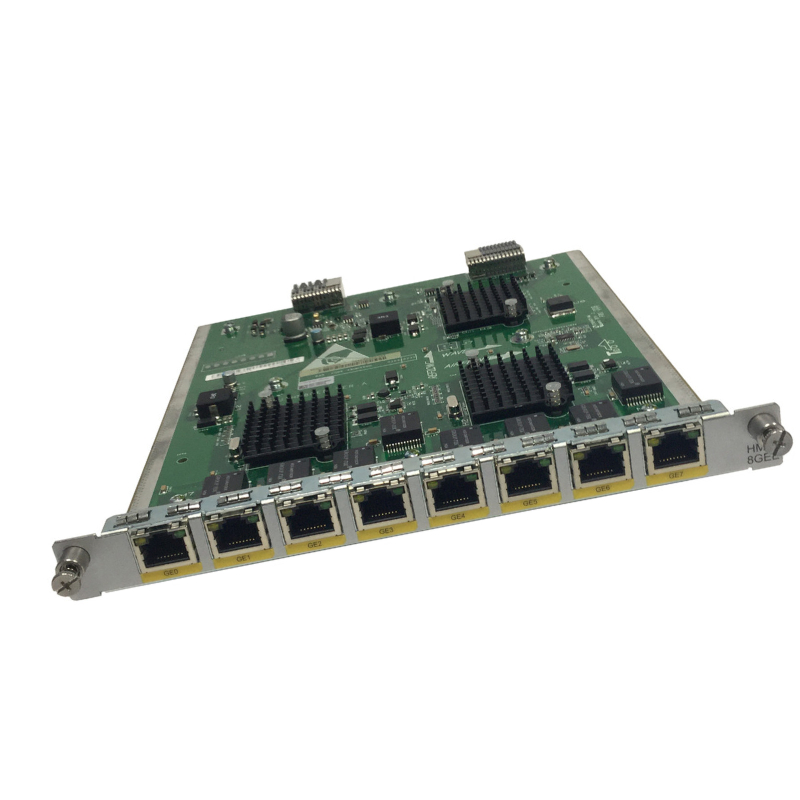
HPE JG422A Msr 8 Port Hmim Expansion Module. Factory-Sealed New in Original Box (FSB) with 3 Years Warranty
The HPE JG422A MSR Expansion Module enhances router performance with eight Gigabit Ethernet ports, hot-swappable capability, and advanced protocol support. Designed for enterprise-grade networking, it ensures flexible connectivity and reliable data forwarding.
The HPE JG422A MSR 8 Port HMIM Expansion Module is designed to extend the capability of HPE MSR (Multi-Service Router) platforms by enabling additional interface density and enhancing service integration within enterprise-grade networking environments. This expansion module plays a critical role in scaling WAN and LAN connectivity for branch offices, data aggregation points, and distributed enterprise infrastructures that demand reliable, high-performance routing capabilities. Built for modular flexibility, it integrates seamlessly into compatible HPE MSR chassis, allowing organizations to evolve their network architecture without replacing entire routing systems.
In modern IT environments where digital transformation depends heavily on consistent uptime and scalable throughput, modular expansion components like the HPE JG422A provide strategic value. They allow network engineers to tailor hardware configurations according to workload requirements, bandwidth consumption patterns, and security policy enforcement needs. The 8-port HMIM design enables administrators to deploy additional interfaces in a compact and efficient manner, reducing the need for multiple standalone routers and optimizing rack space utilization.
The engineering approach behind the HPE JG422A MSR expansion module focuses on modular scalability. Instead of relying on fixed-port router designs, this module enables dynamic expansion through hardware add-ons that fit into the MSR platform architecture. This allows enterprises to adapt their network infrastructure based on evolving traffic demands without undergoing full system replacement cycles.
The modular design also ensures backward and forward compatibility within supported MSR series routers, making it a long-term investment for organizations that prioritize lifecycle management and cost efficiency. This flexibility is particularly valuable in environments where network traffic patterns change frequently due to cloud migration, remote workforce expansion, or application modernization initiatives.
The 8-port configuration of the HPE JG422A module is engineered to support multiple concurrent network connections while maintaining stable throughput. Each port is designed to integrate into enterprise routing frameworks where segmentation, redundancy, and load distribution are essential. The architecture supports efficient traffic balancing across multiple links, helping prevent bottlenecks in high-demand scenarios.
High-density connectivity also reduces the need for additional standalone interface devices, simplifying network topology and minimizing potential points of failure. This streamlined approach enhances manageability and contributes to improved operational resilience in mission-critical environments.
Branch office deployments often require robust connectivity solutions that can handle voice, data, and application traffic simultaneously. The HPE JG422A expansion module enables MSR routers to support additional WAN or LAN interfaces, improving the ability of branch offices to maintain consistent communication with headquarters and cloud services.
By extending interface capacity, organizations can implement multiple redundant links to ensure continuous connectivity even in the event of primary link failure. This capability is essential for distributed enterprises that rely on real-time data synchronization and uninterrupted access to centralized resources.
Modern enterprise networks are increasingly converged, meaning they carry multiple types of traffic such as voice over IP, video conferencing streams, cloud application data, and traditional business communications. The HPE JG422A MSR expansion module supports this convergence by providing additional interface flexibility, allowing administrators to segregate and prioritize traffic effectively.
Converged environments benefit from modular expansion because it enables better Quality of Service enforcement and traffic shaping strategies. By increasing interface availability, administrators can design more efficient routing policies that align with business priorities and service-level agreements.
Efficient bandwidth utilization is a core requirement in enterprise networking. The HPE JG422A module contributes to performance optimization by enabling distributed traffic flows across multiple interfaces. This reduces congestion and ensures that critical applications receive the necessary bandwidth allocation.
In environments where large data transfers occur regularly, such as backup replication or cloud synchronization, having additional ports available improves the ability to isolate heavy traffic streams from latency-sensitive applications. This separation enhances overall network responsiveness and user experience.
Latency reduction is a key objective in network design, especially for organizations that rely on real-time systems. The HPE JG422A expansion module supports low-latency communication by providing direct interface expansion within the routing platform, minimizing the need for external switching layers.
By keeping traffic paths more direct and reducing intermediate processing stages, the module helps maintain faster packet delivery times. This is particularly beneficial for financial systems, cloud-based collaboration platforms, and distributed database environments.
In large enterprises with multiple branch locations, the HPE JG422A module provides the scalability required to support complex WAN topologies. Each branch can be equipped with enhanced routing capabilities, allowing for multiple uplinks to different service providers or redundant corporate networks.
This multi-link capability ensures that branch offices maintain connectivity even during ISP outages or network disruptions. It also supports traffic optimization by routing different types of data through the most efficient available path.
Hybrid cloud environments require reliable connectivity between on-premises systems and cloud platforms. The HPE JG422A module supports this requirement by increasing the number of interfaces available for cloud connectivity, VPN tunnels, and secure data exchange channels.
Organizations leveraging multi-cloud strategies benefit from additional interface capacity, as it allows simultaneous connections to multiple cloud providers. This enhances redundancy and reduces dependency on a single cloud infrastructure.
Security segmentation is a critical aspect of enterprise network design. The expansion module enables the creation of multiple isolated network segments, improving control over data flow and access permissions. By separating traffic into dedicated interfaces, administrators can implement stronger security policies and reduce the risk of lateral movement within the network.
This approach is particularly useful in regulated industries where compliance requirements demand strict separation of sensitive data from general traffic flows.
The HPE JG422A MSR 8 Port HMIM Expansion Module is designed specifically for compatibility with HPE MSR series routers. This ensures seamless integration without requiring additional hardware modifications or complex configuration changes. The plug-in architecture allows administrators to expand system capabilities with minimal downtime.
Once installed, the module becomes an integral part of the router’s interface system, enabling full utilization through standard network configuration tools and management protocols supported by the MSR ecosystem.
Integration with HPE MSR platforms allows centralized management of routing policies, interface configurations, and traffic monitoring. The expansion module is fully manageable through these centralized systems, ensuring consistent policy enforcement across all network interfaces.
This unified approach reduces administrative complexity and improves operational efficiency by allowing IT teams to manage expanded infrastructure from a single control point.
The HPE JG422A module is built with enterprise-grade components designed to withstand continuous operation in demanding environments. Its robust construction ensures stable performance even under sustained network loads, making it suitable for critical infrastructure deployments.
Durability is a key requirement for expansion modules used in 24/7 network operations, where downtime can result in significant business disruption. The design prioritizes long-term reliability and consistent signal integrity across all ports.
Redundancy is a fundamental principle in enterprise networking, and the HPE JG422A supports this through multi-interface availability. By enabling multiple active connections, the module reduces reliance on single points of failure within the network architecture.
This fault-tolerant design ensures that traffic can be rerouted dynamically in the event of link degradation or interface issues, maintaining operational continuity across critical systems.
As organizations expand, their network requirements evolve. The HPE JG422A module supports this growth by providing additional interface capacity without requiring replacement of existing routing hardware. This adaptability reduces capital expenditure and allows gradual infrastructure scaling.
Network architects can plan incremental expansions by adding modules as needed, ensuring that infrastructure investment aligns with actual business growth patterns.
Modern networks must accommodate emerging technologies such as cloud-native applications, IoT ecosystems, and high-bandwidth collaboration tools. The expansion capabilities provided by the HPE JG422A ensure that MSR routers remain relevant in evolving technological landscapes.
By increasing interface availability, the module helps organizations prepare for future bandwidth demands and connectivity requirements without major architectural redesigns.
By consolidating multiple network connections into a single modular router system, the HPE JG422A reduces overall infrastructure complexity. This simplification leads to easier maintenance, reduced cabling requirements, and improved system documentation accuracy.
Fewer standalone devices also mean fewer hardware maintenance points, which contributes to lower operational overhead and improved IT resource allocation.
Investing in modular expansion is often more cost-effective than deploying entirely new routing systems. The HPE JG422A allows organizations to extend the life of existing MSR infrastructure while still meeting increasing network demands.
This approach enables better budget management and reduces the frequency of large-scale hardware refresh cycles, improving overall return on investment in networking infrastructure.
The module is suitable for both centralized data center environments and distributed edge locations. In data centers, it supports high-density routing configurations, while at the edge it enables robust connectivity for remote sites.
This dual applicability makes it a versatile component for organizations implementing hybrid network architectures that span centralized and decentralized infrastructures.
Service providers can leverage the HPE JG422A module to expand service delivery capabilities across customer networks. The additional ports allow for flexible service segmentation and improved traffic handling across multiple clients or service tiers.
This enhances the ability to deliver scalable and customizable networking solutions to enterprise customers with varying bandwidth and connectivity requirements.


 Contact Us
 Information
 Catalog
 Solid State Drives (SSD)
 Network Switches
 Hard Disk Drives
 HBA & Controllers
 PC & Servers
 PC & Server Memory
 CPU & Processors
 Network Routers
 Power Supplies
 Tape Drives & Libraries
 Network Devices
 Computer & Network Cables