(7% discount is applied at checkout)
Cart is empty
Your go-to destination for cutting-edge server products
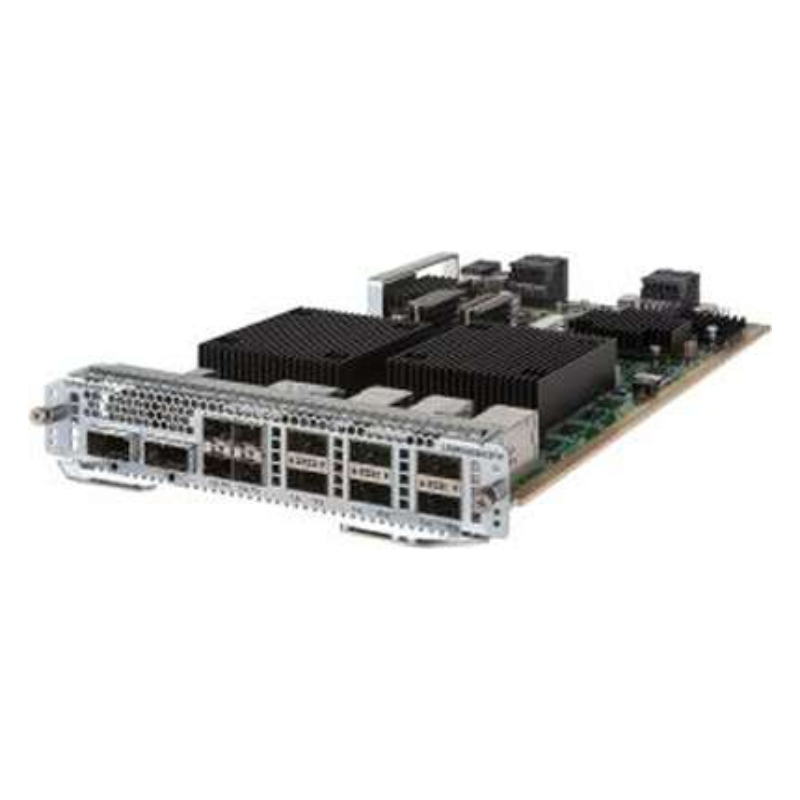


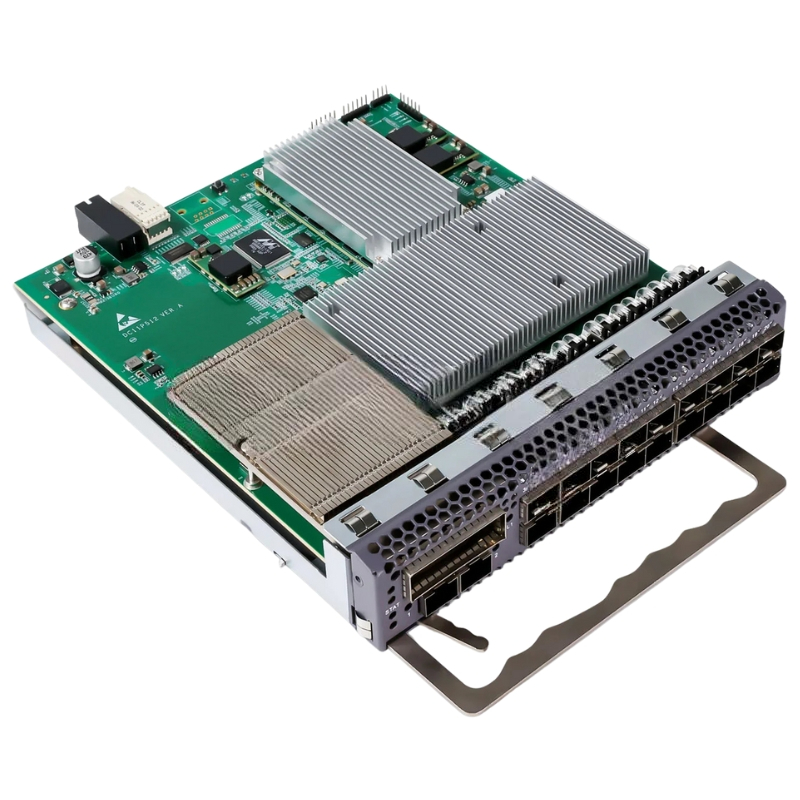
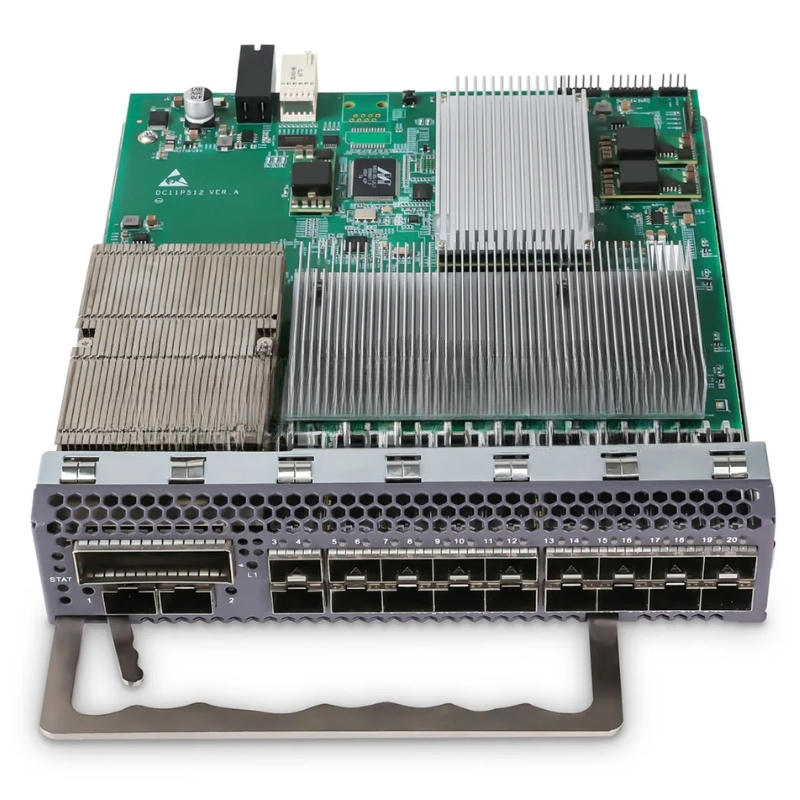
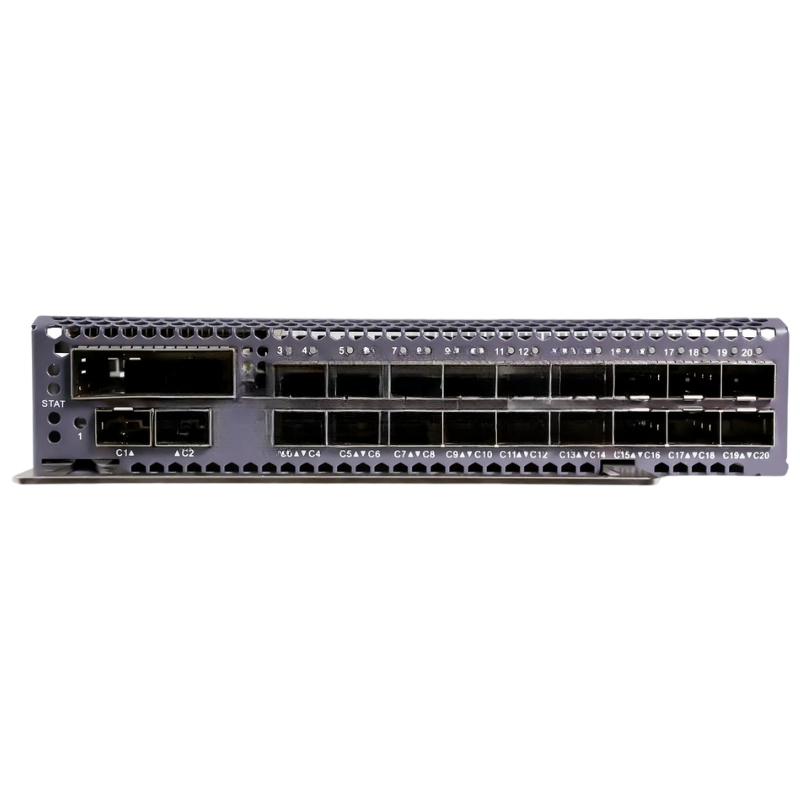
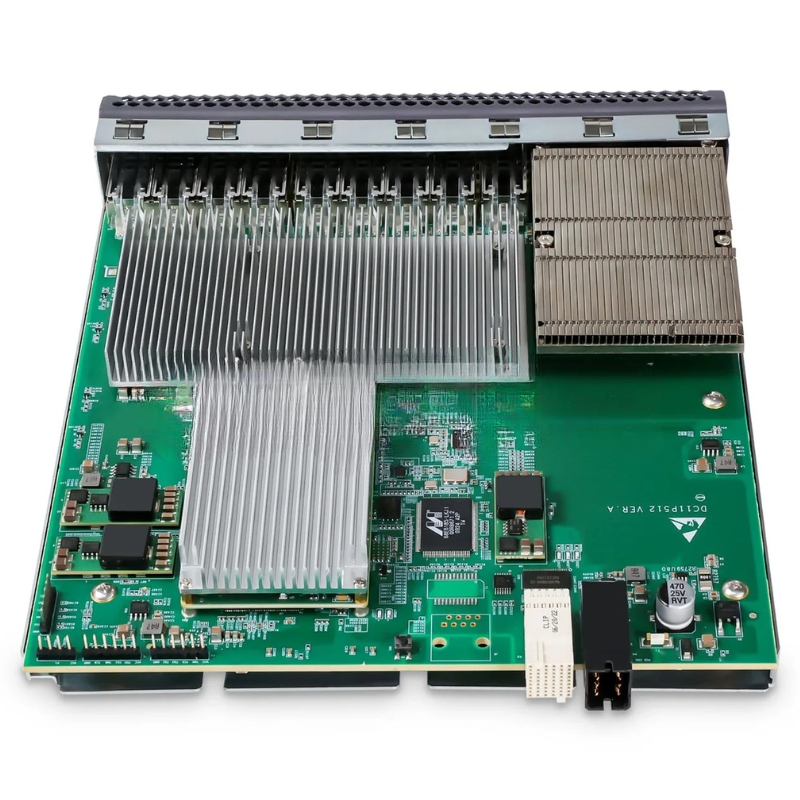
HPE JH002A Flexfabric 7900 2-Port 100Gbe CXP/6-Port 40GBE QSFP+/4-Port 10GBE Expansion Module. New Sealed with 1 year replacement warranty
The HPE JH002A FlexFabric 7900 Expansion Module is engineered to enhance enterprise-grade switching environments with scalable, high-speed connectivity options. Designed for modern data center infrastructures, it delivers flexible port configurations that support evolving network demands and bandwidth-intensive workloads.
This expansion module provides a versatile combination of high-throughput interfaces, enabling seamless integration into hybrid networking environments. It supports multiple transmission speeds to ensure optimized performance across diverse workloads.
The HPE JH002A FlexFabric 7900 expansion module is designed for high-performance data center environments where scalability, flexibility, and ultra-low latency switching are essential. As part of the broader networking ecosystem developed by
This expansion module provides a versatile combination of interfaces, including 2 ports of 100 Gigabit Ethernet using CXP connectivity, 6 ports of 40 Gigabit Ethernet using QSFP+ interfaces, and 4 ports of 10 Gigabit Ethernet. The multi-speed design allows organizations to transition progressively from legacy 10GbE infrastructure toward higher bandwidth 40GbE and 100GbE deployments without requiring a full rip-and-replace upgrade strategy. This ensures long-term investment protection while maintaining the flexibility required for dynamic data center scaling.
At the core of the module’s high-performance capabilities are its 100GbE CXP ports, which are optimized for high-throughput backbone connectivity. These ports are typically used for uplinks between aggregation and core switching layers within large-scale enterprise networks. The 100GbE capacity ensures that bandwidth-intensive workloads such as big data analytics, artificial intelligence processing, high-frequency trading systems, and large-scale virtualization clusters can operate without congestion or bottlenecks. The CXP interface is designed for reliable optical transmission over short to medium distances, making it suitable for intra-data center interconnects.
The inclusion of 6 QSFP+ ports operating at 40GbE provides an essential mid-tier bandwidth option for aggregation and server connectivity. These ports are widely used in leaf-spine architectures, enabling efficient traffic distribution across multiple compute nodes. The QSFP+ form factor supports breakout configurations, allowing a single 40GbE port to be divided into multiple 10GbE links when required. This flexibility enhances port utilization efficiency and allows network administrators to optimize resources based on workload demands and traffic distribution patterns.
The module also includes 4 ports of 10GbE Ethernet connectivity, ensuring backward compatibility with existing infrastructure. Many enterprise environments still rely on 10GbE connections for server access, storage communication, and edge networking. By supporting this speed tier, the FlexFabric 7900 expansion module enables hybrid environments where legacy systems can coexist with modern high-speed networks. This reduces migration complexity and allows organizations to gradually modernize their infrastructure without disrupting operational continuity.
Modern data center designs frequently rely on leaf-spine architectures to ensure predictable latency and uniform bandwidth distribution. The HPE FlexFabric 7900 module is engineered to support such architectures by providing high-capacity uplinks and flexible downlink configurations. In a spine layer role, the 100GbE ports facilitate high-speed interconnectivity between multiple leaf switches, ensuring consistent data flow and reduced oversubscription ratios. In leaf deployments, the 40GbE and 10GbE ports provide direct server and storage connectivity, enabling efficient east-west traffic movement across virtualized environments.
Converged networking is a critical requirement in modern enterprise data centers, where storage traffic, application traffic, and management data must be carried over a unified infrastructure. The FlexFabric 7900 expansion module supports converged Ethernet environments that reduce network complexity while increasing efficiency. By integrating multiple bandwidth tiers within a single module, organizations can unify SAN and LAN traffic, reducing hardware footprint and improving operational efficiency.
The architecture of the HPE JH002A module is designed to minimize packet processing delays and maximize throughput efficiency. It leverages advanced switching ASIC integration within the FlexFabric 7900 platform, enabling wire-speed forwarding across all supported port types. This ensures that high-volume traffic environments such as virtualization clusters and cloud hosting platforms experience minimal latency. The design is particularly beneficial for applications that require deterministic performance, such as financial trading systems, real-time analytics engines, and distributed storage networks.
Traffic management capabilities are built directly into the hardware layer, allowing the module to handle QoS prioritization, congestion control, and flow optimization without relying heavily on software processing. This reduces CPU overhead and ensures consistent performance under heavy load conditions. The module can intelligently distribute traffic loads across available uplinks, preventing network saturation and ensuring balanced utilization of available bandwidth.
Scalability is a core requirement in modern IT environments, and this expansion module is designed to grow alongside organizational needs. The combination of 100GbE, 40GbE, and 10GbE interfaces enables gradual scaling from mid-sized enterprise deployments to hyperscale cloud environments. Organizations can start with moderate bandwidth utilization and progressively scale their infrastructure as application demands increase, without replacing the entire switching platform.
Cloud computing environments require highly elastic and resilient network infrastructure capable of supporting dynamic workloads. The FlexFabric 7900 module aligns with these requirements by offering high port density and flexible connectivity options. It supports virtualization technologies that enable rapid provisioning of network resources, making it suitable for private cloud deployments, hybrid cloud environments, and large-scale virtual machine hosting platforms.
The module is designed to integrate into centralized network management systems that simplify configuration, monitoring, and maintenance tasks. Administrators can manage port configurations, bandwidth allocation, and traffic policies from unified management consoles, reducing operational complexity. This centralized approach ensures consistent policy enforcement across all connected devices within the data center fabric.
Automation plays a critical role in modern data center operations. The FlexFabric 7900 expansion module supports automated provisioning workflows that streamline deployment processes. By integrating with orchestration platforms, the module can dynamically adjust network configurations based on workload demands, reducing manual intervention and improving operational agility.
Enterprise environments require continuous uptime, and the HPE JH002A module is engineered with reliability as a key design principle. It supports redundant configurations within the FlexFabric chassis, ensuring that network traffic can be rerouted in the event of a component failure. This high availability architecture minimizes downtime and ensures uninterrupted service delivery for mission-critical applications.
The hardware design incorporates robust components capable of operating in demanding data center environments. Thermal efficiency, power optimization, and signal integrity are all considered in the module’s engineering. This ensures stable operation even under heavy traffic loads and fluctuating environmental conditions within large-scale server facilities.
Security is a fundamental requirement in enterprise networking, and this expansion module supports advanced segmentation capabilities. By isolating traffic flows across different port groups and virtual network segments, organizations can reduce the risk of unauthorized access and lateral movement within the network. This is particularly important in multi-tenant environments where strict separation between workloads is required.
The module supports policy-driven access control mechanisms that allow administrators to define granular rules governing traffic behavior. These policies can be applied across different port speeds and interface types, ensuring consistent enforcement throughout the network fabric. This enhances compliance with enterprise security frameworks and regulatory requirements.
In virtualized data centers, the FlexFabric 7900 module supports dense virtual machine deployments by providing high-bandwidth connectivity between hypervisors and storage systems. The combination of 10GbE and 40GbE ports ensures that virtual machine migration, storage replication, and application traffic can operate efficiently without network congestion.
High-performance computing environments require extremely fast interconnects between compute nodes. The 100GbE capability of the module supports rapid data exchange between distributed processing systems, making it suitable for scientific simulations, machine learning workloads, and large-scale computational analysis.
The module is frequently deployed in core and aggregation layers of enterprise networks, where it serves as a central traffic distribution point. Its ability to handle mixed-speed environments makes it ideal for transitioning between legacy infrastructure and modern high-speed data center architectures.


 Contact Us
 Information
 Catalog
 Solid State Drives (SSD)
 Network Switches
 Hard Disk Drives
 HBA & Controllers
 PC & Servers
 PC & Server Memory
 CPU & Processors
 Network Routers
 Power Supplies
 Tape Drives & Libraries
 Network Devices
 Computer & Network Cables