(7% discount is applied at checkout)
Cart is empty
Your go-to destination for cutting-edge server products
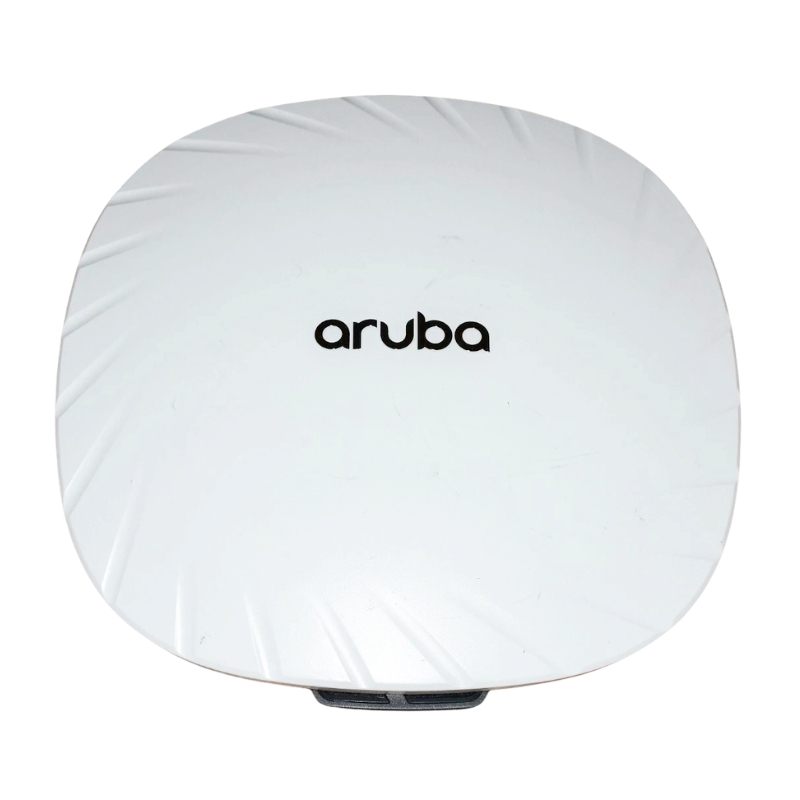


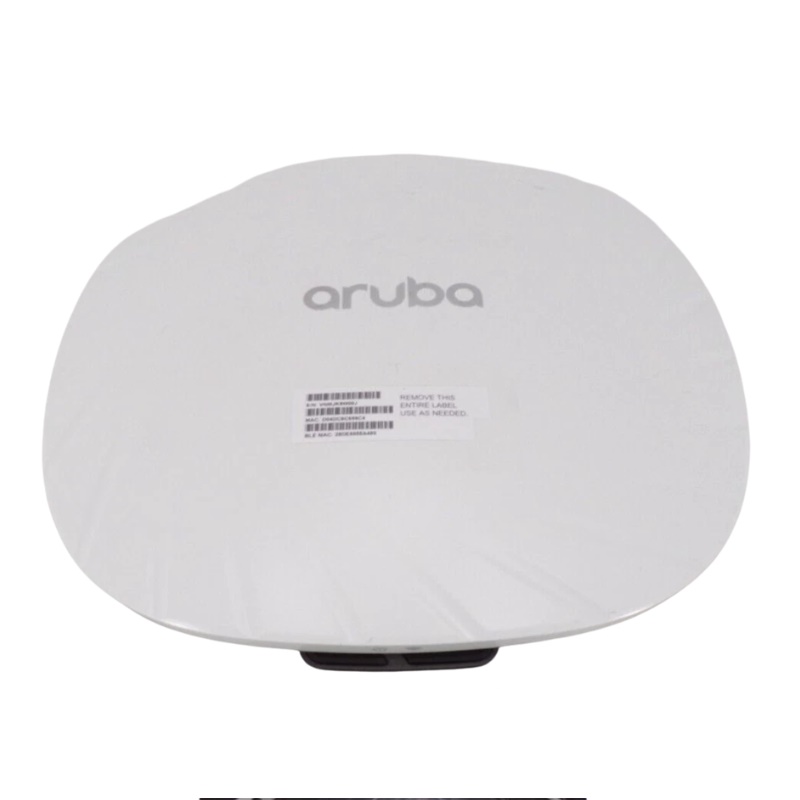
HPE JZ347-61101 Aruba AP-535 (US) TAA Dual Radio 4x4:4 802.11ax Internal Antennas Wireless Access Point. Excellent Refurbished with 1 Year Replacement Warranty
The HPE Aruba AP-535 Wireless Access Point is a high-performance enterprise-grade networking solution designed to deliver fast, secure, and reliable wireless connectivity. Built with advanced 802.11ac Wi-Fi technology, this dual-radio access point ensures seamless coverage, improved bandwidth efficiency, and excellent performance for modern business environments, campuses, and large offices.
The HPE JZ347-61101 Aruba AP-535 (US) TAA Dual Radio 4x4:4 802.11ax Internal Antennas Wireless Access Point category represents a premium class of enterprise-grade wireless networking hardware engineered to deliver exceptional connectivity, scalability, and security for modern campus and mission-critical environments. Built to comply with Trade Agreements Act requirements, this wireless access point category is ideal for government agencies, healthcare institutions, financial organizations, and enterprise campuses requiring compliant and high-performance networking solutions. With advanced Wi-Fi 6 (802.11ax) technology, integrated internal antennas, and 4x4:4 multi-user MIMO architecture, this access point delivers superior wireless performance, enabling seamless connectivity for high-density user environments.
The Aruba AP-535 category utilizes Wi-Fi 6 technology, which introduces significant improvements in wireless efficiency, throughput, and capacity. Wi-Fi 6 incorporates Orthogonal Frequency Division Multiple Access (OFDMA), enabling simultaneous communication with multiple devices and reducing network congestion. This ensures optimal performance in environments where numerous devices compete for wireless bandwidth. The implementation of Target Wake Time (TWT) enhances power efficiency for connected devices by allowing them to schedule communication intervals. This feature is particularly beneficial for IoT devices, mobile devices, and battery-powered equipment, extending operational lifespan while maintaining reliable connectivity.
The 4x4:4 multi-user multiple-input multiple-output architecture enables the Aruba AP-535 wireless access point to transmit and receive multiple data streams simultaneously. This significantly improves data throughput, allowing multiple users to access the network without experiencing performance degradation. This capability ensures smooth operation of bandwidth-intensive applications such as video conferencing, cloud-based applications, and real-time data synchronization.
The dual radio design supports simultaneous operation on 2.4 GHz and 5 GHz frequency bands. This ensures compatibility with legacy devices while providing high-speed connectivity for modern wireless clients. Intelligent band steering directs devices to the optimal frequency band, reducing congestion and improving overall network performance.
The Trade Agreements Act compliance of the Aruba AP-535 TAA wireless access point category ensures that these devices meet strict procurement requirements for government and regulated industries. This compliance makes the access point suitable for federal agencies, defense organizations, and other entities requiring certified networking equipment. TAA-compliant wireless access points provide enhanced reliability, security, and regulatory compliance, ensuring organizations meet procurement and operational standards.
The AP‑535’s simultaneous dual‑band operation allows network administrators to segregate traffic intelligently. The 2.4 GHz band, while more congested due to legacy devices and non‑Wi‑Fi interference, offers superior range and obstacle penetration. The Aruba AP‑535 employs advanced airtime fairness and band steering techniques to push capable devices toward the cleaner, wider 5 GHz spectrum, where channel widths of up to 160 MHz are available. This dynamic load balancing ensures that high‑bandwidth applications receive the spectrum they need without starving older IoT sensors or handheld scanners that may only operate in the 2.4 GHz band. Moreover, the 802.11ax enhancements in the 5 GHz band include higher modulation schemes (1024‑QAM) that pack more data into each transmission, boosting peak data rates significantly compared to 802.11ac. The AP‑535’s ability to handle this complexity natively makes it an ideal foundation for software‑defined networking and AI‑driven optimisation via Aruba’s Central management platform.
To prevent wired backhaul from becoming a bottleneck, the HPE JZ347‑61101 is equipped with a 5 Gigabit Ethernet port. This is a crucial specification because the aggregate wireless throughput of a 4x4:4 802.11ax access point can easily exceed the capacity of traditional Gigabit Ethernet. By supporting 5GBASE‑T, the AP‑535 ensures that data flowing between the wired network and wireless clients remains unimpeded, preserving the speed gains achieved over the air. This Multigigabit capability is backward compatible with existing Cat5e or Cat6 cabling in most installations, allowing enterprises to upgrade their wireless infrastructure without undertaking expensive rewiring projects. The Ethernet port also supports Power over Ethernet (PoE) standards, simplifying installation by eliminating the need for separate power sources, and it can negotiate power delivery intelligently to ensure that all radios and features operate at full capacity.
Beyond Wi‑Fi, the Aruba AP‑535 incorporates Bluetooth 5 technology, which opens a wide array of use cases related to indoor positioning, asset tracking, and proximity‑based services. Bluetooth 5 offers quadruple the range and double the speed of its predecessor, making it far more effective for beaconing and receiving signals from Bluetooth Low Energy (BLE) devices. The internal Bluetooth radio can function as an iBeacon or Eddystone transmitter, allowing organisations to deploy wayfinding applications in hospitals or museums without additional hardware. Simultaneously, it can scan for BLE tags attached to critical assets, providing real‑time location data that integrates with Aruba’s Meridian or other location‑aware platforms. This convergence of Wi‑Fi and Bluetooth within a single access point reduces deployment complexity and power consumption, while enabling IT teams to gather rich analytical data about space utilisation and visitor behaviour.
For public sector entities and enterprises that contract with the US federal government, TAA compliance is not optional—it is a mandatory procurement requirement. The HPE part number JZ347‑61101 explicitly designates a TAA‑compliant variant intended for sale and use within the United States. This compliance assures buyers that the product originates from a designated country or meets the trade agreement criteria, thereby satisfying legal and regulatory stipulations. Beyond regulatory peace of mind, this SKU also includes the appropriate regulatory domain configuration for North America, ensuring that radio transmissions adhere to FCC power limits and channel usage rules. Choosing the correct part number eliminates the risk of interference or non‑compliance, and it guarantees access to region‑specific firmware updates and support from Hewlett Packard Enterprise.
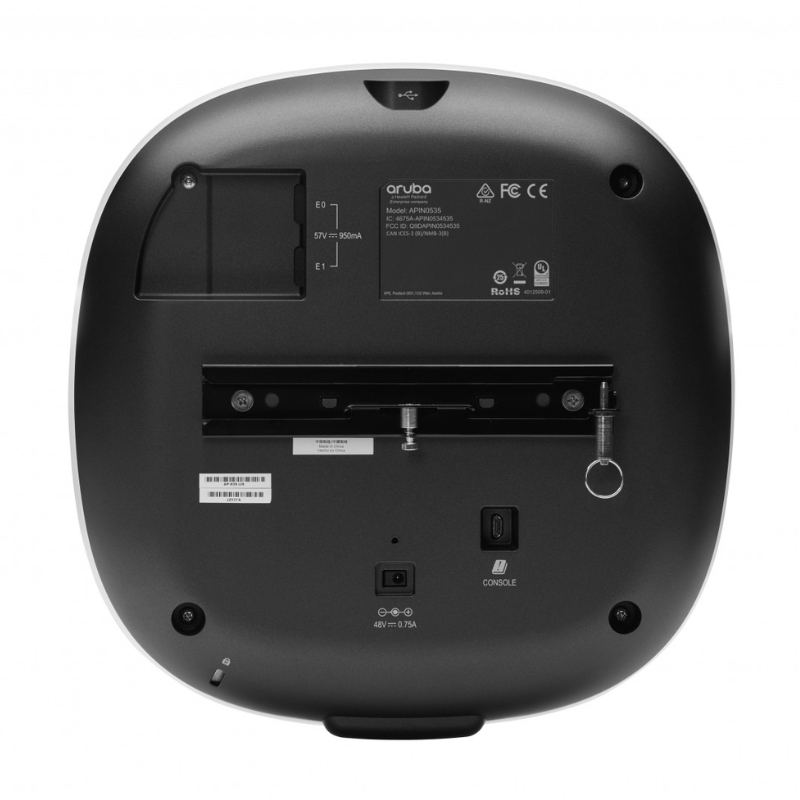
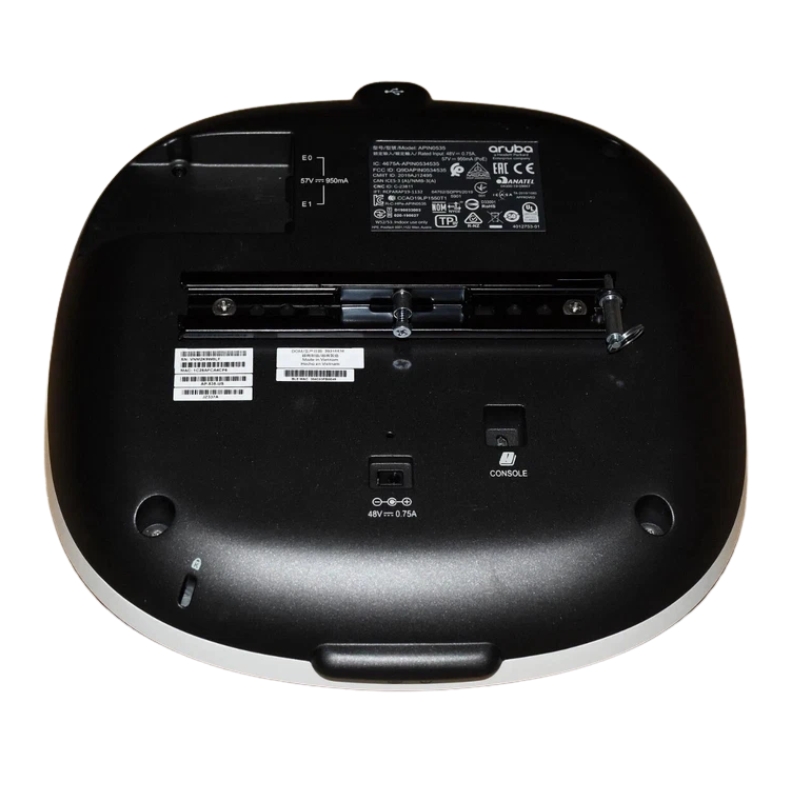
While many access points are ceiling‑mounted, the Aruba AP‑535 offers a rail‑mountable design that expands its installation possibilities. The term "rail‑mountable" typically refers to the ability to attach the device to standard mounting rails, which may be found in industrial settings, on ceiling struts, or in specialised enclosures. This flexibility allows integrators to position the AP‑535 in locations that optimise RF coverage while adhering to architectural constraints. The unit ships with a mounting bracket that accommodates various orientations, and the internal antenna design means there is no need to adjust external elements after installation. Whether deployed in an open‑plan office, a lecture hall, or a warehouse aisle, the rail‑mountable feature simplifies secure attachment and reduces installation time.
The Aruba 530 Series comprises several models tailored to different coverage and client density requirements. The AP‑535 occupies the middle tier, offering a 4x4:4 configuration that balances throughput and cost. Upmarket, the AP‑555 provides additional capabilities like a third radio and higher performance, while the AP‑534 offers an external antenna option for specialised directional coverage. The AP‑535’s internal antennas make it the preferred choice for standard indoor environments where aesthetics and simplicity are priorities. All models share the same underlying 802.11ax chipset and management features, meaning that a mixed deployment of AP‑535 and other series members can be orchestrated seamlessly through Aruba’s controllers or cloud services. This homogeneity simplifies network design and ensures that security policies, QoS settings, and roaming protocols apply uniformly across the entire wireless fabric.
Modern wireless networks must handle latency‑sensitive traffic such as Microsoft Teams, Zoom, and VoIP calls with exceptional reliability. The AP‑535 incorporates advanced Quality of Service (QoS) mechanisms that classify and prioritise traffic at the packet level. With 802.11ax, these QoS capabilities are enhanced by mechanisms like spatial reuse and improved scheduling, which reduce interference from overlapping basic service sets (OBSS). The access point can identify applications based on deep packet inspection and assign appropriate airtime quotas, ensuring that a large file download does not degrade the quality of a concurrent video conference. This application awareness is part of Aruba’s broader policy enforcement framework, which can be centrally managed to adapt to changing business needs without manual intervention on each device.
Every wireless access point is a potential entry point for malicious actors, and the AP‑535 addresses this with a defence‑in‑depth approach. At the silicon level, the hardware supports the latest WPA3 encryption standard, which strengthens password‑based authentication and provides equivalent security to commercial and government networks. The device also includes a dedicated Trusted Platform Module (TPM) for secure key storage and device identity. On the network side, the AP‑535 can enforce segmentation policies that isolate guest traffic from corporate resources, and it can act as a spectrum sensor to detect rogue devices or interference sources. When integrated with Aruba’s policy management firewalls, the access point becomes an enforcement node that adapts to threats in real time, quarantining suspicious endpoints without disrupting legitimate users.
Organisations increasingly prioritise sustainability in their procurement decisions, and the AP‑535 contributes to greener IT operations through intelligent power management. The 802.11ax standard introduces Target Wake Time (TWT), which allows clients to negotiate when they will wake up to send or receive data. This feature significantly extends the battery life of mobile devices and IoT sensors while reducing overall power consumption on the network. Furthermore, the AP‑535’s power supply and circuitry are designed to meet strict energy efficiency guidelines, and its compact, internal‑antenna design uses fewer materials than units with bulky external antennas. By consolidating more functionality into a single device, including Bluetooth and location services, the AP‑535 reduces the need for separate infrastructure components, thereby lowering the total carbon footprint of the wireless LAN.
To fully unlock the potential of the AP‑535, organisations typically pair it with Aruba Central, a cloud‑native management platform that applies artificial intelligence to network operations. Through telemetry data collected from the AP‑535’s radios, Aruba Central can provide insights into client behaviour, recommend channel adjustments, and even predict failures before they impact users. The dual‑radio 4x4:4 design generates a rich dataset that feeds into machine learning models, enabling features like dynamic resource scheduling and automated anomaly detection. For IT teams, this translates into reduced troubleshooting time and a proactive stance toward network health. The integration also simplifies firmware updates and configuration changes across hundreds or thousands of AP‑535 units, ensuring that security patches and feature enhancements are deployed consistently.
While the hardware of the AP‑535 is fixed at the time of purchase, its software is continuously evolvable. HPE periodically releases new firmware versions that introduce optimisations for emerging applications, refine spectrum management algorithms, and patch security vulnerabilities. The internal antennas and radio chains are designed to support potential future features such as enhanced location accuracy or new PHY layer enhancements that may be standardised after the product’s release. Moreover, the device’s ability to operate as a standalone access point, as part of a controller‑based deployment, or in a controllerless cluster gives enterprises the freedom to migrate their management paradigm over time without forklift upgrades. This adaptability protects the capital investment and ensures that the AP‑535 remains a valuable asset throughout its lifecycle.
Understanding the physical constraints of the AP‑535 is essential for successful deployment planning. The unit’s internal antenna design results in a low‑profile enclosure that blends into most interior designs, with dimensions that allow it to fit into standard telecommunications enclosures when required. It is rated for indoor use within specified temperature and humidity ranges, ensuring reliable operation in environments ranging from climate‑controlled offices to semi‑conditioned spaces like warehouses. The absence of moving parts, such as fans, enhances reliability and reduces acoustic noise, making it suitable for noise‑sensitive environments like libraries or recording studios. The rail‑mountable feature, combined with the optional flush‑mount and suspended ceiling brackets, provides installation flexibility that accommodates nearly any physical setting.
For organisations that have already invested in Aruda switching, controllers, or policy management tools, the AP‑535 integrates seamlessly. It supports Aruba’s AirWave network management, which provides deep visibility and reporting across multivendor environments, as well as ArubaOS, the operating system that powers the mobility controllers. The access point can be adopted into an existing cluster and will automatically receive configuration profiles, eliminating manual setup. This interoperability extends to Power over Ethernet switches from other vendors, though optimal performance is achieved when paired with Aruba’s own Multigigabit switches that can negotiate higher power budgets and provide end‑to‑end network insights. The AP‑535 also participates in Aruba’s Dynamic Segmentation, which extends user and device policies from the wired edge into the wireless domain, creating a unified zero‑trust architecture.


 Contact Us
 Information
 Catalog
 Solid State Drives (SSD)
 Network Switches
 Hard Disk Drives
 HBA & Controllers
 PC & Servers
 PC & Server Memory
 CPU & Processors
 Network Routers
 Power Supplies
 Tape Drives & Libraries
 Network Devices
 Computer & Network Cables