
(7% discount is applied at checkout)
Cart is empty
Your go-to destination for cutting-edge server products
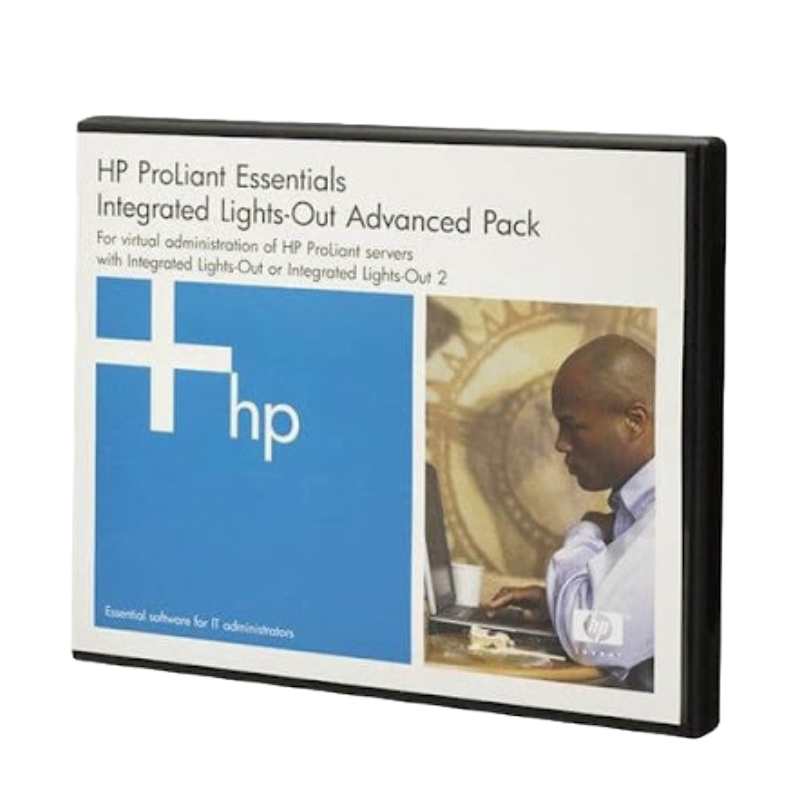
HPE L9Q79-63106 Integrated 1 Server Standard 3 Year Advanced Blade Subscription License. New Sealed in Box (NIB) with 3 Years Warranty
The HPE L9Q79-63106 Integrated 1 Server Standard 3-Year Advanced Blade Subscription License is built for organizations that require dependable server administration, remote access, and centralized infrastructure management. Designed for a single server deployment, this subscription-based license delivers advanced system management capabilities for a three-year validation period, helping IT teams maintain high availability, simplify maintenance, and improve operational efficiency across supported HPE ProLiant and BladeSystem environments.
Technical Specifications
The HPE L9Q79-63106 Integrated 1 Server Standard 3 Year Advanced Blade Subscription License is designed to provide organizations with comprehensive licensing capabilities for HPE blade server environments requiring advanced infrastructure management, operational visibility, automation, lifecycle support, and centralized administration. Businesses operating modern data centers increasingly depend on intelligent software licensing to unlock enterprise-grade functionality while maintaining predictable operational costs. This subscription license enables organizations to maximize server utilization while simplifying administration across blade infrastructures that support mission-critical applications, virtualization environments, cloud deployments, database platforms, analytics workloads, and business continuity initiatives.
Modern enterprise infrastructure requires considerably more than physical hardware. Organizations expect integrated management capabilities that reduce administrative complexity while improving performance, availability, security, scalability, and operational efficiency. The HPE L9Q79-63106 license represents an advanced subscription model that aligns with these expectations by delivering software functionality specifically intended for integrated blade server deployments. Businesses can benefit from continuous access to supported software features throughout the subscription period while maintaining compatibility with evolving enterprise environments.
The three-year subscription duration offers a practical balance between long-term investment protection and technology flexibility. Instead of relying on outdated perpetual licensing models that may become difficult to maintain, organizations gain access to ongoing entitlement that supports infrastructure modernization, software updates, feature enhancements, and vendor-supported operations during the subscription lifecycle.
Integrated blade environments combine compute, networking, management, and storage technologies into a highly consolidated architecture. Such infrastructures are commonly deployed in enterprise data centers where density, centralized administration, scalability, and operational consistency are essential. The HPE L9Q79-63106 license is intended to complement these environments by enabling advanced software functionality associated with integrated blade server management.
As organizations expand digital services, IT administrators require centralized tools capable of simplifying routine operations. Integrated licensing supports administrative efficiency by allowing management software to coordinate multiple systems from unified interfaces. This reduces repetitive configuration activities while improving consistency across large-scale server deployments.
Enterprise infrastructures often support numerous applications simultaneously, including ERP systems, financial software, customer relationship management platforms, healthcare applications, educational services, virtualization hosts, and hybrid cloud environments. Managing these workloads manually introduces unnecessary complexity. Advanced licensing enables organizations to streamline administration while maintaining operational reliability throughout the infrastructure lifecycle.
A three-year subscription period provides organizations with a predictable software licensing schedule. Budget planning becomes significantly easier because licensing expenses can be incorporated into long-term operational planning without unexpected renewal intervals occurring every year. This consistency supports financial forecasting and infrastructure investment strategies.
Longer subscription periods also reduce procurement complexity by minimizing renewal frequency while allowing IT departments to focus on infrastructure optimization instead of administrative licensing tasks.
Subscription licensing generally provides eligibility for supported software releases available during the active subscription term. Maintaining current software versions contributes to infrastructure stability, compatibility improvements, enhanced functionality, and support readiness throughout evolving enterprise environments.
Technology evolves rapidly, particularly in enterprise computing environments. Maintaining current software capabilities helps organizations adapt to changing workload requirements while preserving compatibility with modern hardware platforms, virtualization technologies, storage systems, networking infrastructure, and management frameworks.
Centralized administration represents one of the most significant advantages of integrated server environments. Rather than individually configuring each physical server, administrators can manage multiple systems from consolidated management platforms. This centralized approach improves operational consistency while reducing repetitive manual processes.
The HPE L9Q79-63106 licensing model supports organizations seeking efficient management methodologies that reduce operational overhead while improving infrastructure visibility. Administrators gain the ability to oversee larger environments with greater consistency and reduced administrative effort.
Visibility across enterprise infrastructure enables IT teams to identify system status, resource utilization, health indicators, firmware levels, hardware conditions, and operational trends. Enhanced visibility contributes to proactive maintenance rather than reactive troubleshooting.
Organizations operating blade environments often support dozens or hundreds of workloads simultaneously. Comprehensive monitoring capabilities assist administrators in understanding infrastructure behavior while facilitating capacity planning and long-term optimization.
Business growth frequently results in increased infrastructure requirements. Additional applications, users, virtual machines, databases, development environments, analytics platforms, and cloud services all contribute to expanding compute demand. Subscription licensing designed for enterprise blade infrastructures supports organizations as they scale operations without introducing unnecessary management complexity.
Scalable management capabilities ensure that administrative processes remain consistent regardless of whether an organization manages a small blade deployment or a significantly larger enterprise environment spanning multiple locations.
Infrastructure planning rarely remains static. Organizations continuously introduce new workloads, retire legacy systems, upgrade hardware, and modernize applications. Flexible licensing allows IT teams to adapt their environments according to evolving operational priorities while maintaining consistent management standards across deployed systems.
Manual server administration consumes valuable technical resources. Enterprise organizations increasingly seek automation, standardized configuration management, and centralized operational controls that reduce repetitive administrative tasks. Advanced licensing complements these objectives by enabling sophisticated management functionality intended for enterprise environments.
Reducing administrative overhead allows IT professionals to focus on strategic initiatives such as digital transformation, infrastructure modernization, cybersecurity improvements, cloud integration, workload optimization, disaster recovery planning, and application performance enhancements.
Automation has become a fundamental component of enterprise infrastructure management. Organizations increasingly deploy automated workflows that simplify provisioning, maintenance, monitoring, reporting, configuration validation, and operational consistency. Advanced licensing aligns with these objectives by enabling software capabilities intended to reduce manual intervention while improving administrative efficiency.
Automated operational processes also reduce the likelihood of configuration inconsistencies introduced through manual administrative procedures. Standardized automation contributes to repeatable deployments and predictable infrastructure behavior across multiple systems.
Performance monitoring assists organizations in understanding infrastructure utilization while identifying emerging capacity requirements before service quality declines. Continuous observation of enterprise systems contributes to informed planning decisions, proactive maintenance scheduling, and efficient hardware utilization.
Long-term infrastructure planning depends upon reliable operational data. Historical utilization trends enable organizations to forecast future hardware requirements, evaluate expansion timelines, optimize investments, and maintain sufficient computing capacity for anticipated business growth.
Modern enterprise environments require security to remain integrated throughout infrastructure management processes. Centralized administration contributes to improved visibility while helping administrators maintain consistent operational standards across managed server environments.
Software licensing supporting enterprise management platforms often complements organizational cybersecurity initiatives by encouraging standardized administration, controlled operational procedures, documented management workflows, and ongoing platform maintenance.
Organizations operating within regulated industries frequently maintain strict infrastructure governance requirements. Financial institutions, healthcare providers, educational organizations, government agencies, and multinational enterprises often require consistent documentation, standardized operational procedures, controlled administrative access, and reliable infrastructure management practices.
Subscription-based enterprise management solutions support these objectives by facilitating centralized administration throughout infrastructure lifecycles.
Many organizations operate hybrid IT environments that combine physical servers, blade systems, virtualization platforms, private cloud infrastructure, public cloud services, storage arrays, networking technologies, and backup solutions. Advanced licensing contributes to unified infrastructure administration across these interconnected environments.
Integrated management platforms reduce operational fragmentation by providing administrators with consolidated oversight that spans multiple infrastructure technologies.
Business continuity planning depends upon resilient infrastructure supported by consistent operational management. Reliable server administration contributes to application availability, predictable performance, and timely response to infrastructure events. Organizations investing in enterprise licensing seek to strengthen operational resilience while minimizing service disruptions.
Disaster recovery strategies require coordinated infrastructure management, accurate system documentation, and standardized operational procedures. Centralized management platforms contribute valuable administrative capabilities that support recovery planning, infrastructure replication, operational consistency, and ongoing maintenance across production and recovery environments.
Enterprise server platforms represent substantial capital investments intended to support business operations for multiple years. Software licensing complements these hardware investments by enabling advanced management functionality that improves operational efficiency, infrastructure utilization, and administrative consistency throughout deployment lifecycles.
Organizations benefit from maximizing existing hardware capabilities while maintaining flexibility to adopt future infrastructure improvements without sacrificing centralized management methodologies.
Digital transformation initiatives frequently involve application modernization, cloud integration, automation, analytics, artificial intelligence, and data-driven decision making. Enterprise infrastructure management software supports these initiatives by simplifying administration while providing greater visibility into underlying compute resources.
Operational consistency reduces unexpected configuration differences that may introduce reliability issues within enterprise environments. Standardized administrative procedures simplify maintenance activities, improve troubleshooting efficiency, and promote predictable infrastructure performance.
Subscription licensing supports organizations seeking long-term operational consistency through centralized management approaches that remain aligned with evolving enterprise technologies.
IT professionals continually balance infrastructure maintenance with strategic business projects. Efficient management platforms reduce repetitive administrative effort while allowing technical staff to dedicate additional time toward innovation, optimization, cybersecurity initiatives, cloud migration projects, and business enablement activities.


 Contact Us
 Information
 Catalog
 Solid State Drives (SSD)
 Network Switches
 Hard Disk Drives
 HBA & Controllers
 PC & Servers
 PC & Server Memory
 CPU & Processors
 Network Routers
 Power Supplies
 Tape Drives & Libraries
 Network Devices
 Computer & Network Cables