(7% discount is applied at checkout)
Cart is empty
Your go-to destination for cutting-edge server products
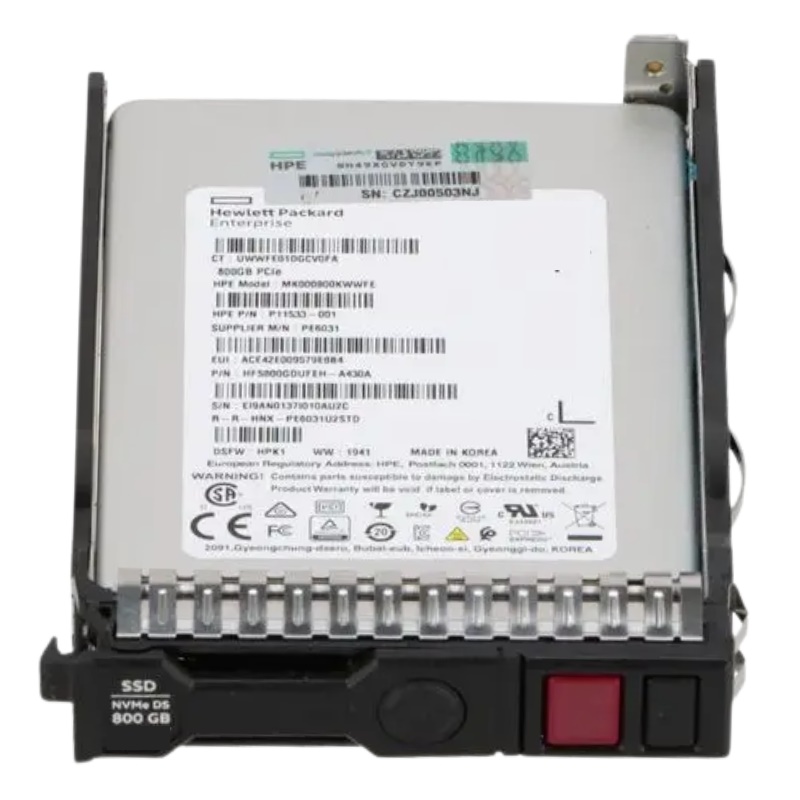


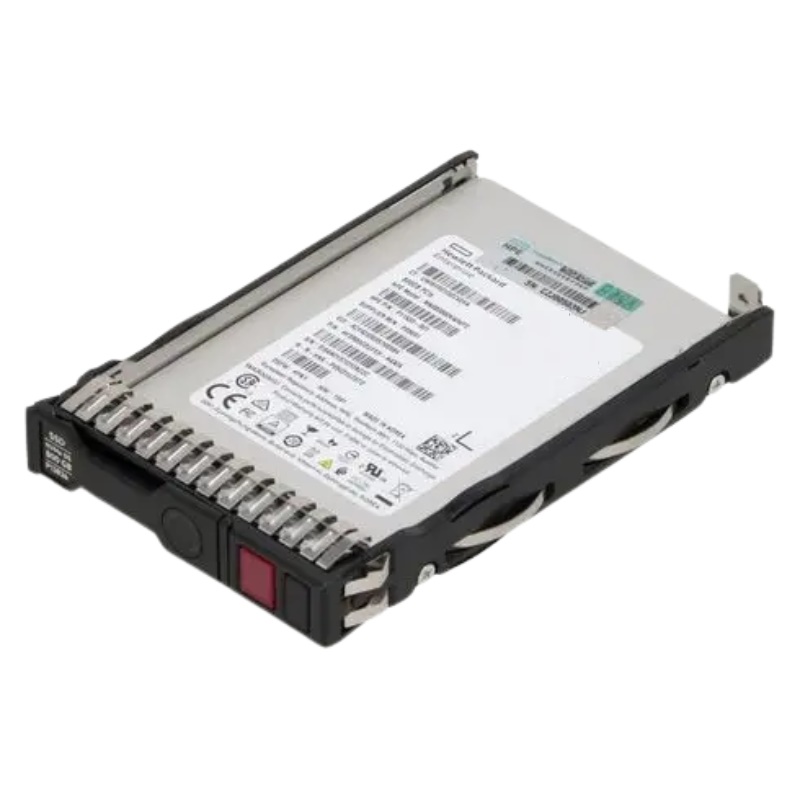
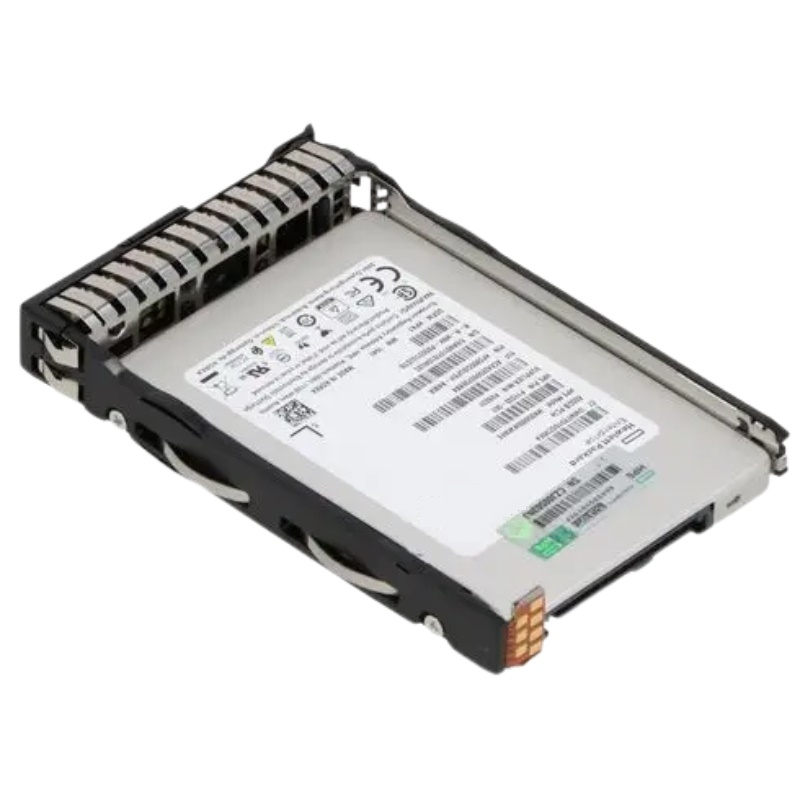
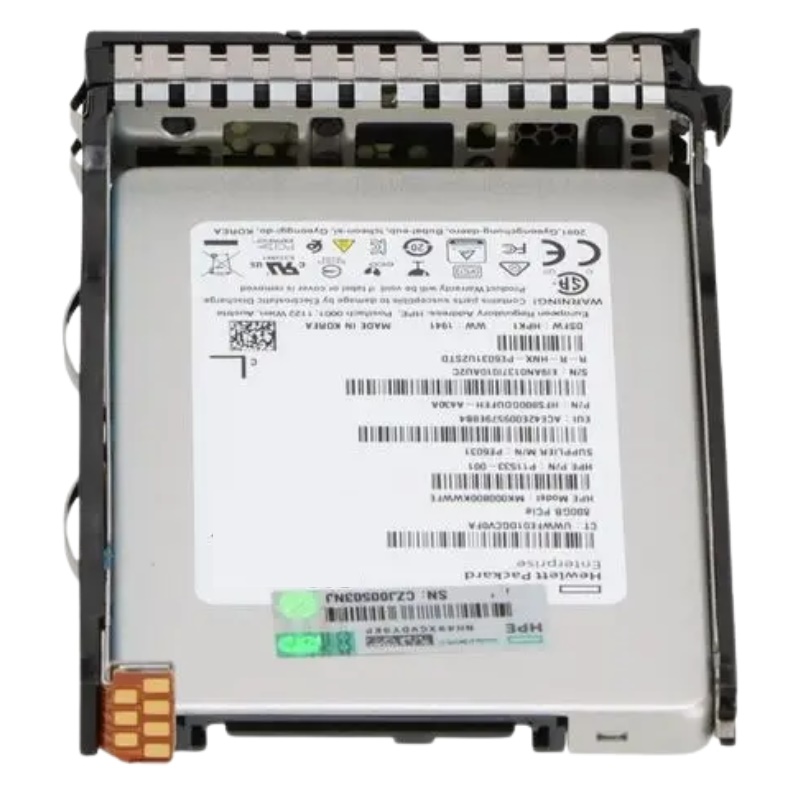
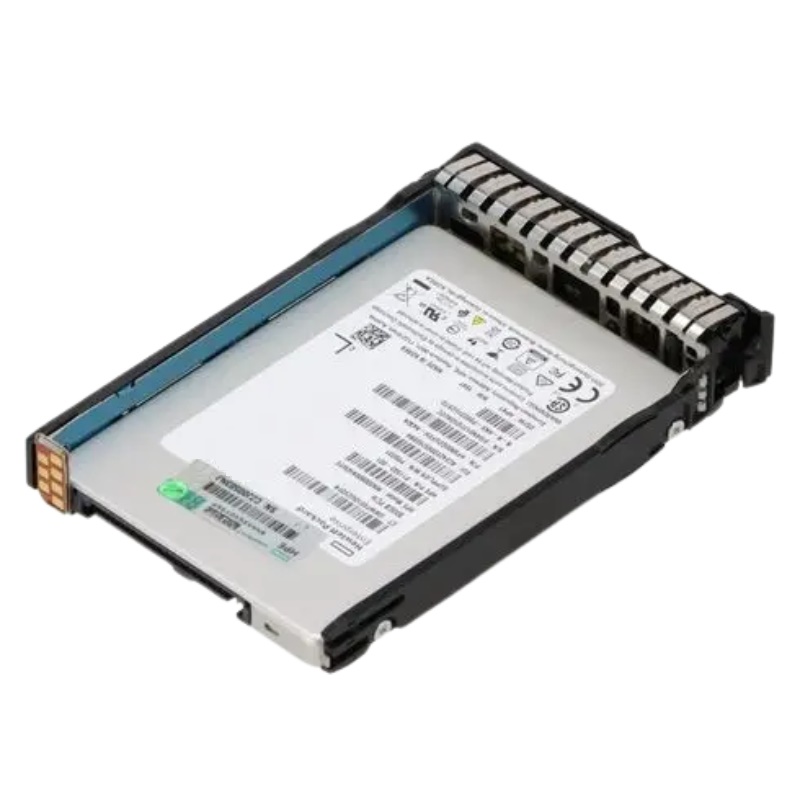
HPE MO000800KYDZK 800GB NVMe Gen4 Mixed Use TLC SFF BC U.3 Static V2 Hot Plug Solid State Drive. Factory-Sealed New in Original Box (FSB) with 3 Years Warranty
The HPE MO000800KYDZK represents a critical advancement in enterprise storage, delivering a potent combination of high performance, exceptional endurance, and unwavering reliability. This 800GB NVMe Gen4 Mixed-Use SSD is engineered specifically for the demanding environments of HPE Gen10 Plus and Gen11 servers, providing a foundational storage component for data-intensive applications, virtualization, and hybrid workloads. As a U.3 SFF (Small Form Factor) drive, it offers the flexibility to integrate into high-density storage configurations while leveraging the groundbreaking speed of the PCIe 4.0 interface.
The HPE MO000800KYDZK represents a pivotal storage solution engineered for modern hybrid data centers. This 800GB NVMe Gen4 Solid State Drive, formatted in the efficient SFF (Small Form Factor) U.3 bundle carrier (BC) interface, is designed to deliver a balanced performance profile ideal for mixed workloads. Certified and optimized for HPE Gen10 Plus and Gen11 server platforms, it bridges the gap between cost-effective capacity and the demanding performance requirements of today's applications, from virtualization and databases to content delivery and beyond.
At the heart of this drive is the NVMe 1.4 protocol over a PCI Express 4.0 interface, doubling the available bandwidth compared to the previous PCIe 3.0 generation. This allows for significantly higher input/output operations per second (IOPS) and reduced latency. The U.3 (SFF-8639) interface is a key differentiator, providing multi-vendor interoperability. A U.3 backplane can automatically support SAS, SATA, and NVMe (U.2) drives, offering unparalleled flexibility in storage tiering and technology refresh cycles without changing infrastructure.
The drive is pre-installed in an HPE-qualified bundle carrier (BC). This carrier ensures secure, tool-less installation into HPE server drive bays, providing optimal thermal management through designed airflow and secure connections. The static (non-hot-plug) V2 designation indicates a specific carrier version tailored for maximum compatibility and cooling within Gen10 Plus and Gen11 chassis. This attention to mechanical integration is crucial for maintaining drive health and performance consistency in densely packed servers.
Leveraging PCIe Gen4 x4 lanes, the drive offers a theoretical bandwidth of up to 64 Gbps (8 GB/s) per direction, a substantial increase over PCIe Gen3's 32 Gbps. This raw bandwidth translates into faster data access, quicker application response times, and the ability to handle more concurrent requests, making it an excellent choice for CPU-rich platforms where storage can often be a bottleneck.
The "Mainstream Performance Mixed Use" classification is central to understanding this SSD's role. Unlike read-intensive or write-intensive drives, a Mixed Use (MU) SSD is engineered with a balanced endurance rating (Drive Writes Per Day - DWPD) to sustain a consistent blend of read and write operations. This makes it inherently versatile for environments where the workload is not purely transactional (read-heavy) or logging/analytics (write-heavy).
This 800GB model is optimized for workloads that require a steady-state performance profile. It delivers reliable, predictable IOPS and latency under sustained pressure, unlike consumer-grade SSDs which may throttle dramatically. The embedded HPE firmware includes features like advanced wear leveling, bad block management, and error correction codes (ECC) tuned for server environments.
Typical applications include hyper-converged infrastructure (HCI) nodes, medium-duty database servers (SQL, NoSQL), virtual desktop infrastructure (VDH) storage, collaborative applications, and enterprise server boot drives. Its capacity and performance profile sit ideally for tier-1 storage in mid-range deployments or as a high-performance tier in a larger storage pool.
Endurance is quantified in both Terabytes Written (TBW) and Drive Writes Per Day (DWPD) over the warranty period. As a Mainstream Mixed Use drive, the MO000800KYDZK offers a balanced endurance rating suitable for daily write volumes typical of mixed workloads. This is achieved through the use of enterprise-grade 3D TLC (Tri-Level Cell) or similar NAND flash memory, coupled with a robust flash controller and over-provisioning.
The drive benefits from HPE's custom firmware, which includes features like Intelligent Drive Wear Gauge for proactive health monitoring, Power Loss Protection to safeguard data in transit during an unexpected power failure, and Thermal Throttling to prevent overheating. It is fully manageable through HPE iLO (Integrated Lights-Out) and HPE OneView, providing seamless integration into HPE's ecosystem for monitoring, alerting, and predictive analytics.
The "For Gen10 Plus & 11 Servers" designation is not a suggestion but a strict compatibility guideline. These server generations have undergone rigorous qualification testing with this specific drive model to ensure firmware interoperability, thermal compliance, and performance validation. Deploying in other systems may result in suboptimal performance, management incompatibilities, or invalidated support.
This includes a wide range of HPE ProLiant DL, ML, and Apollo servers, as well as HPE Synergy compute modules from the Gen10 Plus and Gen11 families. The static V2 carrier is specifically keyed for certain drive bay types within these systems. It is critical to consult the HPE QuickSpecs or configuration tool (HPE iCR) to confirm compatibility with a specific server model and bay configuration before procurement.
The "Multi Vendor SSD" label indicates that HPE has qualified this drive model (often built in partnership with a leading NAND manufacturer) for use across its server portfolio, providing a consistent support experience. The "Static V2" refers to the physical carrier and its compatibility matrix, ensuring it fits the designated hot-plug or static bays in the targeted servers.
The HPE MO000800KYDZK is defined by a comprehensive set of technical specifications that inform procurement and deployment decisions.
The 800GB capacity refers to the user-addressable space. The drive includes additional over-provisioned NAND for background tasks, garbage collection, and wear leveling, which contributes to sustained performance and longevity. Performance metrics include sequential read/write speeds (in MB/s) and random read/write IOPS (at a specific queue depth and block size), as published in the official HPE data sheet. These figures represent performance under steady-state conditions in a qualified HPE server.
The drive adheres to the 2.5-inch Small Form Factor (SFF) specification with a 15mm or 7mm height (as defined by the bundle carrier). It operates within standard server environmental tolerances for temperature, humidity, vibration, and shock. Power consumption is measured under active, idle, and standby states, which is vital for data center power and cooling planning.
The model number MO000800KYDZK follows HPE's part numbering convention. Key identifiers include "800" for the capacity in gigabytes, "NVMe" implied by the family, "Gen4" for the interface generation, and the "KYDZK" suffix defining the exact configuration, carrier type, and market region. This exact part number must be used when ordering spare parts or additional drives to ensure hardware and firmware consistency within an array.
The specific attributes of this drive make it a strategic choice for several concrete deployment scenarios within modern IT infrastructure.
In a ProLiant DL380 Gen11 server, several of these drives can be configured in a software RAID (via HPE Smart Array S100i SR or a hardware HBA) to create a high-performance, redundant storage pool for the host operating system, applications, and associated data. This is ideal for consolidating workloads on a single physical server.
For VMware vSphere, Microsoft Hyper-V, or KVM deployments, these drives provide excellent performance for hosting virtual machine disks (VMDKs, VHDs) where the I/O pattern is inherently mixed. The low latency reduces CPU wait times, allowing for higher virtual machine density per host.
While extreme performance databases might use write-intensive drives, many mainstream SQL Server, MySQL, or PostgreSQL instances see significant performance gains from this Mixed Use NVMe tier. It can store frequently accessed tables, indexes, or transaction logs, dramatically speeding up query times compared to traditional SAS or SATA SSDs.
Its reliability and performance make it an exemplary choice for a primary boot drive in servers running critical services. The fast boot and application load times improve service restart agility, while the endurance ensures the drive can handle frequent system updates and logging over the server's lifespan.
Positioning the Mainstream Mixed Use drive requires understanding HPE's broader SSD portfolio, which is segmented by performance and endurance.
Read-Intensive SSDs, such as the HPE MU000800KYQBB, offer higher capacities and lower cost per gigabyte but are designed for workloads with a high read-to-write ratio (e.g., 90/10). They have a lower DWPD rating. The MO000800KYDZK Mixed Use drive, while similar in capacity, provides a higher write endurance, making it suitable for more balanced workloads at a moderate price premium.
Write-Intensive drives (e.g., HPE VO000800KYBBD) are built for the most demanding write-centric tasks like log aggregation, video rendering, or high-frequency trading. They use SLC or eMLC NAND and have a very high DWPD rating, but at a significantly higher cost per gigabyte. The Mainstream Mixed Use drive offers a cost-effective compromise for environments that are not continuously writing massive volumes of data.
Value Endurance drives offer basic enterprise reliability for light-write workloads at the most attractive price point. The Mainstream Mixed Use drive sits above VE and RI drives in the performance-endurance hierarchy, representing the balanced center of the portfolio for general server duties.


 Contact Us
 Information
 Catalog
 Solid State Drives (SSD)
 Network Switches
 Hard Disk Drives
 HBA & Controllers
 PC & Servers
 PC & Server Memory
 CPU & Processors
 Network Routers
 Power Supplies
 Tape Drives & Libraries
 Network Devices
 Computer & Network Cables