(7% discount is applied at checkout)
Cart is empty
Your go-to destination for cutting-edge server products
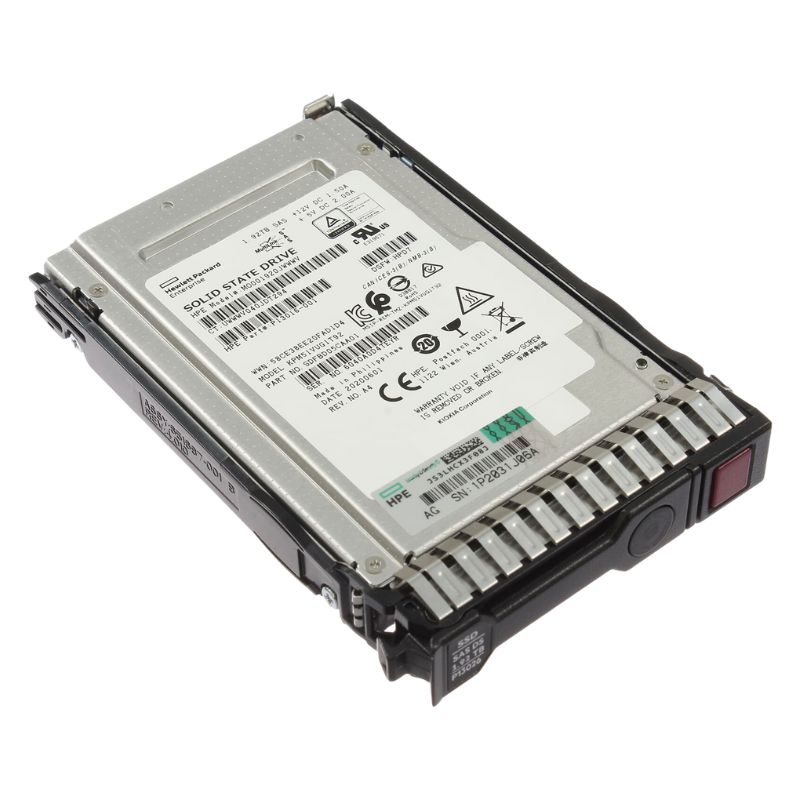


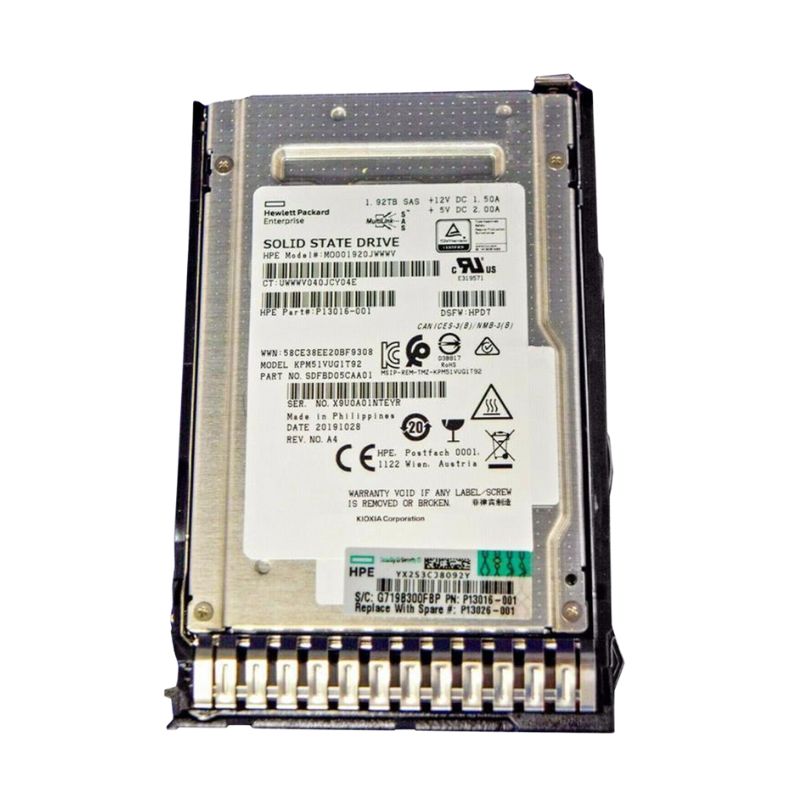
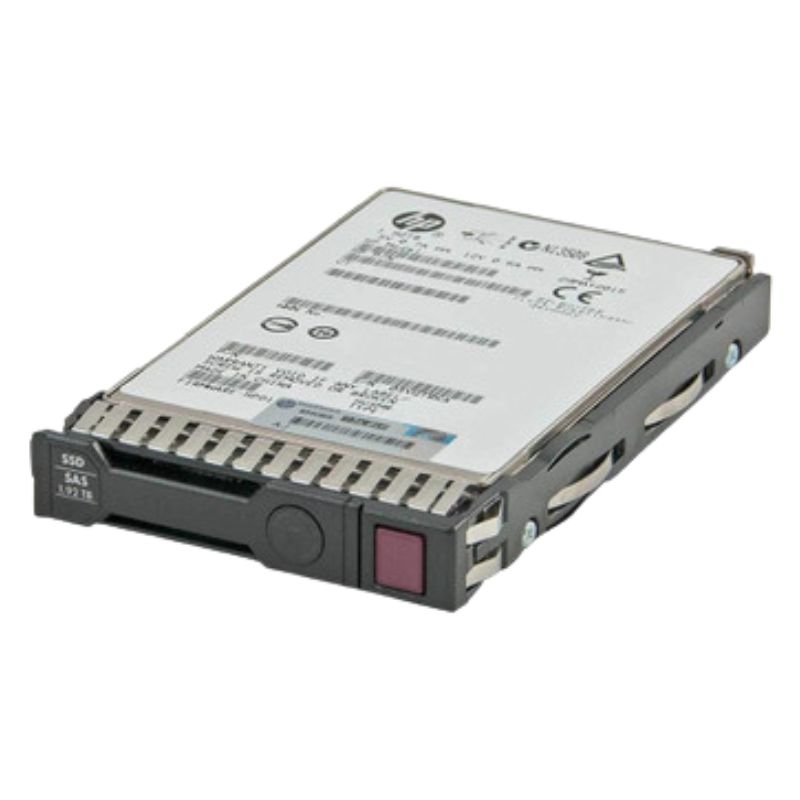
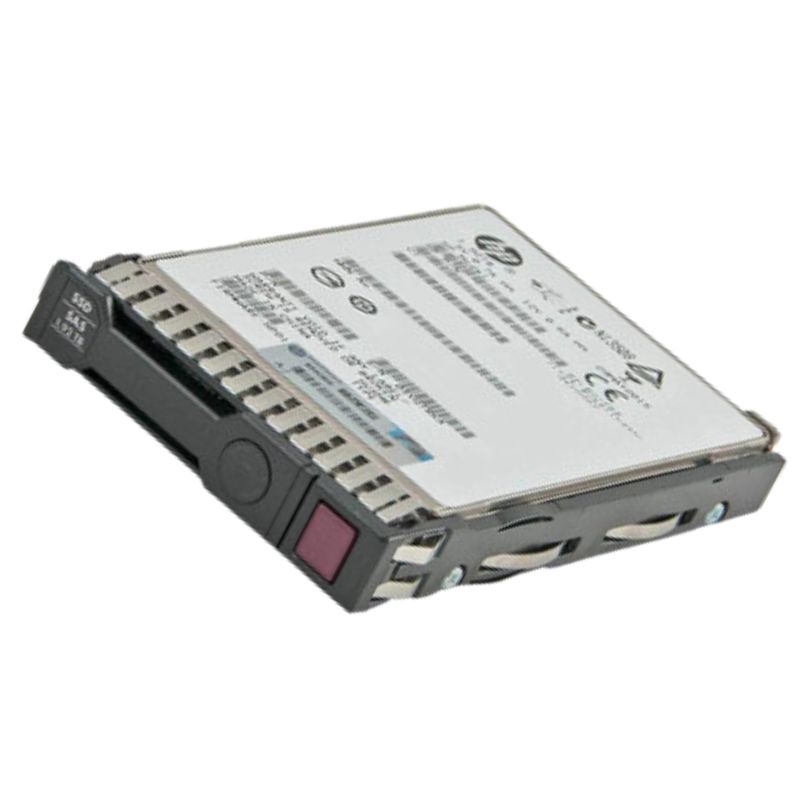
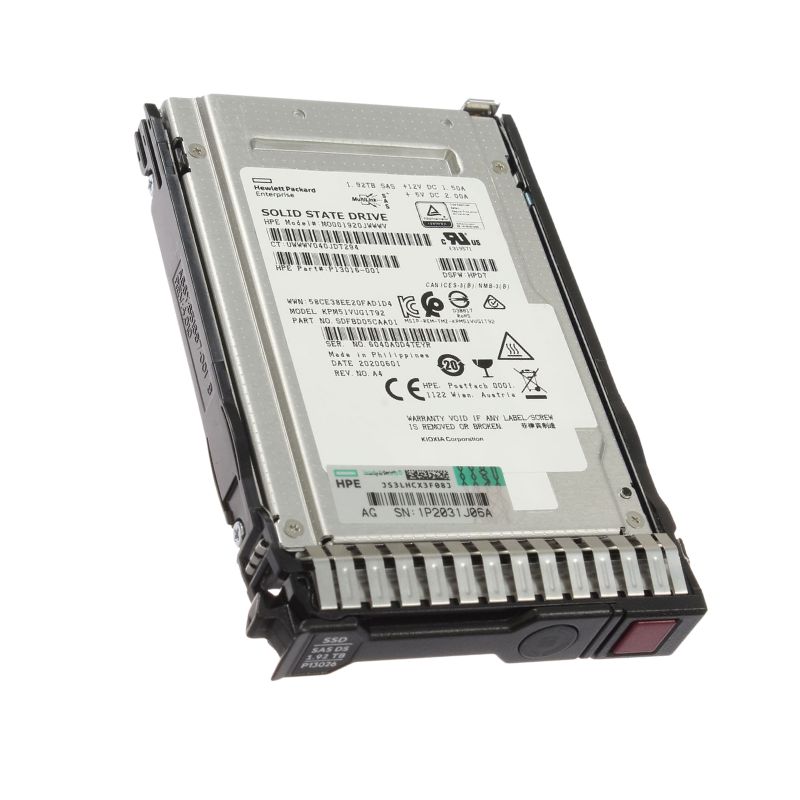
HPE MO001920JWWWV 1.92TB SAS 12GBPS Mixed Use 2.5-inch Internal Solid State Drive. Excellent Refurbished with 1 Year Replacement Warranty
The HPE MO001920JWWWV is a robust 1.92TB SAS (12Gb/s) mixed-use internal solid-state drive built for data centers and enterprise servers where balanced endurance, consistent performance, and reliability are essential. Engineered in a 2.5-inch form factor, this SSD blends sustained throughput, low latency, and enterprise-grade durability to serve virtualization hosts, database clusters, and high-I/O application servers.
Key Advantages and Use Cases
This model excels where predictable performance under mixed read/write workloads matters most. Typical deployments include:
Designed to leverage the SAS 12Gb/s interface, the MO001920JWWWV delivers high sequential and random throughput across demanding workloads. Its design optimizes latency-sensitive reads while maintaining healthy write endurance for mixed-use scenarios, making it a strong candidate for both read-heavy and balanced enterprise tasks.
When configured in typical enterprise server environments, expect:
The firmware and NAND management in this drive target mixed-use patterns, balancing garbage collection, wear leveling, and on-drive caching to maximize usable life while preserving steady performance under real-world enterprise I/O mixes.
HPE engineers these drives to meet enterprise availability needs. Expect advanced features that protect data and prolong lifespan under server-class workloads.
Built for continuous operation, this SSD incorporates robust wear management and error correction mechanisms to deliver predictable service life in mixed-use applications. These durability attributes make it suitable for 24/7 production environments.
The drive implements strong error correction, end-to-end data protection capabilities, and power-loss protection techniques (where supported by system design), ensuring that data integrity is prioritized even in adverse scenarios.
Compact and server-friendly, the MO001920JWWWV fits modern server bays while providing enterprise SAS connectivity.
For deployments where every technical nuance matters, review these additional points:
Integrating the MO001920JWWWV into your infrastructure requires attention to a few practical details to ensure optimal operation and longevity.
To extract predictable performance:
Proactive monitoring is essential for enterprise storage. The MO001920JWWWV exposes SMART attributes and telemetry that integrate with HPE management tools, enabling predictive alerts and easier lifecycle planning.
Mixed-use SSDs occupy a pragmatic sweet spot: they provide better endurance than read-optimized drives while avoiding the higher cost of write-intensive enterprise SSDs. For many production systems, this means a lower total cost of ownership (TCO) with performance and durability that match real application needs.
When evaluating alternatives, consider how the MO001920JWWWV stacks up versus read-optimized or write-optimized counterparts:
Buying enterprise storage is about long-term planning. For procurement teams, the MO001920JWWWV offers a solid balance of price, performance, and longevity when used in the intended mixed-use scenarios.
Enterprise SSDs perform best within specified thermal and power ranges. Ensure proper rack airflow, ambient temperature control, and stable power to keep the drive within manufacturer-recommended operating limits.
The HPE MO001920JWWWV is a dependable building block for enterprise storage tiers that require a measured mixture of endurance, cost efficiency, and performance consistency. When deployed with sound thermal management, periodic firmware updates, and centralized health monitoring, it can deliver years of steady service for a broad range of mission-critical IT workloads.
The HPE MO001920JWWWV is a purpose-built enterprise-grade internal solid state drive delivering 1.92TB of usable capacity on a compact 2.5-inch form factor. With a SAS 12Gb/s interface and a Mixed-Use endurance class, this drive is optimized for demanding server workloads that require a balance of sustained throughput, consistent I/O performance, and strong endurance characteristics. The HPE MO001920JWWWV is designed for modern data center requirements including virtualization, databases, transactional applications, and mixed read/write workloads where predictable low latency matters.
Form Factor: 2.5-inch (SFF) — compatible with many HPE ProLiant servers and storage enclosures that accept 2.5" SAS drives.
Interface: SAS 12Gb/s (Serial Attached SCSI) — provides enterprise-class link reliability and features such as dual-port connectivity (where supported), which is commonly used in redundant controller architectures.
Capacity: 1.92TB formatted/usable capacity (actual usable capacity may vary by vendor formatting, firmware, and RAID overhead).
Performance Profile: Engineered for mixed-use workloads with a solid balance of sequential and random I/O performance. The 12Gb/s SAS interface ensures the drive can sustain high throughput bursts and maintain low, predictable latencies under concurrent access.
Endurance Class: Mixed-Use — optimized for workloads that involve a combination of reads and writes such as virtual machines, boot volumes, OLTP databases, and high-performance caching layers. Typical mixed-use SSDs from HPE class prioritize endurance measured in drive writes per day (DWPD) and mean time between failures (MTBF).
IOPS & Throughput: While exact IOPS and MB/s figures depend on firmware, host workload mix, and queue depth, expect enterprise-level random IOPS in the tens to hundreds of thousands range when driven correctly by a HPE server and modern controller.
Power-loss Protection: Enterprise SAS SSDs commonly include on-drive power-loss protection to help ensure that in-flight data in DRAM caches is committed to non-volatile storage in the case of unexpected power events.
Advanced Error Correction: Strong ECC and background media management preserve data integrity and extend drive life.
End-to-End Data Path Protection: Protects data from the host through the drive to the NAND flash, helping reduce the risk of silent data corruption.
MTBF and DWPD: Designed to meet enterprise MTBF targets (often measured in millions of hours) and provide a DWPD rating suitable for mixed workloads—making the MO001920JWWWV a reliable choice for server-scale deployments.
The 2.5-inch form factor allows higher drive density in blade and rack servers, enabling more storage capacity per unit of rack space. For environments where compute density and power/cooling efficiency are paramount, 2.5" SAS SSDs like the MO001920JWWWV reduce rack footprint while delivering enterprise performance.
SAS 12Gb/s remains a standard in enterprise storage due to its robustness, backward compatibility, and support for multi-initiator topologies. Advantages include:
HPE-branded SSDs such as the MO001920JWWWV typically include firmware tuned for HPE server environments. This includes drive telemetry compatible with HPE management tools (iLO, Systems Insight Manager, and storage controllers), predictive failure monitoring, and firmware-level optimizations that can enhance interoperability with HPE controllers and RAID implementations.
The mixed-use endurance class and fast random I/O characteristics make the drive an excellent fit for virtualization hosts that run multiple virtual machines (VMs). Benefits include reduced VM boot storms, faster snapshot and clone operations, and improved I/O consolidation for mixed workloads.
OLTP (online transaction processing), small-block databases, and other latency-sensitive transactional systems benefit from the consistent low-latency responses of SAS SSDs. The MO001920JWWWV is well positioned for database log volumes, indexes, and hot tables that see frequent reads and writes.
For hybrid storage arrays and software-defined storage (SDS) stacks, mixed-use SSDs are commonly deployed as cache or tier-1 acceleration layers to service hot data and reduce backend HDD access. The 1.92TB capacity offers a practical balance between cache size and cost.
When used as boot/system drives for hypervisors or application servers, enterprise SAS SSDs provide faster boot times, greater reliability than consumer drives, and better manageability by datacenter monitoring tools.
Before purchase and deployment, confirm physical, electrical, and firmware compatibility:
HPE drives often have firmware releases that fix performance issues, add telemetry features, or improve interoperability. Use HPE’s recommended management toolchain (e.g., HPE Service Pack for ProLiant or controller firmware utilities) to schedule verified firmware upgrades and maintain consistent drive operation across the fleet.
For optimal performance:
When deploying in hardware RAID arrays:
Maintain adequate airflow and temperature monitoring: sustained heavy I/O raises SSD internal temperature and can trigger thermal throttling. Provision server cooling to datasheet recommendations to ensure consistent performance.
Leverage SMART/SAS attributes and HPE telemetry integration for predictive drive health monitoring. Key metrics to track include media wear indicators, uncorrectable error counts, read/write throughput, provisioning events, and temperature trends. Proactive replacement policies driven by telemetry can reduce unplanned downtime.
HPE enterprise SSDs typically include manufacturer warranties covering defects and premature failure for a fixed period or until specified TBW/DWPD thresholds are reached. Understand the warranty terms for the MO001920JWWWV, including return material authorization (RMA) procedures, cross-shipping options, and support tiers. Also plan for end-of-life (EOL) transitions by maintaining firmware and procurement records to avoid compatibility surprises.
Many enterprise SSDs support hardware-based encryption and secure erase commands (such as SANITIZE or crypto-erase). Confirm whether the MO001920JWWWV includes self-encrypting drive (SED) capabilities or whether encryption is implemented at the controller or host layer. When decommissioning drives, use approved secure erase procedures to meet compliance requirements and ensure sensitive data cannot be recovered.
Data center operators must align disposal and sanitization practices with regulatory requirements (e.g., GDPR, HIPAA, or organizational policies). Drives used to store regulated data should be tracked, sanitized, and disposed of with auditable processes.
Mixed-Use SSDs like the MO001920JWWWV strike a balance for environments that require both sustained writes and reads. Compared with specialized classes:
NVMe offers higher raw bandwidth and lower CPU overhead for many workloads, but SAS SSDs remain relevant because of:
For organizations modernizing infrastructure, a hybrid approach — using NVMe for latency-critical front-end services and SAS SSDs for high-density, lower-latency-tier storage — can be cost efficient.
Enterprise SAS SSDs command a premium compared to SATA or consumer-grade drives, but they deliver operational savings through lower power consumption per IOPS, reduced maintenance from fewer failures, and improved application performance that can reduce server count or licensing costs in virtualized environments.
When calculating usable capacity for procurement, factor in RAID overhead, hot spares, and future growth. A 1.92TB drive in a RAID 10 configuration yields approximately half the total raw capacity for usable space; in RAID 6, usable capacity depends on the number of parity drives and stripe width. Model scenarios with expected growth and IOPS demands to avoid expensive mid-cycle refreshes.
Purchasing HPE-branded modules simplifies support escalation since HPE can correlate drive telemetry with server telemetry and provide consolidated support. Ensure procurement includes support contracts aligned to your SLA requirements.
Plan drive refresh cycles based on TBW/DWPD projections, warranty coverage, and workload intensity. Maintain firmware and configuration documentation to ensure seamless replacements with minimal compatibility issues.
server SSD, ProLiant compatible SSD, enterprise mixed-use drive, SAS 12Gbps performance, data center SSD reliability, DWPD, MTBF, HPE SSD warranty.
Use product schema (JSON-LD) on the category page to expose attributes like model number, capacity, interface, form factor, manufacturer (HPE), and aggregateRating if available. Include Product and Offer nodes with priceValidUntil and availability markup to increase visibility in search results.
The physical SAS interface is industry standard, but HPE drives may ship with vendor-specific firmware or require an HPE carrier. Functionality in non-HPE platforms is possible but may forfeit full vendor support or telemetry integration; verify with your hardware vendor.
Monitor drive health via SMART/SAS attributes, apply validated firmware updates, manage thermal conditions, and plan for replacements based on DWPD/TBW indicators and telemetry alerts.
Low latency and high sustained throughput for mixed workloads — ideal for virtualized environments and transactional databases where predictable I/O matters.
Enterprise-grade power-loss protection, strong ECC, and end-to-end data path protection help ensure data integrity in demanding datacenter scenarios.
2.5" density and SAS connectivity enable higher storage density per rack and compatibility with existing HPE orchestration and telemetry tools, reducing operational friction during deployment and ongoing management.
For write-intensive use cases, consider HPE or equivalent write-optimized SSDs with higher DWPD ratings and enterprise-grade NAND designed for heavy sustained writes. These are appropriate for logging clusters, telemetry ingestion, and write-heavy caching layers.
Organizations modernizing to NVMe should evaluate platform upgrades for NVMe backend support (U.2 or PCIe) and where possible, tier latency-sensitive workloads to NVMe while maintaining SAS for bulk low-latency storage under legacy controllers.


 Contact Us
 Information
 Catalog
 Solid State Drives (SSD)
 Network Switches
 Hard Disk Drives
 HBA & Controllers
 PC & Servers
 PC & Server Memory
 CPU & Processors
 Network Routers
 Power Supplies
 Tape Drives & Libraries
 Network Devices
 Computer & Network Cables