(7% discount is applied at checkout)
Cart is empty
Your go-to destination for cutting-edge server products
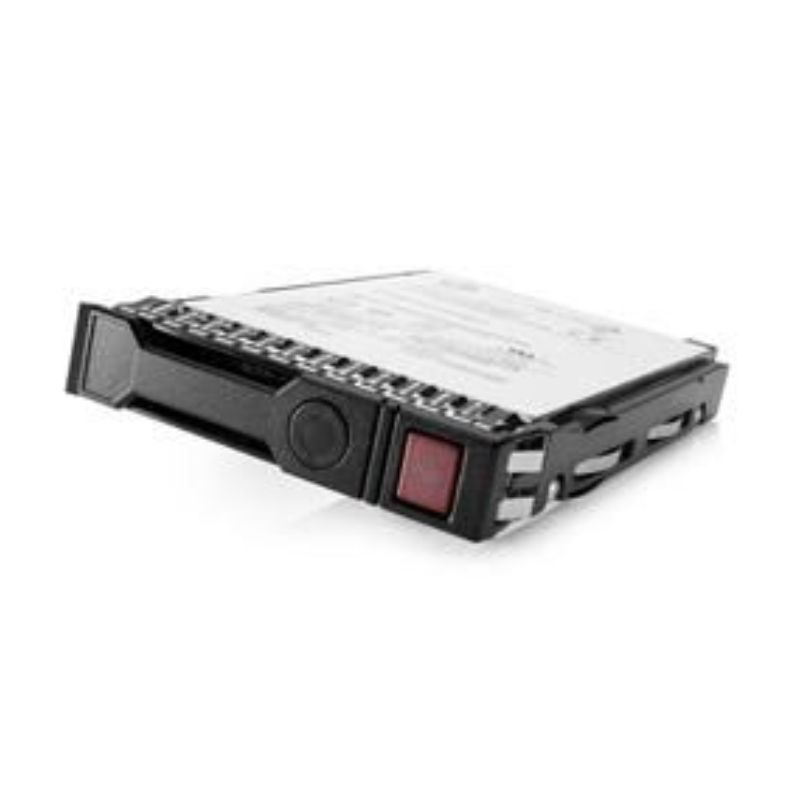


HPE MO006400KXUKA 6.4TB NVMe MU SFF SC U.3ST V2 MV w/Tray SSD. New (System) Pull with 1 year replacement warranty
The HPE MO006400KXUKA is a high-capacity NVMe solid-state drive engineered for demanding enterprise workloads. With a 6.4TB raw capacity in a multi-unit, small form factor (SFF) U.3 NVMe package and a vendor-supplied tray, this drive is tailored for data centers, cloud providers, hyperconverged infrastructure, and latency-sensitive database or virtualization environments. Built to combine blistering random I/O with sustained sequential throughput, the MO006400KXUKA balances capacity density with NVMe performance characteristics that modern storage stacks require.
Although compact, the MO006400KXUKA packs enterprise-grade engineering. Below are the essential attributes that make the part number MO006400KXUKA stand out.
The 6.4TB raw capacity offers a compelling capacity-per-bay ratio compared with legacy SAS SSDs, enabling higher usable storage capacity per chassis when used with thin provisioning or integrated compression/deduplication features in storage arrays.
The MO006400KXUKA is optimized for enterprise-style service levels. While exact throughput and IOPS depend on host platform, queue depth, and workload profile, expect:
For large sequential transfers (backup streams, VM migration, bulk data ingest), the NVMe MU SFF design supports sustained high bandwidth that outpaces SATA/SAS SSDs, reducing migration windows and backup windows.
Enterprise environments demand predictable endurance and robust data protection. HPE designs and qualifies drives such as MO006400KXUKA to meet those expectations.
Designed for 24x7 data center operation, the drive has passed enterprise thermal and shock qualifications to minimize unplanned downtime in dense server and chassis deployments.
MO006400KXUKA is sold as an HPE-branded/qualified module, which simplifies procurement and integration into HPE ProLiant servers and HPE storage arrays that accept U.3 NVMe drives.
Designed to fit into heterogeneous architectures — from direct-attached NVMe pools to local caching tiers in a larger SAN/NAS deployment — the drive complements software-defined storage stacks and hyperconverged solutions.
Security is built into modern enterprise SSDs. The MO006400KXUKA supports standard security controls and management interfaces required for secure operations.
NVMe SSDs trade off power for performance; careful planning ensures thermal budgets are respected in dense deployments.
Observe ESD precautions and use the supplied tray for insertion/removal. Hot-swap capability is supported where the host platform and backplane allow.
Firmware is a critical differentiator for enterprise SSDs. HPE-qualified firmware for MO006400KXUKA is optimized for predictable performance, endurance management, and broad platform compatibility.
Understanding how the MO006400KXUKA compares with alternative storage options helps with procurement decisions.
To extract the best value and performance from MO006400KXUKA drives, follow these deployment best practices.
When upgrading from legacy storage or moving to NVMe-first architectures, plan around these common migration considerations.
As an OEM-supplied HPE part, MO006400KXUKA benefits from HPE’s distribution, warranty, and support ecosystem.
Enterprise buyers often have regulatory constraints; the MO006400KXUKA can fit into compliant storage designs with appropriate controls.
If the host backplane and server support hot-swap for U.3 NVMe drives, then the drive can be hot-swapped. Always follow HPE server guidelines and ensure the host OS has appropriate NVMe device handling enabled.
Yes, but for best results keep firmware versions consistent and use drives with similar performance and endurance classes when they share a pool or RAID-like configuration.
Estimate your daily write volume and compare it to the drive’s TBW (terabytes written) or DWPD (drive writes per day) specification. Choose a drive class with headroom for peak loads; consult HPE documentation for exact endurance figures applicable to MO006400KXUKA.
Modern enterprise OS releases—current Linux distributions and Windows Server versions—support NVMe devices. Validate driver and kernel versions for best compatibility.
Buy HPE MO006400KXUKA — a 6.4TB NVMe MU SFF U.3 enterprise SSD. Low-latency NVMe performance, HPE-qualified tray included, ideal for databases, virtualization, and cloud workloads.
Manufacturer: HPE — Manufacturer Part: MO006400KXUKA. Use this HPE-qualified NVMe drive to modernize primary storage tiers, accelerate application response times, and increase usable capacity density in server and chassis environments.
The HPE MO006400KXUKA is an enterprise-grade NVMe solid-state drive designed for modern data centers, hyperconverged infrastructure, and storage-dense server platforms. This SKU is a 6.4TB capacity drive in a small form factor (SFF) U.3 / U.2-compatible mounting style supplied with a drive tray. The MO006400KXUKA is offered by HPE as a factory-supplied OEM part and appears in HPE parts lists, service packs, and resell inventories. :contentReference[oaicite:0]{index=0}
Drives like the MO006400KXUKA belong to the enterprise NVMe U.3 family aimed at workloads that require high I/O density, sustained low latency, and high throughput per bay. Typical deployments include database storage (OLTP/OLAP), virtualization hosts (VDI and multi-tenant virtual machines), analytics nodes, AI/ML data staging, content delivery, caching tiers in scale-out storage, and mixed-read/write application servers. Because of their NVMe interface and SFF U.3 compatibility, these drives are commonly used in 1U–4U server chassis and storage arrays where slot density and hot-swap capability matter.
The MO006400KXUKA uses a small form factor (2.5" SFF) U.3-compatible NVMe interface. U.3 offers backward compatibility in many HPE server backplanes and provides hot-swap, tray-based convenience for data center operations teams. When planning hardware layouts, recognize that U.3 physical trays are standard across many HPE ProLiant and HPE storage chassis, which simplifies replacements and inventory management. :contentReference[oaicite:2]{index=2}
The model number indicates a raw capacity of 6.4TB — a common density point for modern enterprise NVMe SSDs intended to balance cost-per-GB and usable endurance. In RAID and virtualized environments, effective usable capacity will depend on RAID level, reserved overprovisioning, and filesystem or container overhead. Plan capacity with practical usable figures in mind: for example, RAID-1/RAID-10 or erasure-coded layouts will reduce usable capacity relative to raw drive size, and modern filesystems may reserve metadata or journal space that affects user-available GB. :contentReference[oaicite:3]{index=3}
Enterprise NVMe SSDs are engineered for sustained multi-drive and multi-tenant workloads. These drives typically offer strong endurance metrics (expressed as Drive Writes Per Day — DWPD — or TBW) and controllers that manage wear-leveling, bad block remapping, and error recovery. HPE-supplied drives like this SKU are also distributed with validated firmware and may be covered by HPE support policies when installed in HPE-certified systems. For production rollouts, align endurance expectations with your workload's write intensity and choose overprovisioning and refresh cycles accordingly. :contentReference[oaicite:4]{index=4}
Many enterprise-class NVMe drives include power-loss protection capacitors and firmware-safe commit logic that reduce the risk of data loss or metadata corruption on abrupt power events. While the exact implementation varies by vendor and controller, HPE-certified drives are typically validated against server power-loss and reset scenarios to ensure predictable behavior in HPE systems. Always check the specific drive firmware release notes and HPE server compatibility matrix when designing for maximum data integrity. :contentReference[oaicite:5]{index=5}
NVMe SSDs in dense server bays can be thermal hotspots. U.3 trays and server backplanes are engineered to ensure sufficient airflow, but performance can be thermally throttled under sustained heavy workloads. When deploying multiple high-capacity NVMe drives, provision rack cooling and monitor SMART/telemetry metrics to prevent thermal throttling and ensure consistent performance. Many HPE management tools and firmware packages surface these metrics for automated alerts. :contentReference[oaicite:6]{index=6}
HPE often ships drives with vendor-specific firmware integrated into HPE's universal firmware packaging systems. The MO006400KXUKA appears in HPE firmware pack listings and service pack release notes, indicating that it is part of HPE’s supported drive lists for server firmware and platform management updates. Installing HPE-recommended firmware keeps the drive aligned with system BIOS, RAID/Firmware controllers, and platform management expectations. :contentReference[oaicite:7]{index=7}
Before purchase or installation, verify the drive's compatibility against the specific HPE server or storage chassis model. HPE support matrices and official part cross-references are the authoritative source for compatibility and warranty coverage. While many NVMe U.3 drives are functionally interoperable, HPE certification improves the predictability of firmware updates and RAS (Reliability, Availability, Serviceability) behavior. :contentReference[oaicite:8]{index=8}
These practices reduce the chances of unexpected behavior after updates and maintain warranty coverage.
Enterprise NVMe drives deliver significantly lower latency and higher IOPS than SAS or SATA SSDs due to the NVMe protocol and PCIe lanes' parallelism. Real-world performance depends on controller capabilities, NAND type (e.g., TLC vs QLC), overprovisioning, and firmware optimization for mixed or sequential patterns. For latency-sensitive applications — databases, virtualization, or online transaction systems — NVMe drives reduce tail latency and improve transaction throughput when used with NVMe-aware stacks and driver configurations.
Drive-level tuning (e.g., namespace sizing, overprovisioning, and thermal throttling thresholds), host-level configuration (queue depths, interrupt balancing), and system-level tuning (NUMA alignment, CPU affinity) all affect realized performance. For mixed read/write workloads, consider leaving a small percentage of the drive unprovisioned for improved garbage collection and consistent write performance. In scale-out setups, distribute I/O across multiple drives and avoid single-drive hotspots for consistent cluster performance.
NVMe supports deep per-CPU submission queues, enabling high parallel I/O. Tune OS and application queue depths to match workload characteristics: low-latency tasks benefit from short queues and fewer context switches; throughput-bound jobs may use higher queue depths to keep the device saturated. Test different configurations in your environment to find the best balance between throughput and latency.
NVMe U.3 drives are an excellent choice for virtualization hosts that demand high IOPS and low latency — particularly VDI implementations and multi-VM database hosts. When deployed as a caching layer or as primary storage for hot VM images, they significantly reduce boot storms and storage-related VM latency. Consider using them with hypervisor-level features like NVMe pass-through or virtualized storage acceleration for maximum performance isolation.
For databases and analytics workloads, NVMe SSDs reduce query latency and speed up index builds and ETL pipelines. In AI/ML workflows, NVMe drives are ideal for staging large datasets and model checkpoints that need fast read/write cycles during training iterations.
In distributed object or block storage systems, NVMe drives serve as high-performance tiers — either as direct storage nodes or as cache layers in front of higher-capacity HDDs. When designing scale-out architectures, balance density and cost by mixing NVMe tiers for hot data with high-density HDD tiers for cold data.
The MO006400KXUKA appears in reseller inventories and auction listings; purchasers will find both new, open-box, and factory-refurbished units in the secondary market. When buying, prefer HPE-authorized distributors for new parts to ensure warranty and support. If considering used units, validate drive hours, firmware version, and whether the part was marked as 'factory overstock' or 'open-box' to reduce the risk of early failures. :contentReference[oaicite:9]{index=9}
Drives purchased through official HPE channels may be eligible for HPE hardware support and RMA services when installed in covered systems. For third-party purchases, confirm the seller's return policy and whether any HPE warranty transfer or service coverage applies. Keep records of serial numbers and purchase receipts for support claims and asset tracking.
Because SSDs have finite lifespans, maintain a spare pool sized to replace drives showing SMART warnings or approaching manufacturer-recommended retirement thresholds. Keep spare trays and part-compatible caddies on hand to accelerate replacements and reduce mean time to repair (MTTR) for hot-swap scenarios.
Many enterprise drives support on-drive encryption (SED) and secure erase commands that help meet data protection and retirement policies. Verify whether the MO006400KXUKA variant you purchase is an SED model and if it supports standards like TCG Opal or FIPS-validated crypto modules. Using hardware encryption simplifies secure decommissioning and protects data-at-rest without impacting drive performance.
For end-of-life or repurpose operations, use manufacturer-recommended secure erase methods or cryptographic erase (when available) to sanitize data. Physical destruction is the final option for drives that cannot be sanitized to your organization’s standards. Document the sanitization process and retain certificates of destruction or erase logs as required by compliance regulations.
Monitor SMART attributes and vendor telemetry for indicators such as percentage used, media and controller errors, thermal metrics, and power-cycle counts. Networked management tools from HPE and the drive vendor can centralize telemetry and produce actionable alerts when drives begin exhibiting pre-failure symptoms. Early detection enables replacement before data loss or degraded performance.
Common SSD failure modes include NAND wear, controller failures, firmware bugs, and thermal-induced throttling. Mitigations:
When evaluating drives, consider capacity, endurance (DWPD/TBW), performance curves (IOPS and throughput under sustained workloads), latency, and platform compatibility. HPE-branded or HPE-partnered SKUs like MO006400KXUKA often carry validated firmware and explicit compatibility with HPE servers — beneficial for environments that prioritize integrated support and predictable behavior over the marginal cost savings of generic OEM drives. :contentReference[oaicite:10]{index=10}
Organize the category page so that product highlights and key specs are near the top (for scannability) and deeper technical content, deployment guides, and firmware notes are lower on the page. Link to authoritative resources such as HPE support pages, firmware download pages, and server compatibility matrices. Use schema markup (Product, Offer, AggregateRating when available) and include a spec table with canonical SKU references to improve search visibility.
Technically, mixing NVMe models is possible if the backplane and OS support multiple drives. For predictable behavior, use identical firmware families and capacities when building RAID or tiered storage arrays. Mixed-firmware or mixed-endurance environments can show uneven performance or drive retirement timing. Using HPE-validated SKUs reduces these risks. :contentReference[oaicite:12]{index=12}


 Contact Us
 Information
 Catalog
 Solid State Drives (SSD)
 Network Switches
 Hard Disk Drives
 HBA & Controllers
 PC & Servers
 PC & Server Memory
 CPU & Processors
 Network Routers
 Power Supplies
 Tape Drives & Libraries
 Network Devices
 Computer & Network Cables