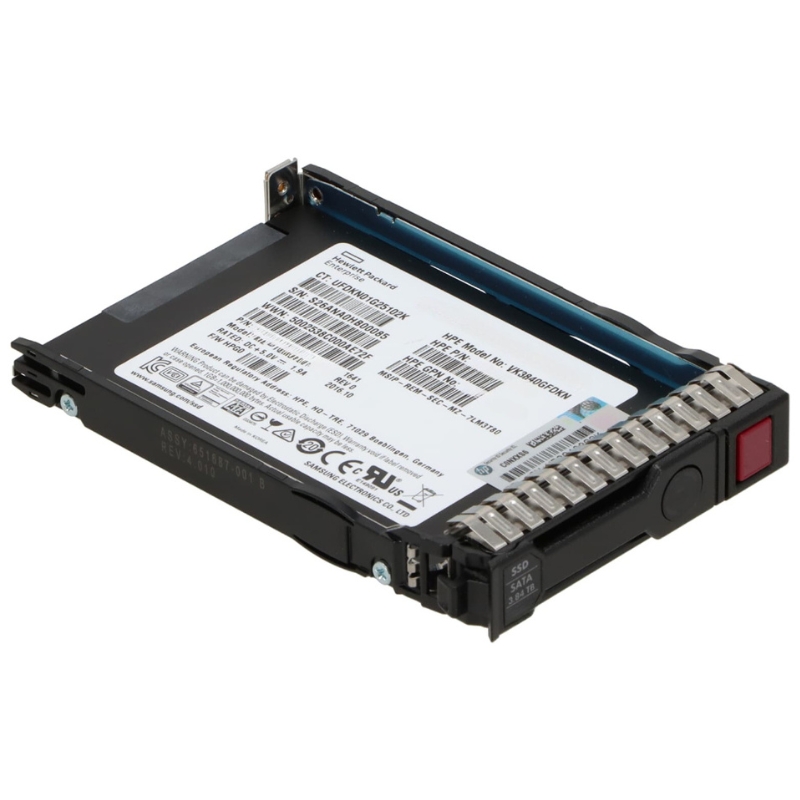
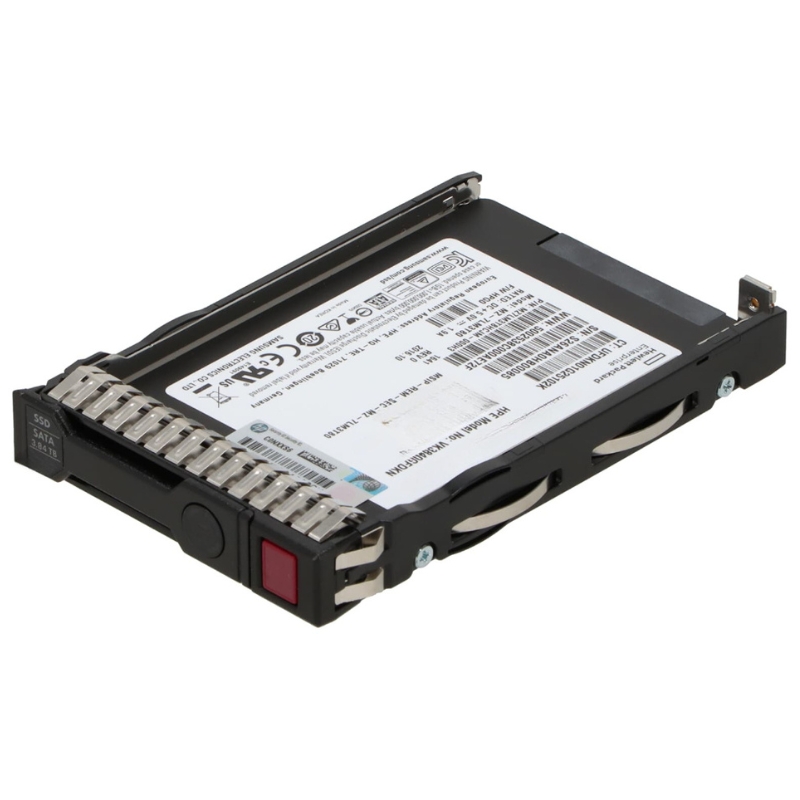
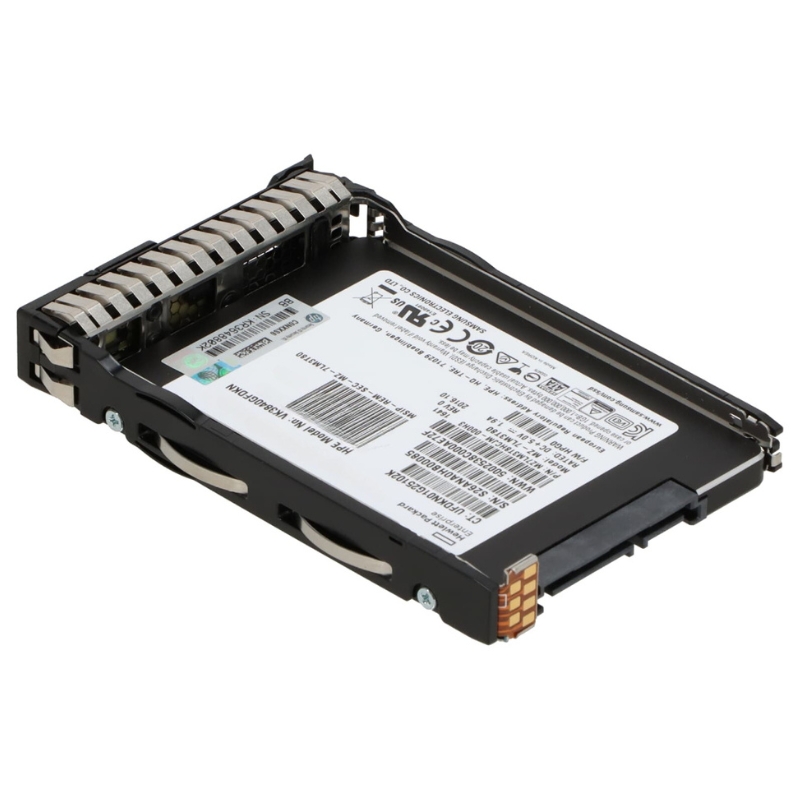
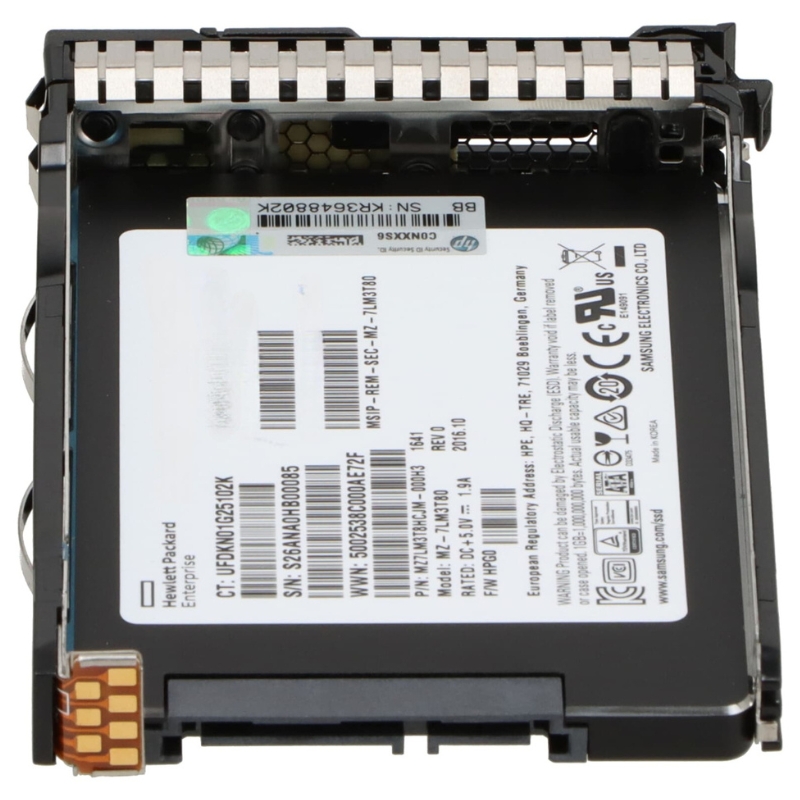
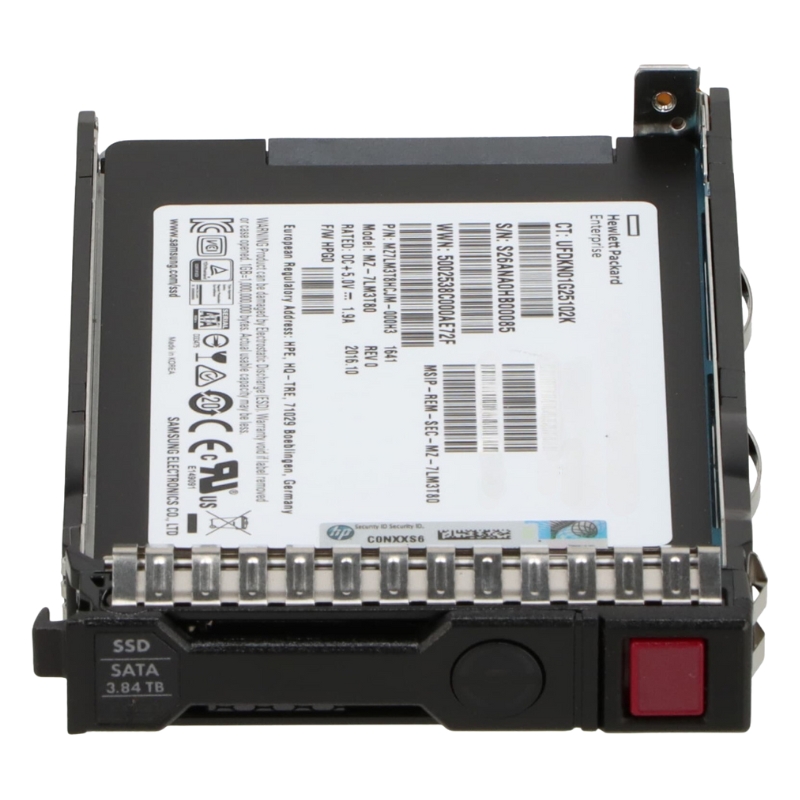
HPE MZ7LM3T8HMLP-000H3 — Enterprise 3.84TB SATA 6G Hot-Plug SFF SSD
The HPE MZ7LM3T8HMLP-000H3 is a high-performance enterprise-grade solid-state drive designed to
deliver reliability, speed, and efficiency for demanding workloads. Built with robust features and
advanced storage technologies, it ensures smooth operations across servers and data centers.
General Details
- Brand: Hewlett Packard Enterprise (HPE)
- Model Number: MZ7LM3T8HMLP-000H3
- Product Category: Enterprise Internal SSD
- Storage Capacity: 3.84 Terabytes
- Form Factor: 2.5-inch SFF (Small Form Factor)
Drive Interface and Compatibility
Designed with universal compatibility, this solid-state drive uses a
SATA 6.0 Gbps interface to deliver stable connectivity with servers and storage
systems. Its plug-and-play capability makes integration easier for IT professionals.
Supported Features
- Advanced TRIM command for optimized performance
- S.M.A.R.T. monitoring for health diagnostics
- Read-intensive design for enterprise workloads
- Secure 256-bit AES data encryption
- Flash Cell Care Technology for extended lifespan
Performance Characteristics
The drive provides exceptional speed and endurance tailored for enterprise applications. It is
particularly effective in read-heavy environments such as database management, online
transaction processing, and virtualization.
Key Performance Ratings
- Random Read IOPS: Up to 99,000
- Random Write IOPS: Up to 18,000
- MTBF (Mean Time Between Failures): 2,000,000 hours
Reliability and Data Integrity
HPE ensures consistent performance and enhanced data security with advanced protective
technologies. These features help safeguard mission-critical data against power outages,
temperature fluctuations, and unexpected failures.
Protective Mechanisms
- End-to-End Data Protection to maintain data consistency
- Power-Loss Protection (PLP) for safeguarding during outages
- Dynamic Thermal Guard Algorithm for heat control
- Error Correcting Code (ECC) to minimize data corruption
Why Choose HPE Enterprise SSDs?
Businesses rely on HPE storage solutions for their dependability, long lifespan, and optimized
efficiency. The MZ7LM3T8HMLP-000H3 offers strong performance benchmarks,
scalable capacity, and energy efficiency tailored to high-demand IT infrastructure.
Advantages at a Glance
- High endurance for read-intensive workloads
- Enterprise-grade encryption and data protection
- Reduced power consumption for efficient operations
- Designed for mission-critical server applications
- Enhanced durability with 2 million hours MTBF
Use Case Scenarios
- Data center operations requiring high read throughput
- Virtualization and cloud computing platforms
- Enterprise-level databases with heavy read loads
- Secure environments needing advanced encryption
Key technical highlights
- Capacity: 3.84 TB user-addressable (raw formatting-dependent).
- Interface: SATA 6.0 Gbps (SATA III) — broad platform compatibility with HPE servers and many enterprise storage controllers.
- Form factor: 2.5" SFF, 7mm height; hot-plug capable for maintenance without downtime.
- Sequential throughput: Up to 520 MB/s read / 480 MB/s write (128 KB sequential).
- Random I/O: Up to ~97K IOPS random read (4 KB) and ~24K IOPS random write (4 KB) — tuned for consistent QoS under mixed loads.
- Endurance & DWPD: Enterprise-rated endurance with multi-year TBW allowance and approximately 1.3 DWPD for workload durability.
- Reliability: MTBF in the multi-million-hour range and industry-grade error/lifetime protection features.
Performance snapshot
Expect steady sequential bandwidth near the SATA limit on single-drive tests (≈520/480 MB/s). Random performance is where enterprise value appears: predictable 4 KB read latency and IOPS consistency make the drive suitable for virtual machines, medium-latency databases, and read-cache layers. Performance measurements are typically performed under standardized test conditions (FIO with specified queue depths); real-world numbers vary by controller, platform and workload profile.
Detailed specifications (concise reference)
Interface & compliance
- SATA 6.0 Gbps interface, ATA/ATAPI-7 compatible
- Support for NCQ, TRIM, and standard ATA feature set
- Native command queuing (NCQ) support for throughput optimization
Performance & QoS
- Sequential read (128 KB): up to 520 MB/s
- Sequential write (128 KB): up to 480 MB/s
- Random read (4 KB): up to ~97,000 IOPS
- Random write (4 KB): up to ~24,000 IOPS
- Latency (4 KB, QD=1): read ≈130 µs, write ≈30 µs (typical)
- IOPS consistency: high percentiles maintained for predictable service (enterprise-grade QoS)
Endurance, reliability & power
- Endurance (TBW for 3.84TB): multi-petabyte write allowance across the drive lifetime (manufacturer TBW spec listed for each capacity in datasheet).
- DWPD: ~1.3 Drive Writes Per Day (indicative for mixed-read workloads)
- MTBF: multi-million-hour design target
- Power: active read/write and idle figures tuned to enterprise thermal envelopes (higher capacities show slightly increased active write power).
Common use cases
- Read-caching layer: As an accelerator in hybrid arrays or host-based caches to offload reads from slower media.
- Virtualization hosts: Supporting high VM densities with predictable latency for boot storms and random read patterns.
- Database acceleration: Read-heavy OLAP queries or analytics where sequential throughput and random read IOPS are important.
- Capacity flash tiers: Where high capacity and low-latency reads are required at a lower cost than high-endurance flash.
Compatibility & integration with HPE systems
Designed as an OEM offering (commonly found under HPE OEM part numbers), this drive integrates well with HPE ProLiant and MSA arrays that accept 2.5" SATA enterprise units. Hot-plug capability and industry-standard connectors let administrators perform field replacements without server downtime in supported chassis. Always confirm firmware and HPE compatibility lists before mass deployment to ensure management features (firmware update flow, SMART attributes and vendor-specific health reporting) are recognized by your server management stack.
Firmware & management notes
- Enterprise drives often ship with OEM firmware tuned for manufacturer ecosystems; when replacing or upgrading, match firmware family where required by the host vendor.
- SMART reporting, thermal logs and media wear indicators should be monitored with standard tools or vendor utilities; integrate alerts into your monitoring systems for proactive replacement.
- When used in RAID arrays, account for rebuild performance and increased background write activity — provision spare capacity and plan RAID-level trade-offs accordingly.
Deployment recommendations & best practices
Thermal & airflow planning
2.5" enterprise SSDs achieve rated performance under recommended thermal conditions. Ensure sufficient airflow across drive bays; monitor drive case temperature (Tc) and adhere to HPE chassis cooling recommendations. For sustained heavy writes, provide extra airflow or allow cooling cycles to avoid thermal throttling.
RAID and redundancy design
- Choose RAID level based on performance vs. redundancy needs: RAID10 for low-latency workloads, RAID6 for higher usable capacity with parity protection.
- Account for rebuild times: while SSD rebuilds are faster than HDDs, they introduce background writes that consume endurance budget.
- Use spare drives (hot spares) to speed recovery and reduce unrecoverable read error exposure during rebuilds.
Endurance management
Monitor usage metrics (host writes, spare area wear, TBW counters) and set replacement thresholds well before warranty limits to avoid unexpected failures. For write-heavy caching or log-intensive tasks, consider higher-DWPD class drives; for the PM863a-based 3.84TB drive, the design point targets read-dominant or mixed workloads rather than sustained high-rate writes.
Comparing to other enterprise SSD classes
The MZ7LM3T8HMLP is a mid-tier enterprise SATA SSD — it trades some endurance and raw write performance for greater capacity and lower cost-per-GB compared to high-endurance, NVMe or SAS devices. When comparing:
- vs consumer SATA SSDs: Enterprise firmware, extended MTBF and full ATA enterprise command support make the HPE/Samsung drive far more suitable for 24/7 server duty.
- vs NVMe SSDs: NVMe will offer higher IOPS and lower latency; SATA enterprise SSDs offer broad backward compatibility and simpler platform integration at a lower price point.
- vs SAS enterprise SSDs: SAS can offer dual-port redundancy and different performance envelopes; choose SAS if controller topologies or multi-pathing demands exist.
Drive health monitoring & operational tooling
Integrate SMART and vendor-specific health counters into central monitoring. Key telemetry to track:
- Total host writes (to track TBW consumption)
- Available spare (%) and bad block statistics
- Temperature and power cycle counts
- Reallocated/retired block counts and media errors
Use server management suites (HPE iLO/Systems Insight Manager) and storage management tools that can parse vendor SMART attributes for automated alerting and pre-failure replacement scheduling.
Security features & data protection
The drive family supports industry-standard encryption engines (AES-256) and secure erase features. When data sanitization is required at decommission, use vendor-approved secure erase commands or platform-level encryption to meet compliance requirements. Always validate erase and sanitization outcomes with your organization’s policy tools.
Migration & replacement checklist
- Confirm RAID parity and backup state before any drive removal.
- Match capacity and interface type when replacing drives to prevent compatibility problems.
- Stage firmware updates in a test environment; avoid rolling firmware updates across production arrays without vendor guidance.
- Use hot-swap trays and observe proper insertion/ejection sequences in HPE chassis to avoid electrical or mechanical damage.





 Contact Us
 Information
 Catalog
 Solid State Drives (SSD)
 Network Switches
 Hard Disk Drives
 HBA & Controllers
 PC & Servers
 PC & Server Memory
 CPU & Processors
 Network Routers
 Power Supplies
 Tape Drives & Libraries
 Network Devices
 Computer & Network Cables