(7% discount is applied at checkout)
Cart is empty
Your go-to destination for cutting-edge server products
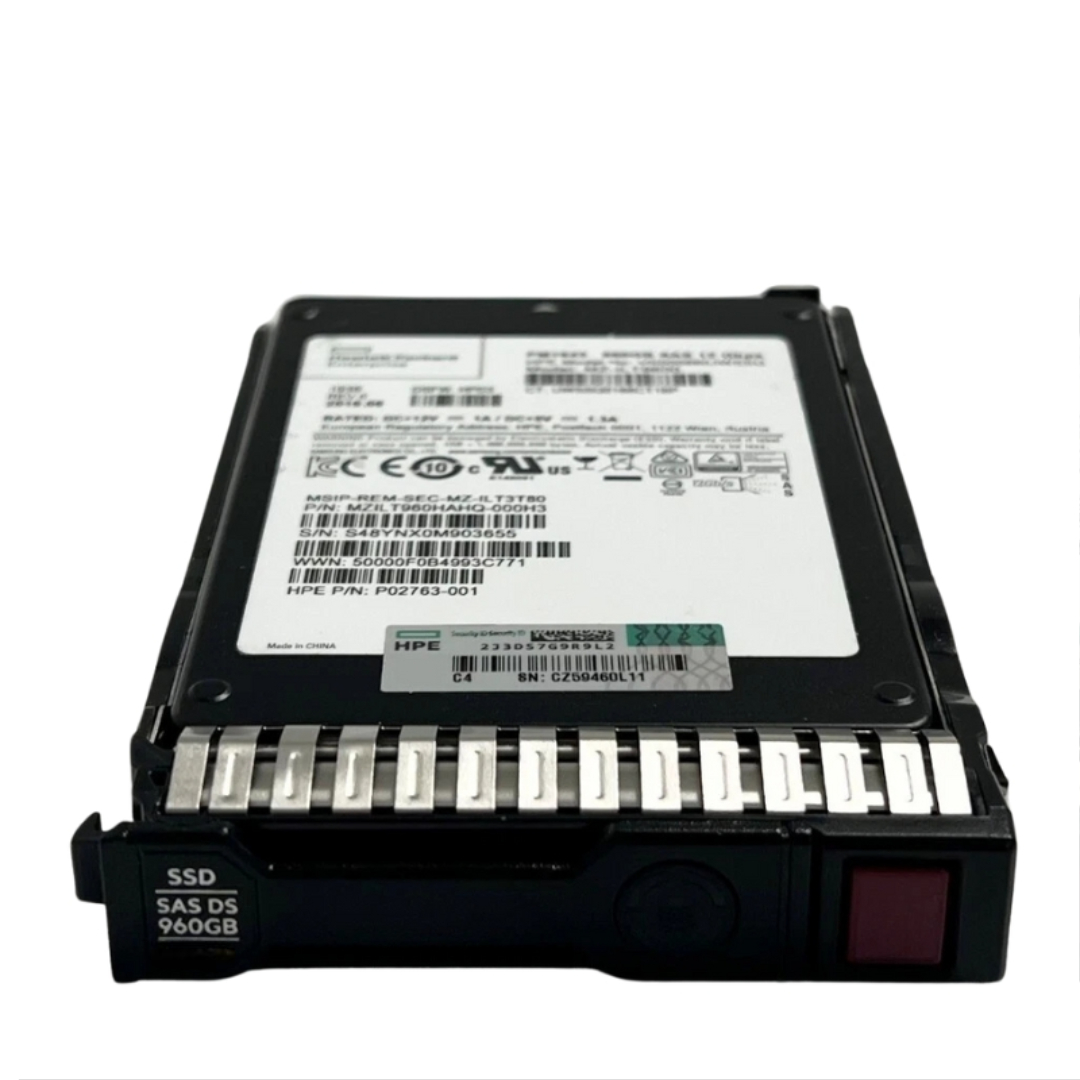


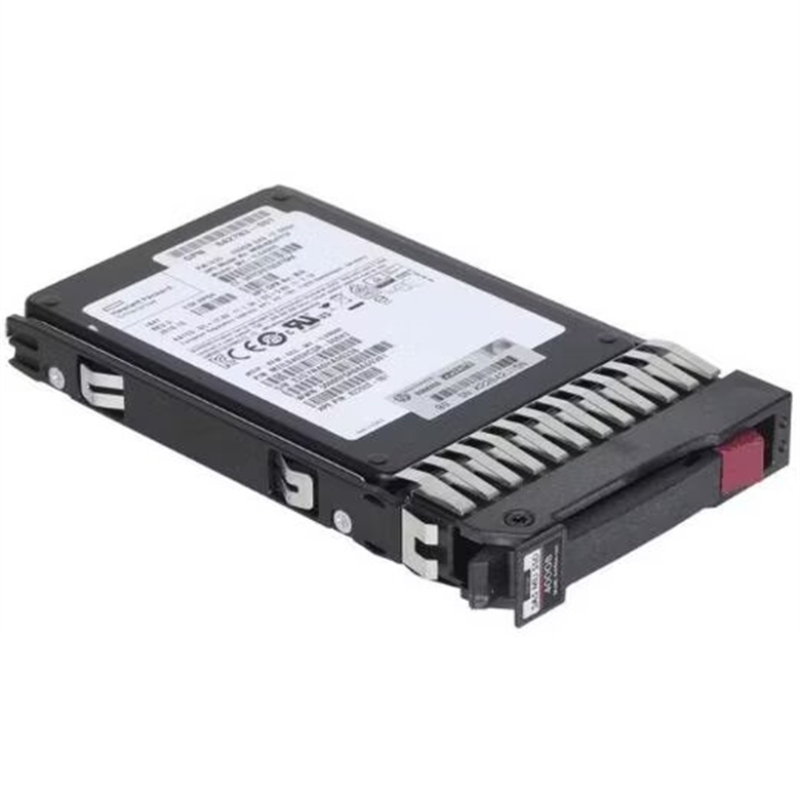
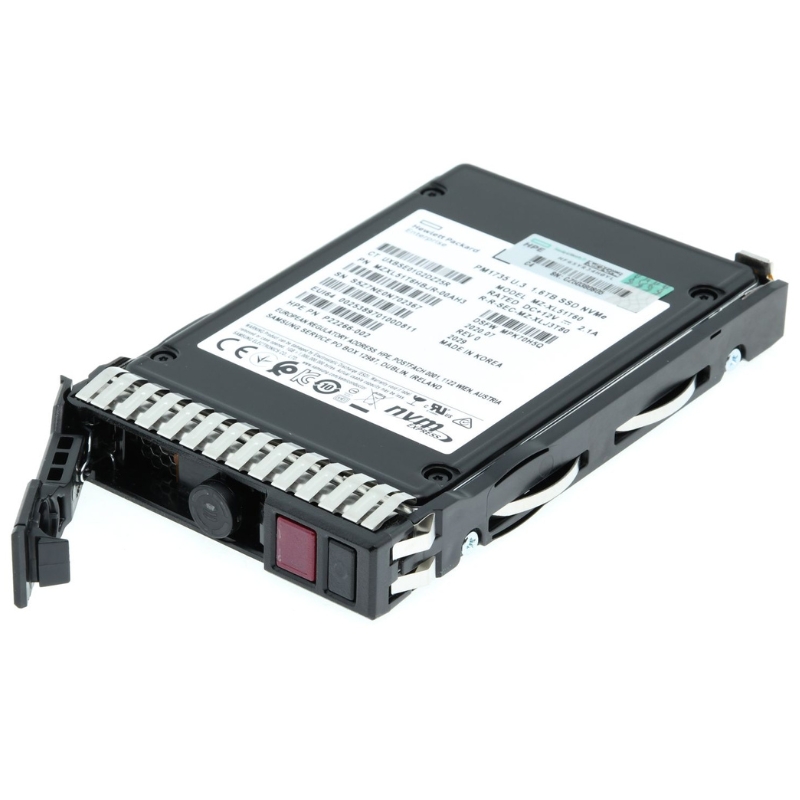
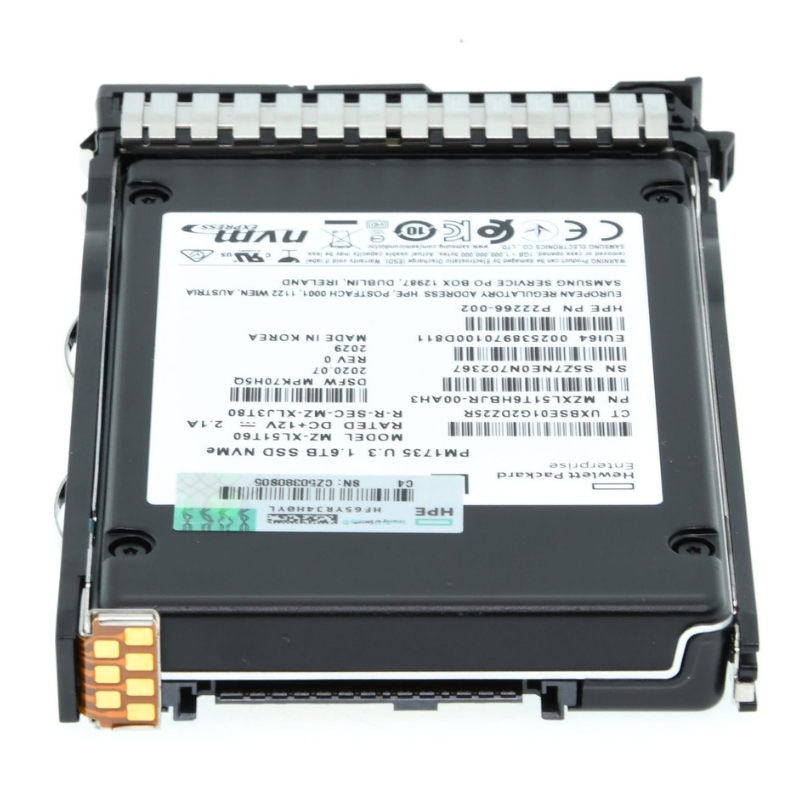
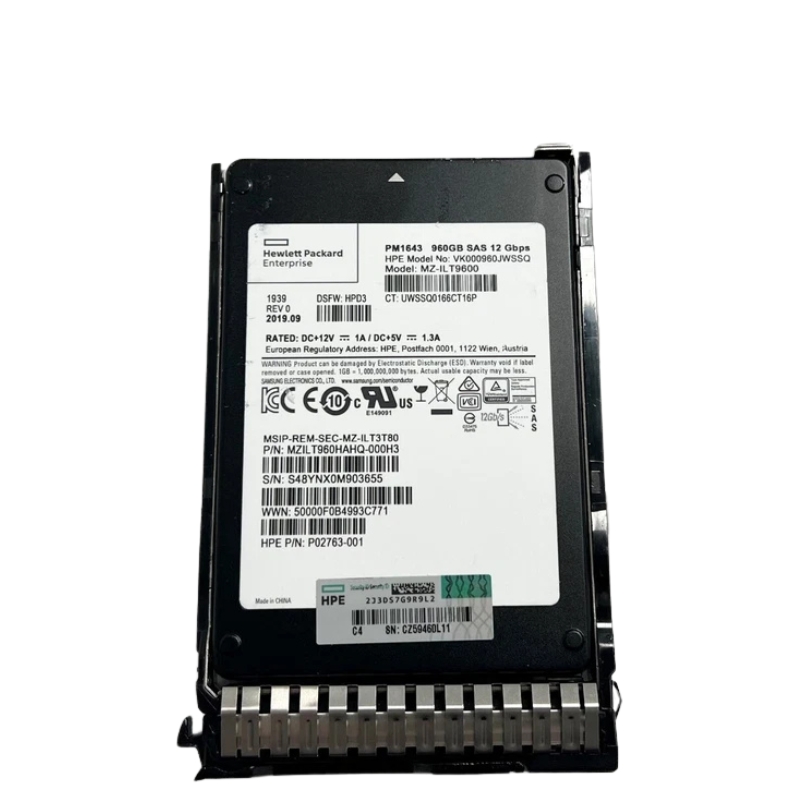
HPE MZ7LM960HMJP-000H3 960GB SATA 6GBPS LE SFF SSD. Excellent Refurbished with 1 Year Replacement Warranty
The HPE MZ7LM960HMJP-000H3 is a high-performance 2.5-inch internal solid-state drive designed to deliver superior efficiency, reliability, and secure data handling. Built with advanced flash memory technology and robust endurance, this enterprise-grade SSD enhances storage systems with faster data access and improved overall system responsiveness.
This enterprise SSD provides exceptional input/output operations per second, ensuring rapid application responsiveness and consistent performance under demanding workloads.
Integrating this SSD into business environments provides consistent high-speed operations, lower latency, and secure data retention, making it suitable for enterprise servers, mission-critical applications, and data-intensive workloads.
This drive is engineered for environments that demand uninterrupted performance and data reliability. It ensures optimal balance between performance, endurance, and security for enterprise computing systems.
While many SATA SSDs target consumer notebooks or desktops, the HPE MZ7LM960HMJP-000H3 is engineered specifically for enterprise deployment. The distinguishing attributes include firmware validated for HPE server platforms, extended power-loss protection options, and workload-friendly performance profiles. This combination reduces the friction of integration in server racks and storage arrays while delivering reliable service in 24/7 production environments.
Enterprise SSDs do more than store bits; they interact with host systems through command queuing, TRIM, and drive-level error management. The MZ7LM960HMJP-000H3 includes firmware optimizations for consistent sustained performance under heavy I/O, predictable latency for small-block random reads and writes, and robust error-correction routines. When used in HPE-branded systems, firmware and microcode compatibility reduce the likelihood of drive-level incompatibilities and enable smoother firmware updates through HPE management tools.
The 2.5-inch SFF (small form factor) profile makes this drive suitable for dense server environments. The G1 series specification denotes a specific HPE-compatible sled and connector layout; many HPE chassis and carriers are designed to accept these drives without modification. Physical dimensions and connector pinouts follow industry conventions, ensuring easy mounting in 2.5-inch drive bays and standard hot-swap trays.
SATA 6Gbps SSDs are naturally bounded by the SATA interface; however, within that envelope the MZ7LM960HMJP-000H3 delivers strong mixed-workload performance. Expect rapid sequential throughput for large-file operations and much faster random I/O compared to mechanical HDDs. For common enterprise tasks—OS booting, database caching, application logs, and virtualization boot storms—this drive reduces service latency and accelerates application responsiveness.
Typical enterprise SATA SSD behavior includes high sequential read/write speeds close to the SATA bus limit for sequential transfers, and low-latency random reads/writes for small block sizes. While exact throughput numbers vary by firmware and system, administrators should optimize workloads by ensuring proper alignment, enabling TRIM where supported, and sizing caches to complement the SSD's strengths.
Endurance is a key concern in enterprise SSD selection. The HPE MZ7LM960HMJP-000H3 is built with high-quality NAND and controller logic to support sustained mixed workloads. Reliability features often include advanced ECC (error-correcting code), bad block management, wear-leveling algorithms, and optional power-loss protection to minimize data loss in unexpected outages. Administrators should consult HPE warranty and endurance ratings (TBW or DWPD) for planning replacement cycles.
SMART attributes and vendor-specific telemetry give insight into remaining lifespan, programmed/erased cycles, and reallocated sectors. Use HPE Integrated Lights-Out (iLO), HPE System Insight Manager, or vendor monitoring tools to collect SMART data, temperature logs, and media wear indicators. Early detection of abnormal metrics enables proactive drive replacement and prevents unscheduled downtime.
Before purchase, confirm compatibility with your server model and storage controllers. HPE often lists certified drive models per server and storage array—using certified HPE drives reduces support complexity and guarantees firmware compatibility. That said, the SATA interface is widely standardized; many industry-standard controllers will operate with the drive, but vendor-specific features (encryption, telemetry) may be limited on non-HPE systems.
If deploying in RAID arrays, choose a controller with enterprise-grade cache and battery or supercapacitor-backed write caching to complement the drive's endurance profile. RAID levels should be selected according to workload: RAID 1/10 for performance and redundancy, RAID 5/6 for higher usable capacity with protection, while also considering rebuild impact on SSD endurance. For mixed SSD/HDD arrays, verify the RAID controller's SSD handling and rebuild prioritization.
SSDs generate less heat than high-RPM HDDs, but in dense server environments thermal management remains critical. Ensure adequate airflow through chassis bays, monitor drive temperatures, and follow vendor-specified operating temperature ranges. Sudden temperature spikes can affect longevity and trigger thermal throttling in some controllers.
Enterprise drives may include built-in mechanisms or rely on the host platform for power-loss protection. When deploying the MZ7LM960HMJP-000H3 in write-heavy environments, pair it with systems that provide clean power or have UPS protection. For maximum data integrity during sudden power loss, use controllers with non-volatile cache or drives explicitly rated for power-loss protection.
The 960GB capacity positions this SSD as a versatile option for many enterprise roles. Below are common deployment patterns where this drive delivers measurable benefits.
When sizing a storage solution, balance capacity, performance, and endurance. A 960GB SSD provides ample space for operating systems and hot datasets; however, consider RAID overhead, snapshots, and backups when planning usable capacity. SSDs typically cost more per GB than HDDs, but the total cost of ownership (TCO) should factor in power savings, cooling efficiency, increased application performance, and potential consolidation of server workloads.
When evaluating enterprise SATA SSDs similar to the HPE MZ7LM960HMJP-000H3, prioritize the following attributes:
Installing the MZ7LM960HMJP-000H3 is straightforward in supported HPE bays. Follow these practical steps to minimize risk during installation and replacement.
Enterprise SSDs commonly offer security features such as hardware-level encryption, secure erase, and cryptographic erase options. If data security is a requirement, ensure the drive supports the needed encryption standards and that your platform can manage keys securely. HPE platforms often provide centralized key management and secure erase capabilities to meet compliance requirements.
When retiring or reassigning drives, perform a vendor-sanctioned secure erase to remove residual data. Avoid relying on file-level deletion, which does not fully sanitize NAND cells. Use HPE or manufacturer utilities designed to execute secure erase procedures that conform to organizational data governance policies.
Understanding the tradeoffs between storage technologies helps choose the right medium for each tier of your architecture. Below is a concise comparison framework to guide selection.


 Contact Us
 Information
 Catalog
 Solid State Drives (SSD)
 Network Switches
 Hard Disk Drives
 HBA & Controllers
 PC & Servers
 PC & Server Memory
 CPU & Processors
 Network Routers
 Power Supplies
 Tape Drives & Libraries
 Network Devices
 Computer & Network Cables