(7% discount is applied at checkout)
Cart is empty
Your go-to destination for cutting-edge server products
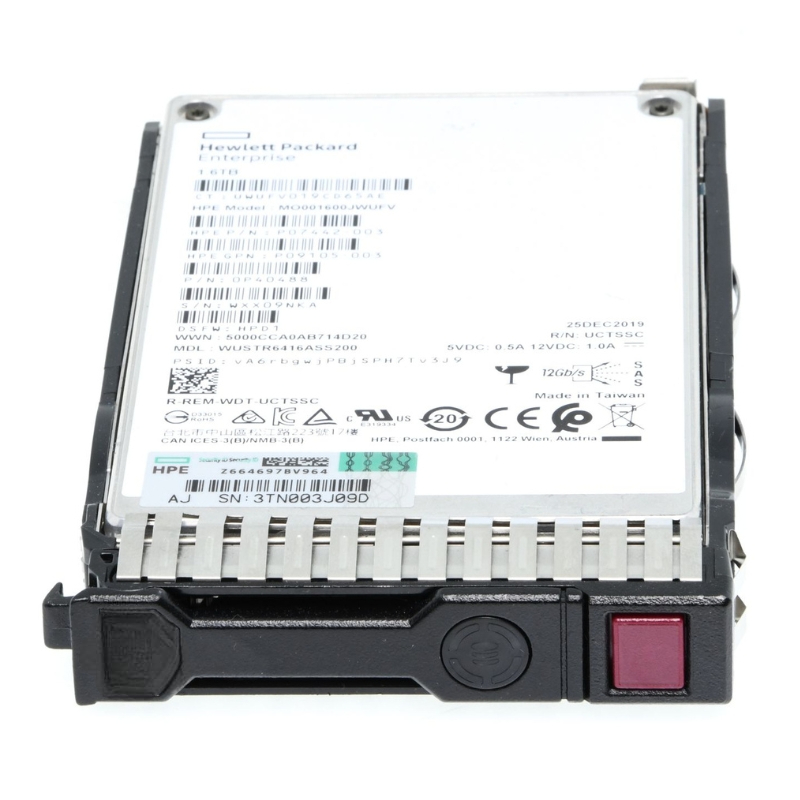


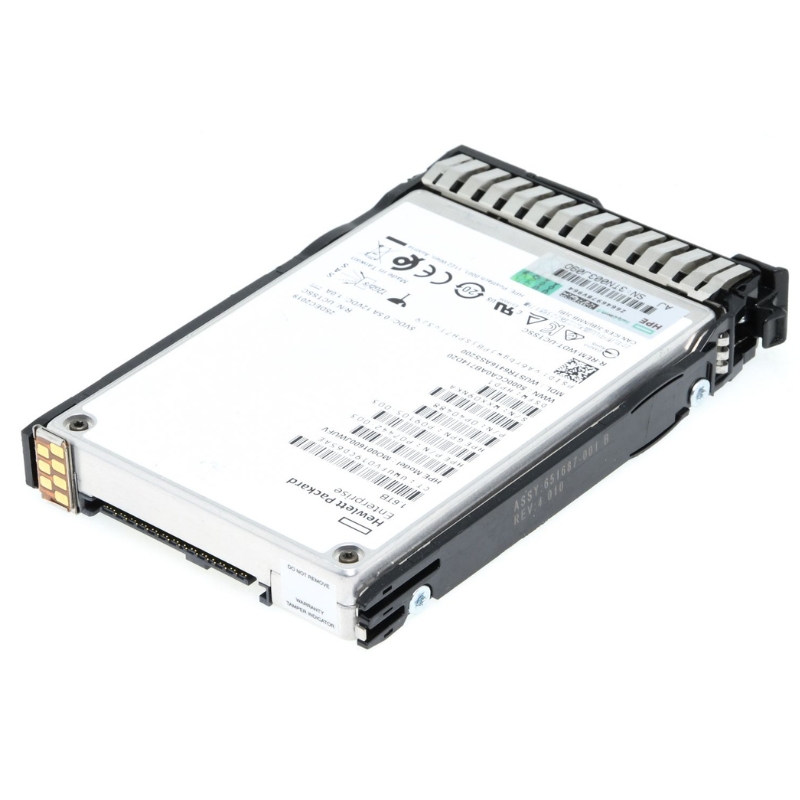
HPE N9Z14A SV3000 400GB SAS 12GBPS MU Multi Level Cell SFF CC SSD. Excellent Refurbished with 1 year replacement warranty
This enterprise-grade solid state drive is designed for organizations seeking higher efficiency, durability, and seamless compatibility with modern infrastructures. Built with advanced flash technology, it delivers consistent performance across mixed workloads while offering excellent reliability.
Offering a substantial 400GB storage capacity, this drive ensures reliable handling of critical data while maintaining speed and efficiency. It supports a maximum transfer rate of 12Gb/s, guaranteeing reduced latency and faster response times for business-critical applications.
This drive leverages a Serial Attached SCSI (SAS) interface, delivering robust connectivity and supporting seamless integration in enterprise servers and storage arrays. The SAS protocol ensures enterprise-level stability, extended scalability, and multi-device communication.
The physical and electrical design of the HPE N9Z14A centers on durability and fit-for-purpose engineering. The SFF packaging enables maximum drive density in blade servers, rack-mount arrays, and high-density storage enclosures—ideal when rack space and thermal headroom are at a premium. Inside, enterprise-focused components and firmware tuning deliver predictable I/O behavior under sustained workloads.
Compact drives create heat; HPE's SV3000 series addresses thermal constraints through thermal throttling profiles, validated airflow envelopes, and heat-tolerant components. The drive's mechanical profile adheres to industry SFF dimensions, making it fully compatible with HPE validated sleds, caddies, and backplanes.
HPE qualifies drives for enterprise shock and vibration tolerances and publishes Mean Time Between Failures (MTBF) metrics that align with data center expectations. These specifications reduce the risk of unexpected downtime and support service-level agreements.
The HPE N9Z14A SV3000 400GB SSD is tuned for mixed read/write workloads typical of virtualization, database caching, and general-purpose block storage. Leveraging a SAS 12Gb/s interface and optimized flash translation layers (FTL), the drive delivers high random IOPS and low, consistent latency—especially compared to traditional spinning media.
- Sequential performance: Excellent for large-file transfers and streaming write/read tasks, supported by the 12Gb/s SAS channel.
- Random performance: Strong for small-block reads/writes due to internal parallelism, multiple channels to NAND, and enterprise caching algorithms.
Endurance is a critical consideration when selecting any SSD for enterprise workloads. The MLC NAND used in the SV3000 balances longevity and cost, and HPE complements this with firmware-level wear management, background scrubbing, and error-correction routines to maintain data integrity over the drive’s life.
Enterprise-grade SSDs commonly integrate power-loss protection capacitors and robust ECC (Error Correcting Code) to prevent data corruption during sudden power events and to correct bit errors before they propagate. These safeguards are particularly valuable in mission-critical storage arrays.
The N9Z14A is designed to be drop-in compatible with HPE storage controllers, servers, and validated arrays. Compatibility extends to firmware ecosystems and vendor management tools, allowing administrators to monitor, update, and manage assets centrally while preserving warranty and support entitlements.
HPE often ships drives with validated firmware versions specifically tuned for its platforms. Using HPE's integrated management suites (such as HPE OneView, Integrated Lights-Out — iLO — or storage management suites) ensures correct firmware management and enables drive-level telemetry, predictive health, and secure erasure functions.
Security is paramount in enterprise storage. The SV3000 family supports advanced data protection mechanisms to help organizations meet regulatory, privacy, and corporate governance requirements.
Secure erase commands and cryptographic erase options allow the safe decommissioning or repurposing of drives—critical for service providers and enterprises with strict data disposal policies. Always follow validated sanitization procedures for compliance.
Successful deployment of HPE N9Z14A drives requires planning across hardware, firmware, and operations. Correctly provisioning drives, understanding their role within the storage topology, and continuously monitoring health metrics will maximize return on investment.
Place drives in chassis bays that meet manufacturer airflow requirements. Monitor drive inlet temperatures and verify system-level cooling to prevent thermal throttling that can degrade performance under sustained I/O.
When selecting storage media, compare the HPE N9Z14A to competing flash types and interfaces. Each choice involves trade-offs between cost, performance, capacity, and endurance.
SAS 12Gb/s SSDs remain prevalent in many enterprise arrays due to mature ecosystems and broad controller compatibility. NVMe drives—directly attached to PCIe—offer lower latency and higher parallelism but require NVMe-capable backplanes and host controllers. Choose based on application latency sensitivity, platform readiness, and total cost of ownership.
The HPE N9Z14A fits a range of real-world scenarios. Below are illustrative deployments that highlight the drive’s strengths:
In virtualized clusters, the drive accelerates VM boot storms, enables faster VM migration, and reduces I/O tail latency—improving end-user responsiveness and consolidation ratios.
For OLTP (Online Transaction Processing) databases and caching layers, the drive’s low-latency random I/O and consistent performance shorten query response times and increase transaction throughput.
As part of a tiered storage strategy, 400GB SFF SSDs provide hot-tier capacity for frequently accessed data while larger, slower media handle cold storage. Compression-capable drives help optimize usable capacity in such arrays.
Ongoing health checks and firmware hygiene will ensure predictable drive behavior over time. Use HPE management tools to centralize alerting, firmware updates, and replacement workflows.
Apply firmware updates only after validating compatibility with host controllers and after scheduling maintenance windows. HPE releases validated firmware bundles that mitigate risk when applied in prescribed orders.
In regulated industries—finance, healthcare, government—drive-level encryption, detailed audit trails, and approved sanitization techniques help meet compliance requirements. The SV3000 line integrates with these practices when configured within validated HPE systems.
Centralized logging and hardware telemetry feed compliance reports and forensic investigations; use management tools to capture encrypted logs and retention policies aligned to corporate mandates.
Organizations modernizing storage should plan migrations carefully. Strategies include phased replacements, hybrid arrays, and read/write caching layers that minimize downtime and gradually shift workloads to flash-backed tiers.
Use controller-level replication and snapshot capabilities to move data between tiers or sites. Ensure replication is configured to respect the performance profile and queuing behaviors of SSD-backed volumes.
Consult HPE’s official data sheets, interoperability matrices, and firmware bulletins for the most accurate installation instructions, validated configurations, and compatibility lists. These resources will provide tested guidance for deployment, firmware updates, and support pathways.


 Contact Us
 Information
 Catalog
 Solid State Drives (SSD)
 Network Switches
 Hard Disk Drives
 HBA & Controllers
 PC & Servers
 PC & Server Memory
 CPU & Processors
 Network Routers
 Power Supplies
 Tape Drives & Libraries
 Network Devices
 Computer & Network Cables