(7% discount is applied at checkout)
Cart is empty
Your go-to destination for cutting-edge server products
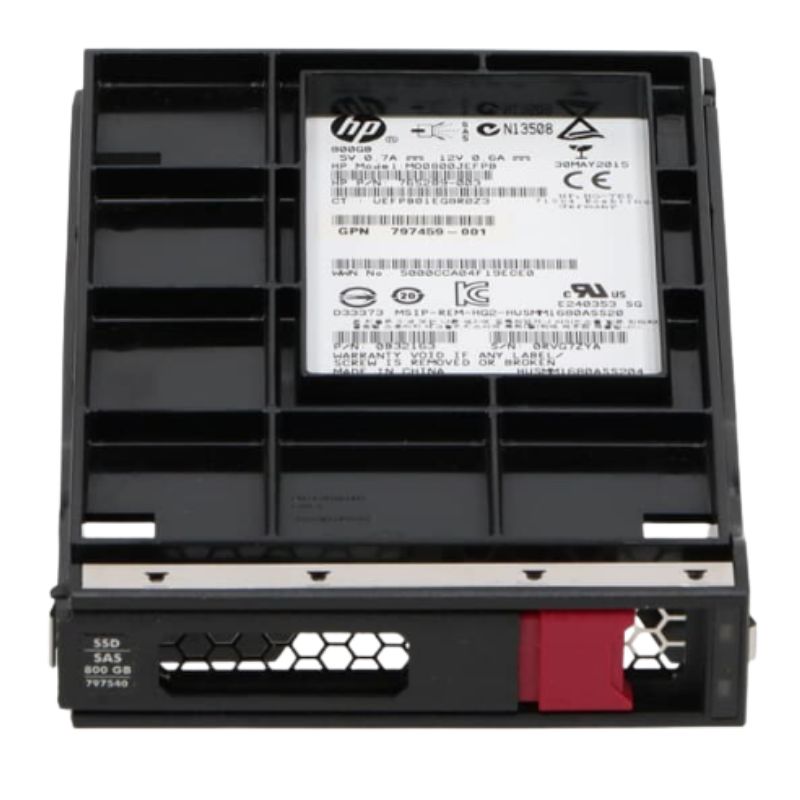


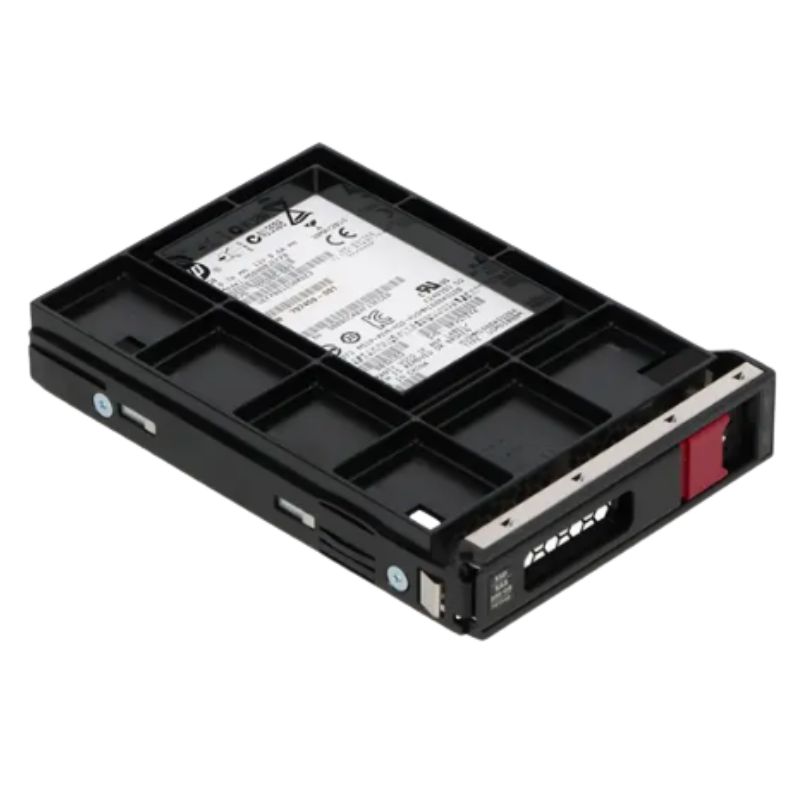
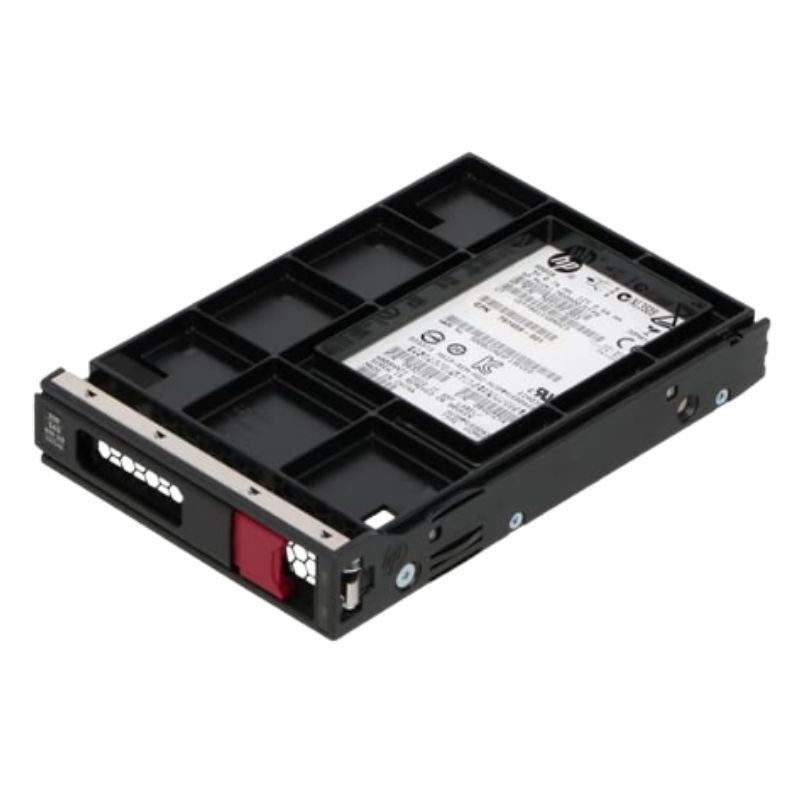
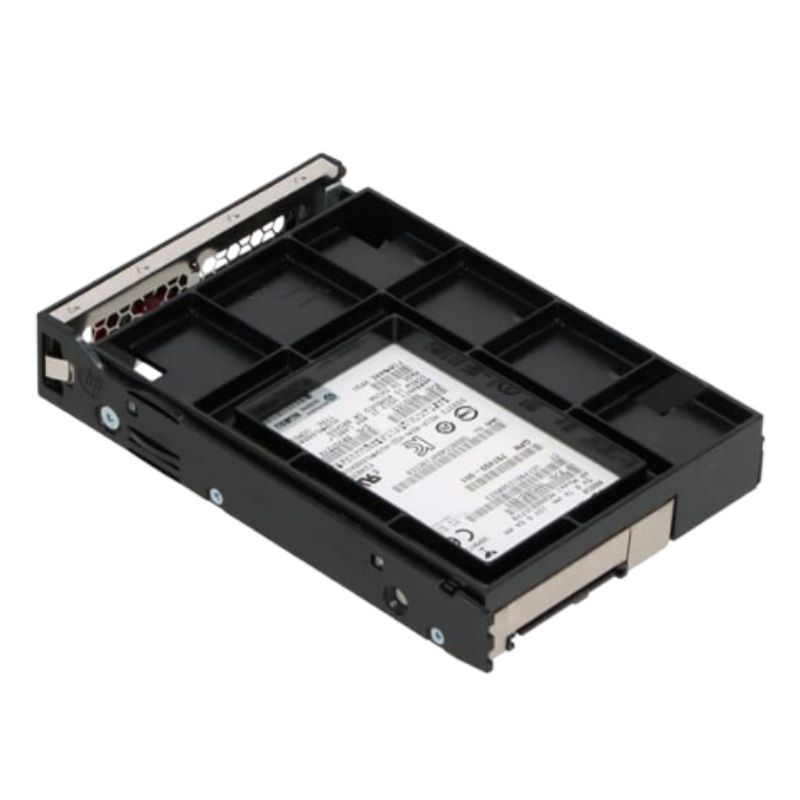
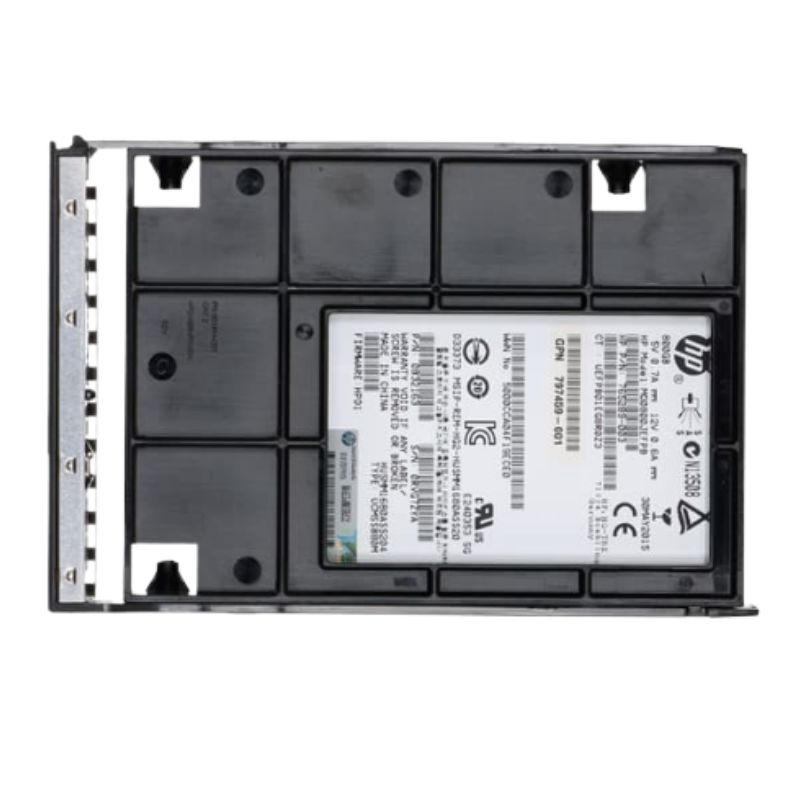
HPE P04551-004 800GB SAS 12GBPS MU 3.5inch LFF LPC Hot Swap Digitally Signed Firmware Solid State Drive. Excellent Refurbished with 1 Year Replacement Warranty
This enterprise-grade storage module enhances server responsiveness with dependable performance, digitally signed firmware, and a rugged hot-swap design. Built for data-intensive applications, it combines speed, stability, and long-term endurance for ProLiant Gen10 platforms.
The drive fits a wide selection of HPE ProLiant Gen10 systems, ensuring optimized performance and validated reliability. Ideal for environments requiring secure firmware and stable storage throughput.
The HPE P04551-004 800GB SAS 12Gbps Mixed Use 3.5-inch LFF LPC hot-swap solid state drive with digitally signed firmware and vendor tray for ProLiant Gen10 servers is a purpose-built storage component designed to bring enterprise-class reliability, performance consistency, and manageability to data center environments. This category description delves into the drive’s technical profile, its role in modern server architectures, and the practical benefits buyers should expect when deploying the HPE P04551-004 in production or lab environments. By exploring interface characteristics, workload suitability, firmware and security considerations, compatibility with HPE ProLiant Gen10 systems, and operational best practices, this page equips procurement teams, system administrators, and storage architects with the context required to make an informed purchase decision.
The drive leverages a 12Gbps Serial Attached SCSI (SAS) interface — a time-tested protocol favored in enterprise storage for its robustness, dual-port availability on many models, and ability to coexist with a broad range of RAID controllers and HBA configurations. The 3.5-inch large form factor (LFF) using the Low Profile Connector (LPC) aligns with rack-mounted ProLiant chassis that support LFF bays, enabling high-capacity, cost-efficient storage layers within tiered architectures. When planning rack layouts and chassis configurations, engineers should verify backplane support for SAS 12Gbps signaling and confirm whether the server chassis supports the LPC standard to ensure physical and electrical compatibility.
The 800GB capacity positions the HPE P04551-004 in the middle of the performance-capacity spectrum for SAS SSDs: large enough for metadata, hot-tier application datasets, and mixed read/write workloads, yet compact enough to be deployed in quantity for capacity scaling. The 'mixed use' designation indicates the drive has endurance and firmware tuning optimized for a blend of read and write operations, making it a strong choice for virtualized environments, tier-1 application databases, caching layers, and mixed workload file services. Workload profiling is essential: measuring average writes per day and IOPS patterns will confirm if the drive’s mixed-use endurance specifications meet the intended service-level objectives.
Digitally signed firmware ensures firmware authenticity and integrity, reducing the risk of unauthorized or corrupted firmware being applied to the drive. For enterprises that require rigorous cybersecurity controls and regulatory compliance, signed firmware adds a layer of assurance. HPE’s firmware ecosystem typically integrates with server management tools such as HPE iLO and HPE Smart Update utilities, enabling coordinated firmware updates that maintain compatibility across server components. Teams should adopt a controlled firmware update cadence and leverage vendor-signed release notes to understand performance improvements, bug fixes, and compatibility changes.
Virtualized infrastructures and desktop virtualization profiles generate unpredictable IOPS bursts and a mix of sequential and random reads/writes. The HPE P04551-004’s mixed-use tuning and SAS interface are well-suited for virtual machine boot storms, snapshot operations, and the metadata-intensive patterns common in hypervisor platforms. Placing these SSDs in a hot-tier or combined with caching layers can dramatically reduce VM boot times and increase density on compute nodes without sacrificing responsiveness.
Transactional databases and application servers with balanced read/write ratios will find the mixed-use endurance profile valuable. The consistent latency of an enterprise SAS SSD helps maintain predictable query response times and improves user experience in customer-facing applications. For OLTP (online transaction processing) workloads where small random I/O dominates, integrating P04551-004 drives into RAID groups or software-defined storage pools provides a predictable foundation for capacity planning and performance SLAs.
When used for active content caches, SMB/NFS active datasets, or metadata stores, the P04551-004 offers a reliable low-latency tier that complements spinning media for high-capacity cold storage. Content delivery networks (CDNs), media transcoding farms, and collaborative file systems benefit from the drive’s ability to deliver consistent access times under mixed loads while preserving the lower total cost of ownership that SAS SSDs can provide when compared with all-flash NVMe tiers in certain architectures.
The P04551-004 is shipped with an HPE-compatible tray to ensure proper mechanical fit, hot-swap readiness, and signal integrity in ProLiant Gen10 chassis. This factory-provisioned tray reduces installation friction and aligns with HPE’s field-replaceable unit (FRU) practices. Before deployment, administrators should cross-check the server model and firmware matrix to confirm certified compatibility, ensuring full support in the event of vendor troubleshooting or RMA processes. Compatibility matrices and HPE’s support documentation typically document validated combinations of controllers, backplanes, and drive firmware.
While SAS drives are broadly compatible with a wide range of HBA and RAID controllers, performance and feature availability—such as advanced RAID caching algorithms, synchronous replication, or drive-level encryption—depend on the controller firmware and capabilities. For RAID-protected deployments, choose a controller that supports 12Gbps SAS signaling and the optimal stripe sizes for your workload. Where possible, testing the controller and drive combination in a lab environment yields practical insight into rebuild times, RAID stripe performance, and the effect of drive failure and rebuild operations on production services.
Enterprise SSDs expose SMART-like telemetry metrics that include remaining life estimates, write amplification indicators, and error counters that help operations teams monitor device health. Integrating drive telemetry into existing monitoring frameworks—such as HPE OneView, iLO, or third-party monitoring systems—enables proactive replacement strategies that reduce unplanned downtime. Administrators should define threshold-based alerts for critical metrics and incorporate regular firmware audits into their maintenance windows to preserve both performance and security posture.
Maintaining a spare pool aligned with the installed base is essential. The 3.5-inch form factor and vendor tray included with the P04551-004 simplify replacement, but planning should include compatibility verification for spare drives and an RMA lifecycle that matches service-level requirements. Documenting drive serial numbers and firmware versions as part of asset management makes root-cause analysis faster when anomalies arise and smooths interactions with HPE support should replacement units be required under warranty.
To prolong drive life and optimize total cost, apply workload-aware provisioning: avoid unnecessary write amplification by using aligned file systems, avoid over-provisioning write-heavy caches without appropriate endurance metrics, and leverage tiering strategies where colder data can be migrated to high-capacity HDD tiers. Storage administrators should balance capacity utilization with write endurance concerns by periodically reviewing actual write volumetrics and adjusting policies such as deduplication, compression, and snapshot retention to reduce sustained write pressure when necessary.
Performance tuning starts with choosing the correct RAID layout and stripe width for the target workload. For mixed-use patterns, RAID 10 often provides a balance of write performance and rebuild speed, whereas RAID 5 or RAID 6 can deliver higher usable capacity at the cost of write amplification and potentially longer rebuild times. Evaluate controller cache sizes, write-back versus write-through policies, and battery or flash-backed cache presence when designing for both performance and data protection. The predictable latency of SAS SSDs makes them excellent choices for caching tiers in hybrid arrays or for front-ending larger HDD pools.
The P04551-004 integrates well into software-defined architectures where local SSDs are pooled across nodes for distributed file systems or hyper-converged infrastructures. When used as local caching or performance tiers, these drives reduce network traffic to central storage and accelerate workload locality. Ensure that storage orchestration layers are aware of device endurance and configure rebalancing policies that avoid unnecessary data movement which can unduly increase write cycles on SSDs.
Enterprises must balance the premium of enterprise SAS SSDs against their operational benefits: reduced latency, lower power draw under some workloads, and smaller physical footprint compared to HDD arrays that deliver similar performance. The 800GB capacity point enables denser storage within LFF bays and is often more cost-effective for mixed workloads than higher-end NVMe tiers when factoring in controller ecosystem costs, required PCIe lanes, and platform readiness. Total cost of ownership calculations should include power and cooling, expected replacement rate based on endurance projections, and potential gains in application efficiency attributable to lower storage latency.
Procurement teams should size purchases to match expected growth curves, factoring in spare drive requirements and the operational impact of firmware refresh cycles. Lifecycle refresh planning benefits from aligning with server refresh windows; retiring or reassigning drives before end-of-life events can avoid disruptions and lower the complexity of mid-life firmware upgrades. Documenting expected replacement schedules and maintaining a small inventory of matched spare drives will shorten mean time to repair (MTTR) in the event of drive failures.


 Contact Us
 Information
 Catalog
 Solid State Drives (SSD)
 Network Switches
 Hard Disk Drives
 HBA & Controllers
 PC & Servers
 PC & Server Memory
 CPU & Processors
 Network Routers
 Power Supplies
 Tape Drives & Libraries
 Network Devices
 Computer & Network Cables