(7% discount is applied at checkout)
Cart is empty
Your go-to destination for cutting-edge server products
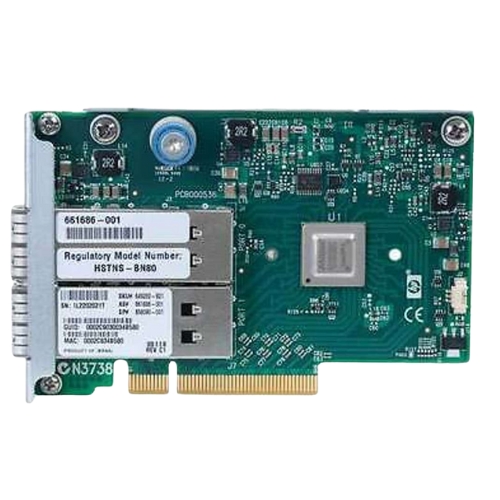


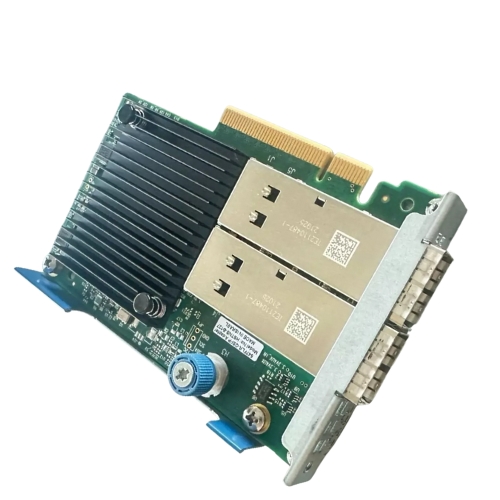
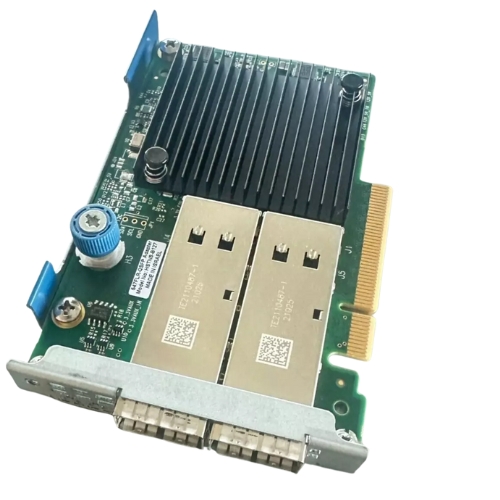
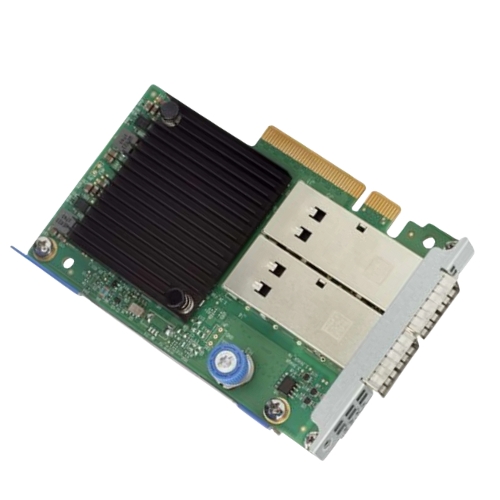
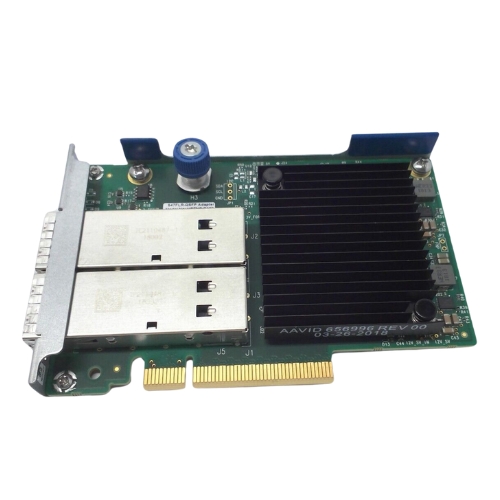
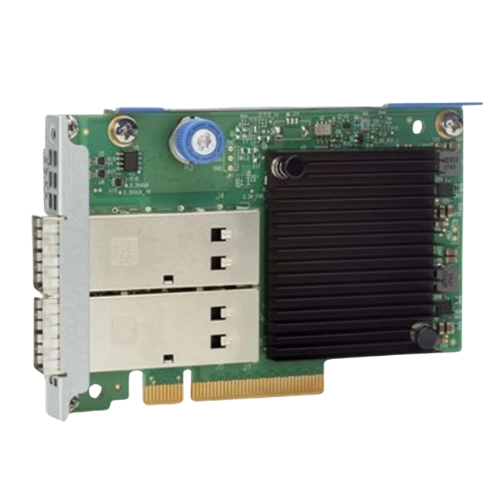
HPE P05891-B21 2 Port Network Adapter G3 40GBE QSFP+ Interface Card. Excellent Refurbished with 1 year replacement warranty
HPE P05891-B21 2-Port 40GbE Network Adapter
Built by Hewlett Packard Enterprise (HPE), the P05891-B21 network interface card (NIC) provides exceptional network performance with dual 40GbE QSFP+ connectivity. The adapter is engineered for modern enterprise workloads, enabling fast data transmission while maintaining compatibility with optical fiber and Direct Attach Copper (DAC) cabling solutions.
The HPE P05891-B21 2 Port Network Adapter G3 40GBE QSFP+ Interface Card represents an advanced networking solution designed for organizations that require reliable, high-bandwidth connectivity across modern server infrastructures. Built to support enterprise-class networking environments, this 40GbE network adapter enables businesses to meet growing demands for virtualization, cloud computing, software-defined networking, high-performance computing, artificial intelligence workloads, storage networking, and large-scale data processing. As network traffic continues to increase, organizations require infrastructure capable of delivering consistent throughput, reduced latency, enhanced efficiency, and dependable scalability. This category includes enterprise-grade network interface cards engineered specifically for demanding data center deployments where uninterrupted communication between servers, storage arrays, virtualization hosts, and networking equipment is essential.
The dual-port architecture provides increased flexibility for redundancy, bandwidth aggregation, workload balancing, and network segmentation. Organizations deploying enterprise servers benefit from higher data transfer capabilities while simultaneously improving overall network resilience. Whether supporting mission-critical databases, virtual desktop infrastructures, ERP systems, private cloud environments, container platforms, or enterprise backup operations, the HPE P05891-B21 category offers a networking foundation that aligns with modern infrastructure requirements.
Forty Gigabit Ethernet has become an important networking standard for organizations seeking significantly greater bandwidth than traditional 10GbE infrastructures. The HPE P05891-B21 2 Port Network Adapter G3 40GBE QSFP+ Interface Card enables servers to transmit and receive large volumes of information while maintaining low latency and predictable network behavior. This performance advantage becomes particularly valuable for organizations managing data-intensive workloads where network bottlenecks directly affect application responsiveness.
Large enterprises often consolidate hundreds of virtual machines onto fewer physical servers. As virtualization density increases, network demands also rise considerably. Multiple virtual machines simultaneously accessing storage, databases, backup systems, application servers, and cloud resources require network adapters capable of sustaining continuous heavy traffic without compromising stability. This category supports those requirements by providing enterprise networking designed specifically for high-capacity environments.
Today's enterprise data centers process significantly larger datasets than previous generations. Artificial intelligence training, machine learning analytics, media production, scientific simulations, business intelligence reporting, and cloud-native applications all contribute to substantial network utilization. A dual-port 40GbE network adapter allows servers to communicate efficiently with switches, storage platforms, and clustered systems while reducing congestion across critical network paths.
Higher throughput minimizes delays associated with moving virtual machine images, database replication, distributed computing tasks, backup operations, and storage synchronization. Organizations seeking improved application responsiveness often view high-speed networking as an essential component of infrastructure modernization.
Latency affects every enterprise application that depends upon frequent communication between servers. Financial systems, online transaction processing, virtualization clusters, distributed databases, real-time analytics, and cloud management platforms all benefit from lower communication delays. The HPE P05891-B21 category emphasizes efficient packet handling and optimized network performance that contributes to faster response times throughout enterprise environments.
The two-port configuration expands deployment possibilities while improving both availability and performance. Organizations frequently dedicate individual network ports to separate traffic types including storage communications, application traffic, virtualization migration, backup operations, management networks, or production workloads. Separating traffic across dedicated interfaces improves overall network organization while reducing congestion.
Redundancy remains a critical requirement within enterprise IT environments. Infrastructure supporting healthcare systems, banking platforms, manufacturing operations, educational institutions, government agencies, and cloud providers cannot afford extended downtime resulting from individual hardware failures. Dual-port networking enables redundant paths that continue operating even if one connection experiences disruption. This architecture contributes to higher service availability while supporting business continuity objectives.
Balancing traffic across multiple interfaces helps maximize available bandwidth while preventing individual links from becoming saturated. Organizations managing large-scale virtualization clusters or storage-intensive applications benefit from distributing workloads intelligently across available network resources. Proper load balancing also contributes to predictable application performance during periods of increased network utilization.
The QSFP+ interface has become a widely adopted connectivity standard for enterprise networking due to its ability to support high-speed communication over compatible optical or direct attach cable solutions. The HPE P05891-B21 category includes adapters utilizing QSFP+ connectivity, making them suitable for integration within professional networking environments requiring scalable, high-performance interconnects.
Organizations deploying 40GbE networking often leverage QSFP+ direct attach copper cables for shorter server-to-switch connections or optical transceivers for longer-distance deployments. This flexibility allows infrastructure architects to optimize networking investments according to rack layouts, data center design, cable management strategies, and future expansion requirements.
As enterprise environments continue expanding, scalable connectivity becomes increasingly important. QSFP+ technology allows organizations to implement standardized networking architectures capable of supporting growing workloads while maintaining consistent infrastructure management practices.
Enterprise servers require networking components capable of sustained operation under demanding workloads. Unlike consumer-grade networking hardware, enterprise adapters emphasize reliability, stability, long operational lifecycles, firmware integration, driver optimization, and compatibility with business-critical operating systems. The HPE P05891-B21 category supports organizations seeking networking hardware appropriate for continuous operation within professional environments.
Virtualization platforms frequently consolidate dozens or even hundreds of virtual machines onto individual physical servers. This concentration of computing resources dramatically increases network utilization because every virtual machine shares physical networking hardware. High-speed adapters provide sufficient bandwidth for virtual machine communication, storage access, live migration, backup operations, disaster recovery replication, and cloud orchestration.
Shared storage platforms remain central to enterprise virtualization deployments. Whether organizations utilize network-attached storage, software-defined storage, hyper-converged infrastructure, or distributed storage clusters, high-speed networking accelerates storage communication while reducing potential bottlenecks.
Private clouds and hybrid cloud deployments rely upon robust networking between compute nodes, storage resources, orchestration platforms, and management systems. The HPE P05891-B21 category supports cloud infrastructure requiring dependable high-speed communication capable of handling diverse enterprise workloads.
Modern organizations increasingly depend upon applications processing large datasets continuously. Business intelligence systems, data warehouses, analytics platforms, content delivery services, video processing environments, genomic research, engineering simulations, and scientific computing all require reliable high-bandwidth networking.
Enterprise databases generate substantial network traffic through replication, clustering, backup operations, reporting services, and application connectivity. High-speed networking improves communication efficiency between database servers, storage arrays, and application servers while contributing to faster transaction processing.
Organizations analyzing massive datasets often distribute workloads across numerous compute nodes. Efficient communication between processing systems significantly affects overall analytics performance. Forty Gigabit Ethernet infrastructure reduces network constraints associated with distributed data processing frameworks.
Training machine learning models requires moving enormous datasets between compute resources and storage systems. Faster networking accelerates data availability, shortens processing cycles, and enhances resource utilization throughout AI infrastructure deployments.
Enterprise networking hardware must operate consistently under demanding conditions. Downtime affects productivity, customer experience, financial performance, and regulatory compliance. The HPE P05891-B21 category emphasizes networking solutions intended for continuous business operation across production environments.
Organizations implementing clustered applications, virtualization hosts, storage platforms, and mission-critical services frequently deploy redundant networking to eliminate single points of failure. Dual-port configurations contribute to resilient infrastructure capable of maintaining communication despite hardware interruptions.
Stable networking improves application reliability by minimizing packet loss, reducing retransmissions, and maintaining predictable throughput under sustained workloads. Enterprise environments benefit from networking hardware engineered for continuous operation within professional server installations.
Replication between primary and secondary sites depends heavily upon available network capacity. Increased throughput shortens synchronization times, improves recovery point objectives, and supports more effective disaster recovery planning.
The HPE P05891-B21 category fits naturally into enterprise networking strategies involving top-of-rack switches, aggregation layers, core networking infrastructure, virtualization clusters, storage fabrics, and cloud management platforms. Organizations modernizing legacy infrastructure frequently adopt higher-speed adapters as part of broader digital transformation initiatives.
As enterprises reduce hardware footprints through virtualization and containerization, networking demands become concentrated onto fewer physical systems. High-capacity network adapters help maintain consistent communication despite increased server utilization.
Modern data centers increasingly implement software-defined networking to improve flexibility, automation, and workload mobility. High-speed physical networking remains essential for supporting programmable infrastructure and policy-driven traffic management.
Efficient networking reduces idle time associated with data transfers, allowing processors, storage devices, and applications to operate more effectively. Better resource utilization contributes to improved return on infrastructure investments.
Removing network limitations allows applications to fully utilize available compute and storage capabilities. Organizations frequently discover that upgrading network infrastructure significantly improves overall system responsiveness across multiple business applications.
Multiple interfaces facilitate separation of production, storage, backup, management, and virtualization traffic into distinct logical networks. Proper segmentation enhances both security and operational management while simplifying infrastructure administration.
Organizations responsible for regulatory compliance and continuous service delivery require networking hardware capable of dependable long-term operation. Enterprise-grade adapters contribute to stable environments supporting critical applications around the clock.
Financial institutions process high volumes of transactions requiring dependable, low-latency communication between application servers, databases, storage systems, and disaster recovery infrastructure. High-speed enterprise networking supports these demanding operational requirements.
Organizations adopting enterprise-grade networking position themselves for continued digital transformation initiatives involving hybrid cloud adoption, edge computing, artificial intelligence, automation, software-defined infrastructure, and advanced analytics. High-performance networking forms the communication backbone connecting servers, storage, applications, and users across modern enterprise ecosystems.


 Contact Us
 Information
 Catalog
 Solid State Drives (SSD)
 Network Switches
 Hard Disk Drives
 HBA & Controllers
 PC & Servers
 PC & Server Memory
 CPU & Processors
 Network Routers
 Power Supplies
 Tape Drives & Libraries
 Network Devices
 Computer & Network Cables