(7% discount is applied at checkout)
Cart is empty
Your go-to destination for cutting-edge server products
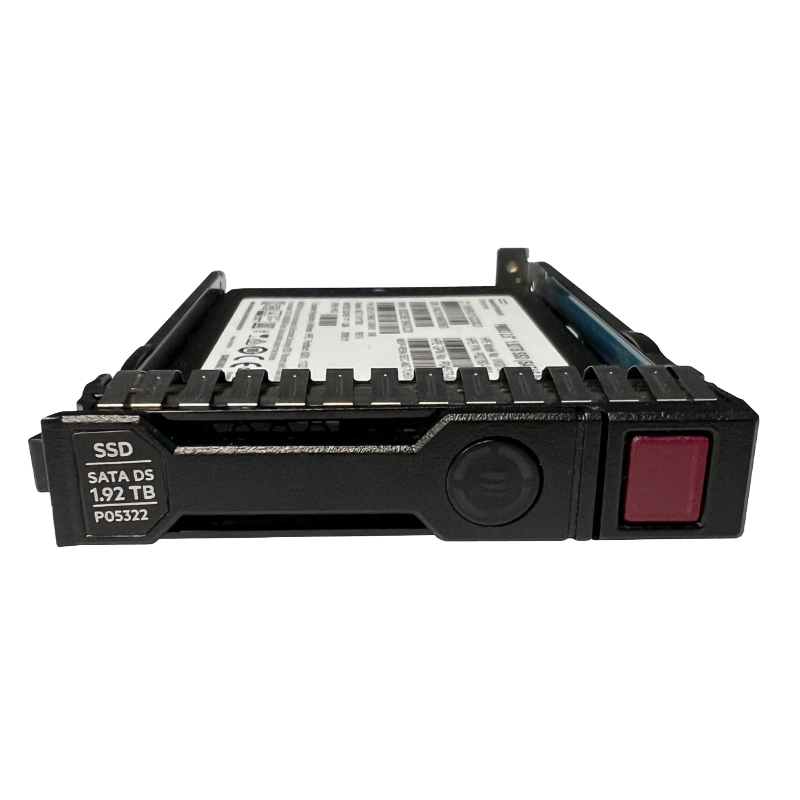


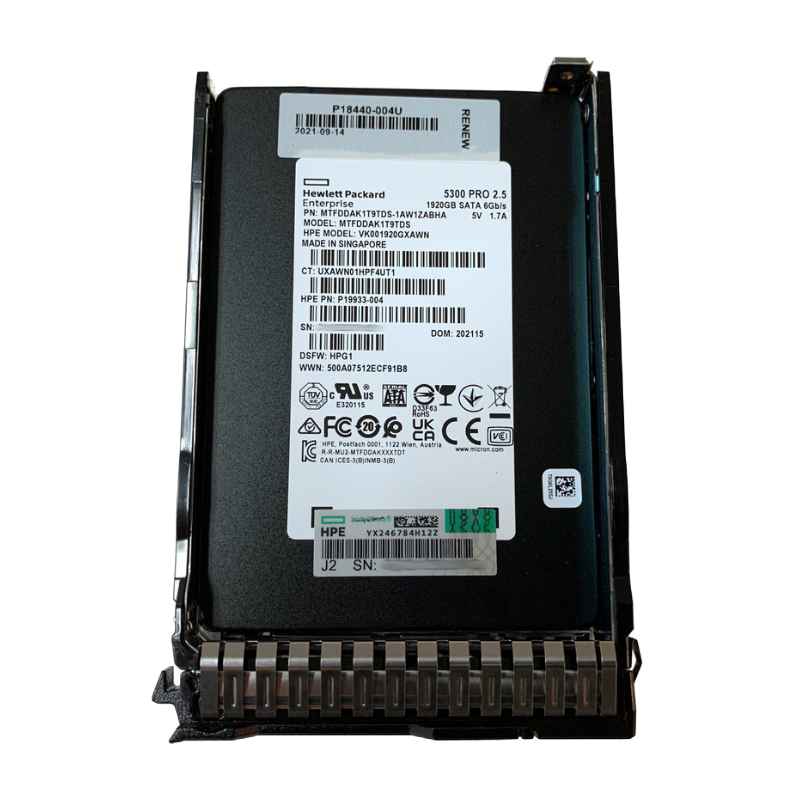
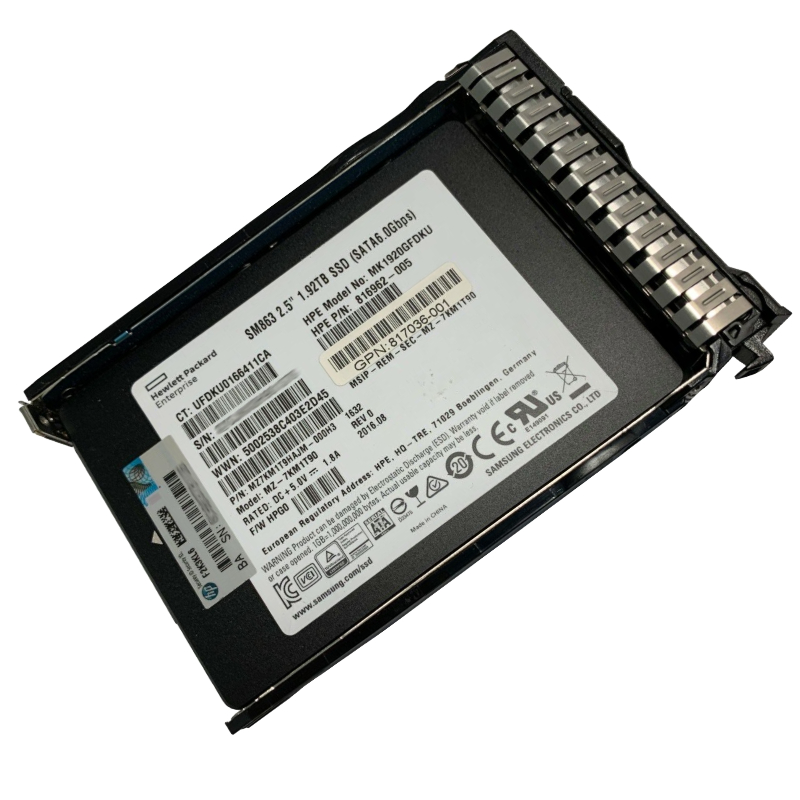
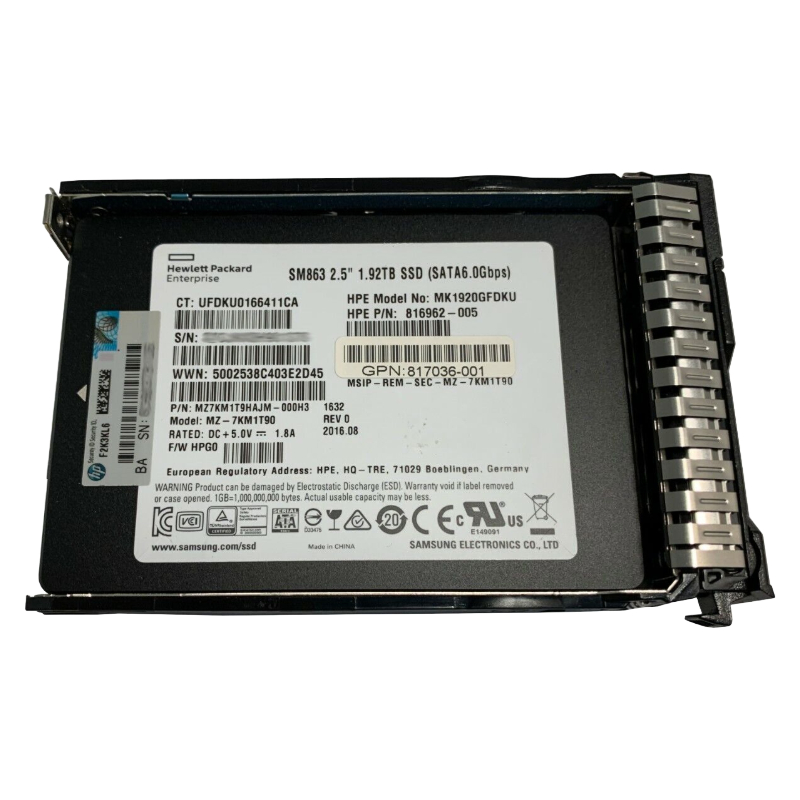
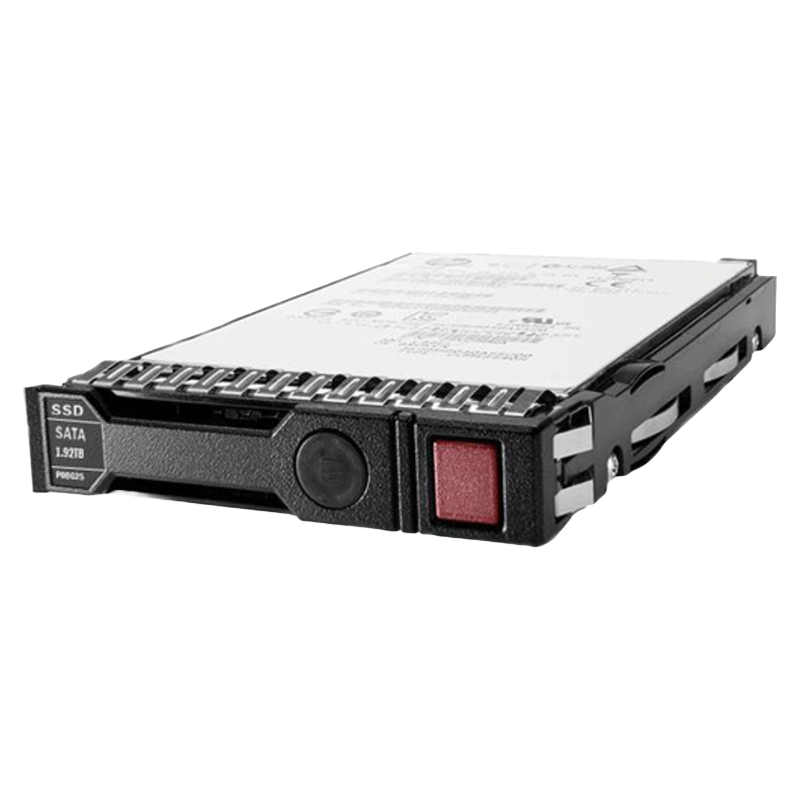
HPE P08625-001 1.92TB SATA 6GBPS DS Mixed Use Solid State Drive. Excellent Refurbished with 1 year replacement warranty.
| SKU/MPN | Warranty | Price | Condition | You save |
|---|---|---|---|---|
| P08625-001 | 1 Year Warranty | $665.00 | New Sealed in Box (NIB) | You save: $232.75 (26%) |
| P08625-001 | 1 Year Warranty | $475.00 | Excellent Refurbished | You save: $166.25 (26%) |
The P08625‑001 HPE 1.92 TB SATA 6Gbps DS Mixed Use solid state drive category represents a refined class of enterprise‑grade storage devices tailored for mid to heavy workloads.
This high-performance solid-state drive offers the perfect balance between read and write operations, making it ideal for databases, virtualization, and high-demand server applications.
The P08625‑001 HPE 1.92 TB SATA 6Gbps DS Mixed Use solid state drive category represents a refined class of enterprise‑grade storage devices tailored for mid to heavy workloads. This classification encompasses storage modules engineered for consistent throughput, predictable latency, and endurance in demanding server environments. Within this category standard, subcategories may emerge by usage pattern (mixed use, read intensive, write intensive), interface type, and endurance rating. The P08625‑001 drive lies firmly in the “mixed use” segment, balancing read and write workloads while offering strong reliability and compatibility with HPE Gen10 systems.
Mixed use solid state drives fall between ultra high endurance write drives and read‑optimized models. They are designed to serve workloads that involve frequent reads alongside regular writes. In virtualization, database caching, and many I/O‑intensive applications, a drive that can deliver both write throughput and read performance without degradation over time is essential. The P08625‑001 exemplifies this balance through symmetrical design and firmware optimizations that handle the blend of data operations smoothly.
Within the broader SSD category, users might distinguish three main subtypes: read‑intensive, mixed‑use, and write‑intensive. Read‑intensive drives optimize read operations at the cost of lifespan under writes; write‑intensive ones maximize durability under heavy writes but may be overkill (and much more expensive) for mixed workloads. The mixed use class, which includes P08625‑001, offers a compromise: endurance and performance high enough for sustained reads and occasional bursts of write traffic without overdesigning cost or sacrificing compatibility.
The 1.92 TB capacity positions the P08625‑001 in the upper mid‑tier of enterprise drives, fitting many modern server density requirements. The 2.5‑inch form factor ensures compatibility with most server drive bays, while the hot‑pluggable design allows administrators to replace or upgrade drives without powering down the system. This balance of capacity and portability makes it ideal for data centers that value both storage density and operational flexibility.
Operating on SATA 6 Gbps, this drive supports the industry standard interface widely adopted across server platforms. The single‑port connectivity simplifies installation and wiring. Although newer interfaces like NVMe and SAS exist, SATA 6 Gbps remains relevant in many legacy and midrange systems. Its backward compatibility and ubiquity enhance deployability across a wide range of HPE servers.
At the heart of the P08625‑001 is Triple‑Level Cell (TLC) NAND flash, which offers a cost-effective compromise between density and endurance. To support enterprise workloads, firmware is digitally signed, offering security and integrity. The drive’s internal architecture handles wear leveling, bad block management, and error correction transparently for the host system. These features ensure long service life, stable performance, and predictable behavior under stress.
Performance in this category is judged not just by peak throughput but by consistency under load. The P08625‑001 delivers up to 600 MBps external transfer rate and a maximum sequential read throughput of 530 MiB/s. In random write operations with 4 KiB and a queue depth of 1, the average latency of 52 microseconds highlights the low overhead during small I/O operations. This is crucial in database and virtual machine workloads, where many small writes and reads occur concurrently.
Endurance is critical in the mixed use category, as drives must survive both read and write stress. The P08625‑001 is rated for 10,000 writes across 30 days and a DWPD (Drive Writes Per Day) of 3.10, positioning it well for sustained use in business‑critical systems. Over the drive’s service life, this endurance rating ensures that it can handle repeated write cycles without unexpected failures or performance degradation.
One of the hallmarks of the P08625‑001 category is its guaranteed compatibility with HPE ProLiant Gen10 servers in 2.5‑inch bays. Models such as DL180 Gen10, DL325 Gen10, and DL360 Gen10 support this drive natively. The smart carrier and firmware integration ensure seamless reporting, diagnostics, and replacement workflows within HPE server management tools.
The hot‑pluggable nature of this drive class supports safe insertion and removal under power, minimizing downtime during upgrades or replacements. This is especially relevant in dense rack environments where drive access is constrained. The smart carrier ensures mechanical alignment, thermal control, and proper airflow without additional host configuration.
Drives in this category often include integration with host monitoring frameworks that expose drive health, wear metrics, temperature, and error statistics. The digitally signed firmware offers both assurance and control, enabling updates and diagnostics while preserving integrity. Administrators can track drive lifetime, usage patterns, and proactively replace a drive before failure.
In virtualized environments with frequent read and write operations—such as boot storms, snapshot operations, or live migration—the P08625‑001 category excels. It maintains low latency when multiple virtual machines access storage simultaneously. The balance between read and write performance helps avoid bottlenecks common in drives optimized only for reads.
Database systems often perform a mixture of reads and writes. In transactional workloads, such as financial systems or order processing, the demand for consistent response under varying load is considerable. Drives in this category deliver the steady performance and durability needed for such workloads without overinvesting in high‑end write‑optimized SSDs.
Enterprises often use tiered storage, with high performance SSDs as caches or fast tiers, and larger HDDs for bulk storage. The P08625‑001 category fits as a middle tier—fast enough to serve cache or working set traffic, and reliable enough to sustain moderate write load. It also performs well in mixed workload zones such as web servers, application servers, and analytics nodes.
Within this category, robust wear leveling algorithms distribute writes uniformly across NAND blocks. Overprovisioning reserves extra capacity for replacements, and powerful error correction codes (ECC) prevent data corruption. The P08625‑001 design includes these safeguards to maximize service life and consistent performance under stress.
A vital feature of enterprise SSDs is monitoring health through SMART attributes, predictive warning on block failures, and integration with server alerting systems. This category encourages preemptive drive replacement and reduces unplanned downtime. Administrators can intervene before drive failure, preserving data integrity and availability.
Drives in the mixed use class manage thermal conditions to avoid thermal throttling under load. They operate within typical power envelopes suitable for dense server enclosures. In this category, designs include temperature sensors and dynamic throttling to protect drive health, while still delivering consistent throughput.
Compared with read‑intensive models, the mixed use class offers higher write tolerance at the cost of somewhat reduced read optimization. Though read‑intensive drives may offer slightly lower read latency or higher read IOPS, they lose durability under regular write traffic. The P08625‑001 strikes a more balanced value, better suited for environments with mixed I/O patterns.
Write‑intensive drives push endurance to the limit and often carry a premium cost. Unless the workload is overwhelmingly write heavy, such drives may be overkill. Within the mixed use category, the P08625‑001 yields strong endurance (3.10 DWPD) but at lower cost and greater flexibility than pure write-optimized models.
Within the P08625‑001 category, administrators should size capacity relative to working set demands and plan redundancy. A balanced deployment may distribute writes across multiple drives to avoid saturation. Overprovisioning at the drive level and logical data striping help maintain performance headroom and longevity.
Regular firmware upgrades, when offered by HPE, help maintain drive stability, bug fixes, and compatibility enhancements. Because the firmware is digitally signed, updates must be compatible with underlying hardware and server management tools. Scheduling updates during maintenance windows ensures minimal impact to live systems.
Advancements in 3D NAND, quad-level cell (QLC) optimization, and next-generation error correction techniques will push the boundaries of capacity and endurance. In the mixed use category, upcoming drives may offer higher TB capacities, lower latencies, and better thermal efficiency while maintaining cost control.
While this category currently centers on SATA 6 Gbps interface, NVMe and PCIe interfaces are becoming mainstream in enterprise storage. However, legacy systems and budget constraints preserve the relevance of SATA-based mixed use drives. Over time, hybrid platforms may support both SATA and newer protocols to ease migration.


 Contact Us
 Information
 Catalog
 Solid State Drives (SSD)
 Network Switches
 Hard Disk Drives
 HBA & Controllers
 PC & Servers
 PC & Server Memory
 CPU & Processors
 Network Routers
 Power Supplies
 Tape Drives & Libraries
 Network Devices
 Computer & Network Cables