(7% discount is applied at checkout)
Cart is empty
Your go-to destination for cutting-edge server products
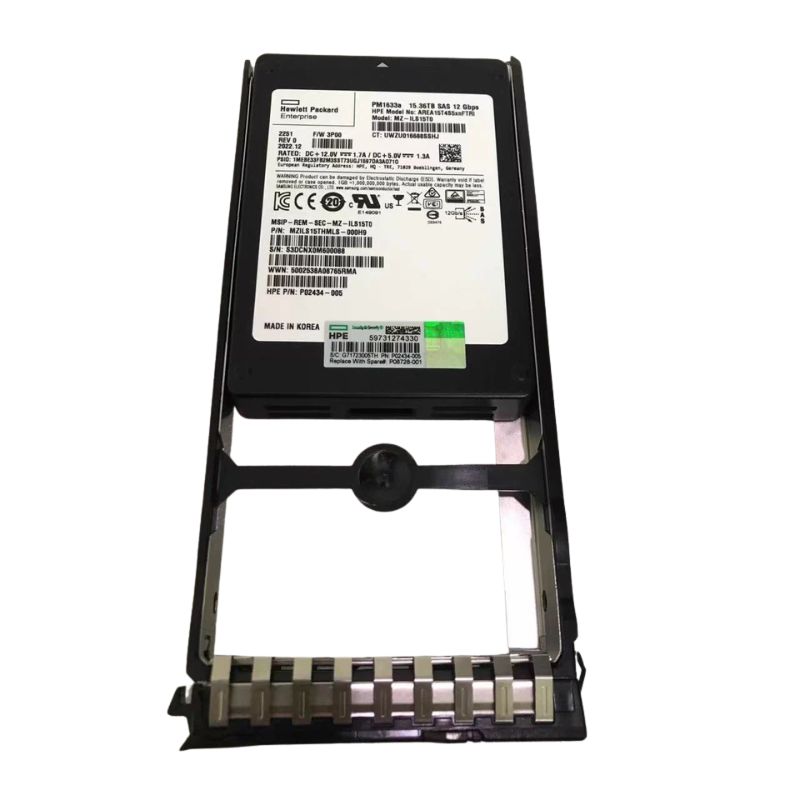


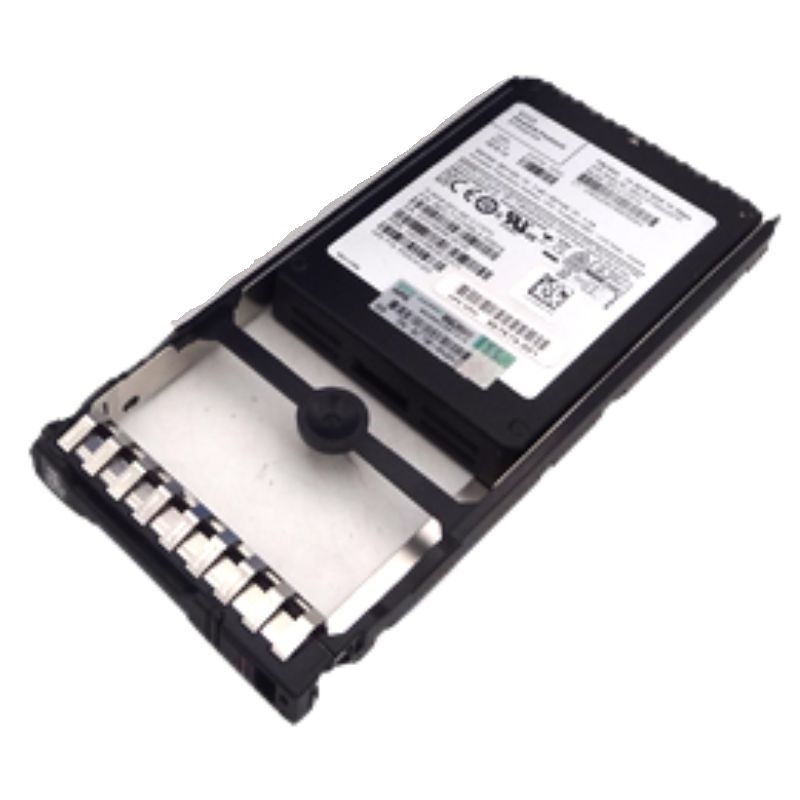
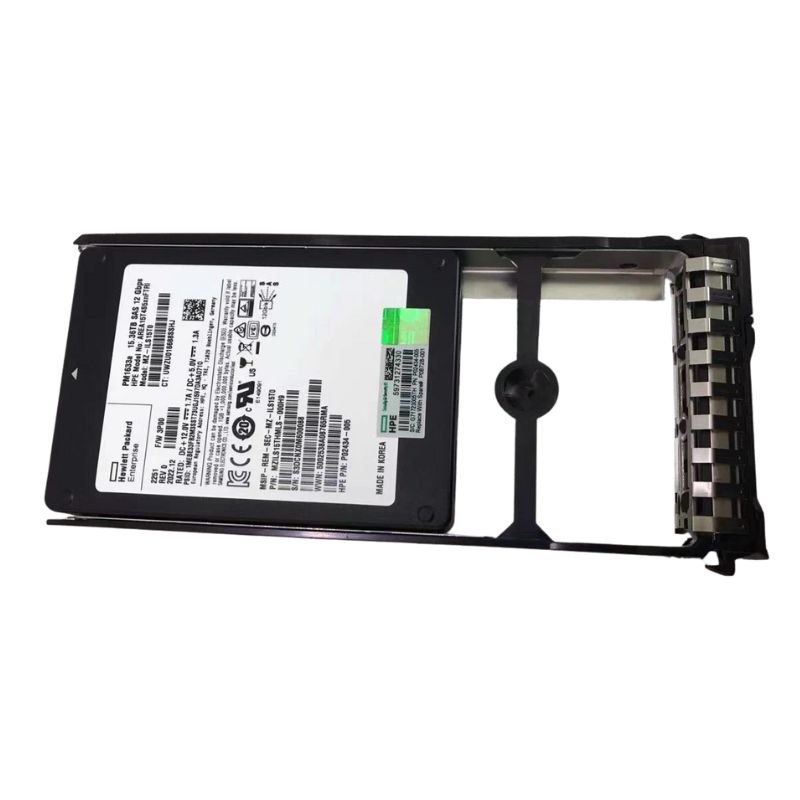
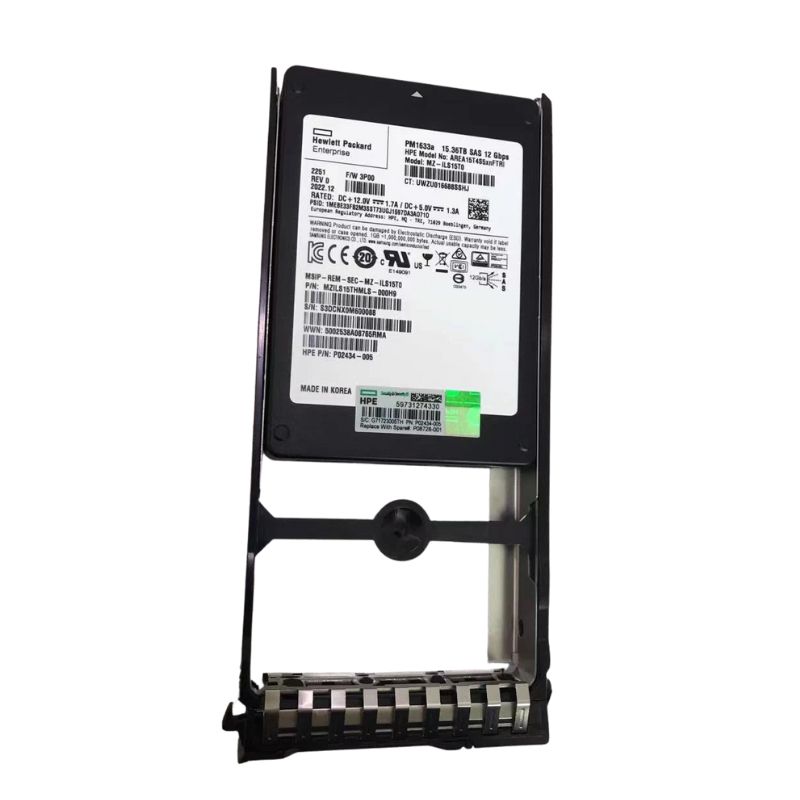
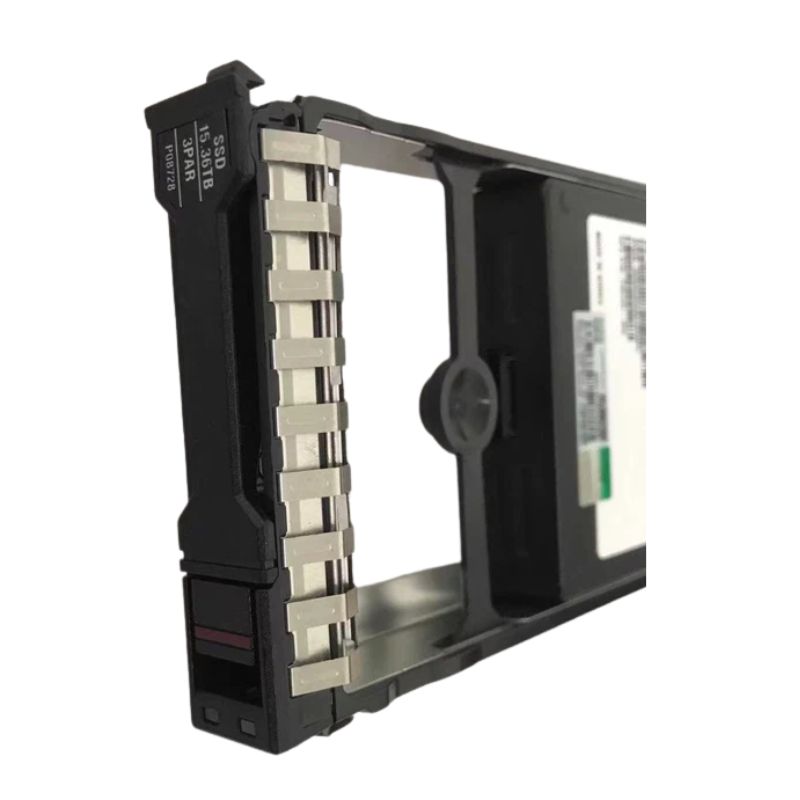
HPE P08728-001 3par 9000 15.36TB SAS 12GBPS 2.5inch SFF Internal Solid State Drive. Excellent Refurbished with 1 Year Replacement Warranty
The HPE P08728-001 stands out as a robust, enterprise-class solid state drive engineered to enhance data throughput, strengthen system responsiveness, and deliver exceptional reliability. Crafted for HPE 3PAR 9000 arrays, it ensures consistent performance across intensive workloads.
This drive is fine-tuned to sustain heavy application loads, delivering responsive performance in virtualized, analytical, and transactional environments.
The HPE P08728-001 3PAR 9000 15.36TB SAS 12Gbps 2.5-inch SFF Internal Solid State Drive is positioned squarely within the enterprise storage category for high-performance, high-density, and mission-critical storage environments. This category emphasizes purpose-built SAS SSDs engineered for 24/7 operation in HPE 3PAR 9000 systems and other compatible enterprise arrays that demand low latency, sustained throughput, and predictable I/O performance. Buyers searching for HPE P08728-001 or comparable SAS 12Gbps SSDs are typically focused on modernization, consolidation, virtualization, and latency-sensitive workloads where inline deduplication, thin provisioning, and storage tiering require a reliable, high-capacity medium that integrates seamlessly with server and SAN infrastructures.
Within this category, the HPE P08728-001 shines in a range of workload profiles. It is ideal for virtualized server farms running dense VM consolidation, transactional databases requiring high IOPS and low jitter, and VDI deployments where simultaneous read and write bursts must be absorbed without performance collapse. Analytics platforms and real-time data processing pipelines benefit from the drive’s high sustained throughput, while mixed OLTP/OLAP environments use the drive to reduce latency and speed query response times. Backup and restore operations, snapshot-heavy workflows, and metadata-intensive file systems are also typical use cases where enterprise SAS SSDs like this one provide measurable advantages over spinning media.
As an HPE-branded component, the P08728-001 is validated for HPE 3PAR 9000 arrays, ensuring firmware compatibility and plug-and-play readiness. This compatibility reduces integration risk and simplifies lifecycle management through HPE’s management stack, including monitoring, predictive analytics, and firmware update mechanisms. Integration considerations in this category include controller firmware versions, array microcode dependencies, and rack-level power and cooling planning. Documentation in the category typically highlights HPE’s recommended deployment practices, compatibility matrices, and support policies to help infrastructure teams plan upgrades or expansions of their 3PAR estates with minimal disruption.
The drive’s 2.5-inch small form factor (SFF) is central to its role in modern data centers where density is paramount. This category focuses on optimized drive trays and sleds compatible with high-density enclosures and multi-bay chassis. The 2.5-inch SFF design enables higher bay counts per chassis compared with 3.5-inch alternatives, allowing organizations to increase usable capacity and performance per U-space. Thermal management in the category addresses airflow patterns, ambient operating temperatures, and enclosure fan curves to maintain drive reliability under sustained workloads.
Equipped with a SAS 12Gbps interface, the HPE P08728-001 sits in the enterprise class where the protocol delivers robust command queuing, full-duplex transfer modes, and enterprise advisory features not available on consumer interfaces. The category emphasizes sustained sequential bandwidth and random I/O performance measured in IOPS under various read/write mixes. Performance documentation in the category commonly provides benchmark scenarios such as 4K random reads and 70/30 mixed workloads to reflect real-world enterprise behavior. Latency percentiles are also highlighted because deterministic latency is a core requirement for many applications deployed on HPE 3PAR systems.
With 15.36TB of raw capacity, this SSD addresses the intersection of high capacity and performance. Category content frequently discusses effective capacity rather than raw capacity, explaining how deduplication, compression, and thin provisioning on the array can dramatically increase usable storage. Storage architects in this category evaluate how data reduction features interact with drive characteristics and endurance, and how effective capacity influences rack density planning and total cost of ownership. Capacity planning models for the HPE P08728-001 emphasize growth projections, retention policies, and the practical capacity after RAID or erasure coding overhead.
Endurance metrics and drive reliability are critical themes across this category. The HPE P08728-001 is designed for heavy-duty write cycles and continuous operation, with enterprise-grade NAND and controller architectures optimized for wear-leveling and sustained performance. Category documentation details mean time between failures (MTBF), drive write endurance expressed in drive writes per day (DWPD), and error management features like power-loss protection and background data integrity checks. Reliability discussions also cover how proper provisioning, array-level RAID configurations, and proactive monitoring can extend usable life and reduce the incidence of unplanned downtime.
Firmware plays a pivotal role in this category. The P08728-001 firmware is tuned for HPE arrays and includes predictive failure analysis, SMART telemetry, and secure update mechanisms. The category encourages administrators to follow HPE’s firmware update procedures, leveraging system-level orchestration to apply validated bundles during maintenance windows. Serviceability is another central point: hot-swap capability, secure drive branding, and clearly documented rebuild behaviors allow data centers to perform maintenance without taking critical services offline. The combination of proactive telemetry and HPE support pathways helps administrators predict and remediate issues before they escalate.
Experts in this category share practical performance tuning recommendations for environments using the HPE P08728-001. These include aligning storage policies with workload patterns, configuring appropriate RAID levels to balance performance and redundancy, and enabling controller caching judiciously. Storage administrators are advised to tune queue depths, monitor latency percentiles rather than averages, and distribute hot data across drive pools to avoid localized wear. The category also covers the role of tiering: using a mix of high-performance SAS SSDs and denser media to place the most frequently accessed data on drives like the P08728-001 while archiving colder data to more cost-effective layers.
Data security is an important subcategory. The HPE P08728-001 supports enterprise-grade security features that may include hardware-based encryption and secure erase capabilities. Category content addresses how encryption features integrate with HPE storage management and key management systems to meet regulatory and compliance requirements. Data protection strategies within this category expand beyond physical drive security to include snapshot policies, replication, and immutable backups. Administrators are guided on configuring secure erase procedures for decommissioning drives to ensure data remanence risks are mitigated.
Migration strategies covered in this category explain how to introduce the P08728-001 into existing 3PAR estates. Approaches include phased rollouts where new arrays or drive pools are populated with SAS SSDs to absorb high-performance workloads while legacy arrays serve as bulk storage. Transparent data mobility features, non-disruptive data movement, and replication afford administrators flexibility when migrating VMs and databases. The P08728-001 is often used as the keystone of a performance tier in hybrid arrays, enabling predictable application acceleration without wholesale forklift upgrades.
Validation and benchmarking guidance is a core component of the category. Vendors and independent testers typically provide 4K random read/write metrics, mixed workload tests, and long-duration sustained throughput runs to demonstrate how drives behave under real operational conditions. Administrators are advised to benchmark in-situ—testing drive behavior within their specific controller and network topologies—because synthetic tests can diverge from production realities. The category stresses the importance of measuring latency percentiles (such as the 99th and 99.9th percentiles) to ensure SLAs are met under bursty conditions.
This category frequently contrasts SAS SSDs with NVMe, SATA SSDs, and traditional spinning disks. While NVMe offers raw latency advantages, SAS 12Gbps drives remain attractive for environments standardized on SAS fabrics or where existing SAN topologies and multipathing strategies favor SAS. Compared with SATA SSDs, the SAS class delivers superior command queuing, better enterprise features, and more robust error handling. When compared with HDDs, the benefits in performance, energy efficiency per IOPS, and operational simplicity are iterated as drivers for migration to enterprise SSDs like the HPE P08728-001.
Procurement guidance in the category highlights authenticity, firmware versions, and vendor support as key factors. Organizations are encouraged to source drives from authorized reseller channels or directly from HPE to ensure proper warranty coverage and firmware compatibility. Refurbished or third-party drives may present cost advantages but can introduce support limitations; the category explores risk mitigations such as extended maintenance agreements and testing protocols. Transparent SKU mapping and compatibility checks are essential to ensure that ordered drives fit the target chassis and are recognized by the array firmware.
Physical environment considerations are also important. While SSDs generally consume less power than equivalent-capacity HDDs, at scale the difference becomes significant for cooling and power provisioning. The category provides guidance on thermal zoning, airflow management in high-density racks, and power budget planning to ensure that drive additions do not exceed rack-level power distribution limits. Environmental monitoring and alerts are recommended to detect early signs of thermal stress that could affect lifetime and performance.


 Contact Us
 Information
 Catalog
 Solid State Drives (SSD)
 Network Switches
 Hard Disk Drives
 HBA & Controllers
 PC & Servers
 PC & Server Memory
 CPU & Processors
 Network Routers
 Power Supplies
 Tape Drives & Libraries
 Network Devices
 Computer & Network Cables