(7% discount is applied at checkout)
Cart is empty
Your go-to destination for cutting-edge server products
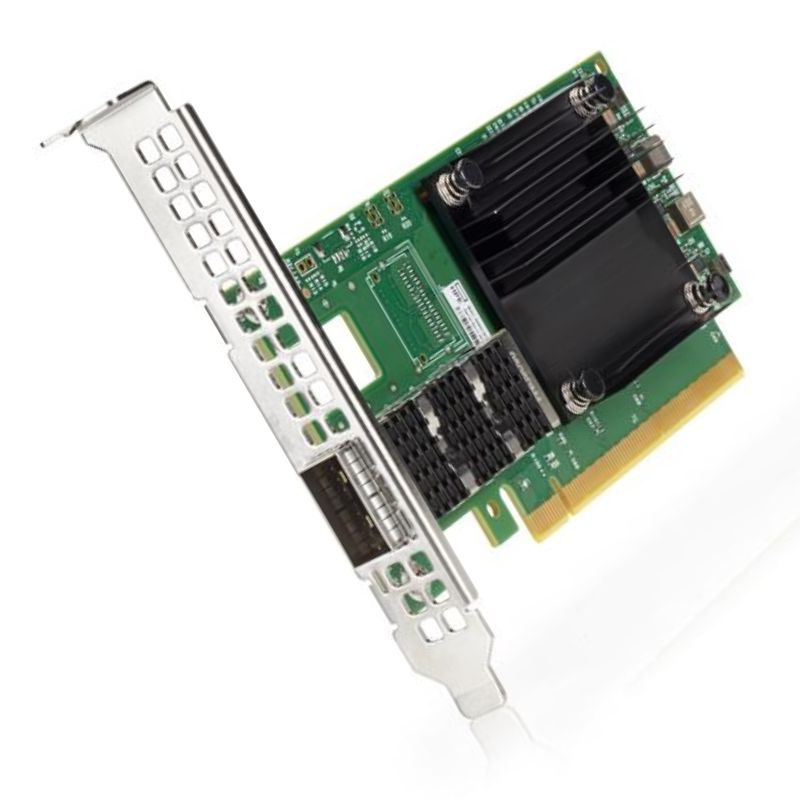


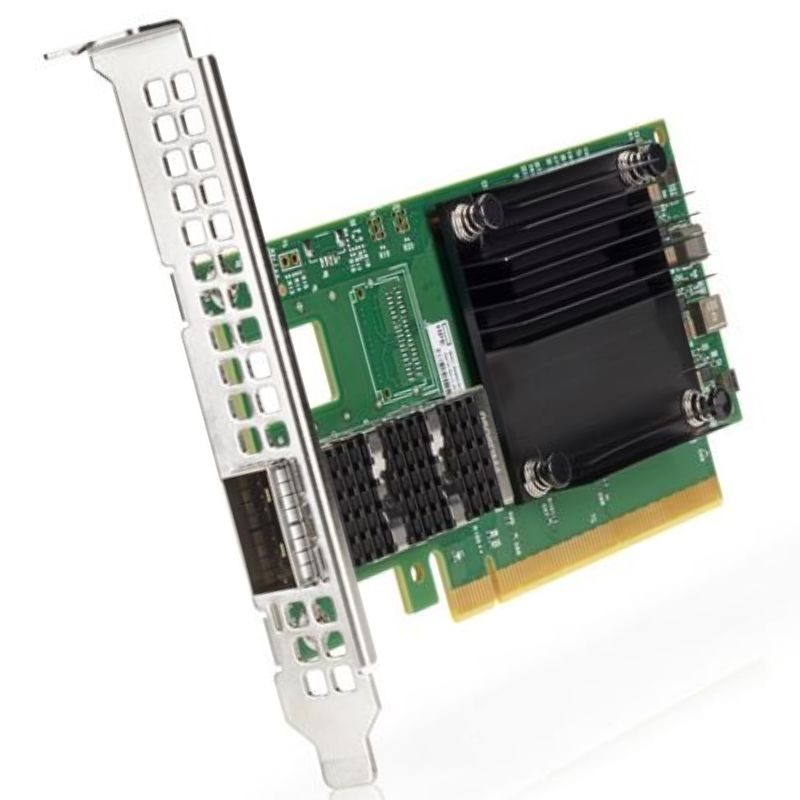
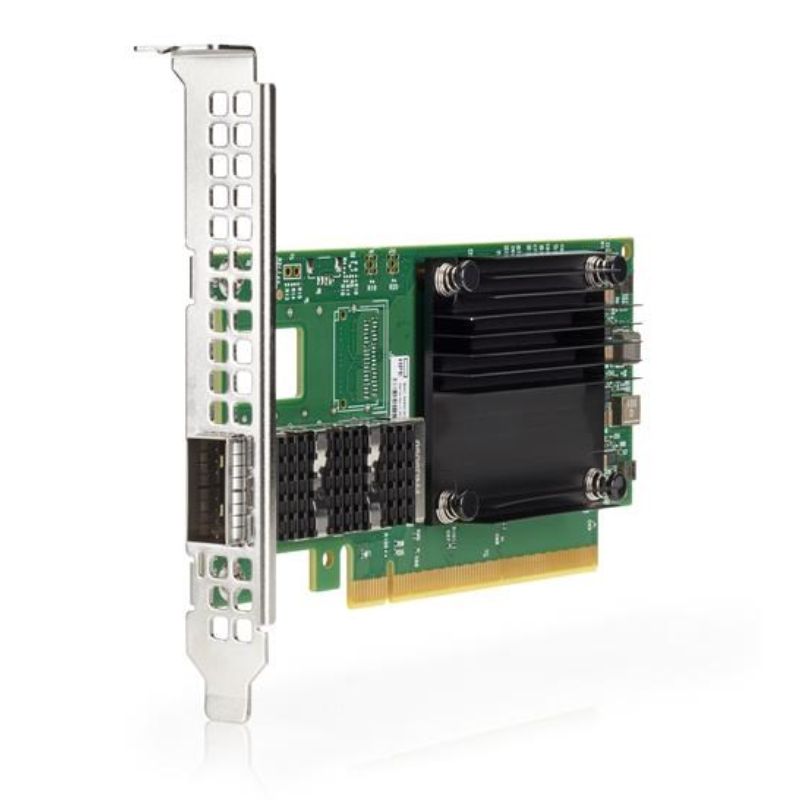
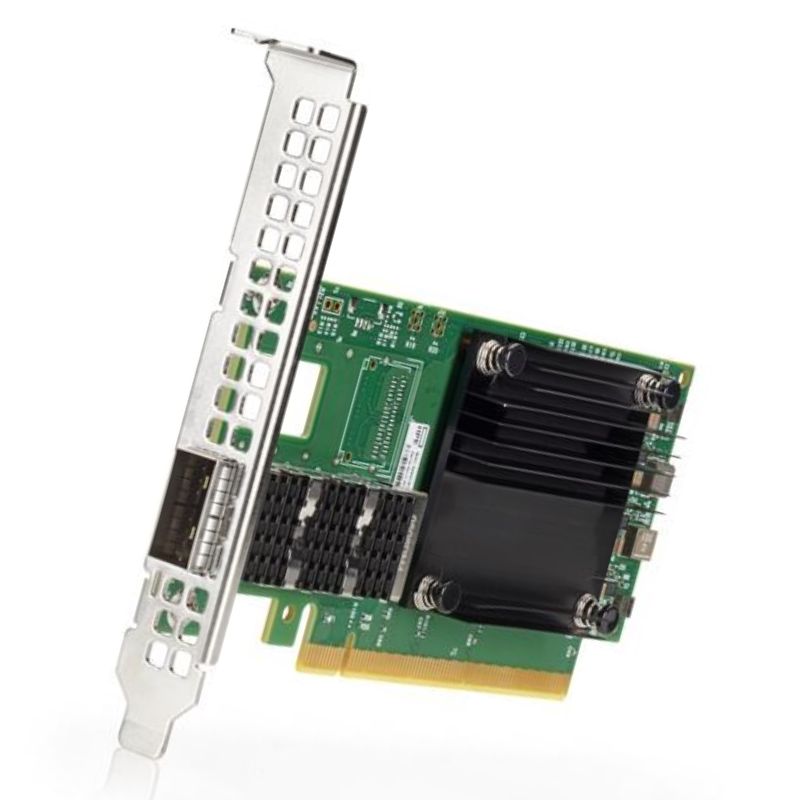
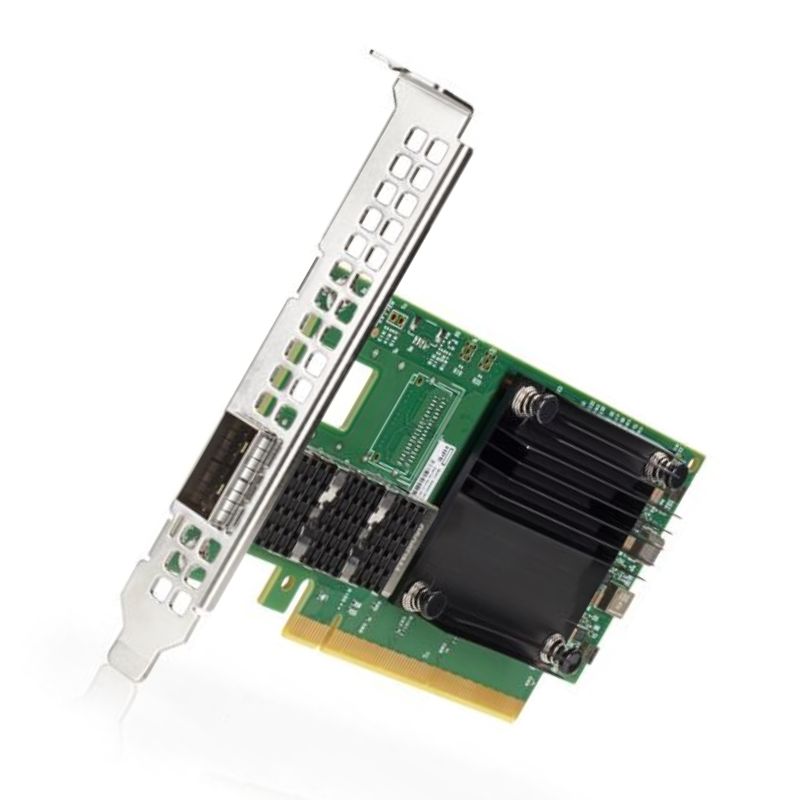
HPE P10180-B21 Mellanox MCX623105AS Ethernet 200GB 1-Port QSFP56 Adapter. New Sealed in Box (NIB) with 3 years Warranty
The category encompassing high-performance Ethernet adapters such as the HPE P10180-B21 Mellanox MCX623105AS Ethernet 200GB 1-Port QSFP56 Adapter is defined by extreme throughput, ultra-low latency, and enterprise-grade reliability. These adapters are engineered to support modern data center architectures where east-west traffic, AI workloads, cloud-native applications, and software-defined infrastructure place unprecedented demands on network interfaces. Within this category, performance is measured not only in raw bandwidth but also in packet processing efficiency, offload capabilities, and deterministic latency behavior.
Adapters in this segment typically leverage advanced PCIe interfaces, high-speed SerDes technology, and sophisticated firmware to deliver consistent performance under sustained load. The 200Gb Ethernet class represents a pivotal tier in networking, enabling organizations to consolidate network links, reduce port counts, and simplify cabling while dramatically increasing available bandwidth per server or appliance. This category is especially relevant for hyperscale data centers, research institutions, financial services platforms, and enterprise environments that demand predictable performance at scale.
Enterprise-grade Ethernet adapters are foundational components in data center networking strategies. They enable high-density compute clusters to communicate efficiently with storage systems, edge devices, and cloud interconnects. In environments where virtualization and containerization dominate, these adapters provide hardware acceleration for overlay networks, virtual switching, and security enforcement. By offloading tasks such as checksum calculation, segmentation, and encryption, the adapter reduces CPU overhead and improves application performance.
In large-scale deployments, network adapters must integrate seamlessly with orchestration platforms and management tools. The category emphasizes compatibility with industry standards, ensuring interoperability across diverse hardware and software stacks. Support for features like SR-IOV, RDMA, and advanced QoS allows administrators to fine-tune network behavior to meet service-level objectives. The HPE and Mellanox lineage within this category underscores a commitment to reliability, long lifecycle support, and enterprise validation.
Scalability is a defining characteristic of high-end Ethernet adapter categories. As data volumes grow and application architectures evolve, adapters must accommodate increased traffic without necessitating wholesale infrastructure replacement. The 200Gb Ethernet class provides ample headroom for future expansion, supporting next-generation switches and spine-leaf architectures. This forward-looking approach reduces total cost of ownership by extending the useful life of network investments.
Future-proofing also involves firmware upgradability and support for emerging protocols. Adapters in this category are designed to adapt to new standards through software updates, ensuring continued relevance as networking technologies advance. This adaptability is particularly valuable in research and development environments where innovation cycles are rapid and requirements change frequently.
The technical architecture of the HPE P10180-B21 Mellanox MCX623105AS Ethernet 200GB 1-Port QSFP56 Adapter reflects the broader category’s emphasis on efficiency and throughput. At its core, this category leverages cutting-edge network controller silicon capable of processing millions of packets per second with minimal latency. Advanced DMA engines, large on-board buffers, and intelligent packet scheduling contribute to consistent performance even under peak load conditions.
PCIe Gen4 connectivity is a common attribute within this category, providing sufficient host bandwidth to support 200Gb Ethernet speeds without bottlenecks. The integration of QSFP56 interfaces allows for flexible cabling options, including DAC, AOC, and optical transceivers, enabling deployment across a range of distances and topologies. These design choices ensure that adapters can be deployed in both dense rack environments and distributed data centers.
Latency sensitivity is a critical consideration for many applications served by this category. Financial trading platforms, real-time analytics, and AI inference workloads require predictable, low-latency network communication. Ethernet adapters in this segment are optimized to minimize jitter and packet delay through streamlined processing pipelines and hardware-based offloads. RDMA over Converged Ethernet (RoCE) support further reduces latency by enabling direct memory access between hosts.
Deterministic performance is achieved through precise timing mechanisms and congestion management features. By supporting advanced flow control and telemetry, these adapters allow network administrators to monitor and adjust traffic patterns proactively. This level of control is essential for maintaining performance consistency in multi-tenant environments where workloads compete for shared resources.
Throughput optimization extends beyond raw link speed. Adapters in this category incorporate a wide range of offload capabilities that reduce CPU utilization and improve overall system efficiency. These include TCP segmentation offload, large receive offload, and inline encryption. By handling these tasks in hardware, the adapter frees compute resources for application processing.
Offload capabilities also enhance security and compliance by enabling inline inspection and encryption without sacrificing performance. This is particularly important in regulated industries where data protection requirements must be met without compromising throughput. The category’s focus on hardware acceleration aligns with broader trends toward zero-trust networking and secure data transport.
High-speed Ethernet adapters are deployed across a wide spectrum of environments, from on-premises enterprise data centers to cloud service provider infrastructure. The HPE P10180-B21 Mellanox MCX623105AS Ethernet 200GB 1-Port QSFP56 Adapter category is designed to integrate seamlessly into existing ecosystems, supporting a variety of operating systems, hypervisors, and container platforms. This flexibility reduces deployment complexity and accelerates time to value.
In converged and hyperconverged infrastructures, these adapters enable high-bandwidth communication between compute and storage nodes. Their ability to handle storage traffic, such as NVMe over Fabrics, alongside traditional Ethernet workloads makes them versatile components in modern architectures. This convergence simplifies network design and reduces the need for separate storage fabrics.
Cloud and AI workloads place unique demands on network infrastructure. Massive parallel processing, distributed training, and data-intensive pipelines require network adapters that can sustain high throughput with minimal latency. The 200Gb Ethernet category addresses these needs by providing the bandwidth necessary to keep GPUs and accelerators fed with data.
In high-performance computing environments, network adapters are critical to cluster efficiency. Low-latency communication between nodes directly impacts application scaling and time-to-solution. Adapters in this category support message passing interfaces and RDMA, enabling efficient inter-node communication for scientific simulations and modeling.
Compatibility is a cornerstone of this category’s value proposition. Broad support for Linux distributions, Windows Server, and virtualization platforms ensures that adapters can be deployed across heterogeneous environments. Driver stability and ongoing updates are essential for maintaining performance and security over time.
Ecosystem support extends to management and monitoring tools that provide visibility into adapter performance and health. Integration with centralized management platforms simplifies lifecycle management, from initial provisioning to ongoing maintenance. This holistic approach reduces operational overhead and enhances reliability.
Operational efficiency is a defining benefit of enterprise-class Ethernet adapter categories. By consolidating multiple lower-speed links into a single high-speed connection, organizations can reduce cabling complexity, switch port utilization, and power consumption. This consolidation translates into lower operational costs and simplified network management.
Reliability is paramount in environments where downtime is unacceptable. Adapters in this category are subjected to rigorous validation and testing to ensure consistent performance under demanding conditions. Features such as error detection, link monitoring, and failover support contribute to high availability and resilience.
While high-performance adapters represent a significant investment, their impact on total cost of ownership is often favorable. By enabling higher density and reducing the need for additional hardware, they help offset initial acquisition costs. Energy efficiency improvements further contribute to long-term savings, particularly in large-scale deployments.
Lifecycle value is enhanced through long-term support and firmware updates that extend the adapter’s useful life. This longevity aligns with enterprise procurement strategies that prioritize stability and predictability. The category’s focus on backward compatibility and standards compliance ensures that adapters remain viable as infrastructure evolves.
Enterprise assurance encompasses not only hardware reliability but also vendor support and serviceability. Adapters in this category benefit from established support ecosystems, including documentation, diagnostics, and professional services. This support infrastructure is critical for minimizing downtime and resolving issues efficiently.
Serviceability features such as detailed logging and remote diagnostics enable proactive maintenance and troubleshooting. By identifying potential issues before they impact operations, organizations can maintain high service levels and protect critical workloads. This emphasis on reliability and support underscores the category’s role as a foundational element of modern network infrastructure.


 Contact Us
 Information
 Catalog
 Solid State Drives (SSD)
 Network Switches
 Hard Disk Drives
 HBA & Controllers
 PC & Servers
 PC & Server Memory
 CPU & Processors
 Network Routers
 Power Supplies
 Tape Drives & Libraries
 Network Devices
 Computer & Network Cables