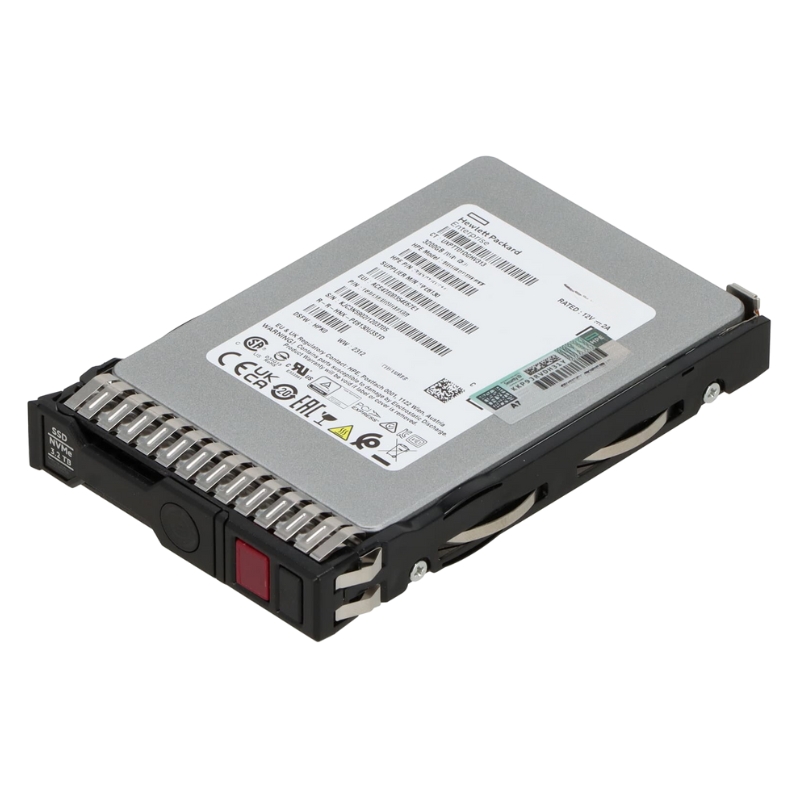
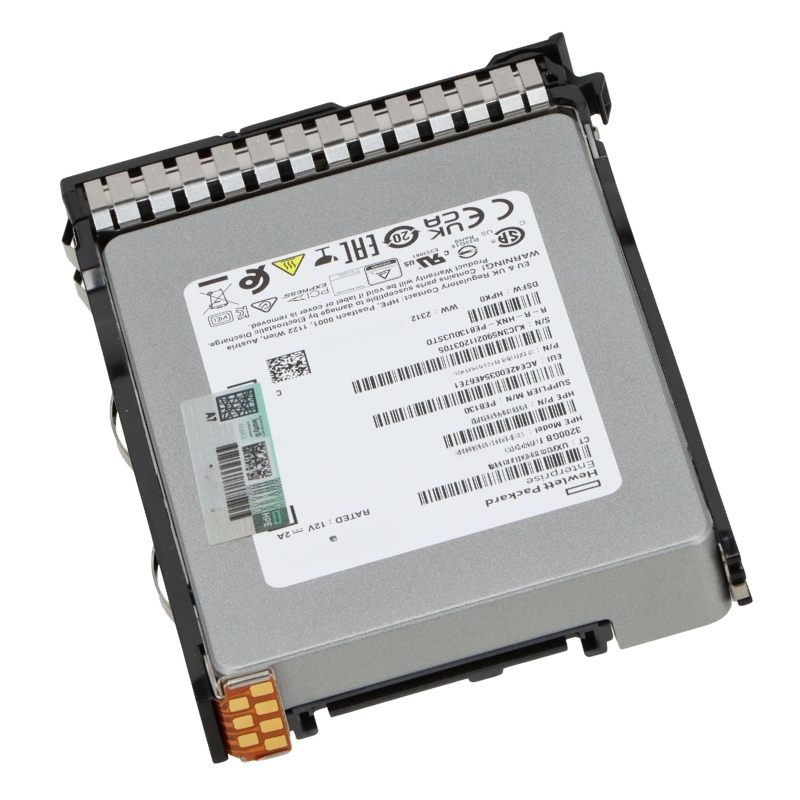
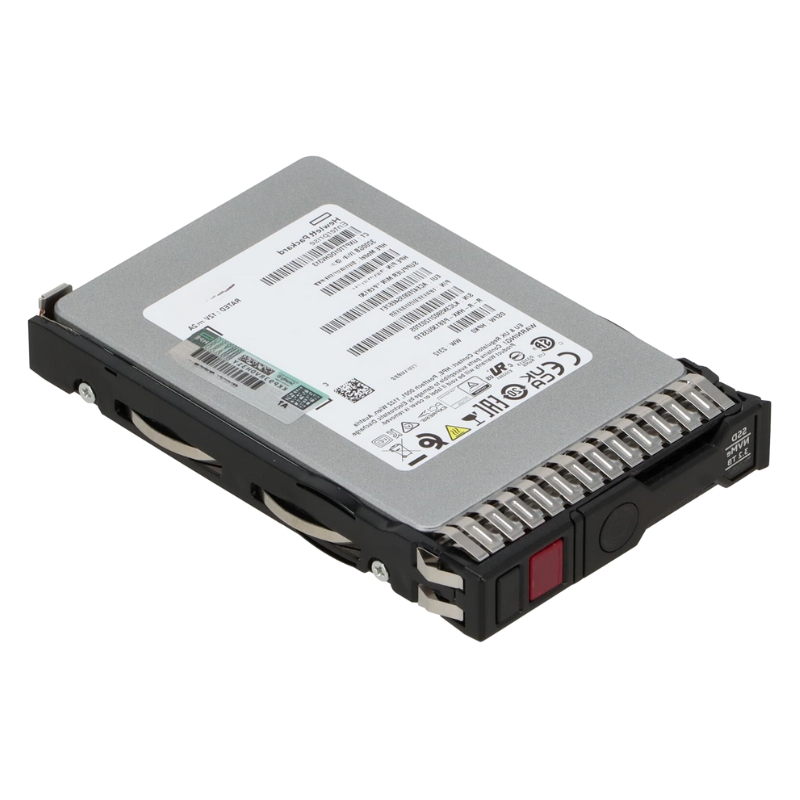
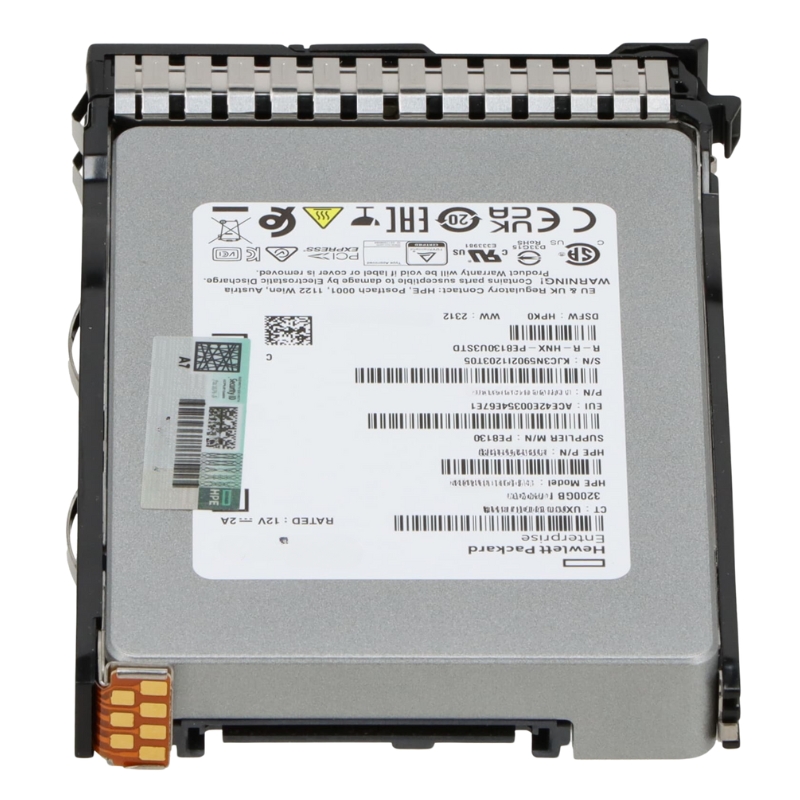
Product Overview of HPE P10592-003 3.2TB NVMe Mixed Use SSD
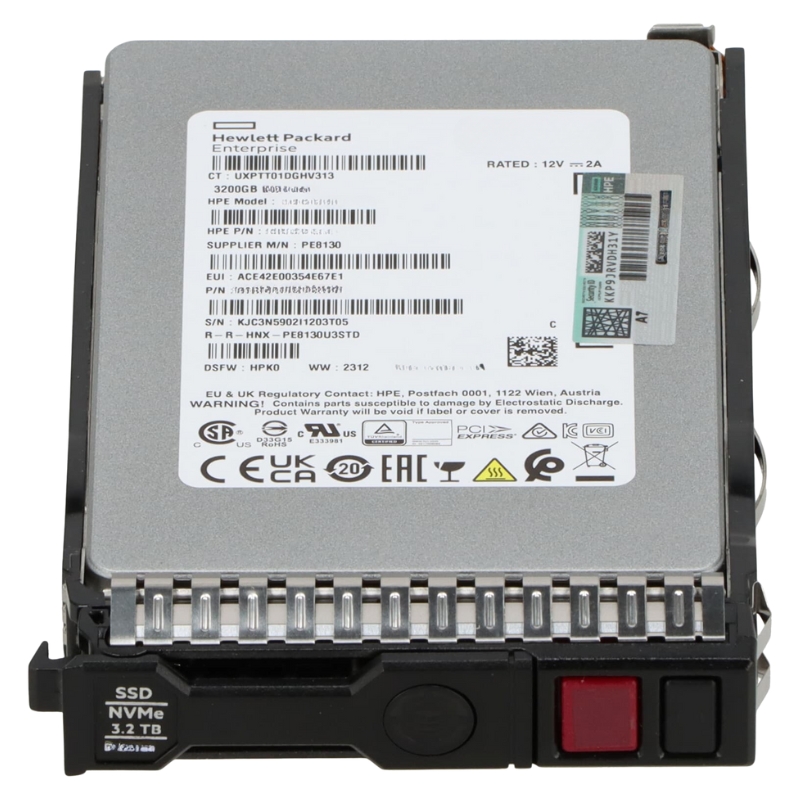
The HPE P10592-003 3.2TB NVMe Mixed Use 2.5-Inch U.2 P4610 SFF SCN SSD is a high-performance enterprise-grade storage solution
designed for data-intensive workloads, virtualization environments, and mission-critical applications. With its advanced NVMe interface,
this solid-state drive ensures faster throughput, lower latency, and superior reliability compared to traditional SATA or SAS SSDs.
Main Information About HPE P10592-003
- Manufacturer: Hewlett Packard Enterprise (HPE)
- Part Number / SKU: P10592-003
- Product Type: Enterprise Solid State Drive
- Sub-Type: 3.2TB NVMe Mixed Use, U.2 Form Factor
Key Features of HPE P10592-003 3.2TB NVMe SSD
- High-speed NVMe protocol for faster data access and reduced latency
- Mixed-use endurance for read and write workloads balance
- 2.5-inch U.2 form factor optimized for server and storage arrays
- Reliable performance under continuous workloads
- Enhanced efficiency for cloud and virtualization platforms
Benefits of Choosing HPE P10592-003
This drive is engineered to deliver exceptional performance for enterprise applications.
Organizations gain advantages such as:
- Scalability to meet growing storage demands
- Consistent I/O performance for business-critical tasks
- Optimized data protection and drive endurance
- Energy-efficient design lowering operational costs
Technical Highlights
- Storage Capacity: 3.2 Terabytes
- Drive Interface: NVMe U.2
- Form Factor: 2.5-Inch Small Form Factor (SFF)
- Usage Category: Mixed-Use Workloads
- Drive Series: P4610
Ideal Applications for HPE P10592-003
The HPE P10592-003 is suitable for a wide variety of enterprise computing environments, including:
- Database management and analytics
- Virtual machines and containerized workloads
- High-performance computing clusters
- Data warehousing and cloud platforms
- Real-time processing and large-scale business applications
Primary advantages
- High usable capacity: minimizes drive count for a given storage pool, lowering chassis and management overhead.
- Performance per watt and per TB: NVMe delivers better throughput and IOPS density compared to older interfaces.
- Balanced endurance: engineered for mixed workloads — better longevity for general-purpose enterprise use than read-intensive-only drives.
- Compatibility: U.2 connectors are widely supported by modern HPE servers and many third-party server platforms.
- Serviceability: hot-swappable design and enterprise-level support options simplify field maintenance and lifecycle management.
Technical and operational considerations
When selecting an HPE P10592-003 or similar P4610-family drive, IT teams should evaluate deployment-level factors beyond raw capacity. These include thermal and power characteristics, firmware features, drive health telemetry, and integration with host controllers and RAID/HBA/Cache layers. Mixed-use NVMe SSDs are engineered to sustain predictable performance across varied I/O patterns, but system-level tuning (queue depths, NVMe namespaces, firmware revisions, and driver stacks) will influence real-world results.
Form factor & connectivity
The 2.5-inch small form factor (SFF) with a U.2 connector provides a blend of enterprise convenience and performance. U.2 is especially valuable for rack servers that accept hot-swap drives; it allows straightforward replacement and standard chassis designs while maintaining the benefits of NVMe.
Mixed-use workload tuning
Mixed-use SSDs are neither purely read-optimized nor extreme write-optimized; they strike a middle ground. Typical tuning recommendations include:
- Provisioning adequate over-provisioning percentages where firmware settings allow.
- Monitoring SMART/NVMe health attributes and wear indicators to predict drive retirement.
- Applying HPE-specific firmware updates and driver updates for the platform to ensure stable performance.
- Using enterprise-grade NVMe drivers and supported controllers for maximum compatibility.
Performance expectations and benchmarking approach
The P4610-class drives, represented here by HPE's P10592-003 offering, are positioned to deliver high IOPS and low latency under mixed random workloads. Benchmarking should be conducted in a manner that mirrors the production workload: use a mix of read/write ratios, realistic block sizes, and concurrency (threads and queue depths) that approximate the target environment.
Suggested benchmark parameters
- Test with a range of block sizes (4K, 8K, 64K) to observe behavior across small and medium I/O.
- Measure both steady-state and sustained throughput — not just peak short bursts.
- Include latency percentiles (p50, p95, p99) to understand tail latencies under load.
- Run endurance simulations if write-heavy patterns are anticipated to estimate useful lifetime.
Typical use cases and deployment scenarios
The versatility of a 3.2TB NVMe mixed-use drive makes it suitable for many enterprise roles. Representative applications include virtualization platforms (hypervisors hosting many VMs), high-performance caching layers, database logs and indexes, mixed OLTP/OLAP database workloads, and tiered storage nodes within software-defined storage stacks.
Common deployment patterns
- VM and hypervisor storage: Host high-density VM images where IOPS and low latency matter.
- Database acceleration: Use as primary or log storage for databases requiring sustained random I/O.
- Caching and tiering: Front-line cache for HDD capacity tiers, or part of a hybrid flash/hard disk tiering strategy.
- Edge and remote data centers: Compact SFF drives in constrained environments where serviceability is important.
- High-performance compute nodes: Local scratch or working set storage for analytics and batch jobs.
Compatibility and integration checklist
Before committing to a purchase or rollout, confirm the following integration items to ensure a smooth deployment of HPE P10592-003 drives:
- Server compatibility matrix — confirm U.2 and NVMe support for your HPE or third-party chassis.
- Firmware and driver compatibility with the host OS and firmware bundle.
- Power and cooling capacity within drive bays and enclosures to maintain thermal limits.
- Monitoring and management software support (HPE management suites, SNMP, iLO/firmware integration).
- Warranty, replacement policies, and support SLAs for enterprise deployments.
Integration with HPE ecosystem
Purchasing an HPE part-numbered drive may provide additional benefits, such as validated firmware, state-aware drivers, and integrated support via HPE’s full-stack support agreements. Customers who prefer to keep a full support path often select OEM-labeled SSDs for peace of mind and streamlined RMA processes.
Reliability, endurance, and lifecycle planning
Reliability is a critical criterion for enterprise SSD selection. Mixed-use NVMe drives are manufactured and validated for predictable endurance across diverse workloads. Lifecycle planning should incorporate drive health metrics, scheduled firmware maintenance windows, and spare-drive inventory management to avoid unexpected downtime.
Monitoring and predictive maintenance
- Enable NVMe SMART and telemetry collection from day one.
- Set up alerts for reallocated sectors, critical temperature thresholds, and wear-level indicators.
- Plan proactive replacement windows based on projected write volumes and manufacturer life estimates.
- Keep spare units on hand for rapid hot-swap replacement in production clusters.
Security, data protection, and firmware management
Enterprise drives frequently include features to protect data at rest and secure device operation. These capabilities can be essential for regulated industries or environments with high security expectations.
Security features to evaluate
- SED support: Self-encrypting drive options or firmware-based encryption to protect data at rest.
- Secure erase and crypto-erase: Methods to sanitize drives securely at end-of-life or reallocation.
- Firmware signing and update control: Ensure firmware can be updated through trusted channels and that tampering checks exist.
- Access controls: Compatibility with host-based or controller-level access restrictions for drive use.
Best-practice thermal controls
- Follow chassis manufacturer guidelines for maximum ambient temperatures.
- Place drives in bays with unobstructed airflow; avoid mixing incompatible drive types in the same thermal lanes.
- Use monitoring to watch for drive temperature excursions and throttle responses.
- Plan rack airflow and fan policies to maintain manufacturer-recommended conditions.
Procurement tips
- Purchase drives with matching firmware/validation sets when possible to simplify rollouts.
- Negotiate spare-part pools and advance replacement SLAs for mission-critical systems.
- Consider staggered procurement to replace drives before end-of-life based on predictive wear analytics.
- Factor in software licensing or storage platform compatibility that might require specific OEM-labeled parts.
Migration, upgrade paths, and scalability
A storage strategy using 3.2TB NVMe U.2 drives should include a roadmap for capacity and performance scaling. Whether scaling vertically (more drives per chassis) or horizontally (more nodes in a cluster), mixed-use drives offer a predictable building block that facilitates capacity planning, performance granularity, and staged upgrades.
Scaling considerations
- Define per-node drive counts and hot-spare policies to determine usable capacity per chassis.
- Plan RAID, erasure coding, or software-defined redundancy with awareness of rebuild times and degraded-mode performance.
- Test scaling under mixed workloads to understand cumulative thermal and power impacts.
- Keep future compatibility in mind — modern U.2/NVMe architectures are forward-compatible, but controller limits (namespaces, lanes) can influence ultimate scaling.
Comparisons and positioning versus other SSD categories
In the SSD ecosystem, mixed-use NVMe U.2 drives sit between read-optimized and heavy-write endurance classes. Compared with SATA or SAS SSDs, NVMe U.2 delivers superior latency and throughput. Compared with extreme write endurance NVMe drives, mixed-use models offer more capacity per dollar while providing sufficient durability for many enterprise use cases.
Practical configuration examples
Below are example configurations that illustrate common architectural choices when using 3.2TB mixed-use NVMe U.2 drives in enterprise systems:
Example: Hyperconverged node
- Role: Local boot and VM datastore
- Drive count: 4–8 x 3.2TB NVMe per node
- Benefits: High local capacity, low latency for VM I/O, simplified maintenance via hot-swap U.2 bays
Example: Cache tier in hybrid array
- Role: SSD cache for HDD-backed capacity pool
- Drive count: 6–12 x 3.2TB drives in cache pool (depending on working set)
- Benefits: Accelerates random I/O, reduces HDD wear, consolidates working sets on fast NVMe media
Example: High-density database node
- Role: Local index and log storage for OLTP databases
- Drive count: 8+ drives in a RAID or erasure-coded array
- Benefits: Consistent mixed I/O performance, simplified capacity management with fewer drives





 Contact Us
 Information
 Catalog
 Solid State Drives (SSD)
 Network Switches
 Hard Disk Drives
 HBA & Controllers
 PC & Servers
 PC & Server Memory
 CPU & Processors
 Network Routers
 Power Supplies
 Tape Drives & Libraries
 Network Devices
 Computer & Network Cables