(7% discount is applied at checkout)
Cart is empty
Your go-to destination for cutting-edge server products
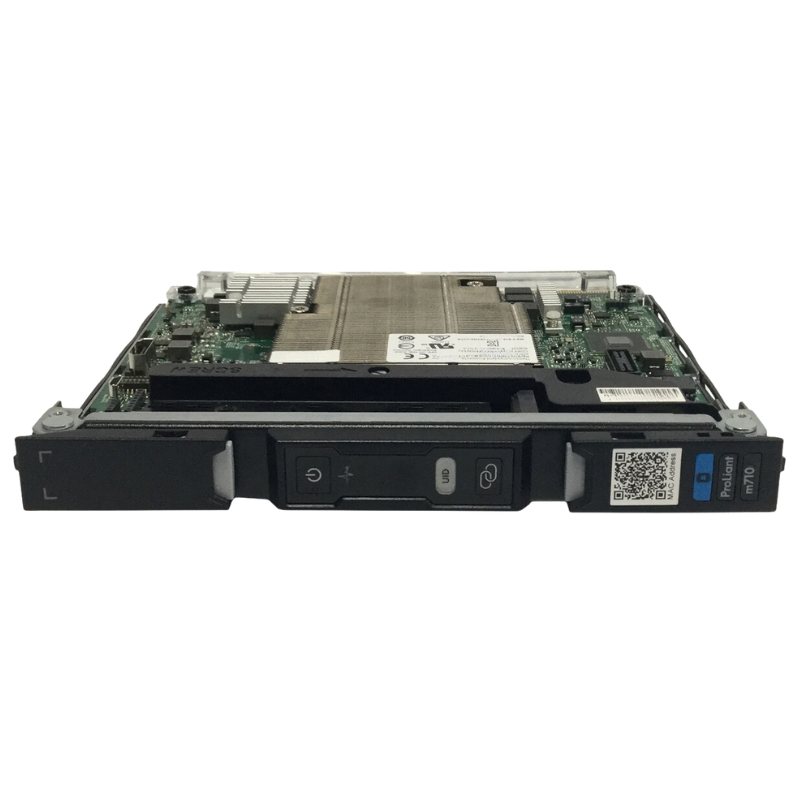


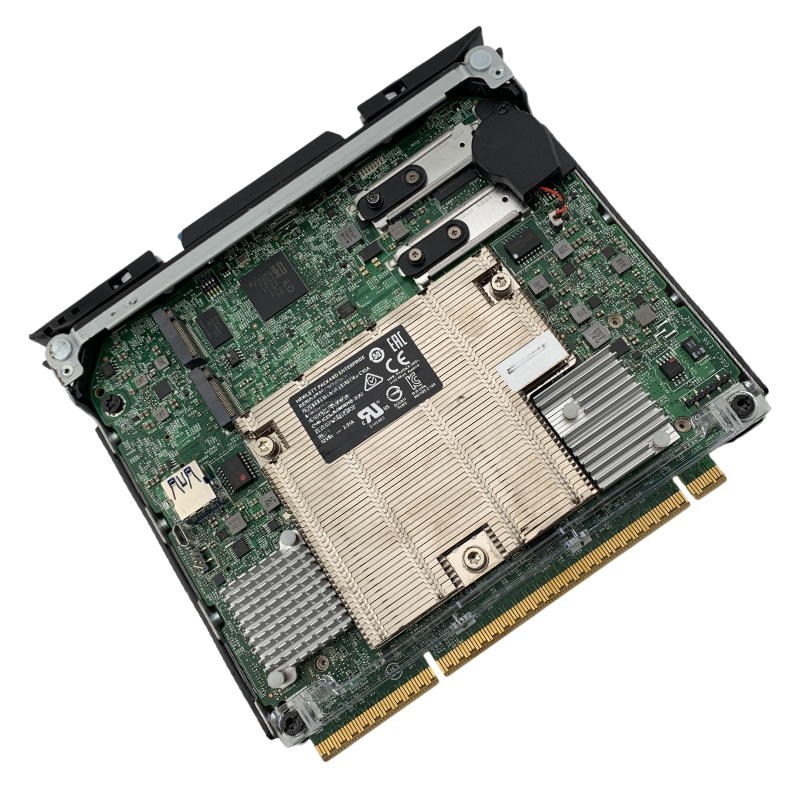
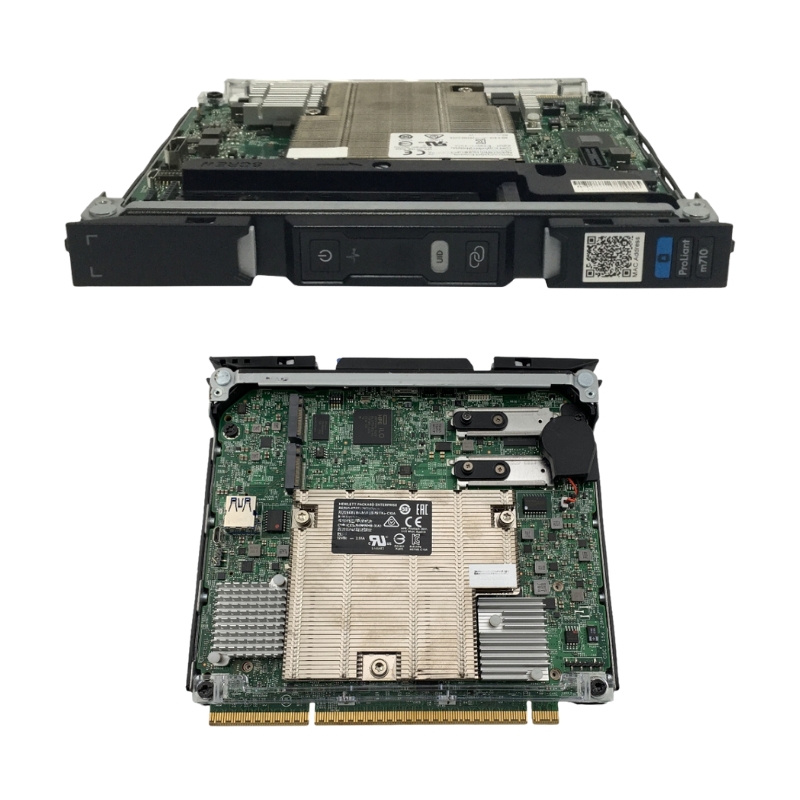
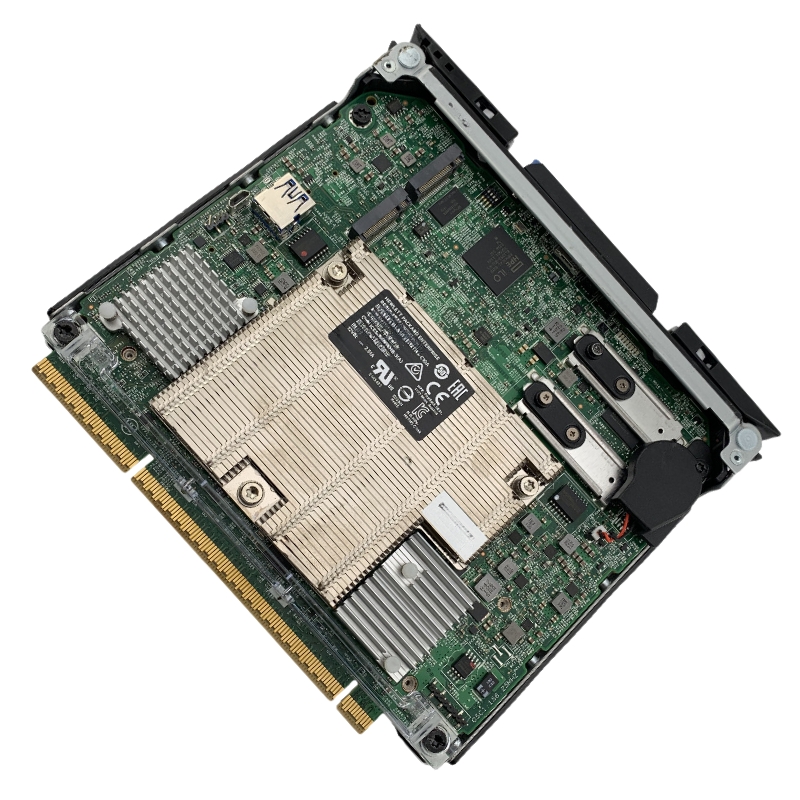
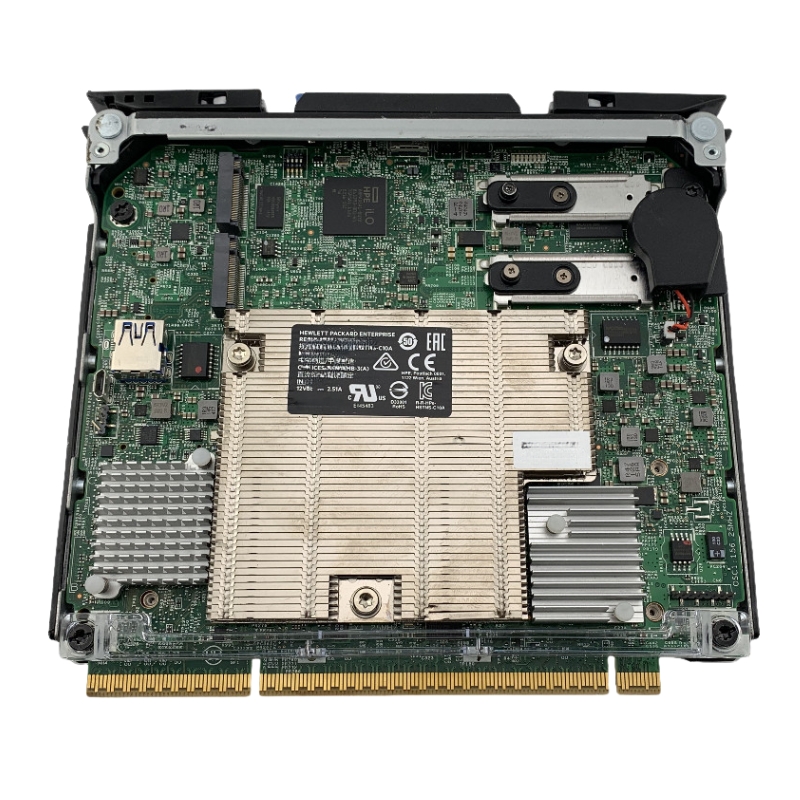
HPE P10694-B21 ProLiant M710x-L E3-1565Lv5 2.5GHz 4 Core 35W Configure Server. New (System) Pull with 1-Year Replacement Warranty
The HPE P10694-B21 ProLiant M710x-L is a high-performance configure server designed to deliver efficient computing power for businesses requiring reliability, scalability, and strong workload management. Featuring the Intel Xeon E3-1565Lv5 processor running at 2.5GHz with 4 cores and a low 35W power profile, this server offers an exceptional balance of performance and energy efficiency.
The HPE ProLiant M710x-L provides advanced computing solutions suitable for businesses of all sizes. It is tailored to deliver optimized data processing, excellent security, and dependable performance.
Equipped with the Intel Xeon E3-1565Lv5, the HPE P10694-B21 is engineered to manage demanding applications with speed and stability. Its 4-core processing power ensures smooth multitasking while minimizing latency.
With a 35W thermal design, this configure server is built to reduce energy consumption without sacrificing computing capability, making it ideal for enterprises aiming to cut operational costs.
At the heart of this server category is the Intel® E3-1565Lv5 2.5GHz quad-core CPU optimized for low-power operation with a 35W thermal design power (TDP). The low-voltage E3 family prioritizes sustained throughput under constrained thermal envelopes, making these servers ideal where power budgets and cooling capacity are limited. Important selling points include:
The M710x-L chassis emphasizes a compact footprint and flexible I/O layout. This makes it a great candidate for remote office/branch office (ROBO) environments, telco edge sites, and data centers that require a balance between compute density and accessibility for maintenance.
Buyers can choose from several subcategories and configuration bundles: base systems with minimal memory and storage for lightweight tasks; pre-configured options optimized for virtualization or database caching; and full-feature kits that include redundant power and expanded storage controllers. The modular design supports a variety of add-on cards, drive options, and management modules, enabling organizations to scale capacity and feature sets as needs evolve.
The Intel E3-1565Lv5 is a four-core, eight-thread processor (with Hyper-Threading where applicable), operating at a base frequency of 2.5GHz with turbo boost potential depending on thermal and power headroom. Core characteristics important to purchasers include:
Memory capacity and configuration are vital for server performance. The M710x-L supports dual-channel DDR memory modules with ECC (Error Correcting Code), a must for reliability in enterprise workloads. Best practice recommendations for different use cases:
The category supports a flexible range of storage configurations. Typical options include single or multiple 2.5" HDD/SSD bays, M.2 boot devices, and onboard SATA/SAS controllers. For storage-optimized subcategories, NVMe or mixed SSD arrays can be integrated through compatible controllers and adapters. Key storage considerations:
Network interfaces vary by configuration and often include multiple Gigabit Ethernet ports with optional 10GbE or fiber uplinks via mezzanine cards. For high-throughput or low-latency networking requirements, choose configurations with SR-IOV support and compatible NICs. The category emphasizes:
HPE ProLiant servers commonly include integrated remote management features such as iLO (Integrated Lights-Out) for out-of-band monitoring, firmware maintenance, and secure remote console access. Benefits of integrated management:
Security-conscious organizations will prioritize secure boot options, TPM support, and firmware verification to meet compliance mandates. Additional category-relevant security elements include:
Starter configurations are aimed at budget-minded buyers who need a reliable compute node for basic application hosting, proxying, or small-scale test/dev environments. Typical starter features:
Virtualization-oriented variants bundle increased memory, faster storage, and NICs that support SR-IOV and jumbo frames. These configurations are optimized for:
Storage-focused subcategories include higher drive counts, RAID controllers with battery/flash-backed write cache, and options for NVMe acceleration. They are targeted at:
ROBO deployments benefit from the low power consumption and compact design of the M710x-L category. Typical rollouts include:
Telecommunications and edge data centers need small, thermally efficient servers that can operate in constrained spaces. The M710x-L is suited for:
For mid-layer application services—such as API gateways, microservice hosts, and middleware—the category provides a cost-effective, reliable platform. Deployment notes:
The most effective procurement strategy begins with workload profiling. Match CPU core counts, memory footprint, and storage IOPS to expected usage patterns. For example, choose a virtualization pack for many small VMs but a storage-enhanced model for write-heavy database tasks.
Confirm compatibility with rack rails, power distribution units (PDUs), and existing backup strategies. Verify that chosen OS and hypervisor versions are supported on the E3-1565Lv5 platform and that drivers for any specialty network or storage adapters are available.
Although each server unit is low-wattage, cumulative rack power must be calculated when deploying multiple nodes in a single rack. Use the server's maximum power draw and add a safety margin for peak conditions. For dense installations:
Proper airflow is essential to maintaining the longevity and performance of low-voltage, high-density servers. Recommended practices:
Regular firmware updates for BIOS, iLO, network cards, and storage controllers are required to maintain security and stability. Centralized update tools or HPE's management suites are recommended for patch orchestration and rollback capabilities.
Keep a small inventory of common failure parts: power supplies, fans, and boot drives. For warranty-covered systems, coordinate part replacement with HPE support to minimize repair time.
Use integrated diagnostics and logging to detect component degradation. Implement alerting rules for ECC memory corrections, predictive failure warnings, and sustained thermal excursions.
Select performance-oriented BIOS settings when latency and throughput are priorities. For energy-constrained environments, choose power saver or balanced profiles to reduce operating costs. Keep in mind:
For storage-bound workloads, enable write cache with battery-backed or flash-backed controllers and use filesystem tuning to match workload characteristics (e.g., large-block sequential IO vs. random small IO). Where possible, segregate application logs, database files, and OS partitions across different physical devices to avoid I/O interference.
The M710x-L platform supports incremental upgrades: more memory, larger or faster drives, and NIC or storage controller add-ons. When planning upgrades, verify:
Consider bundling the server with HPE Care Packs or third-party managed services to simplify lifecycle management and support. Bundles may reduce overall cost while providing quicker time-to-repair and predictable support channels.
Keep spare fans, power modules, and boot SSDs to minimize downtime in production environments. When sourcing spares, prefer OEM parts to maintain compatibility and warranty status.
Benchmarks for this category should reflect real-world workload patterns rather than synthetic peak tests. Recommended benchmarks include:
Example deployments often involve retail edge analytics, where local processing of transaction logs occurs before batch aggregation, and small-scale virtualization clusters used by managed service providers to host customer appliances. These examples highlight the category's strengths: low power draw, reliable baseline performance, and ease of maintenance.
Opt for the M710x-L when your priority set includes low TDP, compact form factor, and cost-effective compute for edge and ROBO scenarios. If you need higher core counts, multi-socket capability, or enterprise-class storage arrays, consider adjacent ProLiant lines designed for denser compute or expanded I/O features.
When comparing SKUs, evaluate:


 Contact Us
 Information
 Catalog
 Solid State Drives (SSD)
 Network Switches
 Hard Disk Drives
 HBA & Controllers
 PC & Servers
 PC & Server Memory
 CPU & Processors
 Network Routers
 Power Supplies
 Tape Drives & Libraries
 Network Devices
 Computer & Network Cables