(7% discount is applied at checkout)
Cart is empty
Your go-to destination for cutting-edge server products
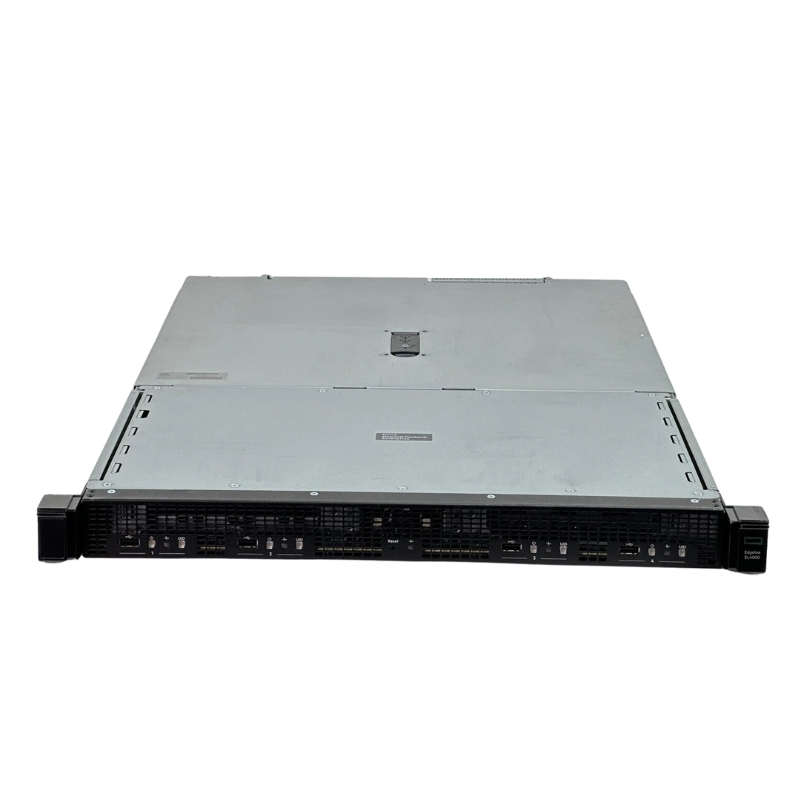


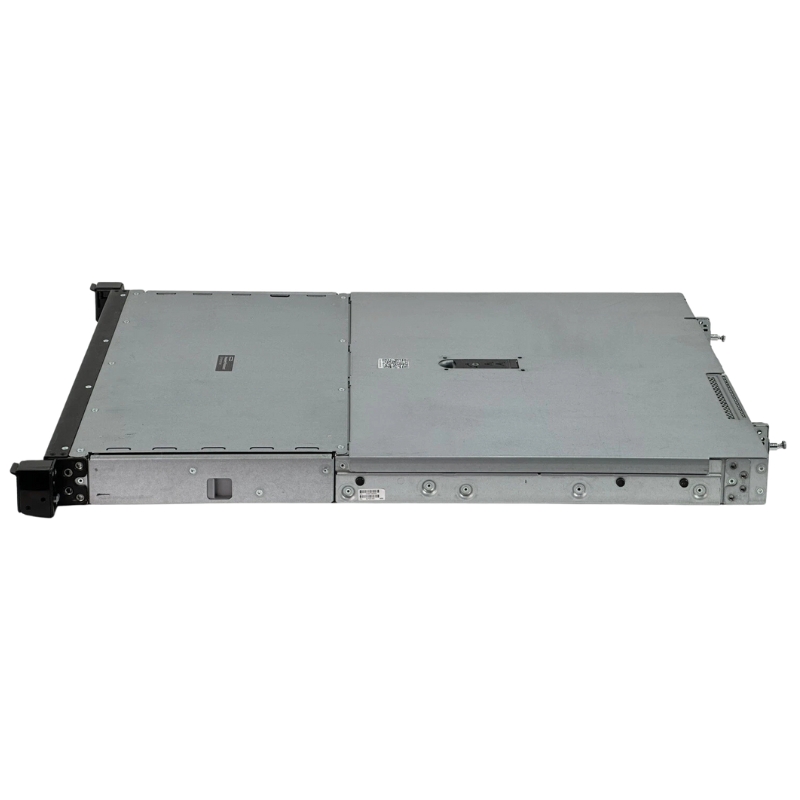
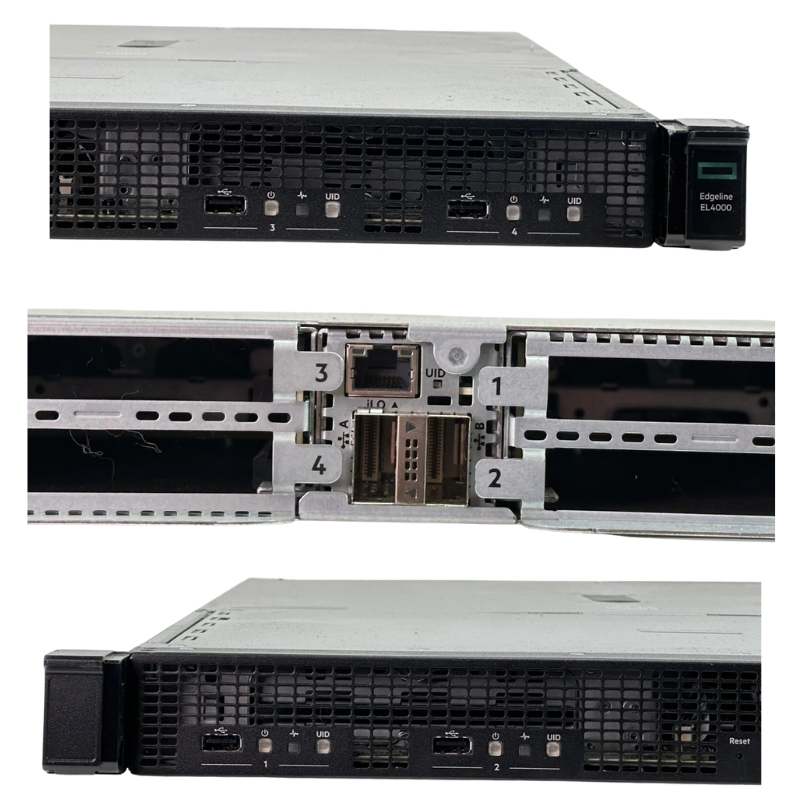
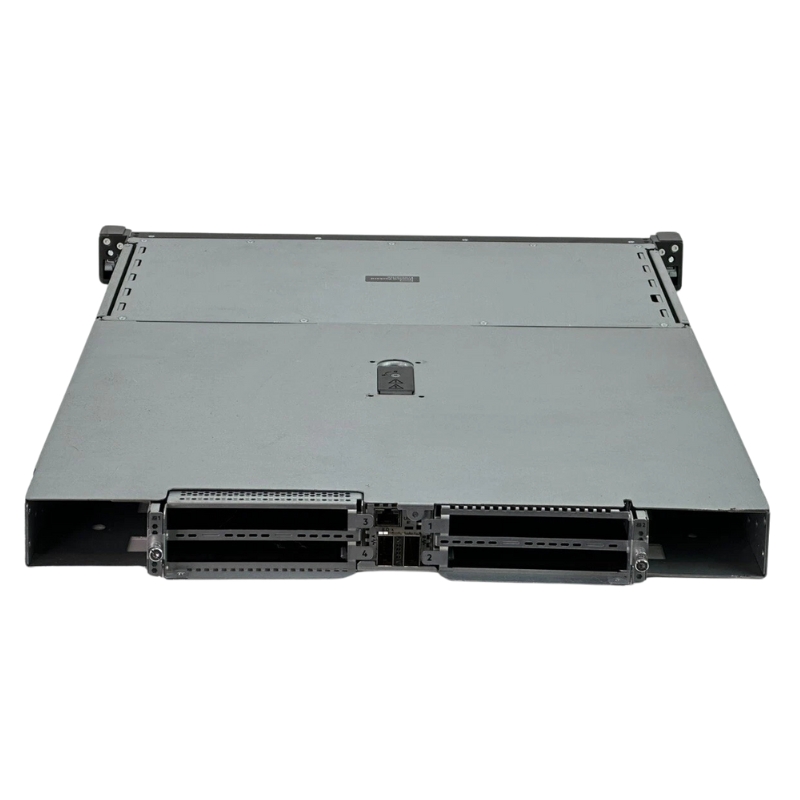
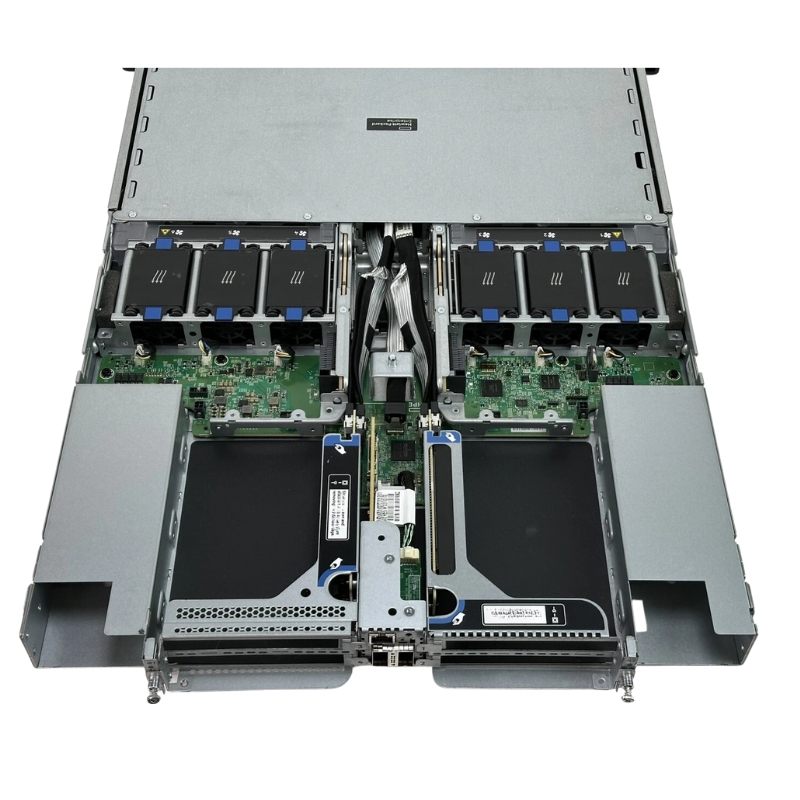
HPE P10777-001 EL4000 4x10G 2xQSFP+ v2 PThru System Server. New Sealed in Box (NIB) with 3 Years Warranty
The HPE P10777-001 EL4000 4x10G 2xQSFP+ v2 PThru System Server is a high-performance solution designed for enterprises that demand speed, scalability, and reliable networking. Built to support advanced workloads, this system server enables seamless integration across data centers, cloud deployments, and high-density computing environments.
Choosing the HPE P10777-001 EL4000 brings a variety of advantages to modern IT infrastructures. This hardware enhances both performance and efficiency while keeping scalability at the forefront.
With 4x10G connectivity and 2xQSFP+ v2 interfaces, this server delivers unmatched throughput for businesses requiring strong networking capabilities. It ensures high-speed interconnectivity between nodes, servers, and clusters.
The HPE P10777-001 EL4000 is engineered for compatibility with modern infrastructure. Its design supports:
Ideal for large-scale data centers where performance and reliable connections are crucial.
Suitable for compute-intensive applications like machine learning, analytics, and scientific workloads.
The HPE P10777-001 EL4000 4x10G 2xQSFP+ v2 PThru System Server category groups hardware modules, passthrough adapters, and networking mezzanine components designed to deliver high-throughput, low-latency connectivity for enterprise servers and dense compute platforms. This category focuses on specialized server I/O modules that expose multiple 10 Gigabit Ethernet ports alongside QSFP+ connectivity for uplinks and fabric aggregation. It is tailored for system integrators, data center operators, cloud builders, and IT teams who require deterministic networking, flexible cabling options, and compatibility with blade and rack servers that accept PThru-style modules.
The EL4000 category often branches into logical subcategories and accessory groups that are relevant when planning a deployment. Understanding these helps buyers assemble complete solutions rather than just single modules.
Although the EL4000 exposes native 10G ports, many deployments require transceivers, breakout cables, or DAC/AOC options to interface with existing fabrics. This subcategory includes short-reach and long-reach optics, copper twinax direct attach cables for short distances, and breakout harnesses that convert QSFP+ into multiple SFP+ connections for flexible topologies.
QSFP+ ports on EL4000 modules enable uplink consolidation. The related catalog typically offers QSFP+ direct attach copper (DAC), active optical cables (AOC), and 1-to-4 breakout cables that split a single QSFP+ into four 10G lanes. These accessories determine reach, power consumption, and link density between server rows and aggregation switches.
In blade and certain modular systems, passthrough modules are paired with rear interconnects or midplane components. This subcategory covers compatible cage hardware, cable management panels, and chassis-level mapping guides that ensure each server bay lines up with the correct external port on the EL4000 PThru module.
The EL4000 4x10G 2xQSFP+ v2 modules are versatile. Below are the most common use cases that drive purchases and drive design decisions in modern infrastructure:
Virtualized infrastructure relies on predictable network performance and deterministic traffic paths. With passthrough modules, each virtualized host can keep direct connectivity to an external switch, which simplifies network troubleshooting and performance tuning. The 10G native ports are suitable for host-to-switch traffic, while QSFP+ uplinks facilitate aggregation back to a spine or ToR switch that serves many hosts.
Applications such as iSCSI, NFS, or NVMe-over-Fabrics benefit from the low-latency, high-bandwidth links that 10G and QSFP+ provide. Using PThru modules removes an intermediate switching layer that could introduce jitter. Designers often pair EL4000 modules with storage arrays, SAN fabrics, or high-performance NAS devices to ensure sustained throughput for backup windows, replication, and heavy I/O workloads.
Telecommunications and edge computing deployments emphasize space, power, and deterministic port mappings. The EL4000 fits well where operators need clear pass-through mapping from server NICs to external network functions — a common requirement for NFV (Network Functions Virtualization) and service chaining.
Selecting the right variant requires attention to system compatibility, cabling strategy, and thermal/power characteristics. Below are critical technical factors to evaluate before procurement.
Each PThru module is manufactured to align with specific server backplanes and chassis architectures. Confirm that the EL4000 v2 module supports your chassis family and that the server slot numbering maps correctly to external ports. Compatibility matrices and mechanical mapping guides are essential to avoid miswired deployments that complicate network diagrams.
One of the defining advantages of passthrough modules is explicit, traceable port mapping: server NIC x maps to chassis port y. This deterministic mapping is helpful in environments where cord tracing, labeling, and port inventory are part of compliance or operational processes. When designing cabling runs, plan label schemes and cable routing to match the PThru port layout.
Decide early whether you’ll use fiber optics, copper DACs, or a mix. Factors to consider:
Passthrough modules themselves are passive or minimally managed, but overall system firmware—on the server and chassis interconnect—impacts the behavior of linked NICs and fabric modules. Keep firmware and driver stacks current for the server network adapters and management controllers to ensure stable auto-negotiation, link speed selection, and error reporting.
Even though PThru modules are generally lower power than active switching modules, they still affect chassis airflow and can impose thermal constraints. Check vendor thermal guides and maintain proper front-to-back airflow paths. Consider placement of high-power servers to avoid localized hot spots near the passthrough module area.
Understanding the performance envelope helps match the EL4000 category modules to workload demands. Core attributes include bandwidth per port, port aggregation behavior, and compatibility with advanced networking protocols.
Native 10G ports deliver a predictable 10 Gbps of full-duplex throughput per port. The QSFP+ links, depending on configuration and cabling, can carry 40 Gbps aggregated traffic or be split for 4×10G operation. Design your fabric with headroom — plan for link utilization that leaves capacity for bursts, replication traffic, and maintenance operations.
Passthrough modules minimize queuing and active switching inside the server chassis. For latency-sensitive applications (e.g., high-frequency trading, real-time analytics, HPC clusters), the reduced intermediary processing results in tighter latency profiles and more predictable packet delivery times.
While PThru modules do not perform packet processing, they are commonly used in fabrics that implement RDMA (Remote Direct Memory Access), RoCE (RDMA over Converged Ethernet), or other lossless transport mechanisms. Ensure the external switch fabric and NICs support necessary flow control and QoS features if you intend to implement RDMA or storage networking protocols that require lossless behavior.
Deploying EL4000 passthrough modules efficiently requires planning for physical installation, cable management, and environmental considerations. Below are recommended best practices that reduce downtime and simplify future maintenance.
Use consistent color coding for cables (for example: QSFP+ aggregation in one color, server uplinks in another) and maintain a cable management plan that includes slack management, rack diagrams, and patch panel labeling. For QSFP+ breakout scenarios, document which QSFP+ lanes map to which server ports to speed troubleshooting.
After physical installation, run link validation and throughput tests to confirm speeds and error-free operation. Validate link auto-negotiation, verify duplex settings, and perform stress tests under realistic loads to expose any configuration or hardware issues early.
Maintain a small stock of compatible modules and common cable types. PThru modules are generally durable, but having a replacement on-hand reduces mean time to repair (MTTR) in case of unforeseen failures or physical damage.
Integrate the server and fabric management tools with your monitoring systems. Although passthrough modules do not emit extensive telemetry, server NICs and the external switches will provide link, error, and utilization metrics. Set alerts for link flaps and error counters to proactively address hardware or cabling issues.
The v2 designation indicates product revision; track part revisions and cross-reference vendor part numbers when procuring replacements or scale-out modules. Keep documentation on compatibility lists and plan for end-of-life (EOL) notices that could affect spares planning.
Network hardware is an integral part of security posture and regulatory compliance. While passthrough modules are passive, decisions about physical access, cabling, labeling, and documentation directly affect security controls.
Restrict access to server racks and cable interconnect zones. Use tamper-evident seals, lockable cabinet doors, and controlled access procedures to ensure only authorized technicians can make changes to cabling or module connections.
Maintain clear records of port mappings, wiring diagrams, and change logs. For audits and incident response, being able to quickly trace which server NIC connects to which external switch port is critical.
When evaluating whether an EL4000 PThru module is the right fit, consider alternatives that offer integrated switching, additional management features, or different port mixes. Below are comparison points to help evaluate trade-offs.
Passthrough modules offer simplicity and deterministic mapping but lack switching features and local packet processing. Integrated switch modules provide internal switching, VLANs, and advanced buffering at the cost of complexity and potentially higher power consumption. Choose passthrough when you want external centralized switching and minimal in-chassis processing.
Modern fabrics may move to 25G/100G at the host or uplink layer for higher density. The 4x10G + 2xQSFP+ architecture fits many current workloads, but plan for migration paths: QSFP+ uplinks can sometimes be leveraged for higher-speed fabrics in future upgrades, and breakout strategies can allow reuse of existing copper or fiber plant while migrating hosts gradually.
When sourcing EL4000 modules and related components, evaluate vendor warranties, support SLAs, and return policies. Vendors that provide clear compatibility matrices, mechanical drawings, and field-replaceable part numbers reduce integration risk. Consider purchasing certified optics when interoperability is critical, and weigh the value of extended support contracts for large-scale or business-critical deployments.
Servers with EL4000 modules often connect to leaf switches using 10G links. Leaf switches then aggregate to spine switches using 40G or 100G uplinks — frequently using the QSFP+ ports as aggregation points. This topology allows servers to maintain consistent 10G access while the fabric scales at the spine layer.
In colocation or multi-tenant deployments, passthrough modules simplify demarcation between tenant servers and provider-managed aggregation switches. Physical separation and deterministic port mapping make it easier to implement tenant-level SLAs and traceability.


 Contact Us
 Information
 Catalog
 Solid State Drives (SSD)
 Network Switches
 Hard Disk Drives
 HBA & Controllers
 PC & Servers
 PC & Server Memory
 CPU & Processors
 Network Routers
 Power Supplies
 Tape Drives & Libraries
 Network Devices
 Computer & Network Cables