(7% discount is applied at checkout)
Cart is empty
Your go-to destination for cutting-edge server products
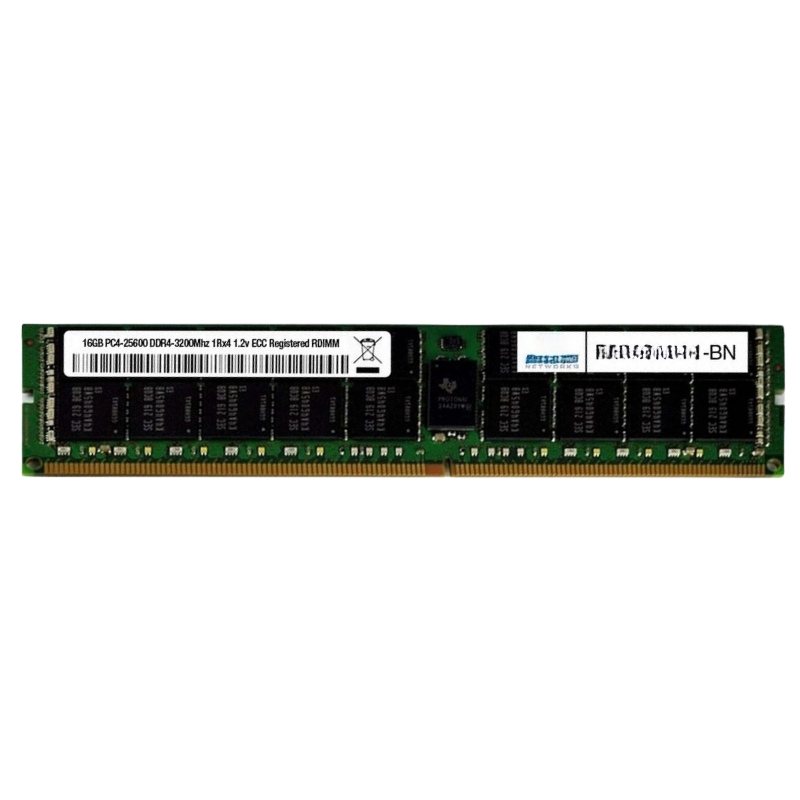


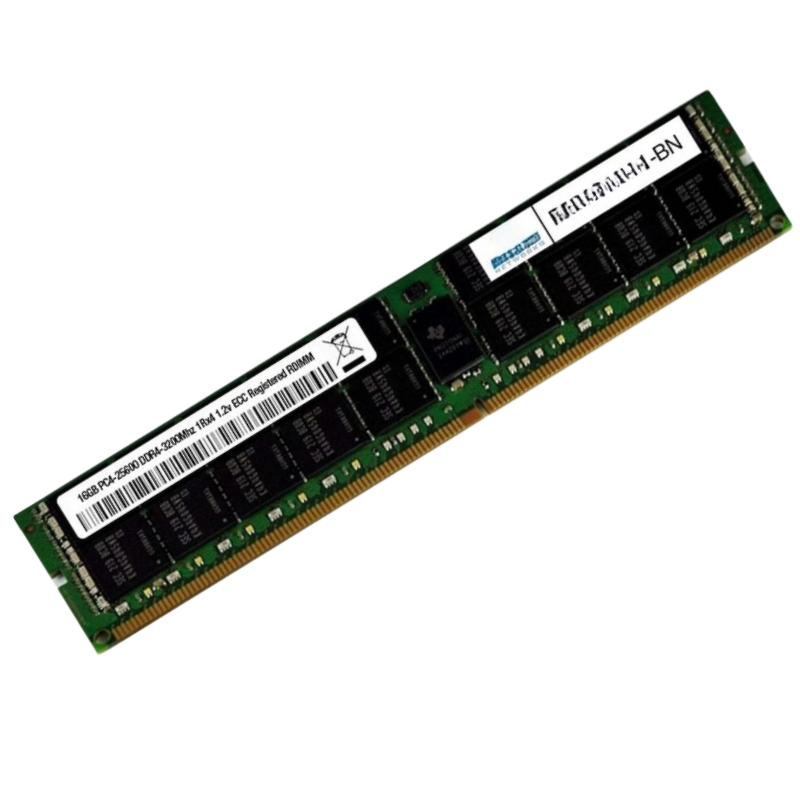
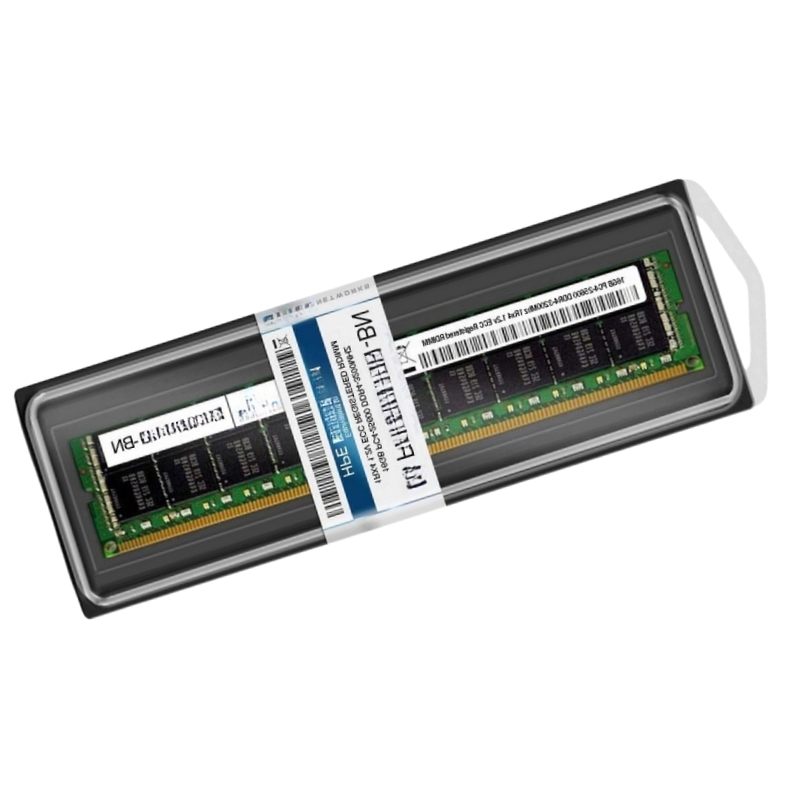
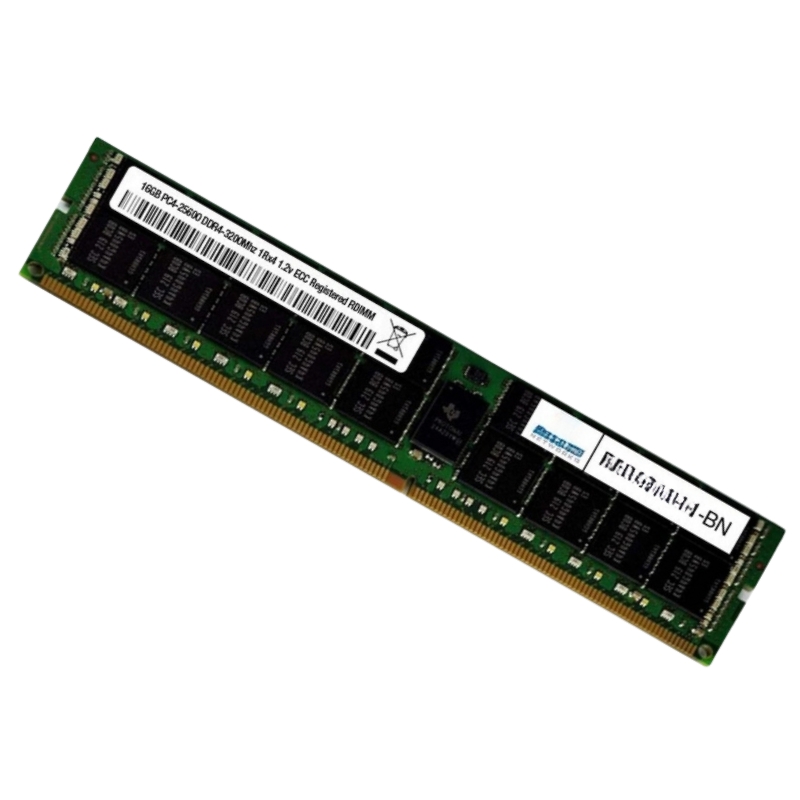
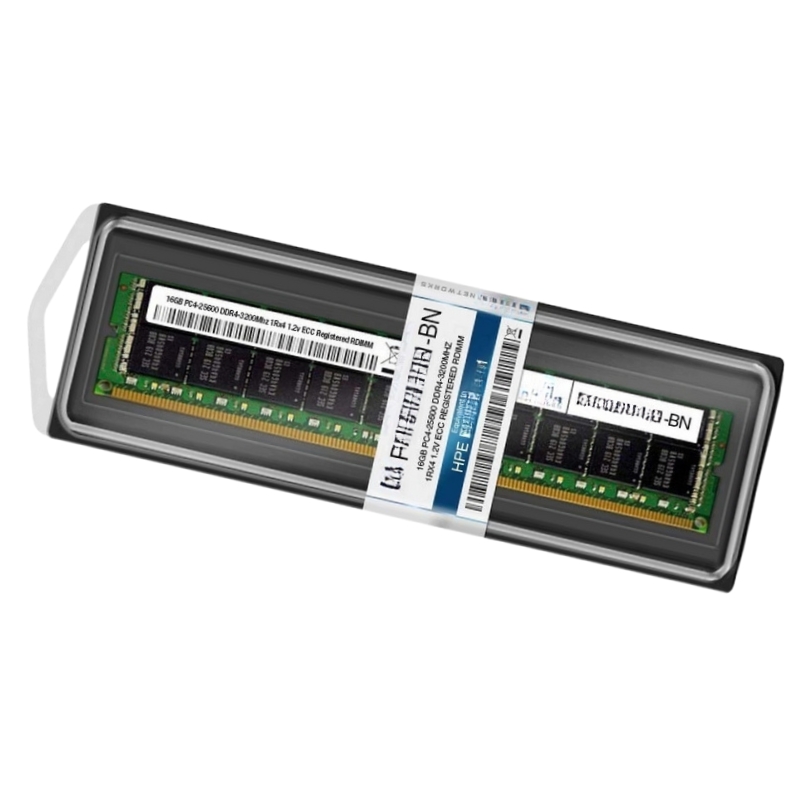
HPE P11442-Z91 16GB 1RX4 DDR4-3200 PC4-25600 Cl22 288 Pin Single Rank X4 ECC Registered RDIMM Genuine Memory Module. New (System) Pull with 1 year replacement warranty
The HPE P11442-Z91 16GB 1RX4 DDR4-3200 PC4-25600 Cl22 288 Pin Single Rank X4 ECC Registered RDIMM genuine memory module is engineered to deliver stable, high-throughput memory performance for enterprise-class servers and workstations. Designed as a Registered DIMM (RDIMM) with Error-Correcting Code (ECC) support, this module provides the balance of capacity, reliability, and speed required by virtualization, large-scale databases, and memory-intensive computing tasks. Key product identifiers — DDR4-3200 (PC4-25600), CL22 latency profile, 288-pin form factor, single rank x4 organization, and HPE part number P11442-Z91 — make this module a precise match for HPE ProLiant and similar server platforms requiring vetted OEM memory.
The memory’s specifications succinctly define its role in modern server architectures:
Core Product Details
This is a system-specific upgrade component designed for seamless integration into the following HPE ProLiant Gen10 Plus servers:
Performance of the P11442-Z91 centers on DDR4-3200 timing and the interplay between latency and throughput. With an operating frequency of 3200 MT/s, the module yields higher sequential bandwidth compared to lower-speed DDR4 variants, which directly benefits memory-bound workloads such as large in-memory databases (e.g., SAP HANA, in-memory OLTP), data analytics, and high-concurrency virtualization. The CL22 timing reflects a design trade-off to preserve stability and compatibility across server platforms while still offering elevated bandwidth. When deployed in balanced channel configurations (e.g., populated per vendor channel population guidelines), the cumulative system memory bandwidth scales linearly with the number of memory channels, making these modules ideal for multi-socket and multi-channel HPE server platforms.
Although CAS latency (CL22) is higher numerically than lower-latency modules, the effective memory access time at DDR4-3200 remains competitive because the higher clock rate offsets the larger CL number. For sequential and streaming workloads — memory copy, virtualization memory consolidation, and large dataset scanning — raw bandwidth is typically the dominant metric; thus DDR4-3200 modules frequently outperform lower-frequency modules despite similar or slightly higher CAS values.
Error-Correcting Code (ECC) and the registered (buffered) DIMM design are central to enterprise reliability. ECC automatically detects and corrects single-bit memory errors and can detect multi-bit errors, significantly reducing the likelihood of silent data corruption. The register (or buffer) on RDIMMs reduces electrical load on the memory controller by buffering address/command signals, enabling denser populated memory configurations and improving signal integrity at higher speeds. Together, ECC and RDIMM characteristics are critical for 24/7 production servers, mission-critical databases, and fault-intolerant compute clusters.
Compatibility is a pivotal aspect of buying OEM-labeled memory. The HPE P11442-Z91 is specifically tested and qualified for HPE ProLiant servers and HPE-certified server series that declare support for DDR4-3200 RDIMMs. Using genuine HPE modules ensures the correct SPD (Serial Presence Detect) firmware profile is present so that the server BIOS/UEFI recognizes frequency, timings, voltage, and thermal parameters without staged compatibility issues. While physical form factor and JEDEC standards may permit operation in non-HPE systems, platform validation (boot stability, BIOS warnings, supported configurations) is most reliable on HPE systems when using genuine HPE memory.
Optimal performance requires adherence to platform-specific memory population rules. For dual-socket or multi-socket servers, populating channels per CPU with matched modules yields maximal parallelism and bandwidth. Single-rank modules like 1Rx4 are often advantageous in mixed-population scenarios where the server expects certain rank interleaving for performance. Consult HPE memory population documentation for channel mapping (A1/A2/B1/B2 etc.) to maximize throughput and minimize latency.
The 288-pin RDIMM is designed to meet server mechanical tolerances, latch profile, and slot keying for secure connection. Thermal dissipation is addressed through module PCB design and heat spreader compatibility; many server chassis rely on system airflow rather than individual heat spreaders, so modules are engineered for efficient convection cooling. Operating voltage is standard for DDR4 RDIMMs, and power draw scales with operating frequency and rank configuration — DDR4-3200 may draw slightly more than lower-frequency DDR4 counterparts, which is normal and accounted for by server power budgeting.
Industry-standard temperature ranges for server DIMMs are typically rated for consistent operation within controlled data center climates (e.g., 0°C to 85°C storage, 0°C to 55°C operating depending on spec). The module generally conforms to JEDEC environmental guidelines and may meet additional vendor environmental and RoHS compliance for lead-free components. Always verify environmental operating ranges if modules are destined for edge or harsh environments.
The HPE P11442-Z91 16GB DDR4-3200 RDIMM is tailored for a variety of enterprise workloads:
A common memory-scaling approach is to combine 16GB modules with higher-capacity modules as needed while ensuring matched speed/voltage profiles for stable operation. Memory tiering strategies can pair high-speed RDIMMs with persistent storage tiers or Optane-like technologies for cost-effective large-memory footprints while preserving hot data in DRAM.
Firmware and BIOS/UEFI revisions impact memory training algorithms and supported speeds. Ensure the server platform is running a firmware version that explicitly supports DDR4-3200 RDIMMs, especially when migrating from older memory speeds. BIOS settings may allow frequency and timing adjustment; however, vendor defaults and SPD profiles are recommended for guaranteed stability.
ECC functionality is central to maintaining data integrity across volatile memory. For environments with regulatory compliance requirements (financial services, healthcare, government), ECC and OEM memory validation help demonstrate adherence to best practices for data correctness and system reliability. Memory-level encryption schemes present in some modern platforms complement ECC by securing data in use; check platform specifications for support of memory encryption and key management if hardware-based in-use data confidentiality is required.
Keeping accurate records of memory part numbers, firmware revisions, and serial numbers aids in audit readiness and lifecycle management. HPE genuine modules typically contain part numbers and serial identifiers that simplify asset tracking within configuration management databases (CMDB).
Expansion often involves adding modules while observing maximum supported DIMM per channel counts and interleaving rules. Replacement — swapping all existing modules for new capacity or higher-speed DIMMs — can simplify configuration but may increase cost. Evaluate whether targeted expansion or wholesale replacement better aligns with performance targets and budget constraints.
In the unlikely event of failure, follow vendor RMA processes. Provide diagnostic logs, corrected/uncorrected ECC event counts, and module serial numbers to expedite replacement. Packaging and shipping instructions from the vendor should be followed to prevent transit damage during returns.
Typical deployment scenarios can help plan capacity and budget:
When procuring P11442-Z91 modules, verify part numbers, labeling, and supplier credentials. Confirm warranty terms and check for authenticity markers such as HPE holograms or vendor serial labels. For large orders, request batch traceability and, if necessary, compatibility confirmation for specific server SKUs. Keep purchase documentation to simplify any future RMAs or service interactions.
Track serial numbers and install dates in inventory management systems to plan refresh cycles. Typical memory lifespan in data center environments spans many years, but operational stresses and error rates should guide replacement policies — proactive replacement is often driven by ECC-corrected error accumulation or evolving performance requirements.


 Contact Us
 Information
 Catalog
 Solid State Drives (SSD)
 Network Switches
 Hard Disk Drives
 HBA & Controllers
 PC & Servers
 PC & Server Memory
 CPU & Processors
 Network Routers
 Power Supplies
 Tape Drives & Libraries
 Network Devices
 Computer & Network Cables