(7% discount is applied at checkout)
Cart is empty
Your go-to destination for cutting-edge server products
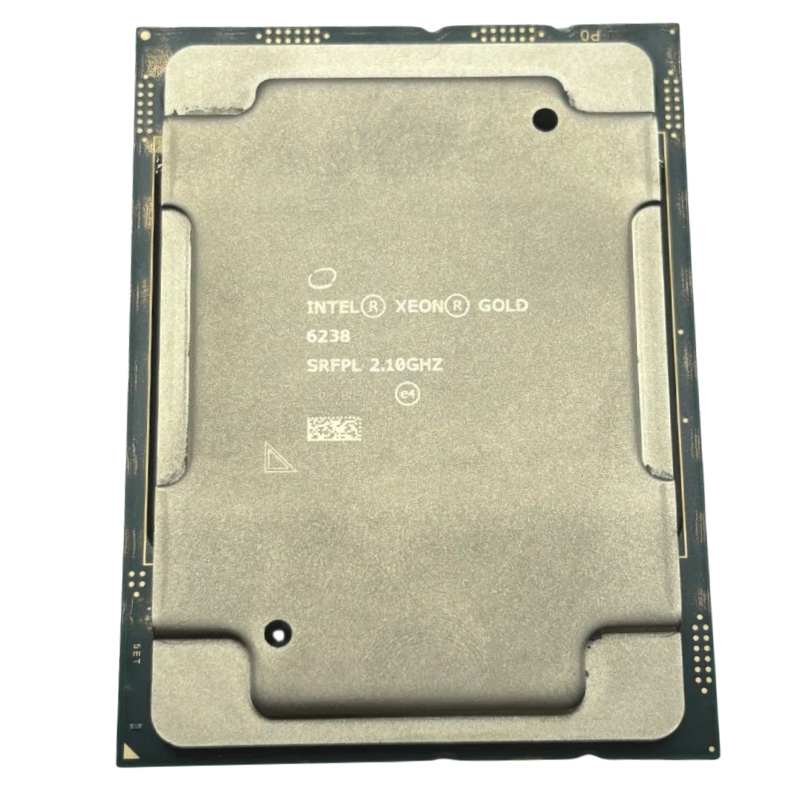


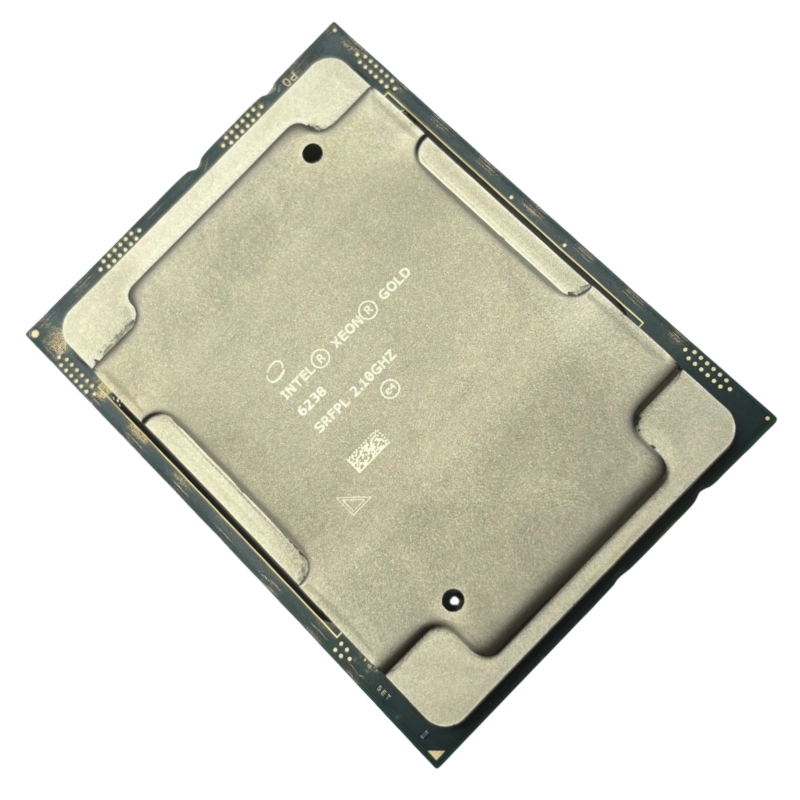
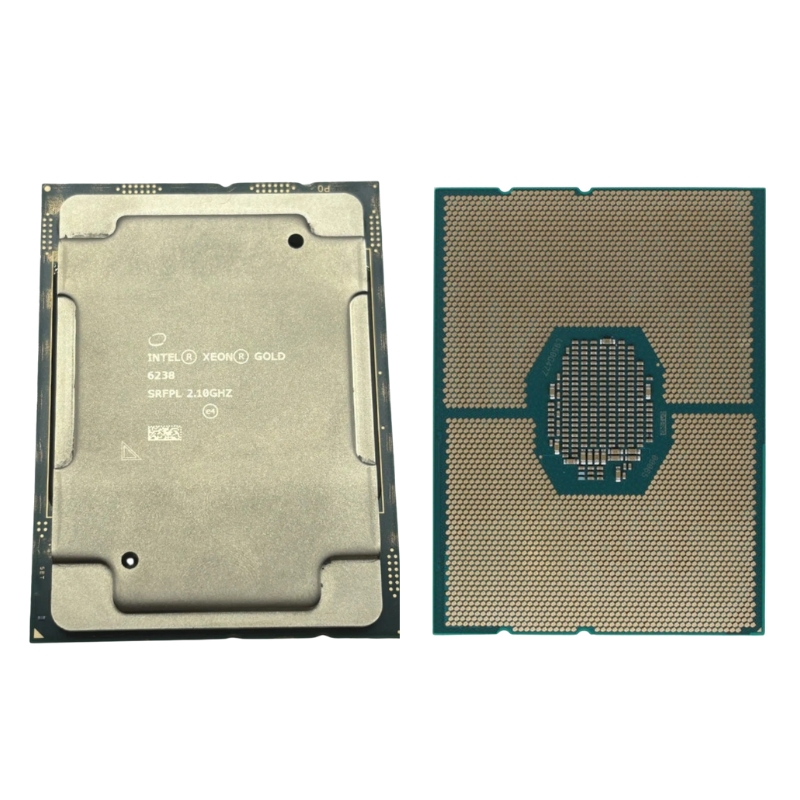
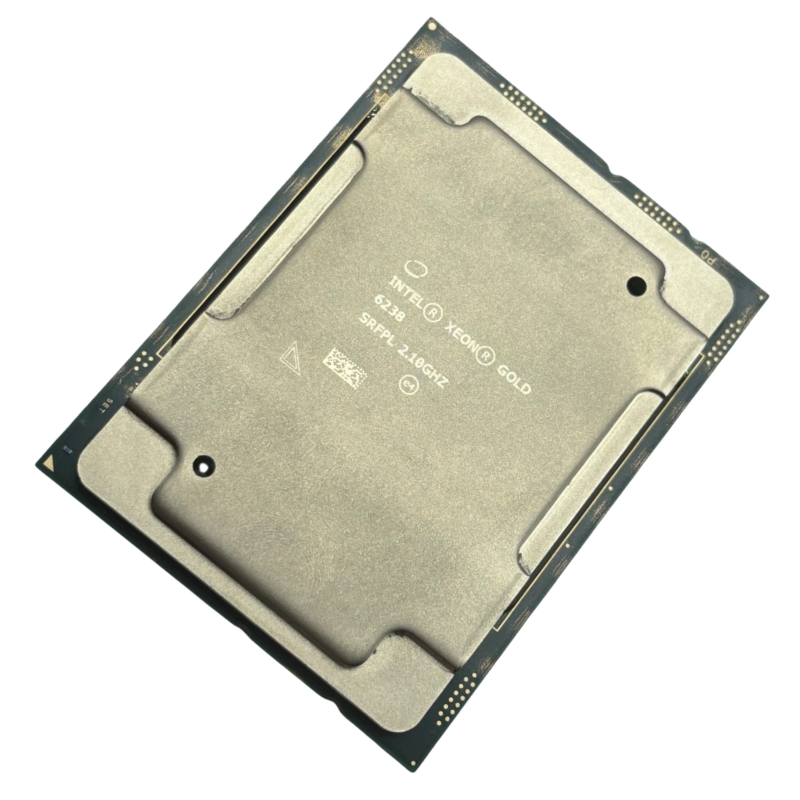
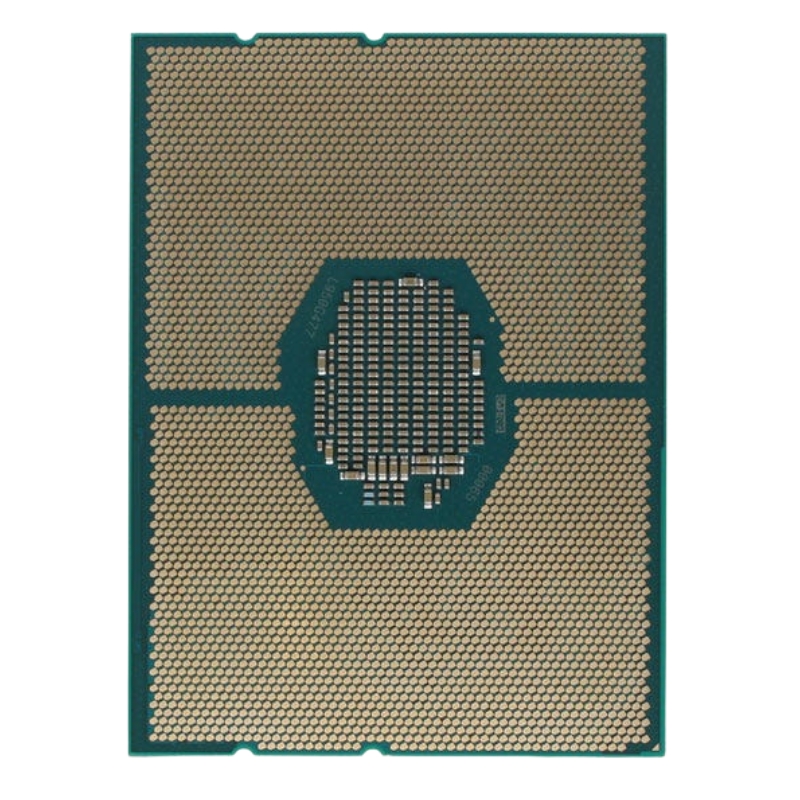
HPE P11873-L21 BL460c Gen10 Intel Xeon Gold 6238 2.1GHz 22 Core 140W Processor. New (System) Pull with 1 year replacement warranty
Product Overview
The HPE P11873-L21 is a high-performance server processor module designed for the HPE ProLiant BL460c Gen10 blade platform. Built around the Intel Xeon Gold 6238, this CPU delivers enterprise-grade compute for virtualization, database workloads, and demanding virtualization and analytics applications. With a base clock of 2.1 GHz and 22 physical cores (44 threads), it balances multi-threaded throughput with energy-aware operation at a 140W TDP.
Ideal for IT teams, data center managers, and systems integrators who need:
The Xeon Gold 6238 is tuned for throughput-oriented workloads. Its high core count and hyper-threading support make it excellent for:
When planning upgrades or replacements, confirm the following compatibility factors to ensure smooth integration into your blade chassis or rack environment.
This processor excels in environments that demand predictable multi-core throughput and enterprise reliability.
At the heart of the P11873-L21 is the Cascade Lake-generation Intel Xeon Gold 6238. The chip’s 22 cores and 44 threads let administrators consolidate more virtual machines or containers per blade without compromising per-thread work. A 2.10 GHz base clock with a 3.70 GHz Turbo Boost ceiling provides headroom for bursty loads while the 30.25 MB Intel Smart Cache optimizes shared-data access patterns — a vital advantage for in-memory databases and caching layers. The 140 W TDP places the part in a performance-optimized thermal bracket that HPE balances with the BL460c Gen10 chassis cooling design. These attributes translate into strong multi-threaded throughput and reliable single-thread performance for mixed enterprise workloads.
22 cores: balancing consolidation and licensing
The 22-core count is a deliberate sweet spot for many data centers: enough physical cores to consolidate dozens of virtual machines, yet not so many that per-socket software licensing costs make dual-socket configurations prohibitively expensive. For organizations that license software per core or per-socket, the Gold 6238 often represents a pragmatic balance between raw compute capacity and predictable licensing economics.
The P11873-L21 kit is validated for HPE ProLiant BL460c Gen10 blades — a mature, highly popular enterprise blade design. The BL460c Gen10 supports the Intel Xeon Scalable family and HPE’s DDR4 SmartMemory, flexible LOM networking options, multiple storage topologies (including NVMe options through mezzanine cards or onboard M.2) and integrated chassis management via HPE OneView. That platform-level compatibility means straightforward integration into existing c7000 or Synergy blade enclosures where the BL460c form factor is deployed. Administrators upgrading to the Gold 6238 find familiar firmware, iLO management, and driver stacks. :contentReference[oaicite:2]{index=2}
The Intel Xeon Gold 6238 supports high-bandwidth DDR4 memory (officially up to 2933 MT/s on supported platforms), and BL460c Gen10 blades are designed to take advantage of multi-channel DDR4 operation. Memory bandwidth matters for database workloads, large-scale in-memory caches, analytics and many HPC applications; pairing the Gold 6238 with matched HPE SmartMemory DIMMs in quad- or hex-channel configurations yields the best predictable latency and throughput. On the I/O front, the processor and platform support multiple UPI links and high-speed PCIe lanes for NVMe and accelerator cards (if the blade and chassis options provide the lanes), enabling scale-out storage and accelerator architectures. :contentReference[oaicite:3]{index=3}
For virtualization-heavy deployments, plan memory capacity for peak consolidated VM working sets rather than average utilization; many architects recommend at least 128–256 GB per blade when running dozens of VMs, scaling to 512 GB or 1 TB where in-memory databases or large analytic workloads dominate. The BL460c Gen10 supports HPE SmartMemory modules that allow easy expansion without sacrificing performance.
The Gold 6238’s 140 W TDP requires careful power and cooling planning inside dense blade enclosures. HPE’s BL460c Gen10 chassis and c7000 enclosures provide engineered airflow and power distribution intended to support higher-TDP parts when populated and configured correctly. When specifying racks and blade enclosures, account for peak power draw, PSU redundancy preference (N+1 vs. 2N) and data center cooling capacity. Workload scheduling and steering (for example, not saturating all blades in a single drawer with sustained heavy floating-point loads) can reduce the risk of thermal throttling or increased cooling expense.
Choose the P11873-L21 when you need a single-socket performance-density balance inside the BL460c Gen10 ecosystem and when the platform-level integration (iLO/OneView, SmartMemory) is a priority. If your workloads are extremely latency-sensitive and require higher single-core clocks, a higher-frequency model may be preferable; conversely, if absolute core count is the primary goal and enclosure licensing costs permit, a higher-core Platinum SKU could be considered. The P11873-L21 sits firmly in the “balanced compute” lane for most enterprise shops.
When sourcing, note that some resellers may list the P/N with slight variations (P11873-L21, P11873-B21, P11873-B21 depending on region or packaging). Check manufacturer kit numbers and processor serial/stepping information to match warranty coverage and support entitlements.
The Cascade Lake family introduced mitigations and microcode updates for known speculative-execution vulnerabilities; paired with HPE’s integrated management and silicon-level features (such as Intel Trusted Execution and platform firmware security), the P11873-L21 can be part of a hardened compute estate. Ensure firmware and microcode updates are applied through trusted channels (HPE Service Pack for ProLiant or OneView-managed repositories) to keep mitigations current.


 Contact Us
 Information
 Catalog
 Solid State Drives (SSD)
 Network Switches
 Hard Disk Drives
 HBA & Controllers
 PC & Servers
 PC & Server Memory
 CPU & Processors
 Network Routers
 Power Supplies
 Tape Drives & Libraries
 Network Devices
 Computer & Network Cables