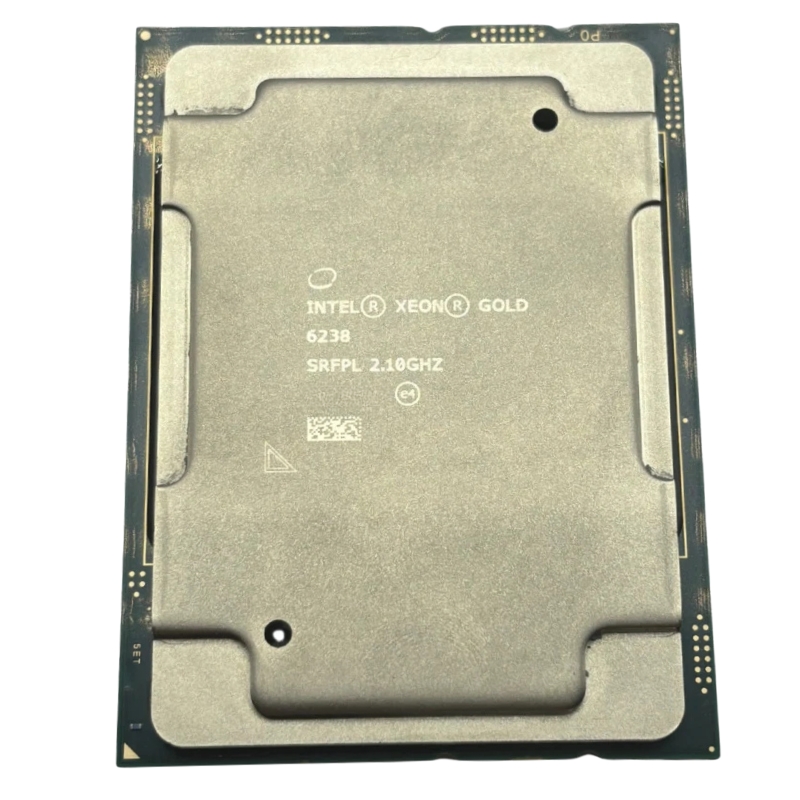
Product Overview — HPE P12010-001 (FC-LGA14B) Intel® Xeon® Gold 6238
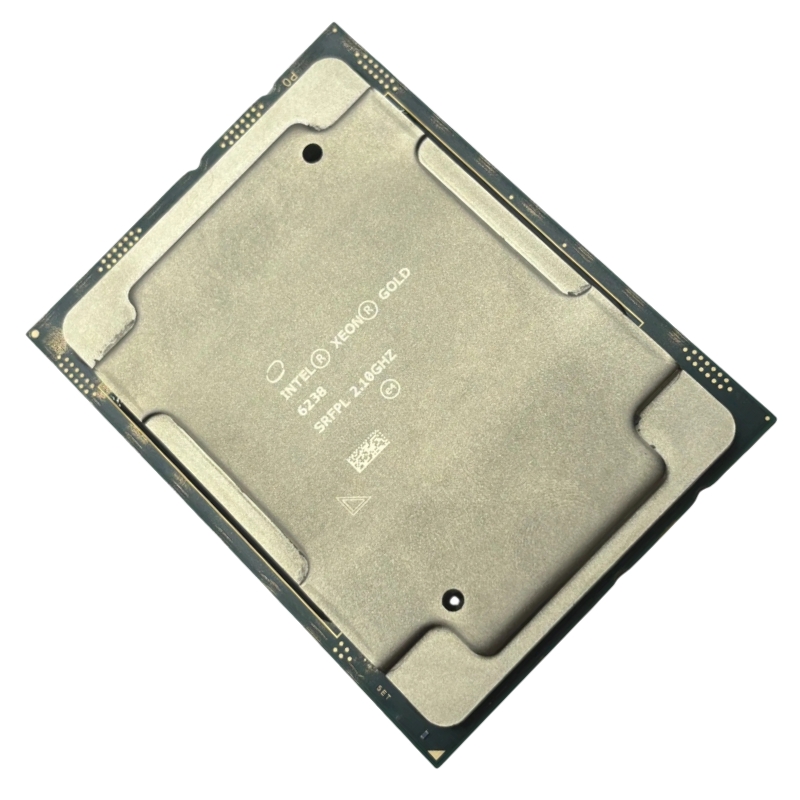
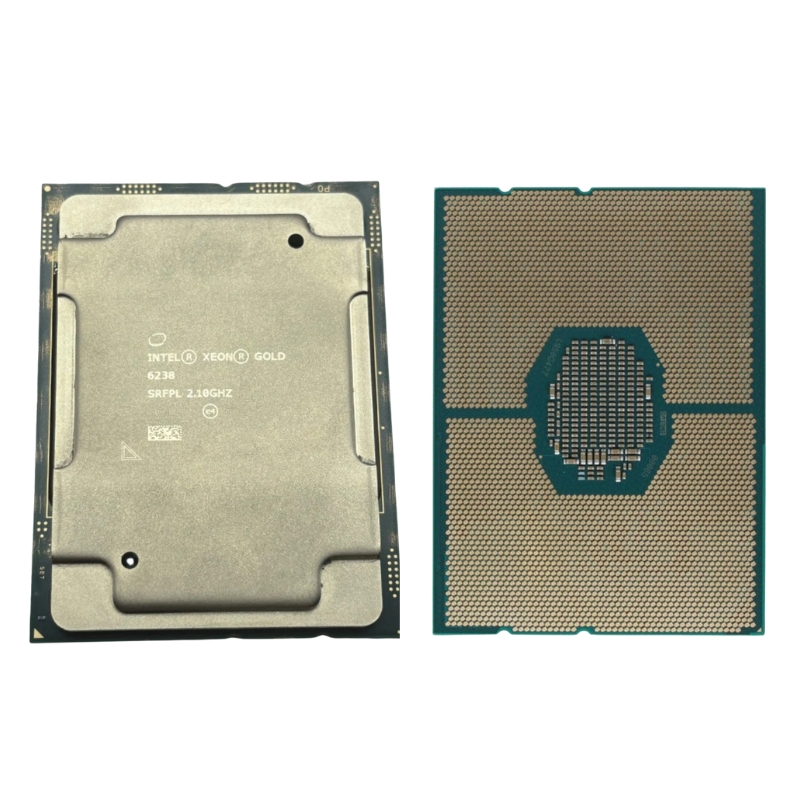
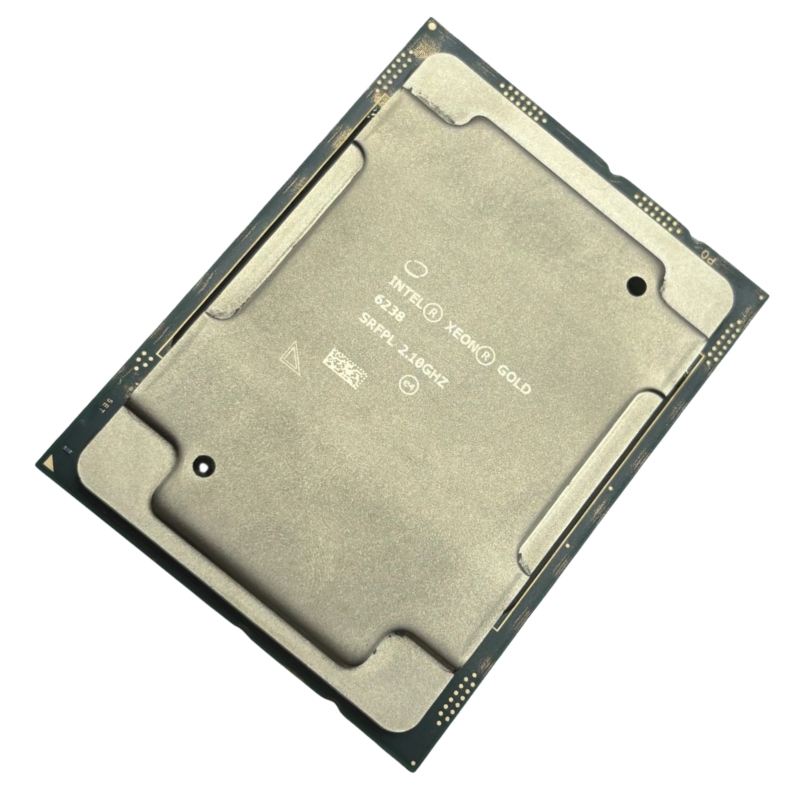
The HPE P12010-001 is a high-performance enterprise processor module built around the Intel® Xeon® Gold 6238 CPU. Designed for demanding data-center workloads, this model pairs multi-core throughput with enterprise reliability for cloud, virtualization, analytics, and mission-critical server applications. Below you'll find an in-depth, search-optimized description that highlights specifications, real-world use cases, installation and tuning guidance, compatibility notes, thermal and power considerations, comparison pointers, and frequently asked questions — all presented using synonyms and unordered lists to improve discoverability.
Core Specifications and Technical
At its core, the HPE P12010-001 packs significant compute resources tailored to scale in HPE ProLiant systems. The essential attributes are summarized for quick reference:
- Manufacturer: Hewlett Packard Enterprise (HPE)
- Part Number: P12010-001
- CPU Model: Intel® Xeon® Gold 6238
- Core Count: 22 cores (multicore architecture)
- Base Clock Speed: 2.10 GHz
- Max Turbo Frequency: Up to 3.70 GHz (single- or lightly threaded bursts)
- Last-Level Cache: 30.25 MB L3 cache
- TDP (Thermal Design Power): 140 W
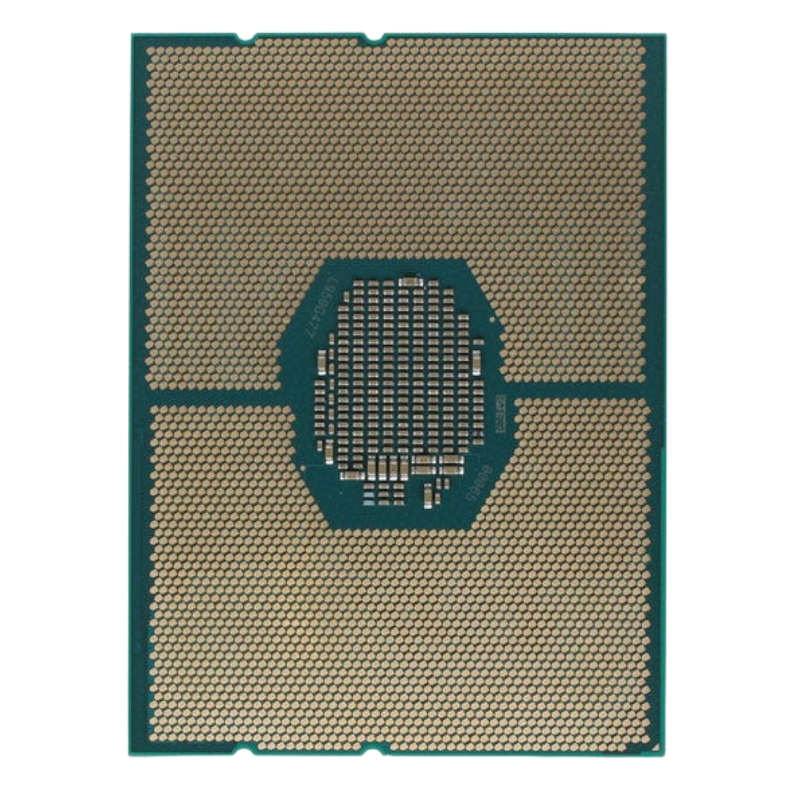
- Socket / Package: FC-LGA14B
- Microarchitecture / Family: Cascade Lake
Architecture and Microarchitecture Benefits
The Cascade Lake microarchitecture delivers incremental IPC improvements, enhanced memory latency handling, and platform features targeted at enterprise workloads. The Xeon Gold 6238 benefits from:
- Large shared L3 cache to improve performance on data-intensive operations.
- Hardware-level mitigations and platform stability for sustained server operation.
- Support for advanced memory configurations and high memory bandwidth per socket.
Intended Server Platforms and Compatibility
This P/N is validated for multiple HPE ProLiant Gen10 chassis. Confirmed compatible enclosures include:
- HPE ProLiant BL460c Gen10 (blade) — ideal for dense, modular environments
- HPE ProLiant DL160 Gen10 (rack) — cost-effective general purpose rack server
- HPE ProLiant DL180 Gen10 (rack) — balanced compute/storage configurations
- HPE ProLiant DL360 Gen10 (rack) — two-socket performance in 1U form factor
- HPE ProLiant DL380 Gen10 (rack) — versatile 2U platform for enterprise use
- HPE ProLiant DL580 Gen10 (rack) — high-availability, scalable four-socket configurations (verify platform support for single/double socket use cases)
When planning an upgrade or replacement, always consult the server’s hardware compatibility matrix and the HPE Service Pack for ProLiant (SPP) to ensure BIOS, firmware, and driver support for the Xeon Gold 6238.
Performance Characteristics and Workload Suitability
The Xeon Gold 6238 in the P12010-001 configuration is tailored for a wide range of enterprise workloads. Its 22 physical cores and large cache make it effective for parallel processing and multi-threaded applications. Typical workloads where this CPU excels include:
- Virtualization farms and hypervisor hosts (VM density and consolidation)
- Database engines (OLTP/OLAP) requiring sustained memory bandwidth
- Business intelligence and ETL pipelines
- In-memory analytics and caching layers (Redis, Memcached, SAP HANA preparatory stages)
- High-performance web services and microservices at scale
- Scientific computing and batch processing where multi-thread scaling matters
Single-Thread vs Multi-Thread Performance
Although the base frequency is a moderate 2.10 GHz, the chip supports dynamic boosting to 3.70 GHz for single-threaded spikes. This means:
- High core count enables excellent throughput for parallel tasks
- Turbo capability helps latency-sensitive threads and interactive processes
- Software that is well threaded will see near-linear scaling across many cores, while serially bound code benefits from turbo bursts
Memory and I/O Considerations
To extract peak value from the Xeon Gold 6238, pair it with the appropriate memory topology and I/O fabric. Key points:
- Support for multiple memory channels per socket — maximize DIMM population for bandwidth-heavy applications.
- Use of Registered ECC (RDIMM/LRDIMM) modules is recommended for stability and error correction in mission-critical servers.
- High throughput storage and NVMe options complement the CPU’s data handling capability.
Recommended Memory Best Practices
- Populate memory channels evenly for predictable latency and bandwidth.
- Match DIMM sizes and speeds per populated channel — avoid mixing unsanctioned modules.
- When using virtualization, allocate memory conservatively and use ballooning technologies to improve consolidation.
Thermal Design and Power Management
The 140 W TDP requires careful attention to cooling and power provisioning. Proper thermal handling ensures reliability and sustained performance:
- Use HPE-approved heat sinks and fan assemblies for the given chassis.
- Ensure adequate airflow paths, regular dust maintenance, and correct rack ventilation.
- Configure power capping if energy budgets or thermal limits must be enforced.
Power Efficiency Tips
- Enable modern power management profiles (e.g., Intel SpeedStep and C-states) where workload allows.
- Use HPE iLO and system management tools to monitor wattage, temperatures, and power usage trends.
- Consider energy-aware workload scheduling and VM placement to reduce peak power draw.
Installation, Upgrade and Field Replacement Guidance
When installing or replacing the P12010-001 processor, follow these practical guidelines to avoid damage and ensure correct configuration:
- Power down server and disconnect power before performing any field replaceable unit (FRU) work.
- Follow anti-static best practices — use an ESD strap and handle the CPU by its edges.
- Apply the correct thermal interface material (TIM) recommended by HPE between CPU and heat sink.
- Update BIOS/UEFI and firmware to the minimum recommended versions listed in the HPE support matrix.
- Re-check system logs and hardware health after boot to verify processor recognition and error-free initialization.
Firmware and BIOS Checklist
- Update system BIOS to the latest stable SPP release before deploying new CPUs.
- Install matching firmware for system management controllers and HPE integrated lights-out (iLO).
- Review HPE release notes for errata, required microcode updates, and compatibility notices.
Reliability, Availability, Serviceability (RAS) Features
The Cascade Lake platform and HPE integration provide many RAS capabilities designed to improve uptime and fault handling:
- ECC memory support to correct single-bit errors and detect multi-bit faults.
- Processor and platform telemetry available via iLO for predictive failure analysis.
- Hot-swap chassis features in supported enclosures to reduce downtime for storage/network FRUs.
Security and Platform Protections
Security features built into the CPU and the HPE platform help safeguard data and system integrity:
- Hardware-assisted virtualization (VT-x/VT-d) for secure VM isolation and device assignment.
- Microcode updates distributed through vendor firmware to mitigate speculative execution vulnerabilities.
- HPE iLO Secure Boot and HPE silicon root of trust options (where supported) for platform attestation.
Operational Security Recommendations
- Regularly apply firmware updates and microcode patches from HPE to address vulnerabilities.
- Enable secure boot and trusted platform settings where your environment requires high assurance.
- Use role-based access control (RBAC) on management interfaces and strong authentication for iLO access.
Comparisons and Upgrade Path Considerations
If you’re weighing the HPE P12010-001 (Xeon Gold 6238) against other options, consider these comparative traits:
- Higher core count vs. higher per-core frequency: The 22-core configuration favors throughput over single-thread peak performance. For workloads that require fewer but faster cores, Intel CPUs with higher base/turbo clocks or different SKU tiers may be preferable.
- Power envelope: 140 W TDP is moderate for enterprise Xeons — compare to lower-TDP SKUs if energy is a primary constraint.
- Platform generation: Cascade Lake is mature and stable; more recent microarchitectures may provide improvements in IPC, power efficiency, or specialized instructions.
When to Choose This Processor
- Consolidating multiple VMs per host for efficient utilization.
- Deploying database instances where many concurrent threads are active.
- Running medium to large cache-sized in-memory workloads.
When to Consider Different SKUs
- If your workload is strongly single-thread bound and requires maximum single-core frequency, evaluate higher frequency Xeon SKUs or newer Intel generations.
- If strict power limits exist, look at lower TDP models or energy-optimized SKUs.
- If you need specialized acceleration (GPUs, FPGAs, or dedicated AI inference chips), consider platform designs that integrate those components more tightly.
Practical Deployment Use Cases
Real deployment scenarios that commonly adopt the HPE P12010-001 include:
- Virtual Machine Hosting: High VM density hosts with balanced CPU-to-memory ratios.
- Enterprise Databases: OLTP systems where many concurrent worker threads are active.
- Backend Services: API backends, business logic tiers, and web application clusters.
- Analytics and Batch Processing: ETL pipelines and parallelizable compute jobs.
- Container Platforms: Kubernetes node pools handling a mix of stateless and stateful services.
Spare Parts and Procurement Tips
- Order HPE-branded or HPE-certified parts to ensure warranty and support coverage.
- Keep part numbers (e.g., P12010-001) handy when logging support tickets or ordering spares.
- Purchase from authorized distributors to avoid counterfeit or incompatible components.
Common Error Symptoms and Quick Fixes
- Server won’t POST: Recheck power, CPU seating, and DIMM seating; swap with known-good components if available.
- Thermal throttling: Verify heat sink mounting, thermal paste application, and airflow; confirm fans are operating at expected RPM ranges.
- Mismatched core counts or erratic behavior: Update BIOS and microcode; ensure the SPP level supports the CPU SKU.
Memory and I/O Capabilities
Memory bandwidth and capacity are crucial for this category. Key characteristics include:
- Support for multi-channel DDR4 memory — increased throughput reduces bottlenecks for data-intensive tasks.
- Large addressable memory space, allowing heavy virtualization and large in-memory datasets.
- Compatibility with numerous HPE server memory configurations, ECC support and recommended DIMM population strategies documented by HPE.
Thermal Design Power and Cooling
With a TDP of 140W, the Intel Xeon Gold 6238 requires careful thermal management. Data centers and server racks using this CPU must account for:
- Appropriate heatsink and airflow profiles for HPE chassis
- Power provisioning adjustments in blade enclosures to support simultaneous high-load CPUs
- Thermal throttling thresholds and BIOS profiles to maintain optimal sustained performance
P/N P12010-001 and LGA14B Socket Considerations
The P12010-001 part number signals a factory-validated CPU module intended for HPE systems that use the LGA14B socket. LGA14B is the physical interface; it’s essential to match the CPU to motherboards and server blades explicitly designed for that socket and firmware. HPE compatibility lists and service guides provide validated pairings between the P12010-001 SKU and chassis models such as HPE ProLiant rack servers and HPE blade servers in the BL/Gen families.
Blade vs Rack Deployment
When selecting this processor SKU, consider the server form factor:
- Blade servers (e.g., BL-series): optimized for density, shared cooling and power. Blade deployments often maximize rack efficiency but require attention to enclosure-level power budgets when multiple high-TDP CPUs are installed.
- Rack servers (e.g., ProLiant): provide more traditional per-server cooling and easier single-server maintenance. Rack units can often accommodate additional storage and NIC expansions that complement CPU capabilities.
Firmware and BIOS Compatibility
Firmware compatibility is non-negotiable. When integrating the P12010-001 CPU into HPE gear:
- Check the HPE Service Pack for ProLiant (SPP) release notes for microcode and BIOS updates addressing stability or performance improvements for the Xeon Gold series.
- Apply the latest validated firmware prior to workload migration to ensure memory training, NUMA balancing, and I/O subsystem compatibility.
- Use HPE Integrated Lights-Out (iLO) tools to monitor thermal and power telemetry specific to this SKU.
Databases, Virtualization and Cloud Hosting
The Xeon Gold 6238 performs well in multi-tenant virtualized environments and database servers where consistent throughput across many threads is more valuable than peak single-thread bursts. Typical use cases:
- Virtualized Infrastructure: Host many VMs or containers with predictable performance and memory isolation using hypervisors such as VMware ESXi, Microsoft Hyper-V, or KVM.
- Relational and NoSQL Databases: Good for OLTP and OLAP workloads when combined with sufficient memory and fast storage tiers (NVMe or SSD caching).
- Application Servers & Middleware: Java application servers, .NET backends, and API gateways that scale horizontally benefit from the high core count and logical thread capacity.
High Performance Computing and Analytics
For compute-bound analytics and HPC tasks, this CPU is appropriate when:
- Workloads can exploit multiple CPU cores and vector instructions (AVX2/AVX-512).
- Memory bandwidth and low-latency interconnects are available to complement CPU throughput.
- Clustered configurations using InfiniBand or high-speed Ethernet scale across nodes.
Cloud-Native and Containerized Workloads
Container density on orchestration platforms (Kubernetes, OpenShift) increases with cores and threads. The Intel Xeon Gold 6238 supports:
- High pod density for horizontal scaling
- Improved scheduling efficiency when pods require CPU requests and limits
- Reduced overhead for languages and runtime environments that use many threads
Power and Cooling Planning
Before deploying multiple P12010-001 CPUs in a single enclosure:
- Run a power budget review: estimate peak and average power draw per blade/rack server and verify against enclosure or rack PDU capacity.
- Follow HPE thermal and airflow recommendations: ensure blanking panels, proper front-to-back airflow, and unobstructed intakes.
- Consider environmental sensors connected to HPE iLO for long-term thermal trend analysis.
Storage and I/O Recommendations
The CPU category works best when paired with storage and I/O that do not bottleneck CPU throughput:
- Leverage NVMe for database log and hot tier storage for low latency.
- Use RAID or software-defined storage with appropriate caching strategies.
- Adopt multi-path I/O and configure NIC teaming for redundancy and bandwidth aggregation.
Performance vs Power Profiles
HPE platforms typically provide BIOS and firmware profiles to balance performance and power efficiency. Recommended steps:
- Use the “Performance” profile for latency-sensitive applications requiring consistent CPU frequency.
- Use moderated or balanced profiles to save energy during non-peak periods without completely sacrificing throughput.
- Monitor CPU C-states and P-states; disabling deep C-states may reduce latency but increase power usage.
NUMA and Threading Considerations
With multi-socket systems, Non-Uniform Memory Access (NUMA) configuration matters:
- Ensure operating system NUMA awareness and affinity-aware scheduling for memory-critical processes.
- Pin threads or bind VMs to CPU cores when predictable performance is required.
- Test workloads under realistic data distributions to identify optimal memory and CPU affinity settings.
Security and Microcode Updates
Security hardening is an ongoing requirement:
- Regularly apply microcode updates and HPE firmware patches that mitigate speculative execution vulnerabilities and improve stability.
- Enable CPU feature flags judiciously—some mitigations may affect performance; weigh security vs performance needs per workload.





 Contact Us
 Information
 Catalog
 Solid State Drives (SSD)
 Network Switches
 Hard Disk Drives
 HBA & Controllers
 PC & Servers
 PC & Server Memory
 CPU & Processors
 Network Routers
 Power Supplies
 Tape Drives & Libraries
 Network Devices
 Computer & Network Cables