
(7% discount is applied at checkout)
Cart is empty
Your go-to destination for cutting-edge server products
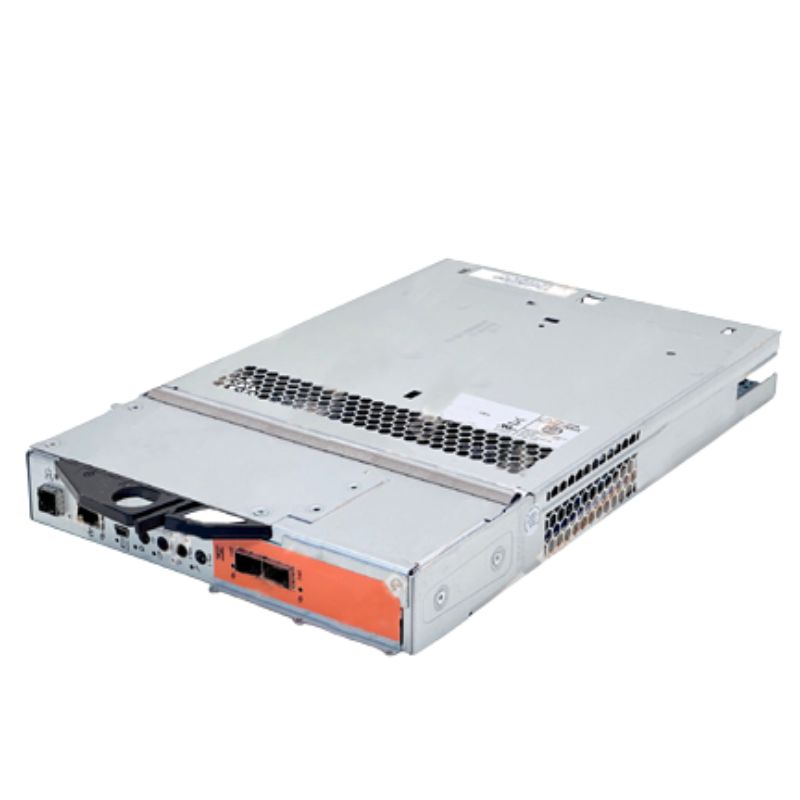
HPE P12947-001 SPS-MSA 1060 Fibre Channel Controller. New Sealed in Box (NIB) with 3 years Warranty
Discover the robust SPS-MSA 1060 Fibre Channel Controller (Part Number: P12947-001) by Hewlett Packard Enterprise—designed for reliable and scalable storage performance.
The HPE P12947-001 SPS MSA 1060 Fibre Channel Controller represents a core component within the HPE Modular Smart Array (MSA) family designed for small-to-medium enterprises and departmental SAN deployments. This category page is dedicated to detailing everything a buyer, system architect, or administrator needs to know about the MSA 1060 Fibre Channel Controller — its technical specifications, deployment scenarios, performance characteristics, management and integration pathways, supported drives and enclosures, and best-practice operational guidance.
Understanding the architecture of the MSA 1060 Fibre Channel Controller helps IT teams plan capacity, performance, and redundancy. The P12947-001 solution is engineered as a controller module within the MSA family, optimized for Fibre Channel SAN environments. Key architectural elements include controller I/O ports (Fibre Channel interfaces), onboard caching, management interfaces, and compatibility with MSA drive enclosures and expansion shelves.
The MSA 1060 controller typically provides multiple Fibre Channel host ports that enable high-throughput, low-latency connectivity to servers and host bus adapters (HBAs). These ports support standardized Fibre Channel speeds (for example, 8Gb/16Gb depending on the model and firmware set), zoning and multipathing, and are intended to integrate with SAN switches from major vendors.
The P12947-001 controller uses a combination of DRAM cache and battery/flash-backed write cache mechanisms (dependent on configuration) to ensure write integrity and to accelerate read/write operations. Controllers in clustered or dual-controller MSA configurations provide automatic failover and transparent controller switching to maintain availability during maintenance or unplanned events.
The MSA 1060 controller is compatible with a range of drive types across HPE’s validated list of media, enabling hybrid and all-flash configurations. Choosing the right mix of SAS HDDs, SAS SSDs, and NVMe-attached options (where supported by the enclosure and controller firmware) helps balance capacity, cost, and performance.
When planning a configuration, evaluate expected IOPS and throughput of target workloads. For virtualization clusters, aim to provision enough flash cache or SSD tiers to absorb random I/O spikes. When capacity is the priority, larger-capacity HDDs reduce rack space needs. Always check HPE Interoperability Matrices and product compatibility lists for supported drive firmware and models.
Performance for the P12947-001 MSA 1060 Fibre Channel Controller is workload-dependent. Benchmarks commonly reported by customers and validation labs measure transaction IOPS, sequential throughput (MB/s), and latency under mixed read/write ratios. Real-world performance will vary based on RAID level, controller cache settings, host multipathing, and drive mix.
For a small VM farm or database cluster, expect low to mid latency and consistent IOPS when SSDs or hybrid tiers are used. For bulk file storage and backup targets with mostly sequential access, HDD-dominant systems deliver high throughput at a lower cost-per-GB. For higher transactional performance, add SSDs or configure the MSA to present hot data on flash tiers.
The MSA 1060 controller supports multiple RAID levels and drive protection schemes. Proper RAID selection directly impacts performance, usable capacity, and rebuild times.
During a drive rebuild, prioritize operations that minimize rebuild time while protecting data integrity. Use hot spares and monitor SMART attributes to proactively replace failing drives. For large-capacity HDDs, consider RAID 6 to reduce the risk of double-disk failures during lengthy rebuilds.
Effective management of the P12947-001 controller requires familiarity with HPE’s management utilities, CLI/GUI tools, and integrations with enterprise monitoring systems. HPE provides centralized management options that simplify provisioning, firmware updates, and health monitoring.
The MSA family integrates with major hypervisors (VMware vSphere, Microsoft Hyper-V, KVM) and backup/replication tools. Use storage plugins and VAAI-compatible operations where available to offload certain storage tasks and improve performance. For backups, integrate with snapshot and replication features to reduce RPO/RTO.
Implement continuous monitoring with SNMP traps or syslog forwarding to centralized monitoring platforms (Nagios, Zabbix, Splunk, SolarWinds). Configure alert thresholds for temperature, drive SMART failures, battery/flash health, controller redundancy, and RAID degradation.
Storage security is critical. The MSA controllers, including P12947-001, support several features designed to protect stored data and management planes from unauthorized access and accidental loss.
Use snapshots for short-term data protection and rapid recovery, and replication for offsite disaster recovery. Establish a replication topology (synchronous vs asynchronous) that meets your recovery time objectives and bandwidth constraints. Test recoveries regularly to validate readiness.
The MSA 1060 controller is versatile and often deployed in the following scenarios: virtualization backends for mid-sized VM farms, primary storage for departmental databases, consolidated file services, backup targets, and remote/branch office storage when paired with replication to central arrays.
When used as primary datastore for virtual machines, the MSA 1060 supports thin provisioning, snapshots, and integration with hypervisor-level APIs to optimize VM density and performance. Consider workload profiling to ensure hot data resides on high-performance tiers.
For transactional databases (OLTP), prioritize low latency and consistent IOPS. Use mirrored RAID options, SSD tiers, and multiple Fibre Channel paths from hosts to storage to maintain predictable performance and uptime.
With high-capacity HDDs and efficient RAID, the MSA 1060 can serve as an on-premise backup target. Combine with deduplication/compression at the backup software layer to reduce capacity needs.
Firmware lifecycles for controllers, drives, and enclosures must be managed to maintain compatibility and security. HPE publishes firmware bundles and interoperability matrices that should be consulted before applying updates.
Track vendor EOL announcements to plan migrations or refresh cycles. Consider extended support contracts if you must maintain older hardware while planning replacements or upgrades.


 Contact Us
 Information
 Catalog
 Solid State Drives (SSD)
 Network Switches
 Hard Disk Drives
 HBA & Controllers
 PC & Servers
 PC & Server Memory
 CPU & Processors
 Network Routers
 Power Supplies
 Tape Drives & Libraries
 Network Devices
 Computer & Network Cables