(7% discount is applied at checkout)
Cart is empty
Your go-to destination for cutting-edge server products


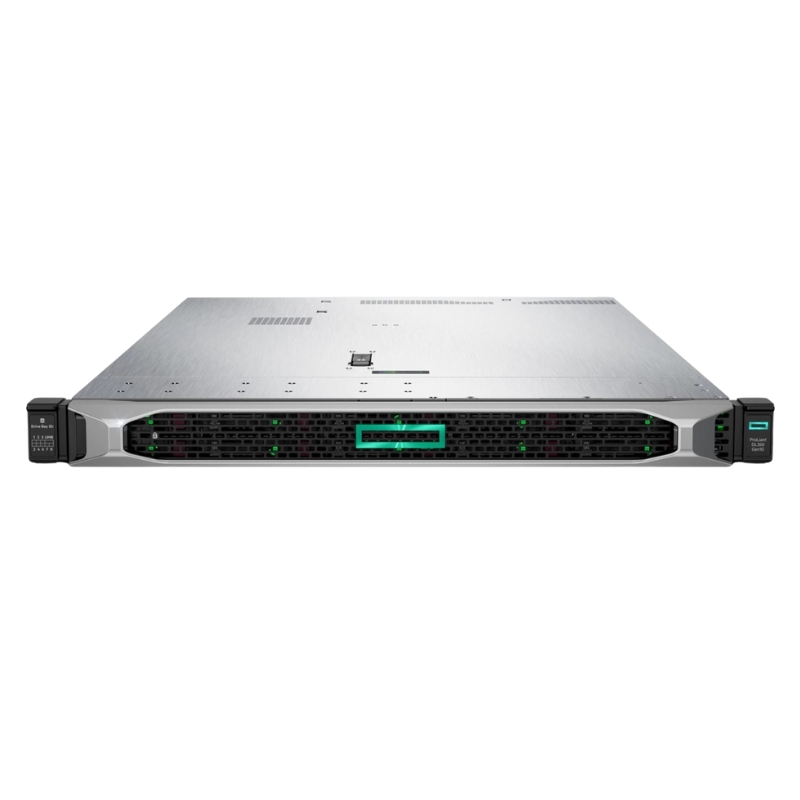
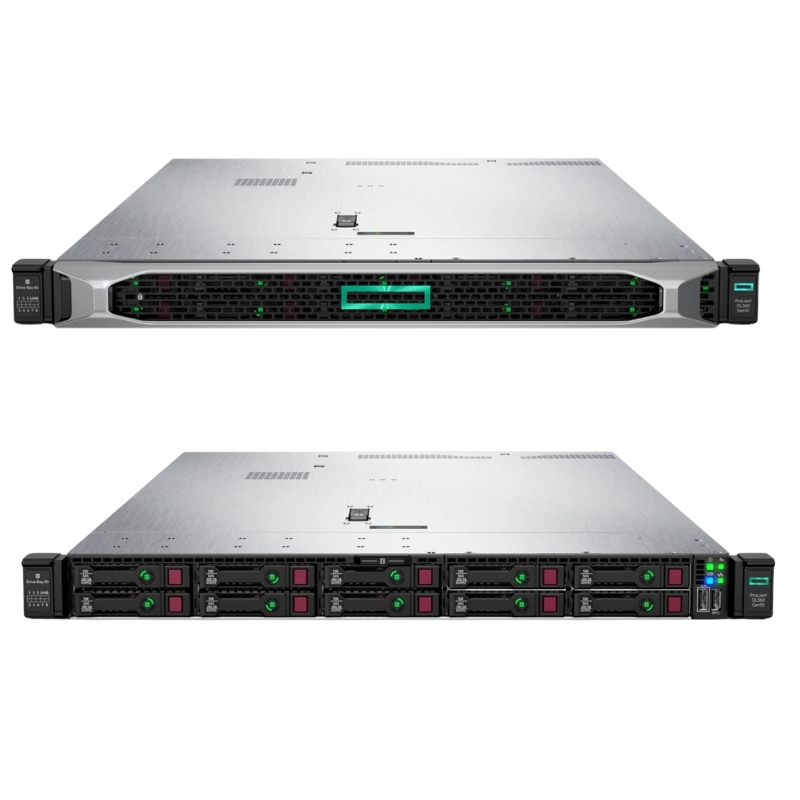
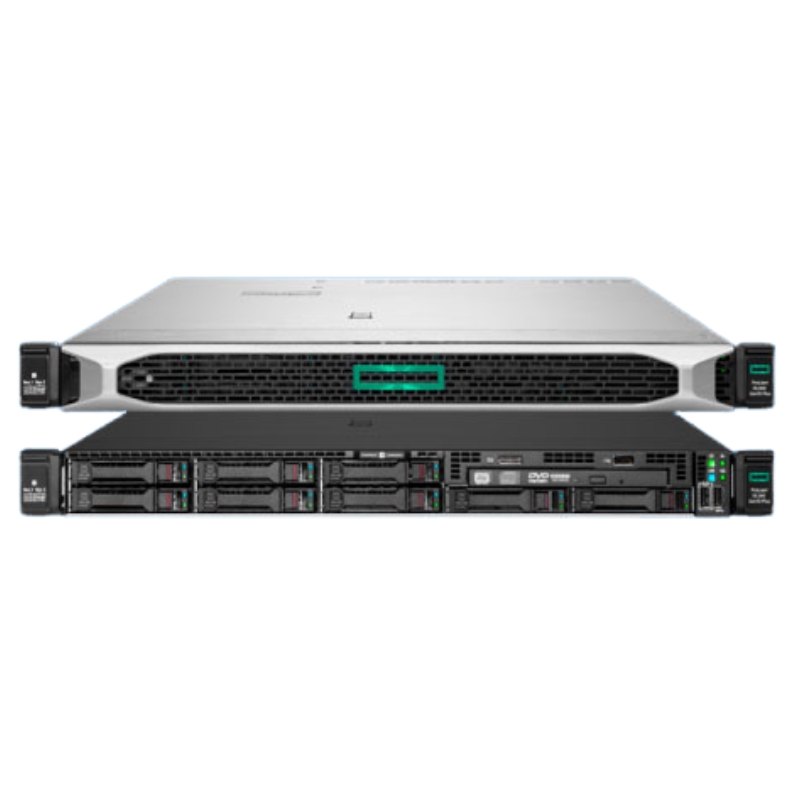
HPE P18230-B21 ProLiant DX360 8Sff Gen10 Cto Server. Excellent Refurbished with 1 year Replacement Warranty
The HPE P18230-B21 ProLiant DX360 Gen10 CTO Server is a high-performance, enterprise-grade solution built for modern data centers. Designed with flexibility and scalability in mind, this Gen10 rack server delivers reliable computing power for virtualization, cloud workloads, databases, and business-critical applications.
The HPE P18230-B21 ProLiant DX360 Gen10 Server represents a pivotal convergence of high-density computing and optimized data processing. Part of HPE's groundbreaking ProLiant DX series, this 8SFF (Small Form Factor) platform is engineered from the ground up for data-centric workloads, including analytics, object storage, and software-defined infrastructure. Unlike traditional general-purpose servers, the DX360 is purpose-designed to maximize I/O throughput, storage flexibility, and deployment efficiency, making it an ideal building block for modern, scalable data environments.
At its core, the ProLiant DX360 Gen10 leverages the robust and secure architecture of the Intel Xeon Scalable processor family (in its CTO - Configure To Order variant). This foundation is enhanced with platform-level innovations unique to the DX series, which prioritize data flow and accessibility. The 8SFF drive bay configuration provides a critical balance between storage capacity and computational density, allowing for significant local storage while maintaining a 1U rack profile. This design philosophy ensures that the server can handle data-intensive tasks where proximity of compute to storage is key to performance.
The 1U rack-optimized chassis of the DX360 is meticulously crafted for serviceability and airflow. Its tool-less design facilitates easy maintenance and upgrades. The front-accessible 8 Small Form Factor drive bays are hot-pluggable and can support a mix of SAS, SATA, and NVMe solid-state drives, offering tremendous flexibility for tiered storage solutions. The chassis layout intelligently separates cooling zones for processors, memory, and storage, ensuring optimal thermal management under sustained heavy loads.
Standard with all HPE Gen10 servers, the integrated iLO 5 (Integrated Lights-Out) management processor is a cornerstone of the DX360's operational efficiency. It provides secure, remote, and embedded management capabilities regardless of the server's power state. Features like the Silicon Root of Trust ensure firmware integrity, while the One-Click Secure Erase and iLO Federation simplify large-scale security and management across the DX fleet.
As a Configure-To-Order (CTO) model, the P18230-B21 platform is a canvas for building a server tailored to specific performance requirements. Its scalability is multifaceted, encompassing processing power, memory bandwidth, and I/O expansion.
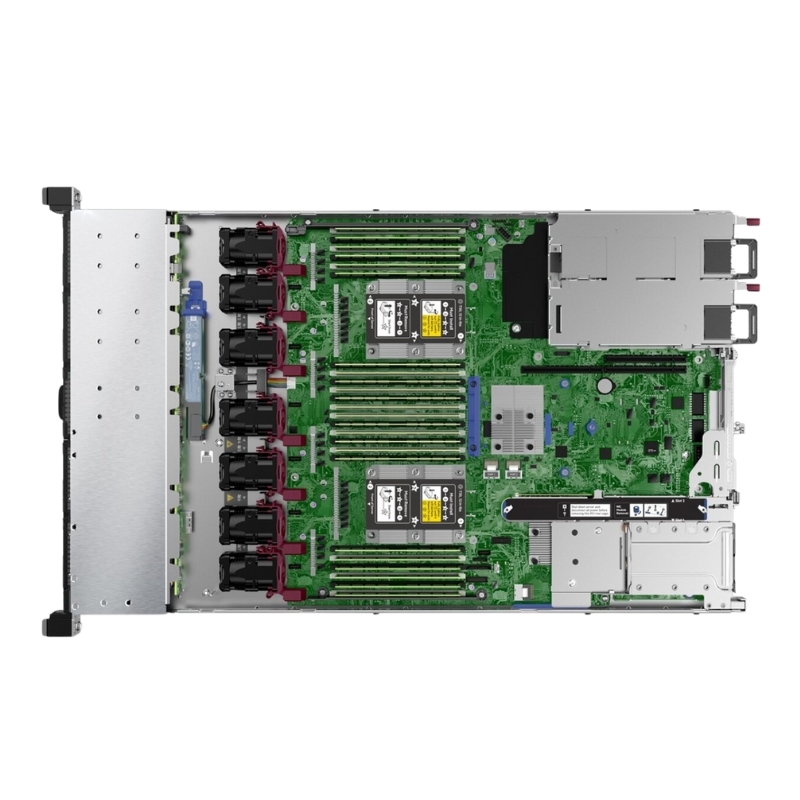
The server supports dual Intel Xeon Scalable processors (from the Bronze, Silver, Gold, and Platinum series). This allows organizations to select core counts, clock speeds, and feature sets (such as AVX-512 instructions for analytics) that precisely match workload demands. The scalable mesh architecture of these processors provides significant improvements in memory bandwidth and latency over previous generations, directly benefiting data-heavy applications.
With up to 24 DIMM slots (12 per processor) supporting DDR4-2933 memory, the DX360 can be configured with substantial system RAM—exceeding 1.5TB. High memory capacity is essential for in-memory databases, large-scale virtualization, and caching layers for object storage. The advanced memory error correction and persistent memory support (with Intel Optane DC Persistent Memory) further enhance data integrity and enable new application paradigms.
The platform includes multiple PCIe 3.0 expansion slots. These are crucial for adding high-performance network interface cards (NICs) for 10/25/40/100GbE connectivity, host bus adapters (HBAs) for external storage, or even GPUs for accelerating specific computational tasks. This flexibility ensures the DX360 can be the network-optimized front-end for a storage cluster or a high-speed compute node in a hyper-converged infrastructure.
The true differentiation of the ProLiant DX series lies in its software-optimized hardware design. The DX360 is a premier choice for deploying software-defined storage (SDS), big data analytics platforms, and cloud-native infrastructure.
With its 8 direct-attach drive bays and extensive PCIe expansion, the DX360 is a perfect physical underpinning for SDS solutions like Ceph, VMware vSAN, or Microsoft Storage Spaces Direct (S2D). The CTO model allows you to specify the exact drive type (SSD for cache, HDD for capacity) and RAID controllers (HPE Smart Array or software-defined) to match the SDS software's requirements, eliminating unnecessary cost and complexity.
The server's high core count, large memory footprint, and fast storage options make it well-suited for analytics engines like Hadoop or Spark. When configured with high-capacity drives and object storage software such as Scality or Cloudian, multiple DX360 servers can form a highly scalable, resilient, and performant object storage cluster for petabyte-scale unstructured data.
The balanced compute, memory, and storage profile of the DX360 makes it a strong candidate for HCI solutions like HPE SimpliVity or Nutanix. In these environments, the server's local resources are pooled with other nodes to create a unified, highly available compute and storage resource, simplifying management and scaling.
HPE Gen10 servers, including the DX360, are renowned for their industry-leading security features, which are baked into the silicon and firmware layers.
This hardware-based security foundation cryptographically verifies that the server firmware (BIOS, iLO, etc.) has not been tampered with, ensuring the system boots only known-good code. It provides a critical defense against sophisticated malware and firmware-level attacks.
When combined with an HPE GreenLake subscription or supported warranty, the DX360 can leverage HPE InfoSight. This cloud-based AI ops platform analyzes data from thousands of sensors across your infrastructure to predict and prevent problems, optimize performance, and recommend right-sizing actions—transforming reactive management into proactive optimization.
HPE iLO Active Health System continuously monitors the server and logs changes. Coupled with HPE OneView, administrators can automate firmware compliance across a fleet of DX360 servers, ensuring they run a consistent, secure, and tested software stack, which is vital for both security and stability in production environments.
As a CTO (Configure To Order) model, the P18230-B21 is a base platform. Successful deployment requires careful consideration of complementary components and integration strategies.
Choices here define the server's primary role. For all-flash performance, configure with 8 NVMe or SAS SSDs. For high-capacity storage, utilize large-capacity SAS or SATA HDDs. A hybrid approach using SSDs for caching/tiering and HDDs for capacity is also common. The selection of an HPE Smart Array controller (with cache protection) or an HBA for software-defined RAID is a critical parallel decision.
Plan for top-of-rack (ToR) or end-of-row (EoR) switch compatibility. For high-bandwidth workloads like storage back-ends or HCI, dual-port 25GbE or faster NICs are recommended. Consider cabling, power distribution units (PDUs), and the overall cooling strategy of the rack to ensure the dense 1U servers operate within optimal temperature ranges.
The DX360 supports high-efficiency platinum or titanium-level power supply units (PSUs). Selecting the correct wattage (e.g., 500W, 800W) based on the final configuration is essential for both energy efficiency and operational reliability. HPE's intelligent power capping and dynamic power management features can further reduce the total cost of ownership in large-scale deployments.


 Contact Us
 Information
 Catalog
 Solid State Drives (SSD)
 Network Switches
 Hard Disk Drives
 HBA & Controllers
 PC & Servers
 PC & Server Memory
 CPU & Processors
 Network Routers
 Power Supplies
 Tape Drives & Libraries
 Network Devices
 Computer & Network Cables