(7% discount is applied at checkout)
Cart is empty
Your go-to destination for cutting-edge server products
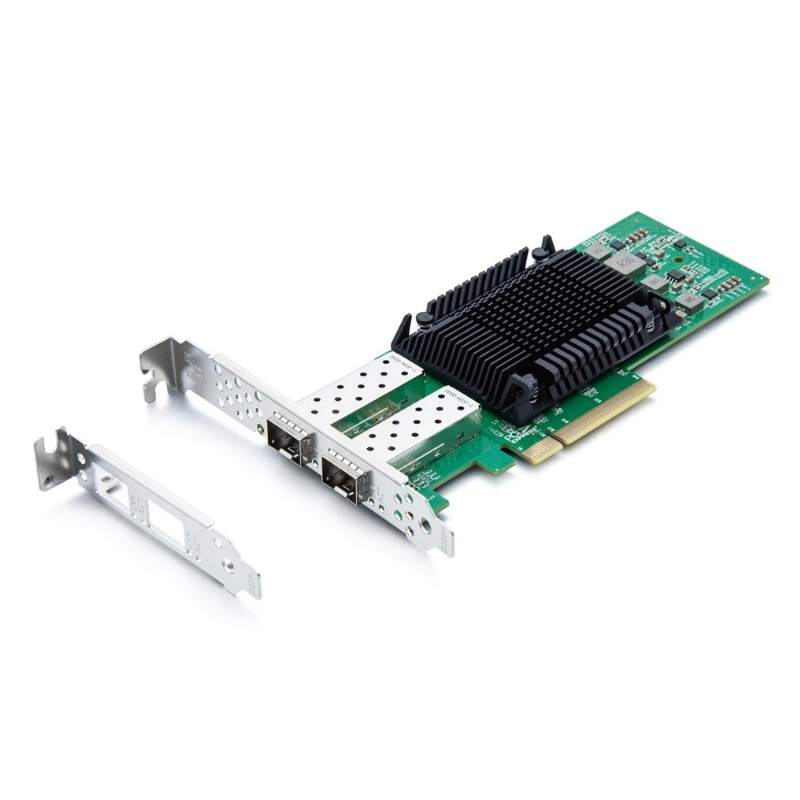


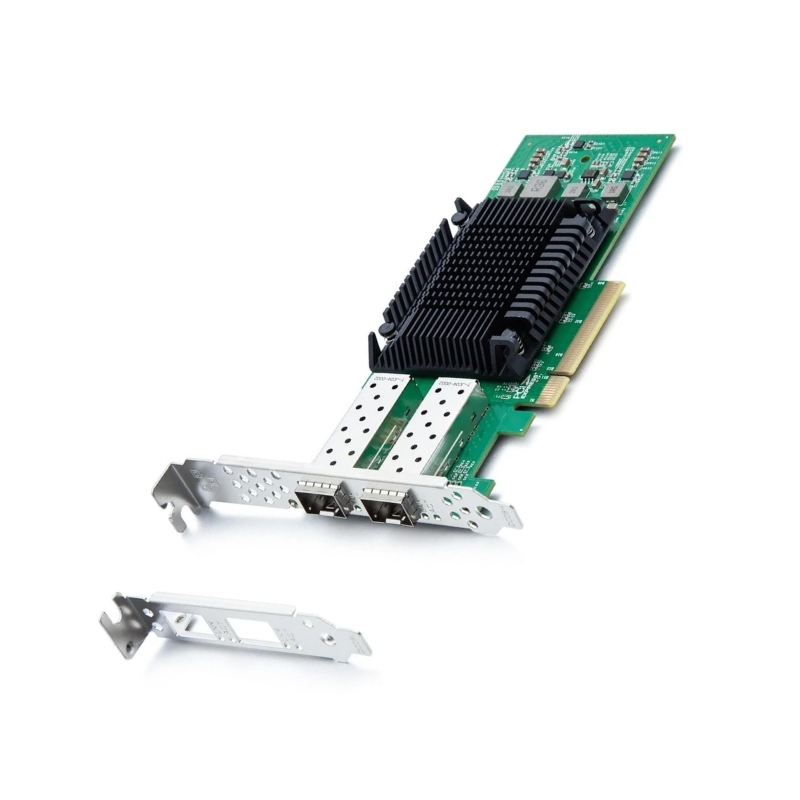
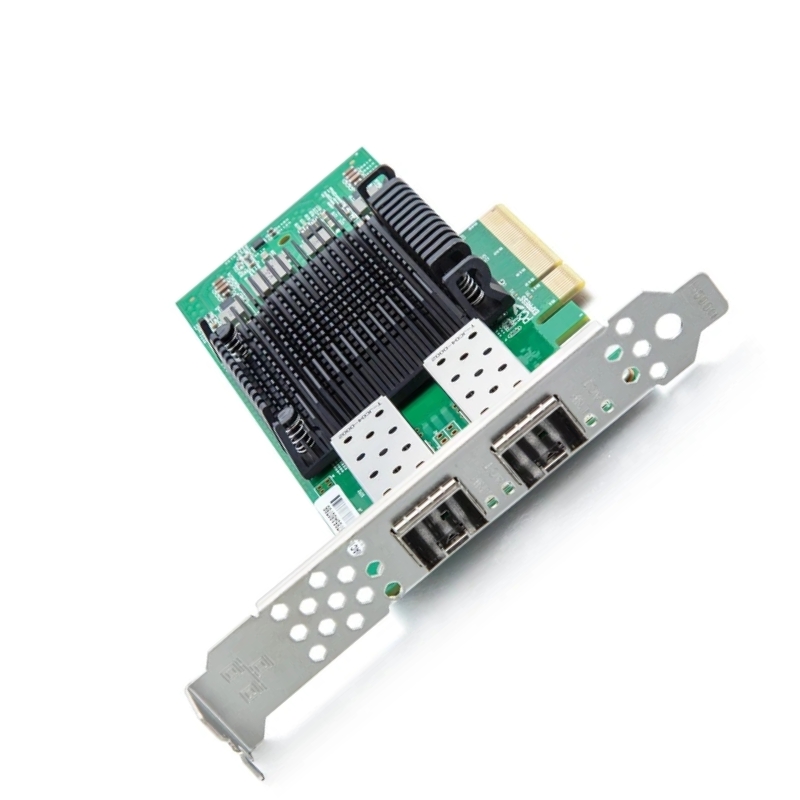
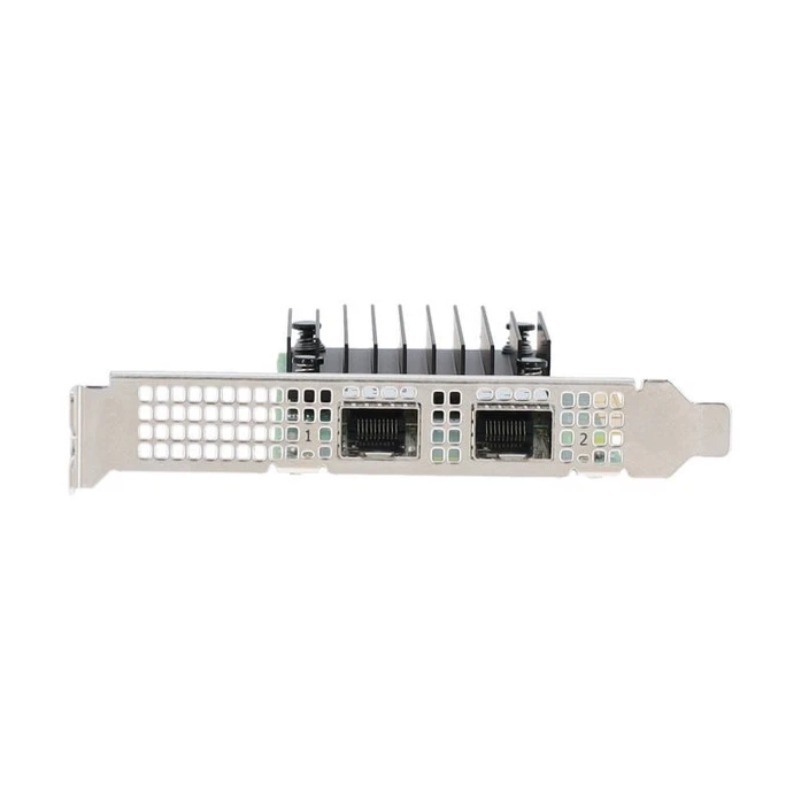
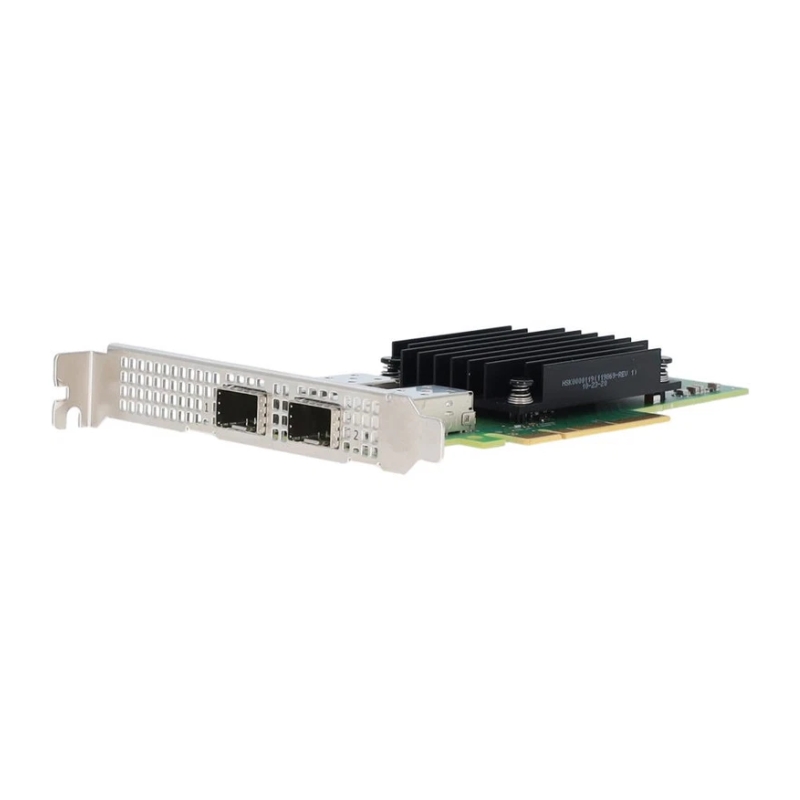
HPE P18715-001 10/25GB Dual Port SFP28 Smart Interface Card. Excellent Refurbished with 1 year replacement warranty
The HPE P18715-001 10/25GB Dual Port SFP28 Smart Interface Card is a high-performance server networking adapter engineered to provide dependable, high-speed Ethernet connectivity for modern enterprise IT infrastructures. Designed for demanding business workloads, this Smart Interface Card delivers dual SFP28 ports that support both 10 Gigabit and 25 Gigabit Ethernet, allowing organizations to seamlessly upgrade network bandwidth without replacing existing infrastructure. The flexible design makes it an excellent choice for virtualization, cloud computing, software-defined storage, database servers, and high-performance computing environments.
Built for HPE enterprise servers, the adapter combines reliable connectivity, exceptional throughput, and low-latency communication to ensure mission-critical applications perform efficiently. By supporting multiple network speeds on each port, organizations can migrate from 10GbE to 25GbE at their own pace while protecting their networking investment.
The HPE P18715-001 10/25GB Dual Port SFP28 Smart Interface Card represents a modern, high-performance network adapter designed for demanding data center and enterprise environments. Positioned within the 10/25 Gigabit Ethernet adapter category, this smart interface card delivers advanced connectivity, flexible bandwidth options, and intelligent offload capabilities that help organizations optimize server performance and network efficiency. As workloads evolve toward virtualization, cloud-native applications, and high-throughput storage, the need for reliable, low-latency network interfaces becomes critical. This HPE smart NIC is engineered to meet those requirements, providing dual SFP28 ports that support both 10Gb and 25Gb Ethernet speeds, allowing IT teams to scale bandwidth according to application demands and infrastructure growth.
Within the broader category of server network interface cards, the HPE P18715-001 stands out for its combination of hardware acceleration, intelligent traffic management, and tight integration with HPE ProLiant and other HPE server platforms. It is designed to support modern data center fabrics, including leaf-spine architectures and high-density server deployments, where consistent throughput and predictable latency are essential. By leveraging SFP28 connectivity, this card enables flexible transceiver and cable options, making it suitable for short-reach and longer-reach connections across racks and rows. The dual-port design enhances redundancy and throughput, allowing administrators to configure link aggregation, failover, and multi-path connectivity to maximize uptime and performance.
A defining characteristic of the HPE P18715-001 Smart Interface Card is its support for 10Gb and 25Gb Ethernet speeds over SFP28 interfaces. This dual-speed capability allows organizations to deploy the card in environments that are transitioning from 10GbE to 25GbE, providing a smooth upgrade path without requiring immediate wholesale changes to the network fabric. In many data centers, existing 10GbE infrastructure remains in place while new segments are built around 25GbE for higher-density workloads. The HPE P18715-001 can operate effectively in both scenarios, giving IT teams the flexibility to match link speeds to switch capabilities and application requirements.
SFP28 technology is optimized for 25GbE, but backward compatibility with 10GbE ensures that the card can be used with a wide range of optical modules and direct attach copper cables. This flexibility simplifies procurement and deployment, as organizations can choose transceivers and cabling that align with distance, cost, and power consumption targets. In high-density racks, short-reach DAC cables may be preferred for cost-effective, low-latency connections, while in larger facilities, optical modules can be used to span greater distances. The HPE P18715-001 supports these options, making it a versatile component in both traditional and modern network designs.
Bandwidth flexibility is particularly important for workloads that experience variable traffic patterns. Applications such as virtualization clusters, container platforms, and distributed storage systems may see bursts of traffic during backup windows, migration events, or peak usage periods. With dual 10/25Gb ports, the HPE P18715-001 can provide sufficient headroom to handle these bursts without saturating links or introducing excessive latency. Administrators can configure each port independently, enabling different VLANs, network segments, or traffic classes to be mapped to specific links, thereby improving traffic isolation and quality of service.
The HPE P18715-001 belongs to the smart interface card category, which goes beyond basic network connectivity by incorporating hardware-based offload engines and intelligent traffic management features. Traditional NICs rely heavily on the host CPU to process network traffic, which can lead to increased CPU utilization and reduced application performance when traffic volumes are high. Smart NICs, by contrast, offload certain tasks from the CPU, such as checksum calculations, segmentation, encryption, and virtualization-related functions, thereby freeing up compute resources for application workloads.
In the case of the HPE P18715-001, offload capabilities may include support for TCP segmentation offload, large receive offload, and other advanced features that reduce the overhead associated with handling large numbers of packets. These offloads are particularly beneficial in environments where servers host many virtual machines or containers, each generating network traffic. By reducing the number of interrupts and context switches required to process packets, the smart interface card helps maintain consistent performance even under heavy load. This contributes to smoother application response times and more predictable throughput.
Smart interface cards also play a role in network virtualization and software-defined networking. The HPE P18715-001 can be integrated with virtual switch technologies and network overlays, enabling features such as SR-IOV (Single Root I/O Virtualization) and virtual function assignment. These capabilities allow virtual machines to access network resources more directly, reducing latency and improving performance compared to traditional software-based switching. In multi-tenant environments, SR-IOV can help isolate traffic between tenants while still providing high throughput and low latency, making the HPE P18715-001 suitable for cloud service providers and large enterprises.
The HPE P18715-001 10/25GB Dual Port SFP28 Smart Interface Card is designed to integrate seamlessly with HPE ProLiant and other HPE server platforms, leveraging firmware, drivers, and management tools that are optimized for HPE hardware. This integration simplifies deployment and ongoing operations, as administrators can use familiar interfaces to configure network settings, monitor performance, and apply firmware updates. HPE management ecosystems often include tools for inventory, health monitoring, and configuration management, and the smart interface card fits into these workflows without requiring complex customization.
Tight integration with server platforms also ensures that the card is validated for compatibility with specific server models, operating systems, and hypervisors. This reduces the risk of interoperability issues and helps organizations maintain stable, predictable environments. When deploying the HPE P18715-001 in production, IT teams can rely on HPE documentation and support resources to guide configuration best practices, performance tuning, and troubleshooting. This level of support is particularly valuable in mission-critical environments where downtime or performance degradation can have significant business impacts.
From a management perspective, the smart interface card may expose telemetry and diagnostic information that can be consumed by monitoring tools. Metrics such as link status, error counts, throughput, and latency can be used to identify potential issues before they affect applications. Administrators can set thresholds and alerts to detect anomalies, such as unexpected packet loss or link flaps, and take corrective action quickly. This proactive approach to network management helps maintain high levels of service availability and performance.
The HPE P18715-001 10/25GB Dual Port SFP28 Smart Interface Card is well suited to a variety of use cases in modern data centers and enterprise networks. One common scenario is its deployment in virtualization clusters, where servers host many virtual machines that require high-bandwidth, low-latency network access. In such environments, the dual 10/25Gb ports provide ample throughput for east-west traffic between virtual machines, as well as north-south traffic to external networks and storage systems. Offload features and SR-IOV support help ensure that virtualization overhead does not compromise network performance.
Another key use case is in high-performance storage networks, including those built around iSCSI, NFS, or object storage protocols. As storage systems increasingly rely on Ethernet-based connectivity, the need for robust, high-speed network interfaces becomes critical. The HPE P18715-001 can be used to connect servers to storage arrays, hyperconverged infrastructure nodes, or distributed storage clusters, providing the bandwidth and reliability required for fast data access and replication. In environments where data protection and backup operations generate significant traffic, the dual-port design helps ensure that storage traffic does not interfere with application traffic.
Cloud-native and containerized workloads also benefit from the capabilities of the HPE P18715-001. Platforms such as Kubernetes rely on network overlays, service meshes, and microservices architectures that can generate complex traffic patterns. The smart interface card’s offload features and support for advanced networking constructs help maintain performance and reduce latency in these environments. By providing high-speed connectivity and intelligent traffic handling, the card supports the scalability and resilience required for modern application architectures.
Performance is a central consideration when evaluating network interface cards, and the HPE P18715-001 is designed to deliver high throughput and low latency across its dual SFP28 ports. With support for 10Gb and 25Gb Ethernet, the card can handle substantial volumes of traffic, making it suitable for bandwidth-intensive applications such as big data analytics, real-time processing, and large-scale web services. Hardware offload features further enhance performance by reducing the CPU cycles required to process network traffic, allowing servers to focus on application workloads.
Latency is equally important, particularly in environments where real-time responsiveness is critical. The HPE P18715-001 is engineered to minimize latency through efficient packet handling, optimized driver stacks, and support for technologies such as SR-IOV. By enabling virtual machines and containers to access network resources more directly, the card reduces the number of software layers involved in packet processing, thereby lowering latency. This can have a noticeable impact on application performance, especially in scenarios where many small transactions occur in rapid succession.
Reliability is another key attribute of the HPE P18715-001. The dual-port design provides inherent redundancy, allowing administrators to configure failover mechanisms that maintain connectivity even if one link experiences issues. Link aggregation and bonding can be used to combine the bandwidth of both ports while also providing resilience against link failures. Additionally, the card is built to meet rigorous quality and durability standards, ensuring that it can operate continuously in demanding data center environments. Firmware and driver updates from HPE help address potential issues and maintain compatibility with evolving software stacks.
The HPE P18715-001 10/25GB Dual Port SFP28 Smart Interface Card is typically validated for use with a range of operating systems and virtualization platforms commonly found in enterprise environments. This includes major distributions of Linux, Windows Server, and hypervisors such as VMware vSphere and Microsoft Hyper-V. Compatibility ensures that the card can be deployed in heterogeneous environments without requiring extensive customization or workarounds. Drivers and firmware provided by HPE are optimized to work with these platforms, enabling stable and predictable performance.
In virtualization scenarios, the card’s support for SR-IOV and other advanced features allows administrators to assign virtual functions to individual virtual machines, providing them with dedicated network resources. This can improve performance and isolation compared to traditional virtual NICs that share a single physical interface. By leveraging these capabilities, organizations can build multi-tenant environments that deliver high levels of performance and security. The HPE P18715-001 thus plays a crucial role in enabling efficient, scalable virtualization infrastructures.
Container platforms also benefit from the card’s compatibility and feature set. While containers typically rely on the host operating system’s networking stack, the underlying hardware still plays a significant role in determining performance and reliability. The HPE P18715-001 provides the high-speed connectivity and offload capabilities needed to support containerized applications that generate substantial network traffic. As organizations adopt microservices architectures and service meshes, the card helps ensure that network performance remains consistent and predictable.
When deploying the HPE P18715-001 10/25GB Dual Port SFP28 Smart Interface Card, organizations should consider how it fits into their overall network design. Factors such as switch capabilities, cabling infrastructure, and traffic patterns will influence how the card is configured and utilized. In environments where 25GbE switches are available, the card can be configured to operate at full 25Gb speeds, providing maximum throughput for bandwidth-intensive workloads. In mixed environments where some switches support only 10GbE, the card’s backward compatibility ensures that it can still be used effectively.
Cabling choices are another important consideration. SFP28 interfaces support a variety of transceivers and cables, including direct attach copper, active optical cables, and traditional optical modules. Each option has different characteristics in terms of cost, distance, and power consumption. For short-reach connections within a rack or between adjacent racks, DAC cables may be the most cost-effective choice. For longer distances, optical modules provide the necessary reach. The HPE P18715-001 supports these options, allowing organizations to tailor their cabling strategy to their specific needs.
Traffic patterns and application requirements should also be taken into account. In environments where certain applications generate particularly high volumes of traffic, administrators may choose to dedicate one port of the HPE P18715-001 to those applications while using the other port for general-purpose traffic. VLANs and quality of service policies can be used to segment and prioritize traffic, ensuring that critical workloads receive the bandwidth and low latency they require. By carefully planning how the card is integrated into the network, organizations can maximize its benefits.
Security is a fundamental concern in any networked environment, and the HPE P18715-001 10/25GB Dual Port SFP28 Smart Interface Card is designed to support secure operation through a combination of hardware and software features. While the card itself is primarily focused on connectivity and performance, it can work in conjunction with operating system and network security mechanisms to protect data in transit. Features such as VLAN tagging, access control lists, and network segmentation can be implemented at the switch and server level to control which devices and applications can communicate.
In some environments, encryption of network traffic may be required to protect sensitive data. While encryption is typically handled by higher-level protocols and software, the performance characteristics of the HPE P18715-001 help ensure that encrypted traffic can be processed efficiently. Hardware offload features may assist with certain aspects of encryption-related processing, reducing the impact on CPU utilization. This is particularly important in environments where large volumes of encrypted traffic are generated, such as secure web services, financial applications, and healthcare systems.
Network protection also involves monitoring for anomalies and potential threats. The telemetry and diagnostic information provided by the HPE P18715-001 can be integrated into security monitoring tools, helping administrators detect unusual traffic patterns, error conditions, or link issues that may indicate a problem. By combining the card’s capabilities with robust security practices and tools, organizations can build network infrastructures that are both high-performing and secure.
As organizations increasingly adopt hybrid cloud and multi-cloud strategies, the role of high-performance network interface cards such as the HPE P18715-001 becomes even more important. Hybrid cloud architectures involve connecting on-premises data centers with public cloud environments, often over high-speed links that must support secure, reliable data transfer. The HPE P18715-001 provides the bandwidth and performance needed to support these connections, enabling fast synchronization of data, efficient workload migration, and responsive access to cloud-based services.
In multi-cloud scenarios, where organizations use multiple public cloud providers alongside on-premises infrastructure, network performance and reliability are critical to maintaining a consistent user experience. The HPE P18715-001 can be used to connect servers that host cloud gateways, API endpoints, and integration services, ensuring that traffic between different environments flows smoothly. By providing dual 10/25Gb ports, the card allows for redundant connections and load balancing, helping to maintain high levels of availability even if one path experiences issues.
Hybrid and multi-cloud architectures also place demands on security and compliance. The performance and flexibility of the HPE P18715-001 support the implementation of secure tunnels, encryption, and segmentation required to protect data as it moves between environments. By combining the card’s capabilities with appropriate network and security designs, organizations can build hybrid and multi-cloud infrastructures that deliver both agility and robustness.
Scalability is a key consideration when selecting network interface cards for data center and enterprise environments. The HPE P18715-001 10/25GB Dual Port SFP28 Smart Interface Card is designed to support scalable architectures by providing flexible bandwidth options and advanced features that can accommodate evolving workloads. As organizations grow and their application portfolios expand, the demand for network throughput and low latency typically increases. The card’s support for 25GbE provides a significant step up from traditional 10GbE, enabling higher density and more efficient use of switch ports.
Future-proofing involves anticipating how workloads and technologies will evolve over time. Trends such as increased adoption of artificial intelligence, machine learning, and real-time analytics are likely to drive higher network traffic volumes and more stringent performance requirements. The HPE P18715-001 is well positioned to support these trends, providing the bandwidth and offload capabilities needed to handle large data flows and complex traffic patterns. By deploying this card as part of their network infrastructure, organizations can build a foundation that is capable of supporting future workloads without requiring frequent hardware replacements.
Scalability also extends to operational practices. The integration of the HPE P18715-001 with HPE management tools and ecosystems helps ensure that administrators can scale their operations efficiently. Automated deployment, configuration management, and monitoring capabilities allow IT teams to manage large numbers of servers and network interfaces without excessive manual effort. This operational scalability is essential for organizations that are expanding their data center footprints or adopting distributed architectures.
Within the broader HPE networking and server ecosystem, the P18715-001 10/25GB Dual Port SFP28 Smart Interface Card occupies a strategic position as a key enabler of high-performance connectivity. It complements HPE ProLiant servers, HPE storage solutions, and HPE networking products by providing the network interface capabilities required to tie these components together into cohesive, efficient infrastructures. As part of a holistic HPE solution, the card benefits from coordinated design, validation, and support, ensuring that it works seamlessly with other HPE products.
Organizations that standardize on HPE hardware can leverage the P18715-001 to maintain consistency across their server fleets. Consistent hardware configurations simplify management, troubleshooting, and capacity planning, as administrators can rely on predictable performance characteristics and compatibility. The smart interface card’s feature set aligns with HPE’s focus on reliability, performance, and manageability, making it a natural choice for environments that prioritize these attributes.
At the same time, the HPE P18715-001 is suitable for heterogeneous environments where HPE servers coexist with other vendors’ hardware. Its support for standard Ethernet protocols and SFP28 interfaces ensures that it can interoperate with a wide range of switches, routers, and storage systems. This interoperability allows organizations to integrate the card into existing infrastructures without requiring wholesale changes, providing a flexible path toward higher performance and more advanced networking capabilities.


 Contact Us
 Information
 Catalog
 Solid State Drives (SSD)
 Network Switches
 Hard Disk Drives
 HBA & Controllers
 PC & Servers
 PC & Server Memory
 CPU & Processors
 Network Routers
 Power Supplies
 Tape Drives & Libraries
 Network Devices
 Computer & Network Cables