(7% discount is applied at checkout)
Cart is empty
Your go-to destination for cutting-edge server products
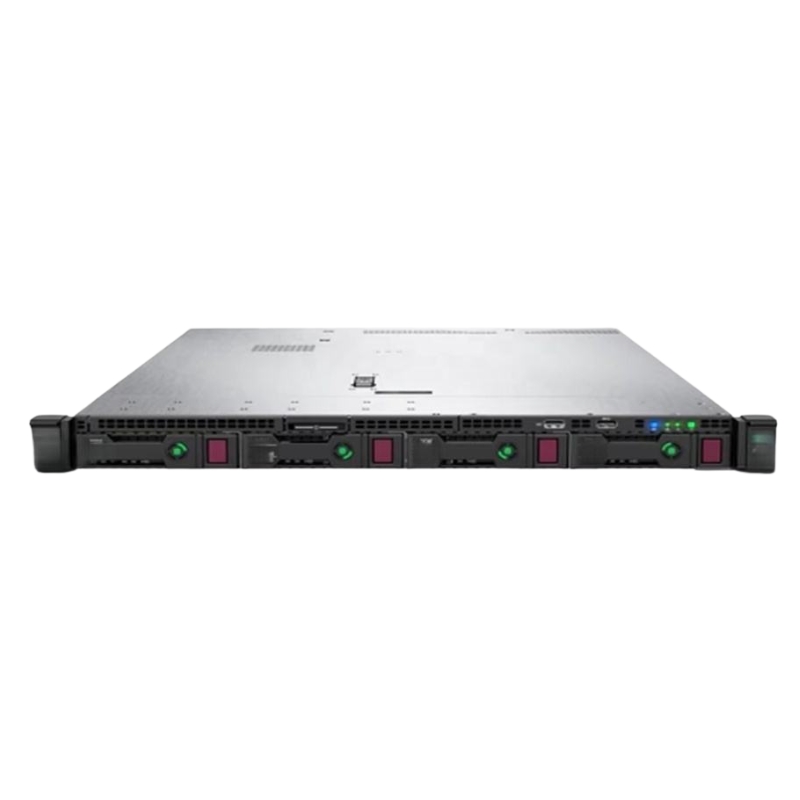


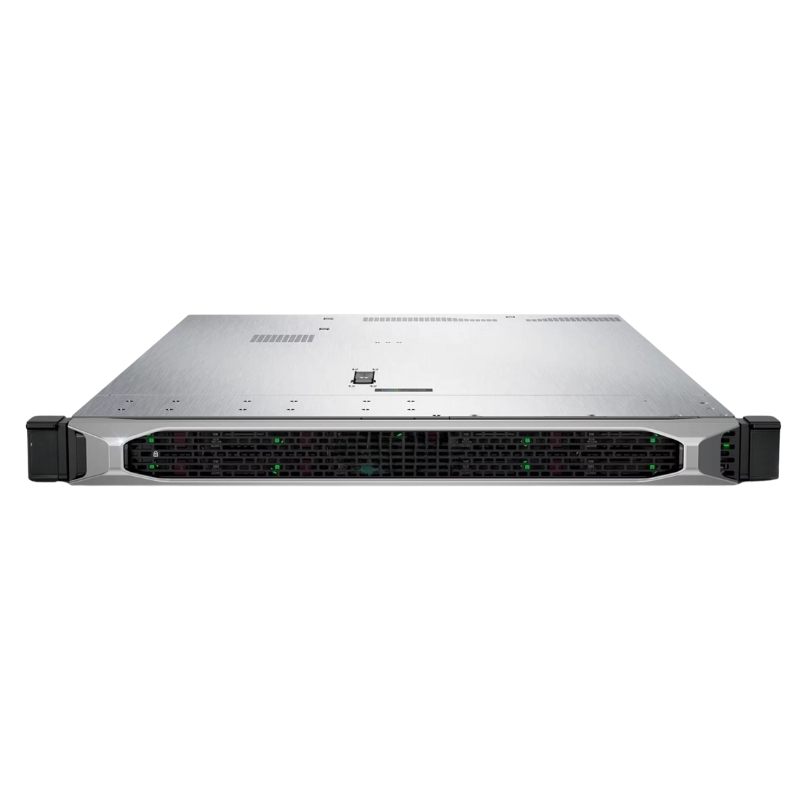
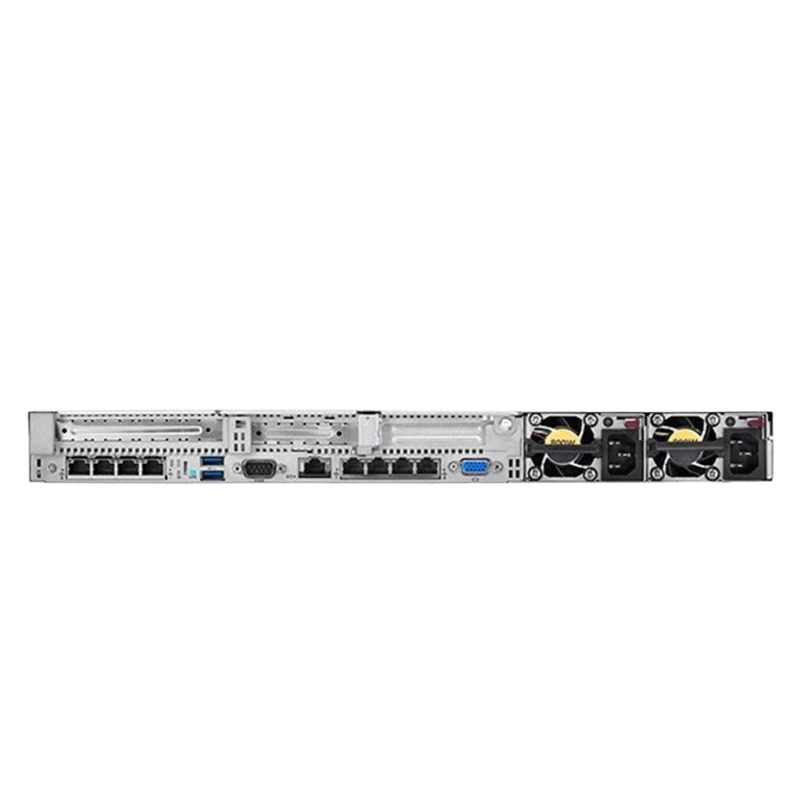
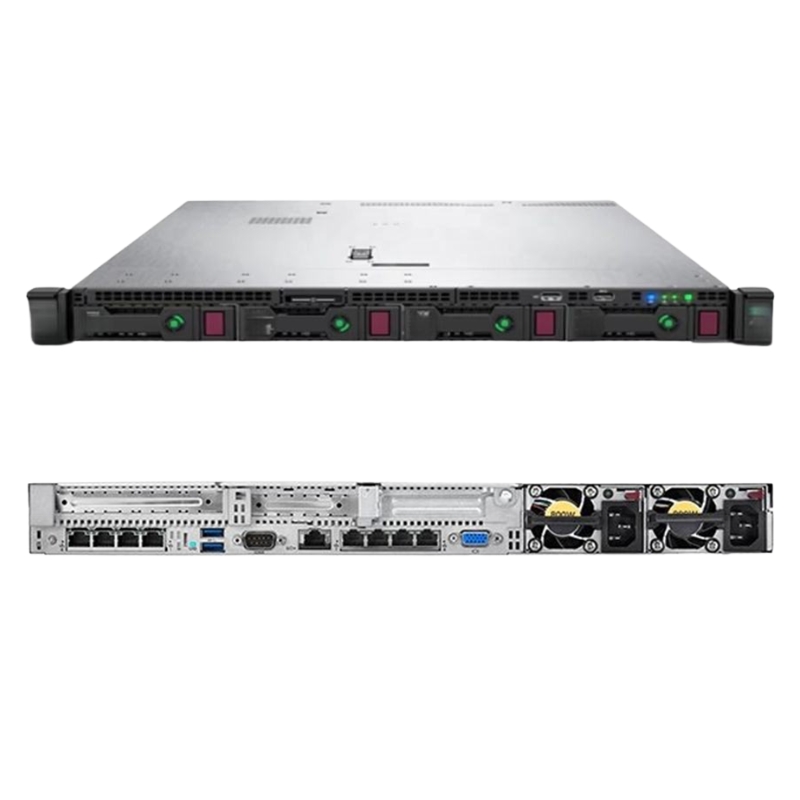
HPE P19765-B21 DL360 Gen10 DIMM 288-Pin 4LFF NC CTO Server. Excellent Refurbished with 1 year Replacement Warranty
The HPE ProLiant DL360 Gen10 Server is a powerful and compact 1U rack server designed for modern data centers, virtualization, cloud workloads, and enterprise applications. Built to support the Intel® Xeon® Scalable Processor family, this server delivers exceptional performance, scalability, and reliability for demanding business environments.
The specific HPE P19765-B21 SKU is not a pre-configured system but a foundational chassis and boardset configuration. It serves as the starting point for a tailored enterprise server. Its core identity is defined by the 1U rack-optimized chassis with four 3.5-inch LFF drive bays, a dual-processor motherboard, and integrated management. This model is intentionally stripped of key components like CPUs, memory, and storage to be populated according to the customer’s precise technical and budgetary requirements. This approach minimizes waste, optimizes performance, and allows for seamless integration into existing data center standards.
The underlying DL360 Gen10 architecture, powered by the Intel Xeon Scalable processor family (from the Bronze to Platinum series), provides a quantum leap over previous generations. It incorporates HPE's unique Silicon Root of Trust, ensuring firmware integrity from boot-up. The platform also features HPE iLO 5 (Integrated Lights-Out), the industry's most advanced server management, offering secure remote control, automated energy optimization, and proactive health monitoring.
HPE's integrated security model is a category differentiator. The Silicon Root of Trust cryptographically verifies the iLO firmware, preventing the execution of tampered or malicious code. This hardware-based anchor creates a chain of trust for the entire server boot process, a critical defense against sophisticated cyber threats.
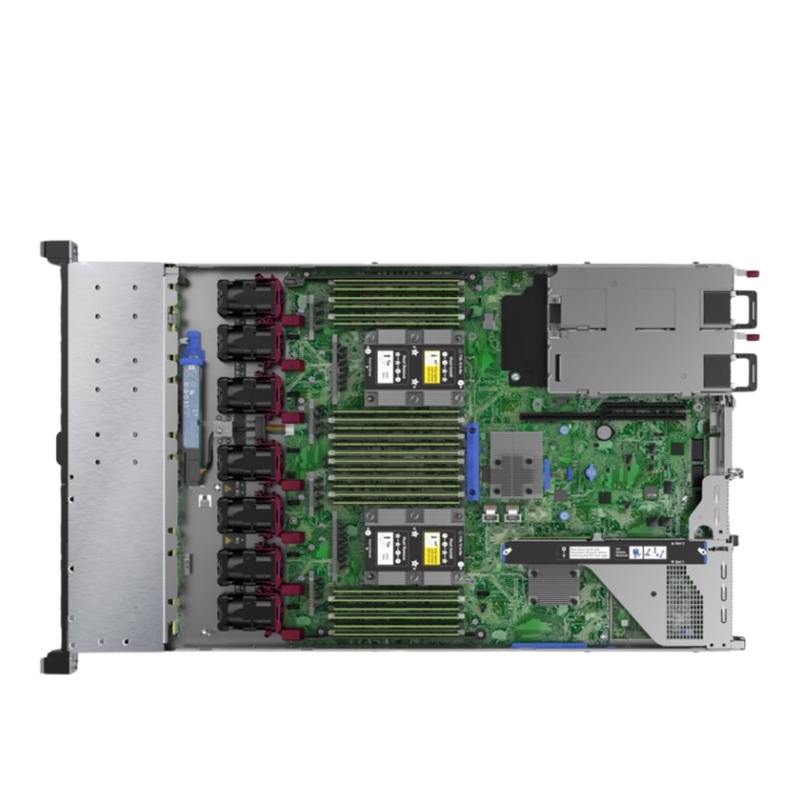
A critical subcategory within the DL360 Gen10 4LFF CTO specification is memory configuration. System performance, especially for virtualization, in-memory databases (like SAP HANA), and high-transaction applications, is directly tied to memory capacity, speed, and reliability. The P19765-B21 base supports up to 3TB of memory using HPE DDR4 SmartMemory modules across 24 DIMM slots (12 per CPU).
The "288-Pin" refers to the physical and electrical interface of the DDR4 memory modules used in the DL360 Gen10. This standardized design ensures compatibility, proper alignment, and secure connection within the server's memory slots. HPE's 288-pin DIMMs are specifically engineered, validated, and tested for the ProLiant ecosystem, ensuring optimal signal integrity, thermal performance, and reliability that generic DIMMs cannot guarantee.
HPE SmartMemory modules are a premium subcategory of memory designed for mission-critical uptime. They go beyond industry standards with features like:
Advanced Error Correction: Enhances data integrity and reduces the risk of uncorrectable errors.
Thermal Sensors: Provide real-time temperature data to iLO for proactive thermal management, preventing throttling and failure.
HPE Firmware Validation: Each module's SPD (Serial Presence Detect) contains HPE-specific data, ensuring full compatibility and optimal performance tuning with the system BIOS and iLO.
Configuring memory in a dual-processor server like the DL360 Gen10 requires adherence to specific population guidelines to maximize multi-channel performance. For optimal performance, DIMMs must be installed in matched pairs per processor and across specific channels. A common configuration for balanced performance and capacity is to populate the white-slotted DIMM bays first, which correspond to the primary memory channels for each CPU. Utilizing HPE's configuration tools or working with an authorized partner is essential to ensure the memory layout delivers the intended bandwidth and capacity.
Within the 288-pin DDR4 category for this server, two main types of modules are available:
RDIMM (Registered DIMM): The most common type for enterprise servers. Includes a register that buffers address and command signals, reducing electrical load on the memory controller and allowing for higher capacities per module (e.g., 16GB, 32GB, 64GB). Offers an excellent balance of performance, capacity, and cost.
LRDIMM (Load Reduced DIMM): Uses a memory buffer (iMB) that isolates the data lines, further reducing the electrical load. This enables the highest possible memory capacities (e.g., 128GB, 256GB per module) and is essential for reaching the maximum 3TB system capacity. LRDIMMs are typically used for maximum memory density applications.
The "4LFF" designation is a pivotal feature of the P19765-B21 model, carving a distinct niche within the DL360 Gen10 family. While most 1U servers opt for 8, 10, or more 2.5-inch drive bays for high I/O with SSDs, the 4-bay 3.5-inch design caters to a different need: high-capacity, direct-attached storage in a compact compute node.
This configuration is ideal for scenarios where local storage capacity and cost-per-gigabyte are more critical than extreme I/O density. It allows for the use of high-capacity SAS or SATA HDDs (e.g., 8TB, 10TB, 12TB, 14TB, 16TB, 18TB) or large 3.5-inch SAS/SATA SSDs. This makes the server an excellent candidate for:
Local database instances with large data sets.Repository servers for backups, logs, or media.
Hyper-converged infrastructure (HCI) nodes where capacity is a primary concern.
Application servers requiring sizable local storage without the cost and complexity of an external SAN array.
As a CTO model, the P19765-B21 can be configured with a range of HPE Smart Array controllers. The choice of controller defines the performance, functionality, and data protection level of the direct-attached storage:
HPE Smart Array E208i-p SR (Software RAID): A cost-effective SAS controller for basic RAID functionality managed via software.
HPE Smart Array S100i SR: Software RAID for SATA drives.
HPE Smart Array P408i-a: A mainstream hardware RAID controller with 2GB Flash Backed Write Cache (FBWC), supporting advanced RAID levels (0, 1, 5, 6, 10, 50, 60) and providing excellent performance for mixed workloads.
HPE Smart Array P816i-a: A high-performance hardware controller with 4GB or 8GB FBWC, offering more ports and superior performance for demanding I/O environments.
The CTO process allows the exact controller to be matched to the performance and data protection requirements of the workload.
The "CTO" aspect of the P19765-B21 is not just a feature; it is the defining procurement and manufacturing model for this server category. It represents a shift from buying an off-the-shelf box to engineering a precise infrastructure component.
Organizations choose the CTO path for several compelling reasons:
Elimination of Overprovisioning and Underprovisioning: Purchase only the components needed, avoiding costly unused hardware or insufficient capacity.
Standardization: Ensure every server deployed meets exact corporate standards for components like network cards (specific NIC models), RAID controllers, or power supply types, simplifying support and management.
Optimized Performance: Tailor CPU core count, memory speed/capacity, and storage performance to the specific application profile.
Streamlined Logistics: Receive a single, fully-integrated, tested, and rack-ready system instead of managing multiple shipments of components for separate integration.
When configuring from the P19765-B21 base, customers specify:
Choice of Intel Xeon Scalable processors, from energy-efficient Bronze series to high-core-count Platinum series. The selection balances core count, clock speed, cache size, and power consumption based on workload threading needs.
As detailed earlier, specifying the quantity, type (RDIMM/LRDIMM), capacity (e.g., 16GB, 32GB, 64GB, 128GB), and speed (e.g., 2666MT/s, 2933MT/s) of HPE SmartMemory modules to meet application demands.
Choosing the drive types (SAS HDD, SATA HDD, SAS SSD, SATA SSD), capacities, and the RAID controller. Also includes selection of any optional boot-optimized devices like HPE Modular Smart Array (MSA) or Embedded SATA configurations.
Selection of embedded or add-on network interface cards (NICs), including 1GbE, 10GbE, 25GbE, or even fiber channel host bus adapters (HBAs) for SAN connectivity. This is where the "Non-Converged" aspect shines, allowing any standard NIC choice.
Choice between standard and Platinum efficiency power supply units (PSUs), typically in a redundant (1+1) configuration for high availability. Selection of hot-plug redundant fans is also standard.
Option to include specific software, such as HPE iLO Advanced or Security Edition licenses, or certain operating system licenses, pre-installed.
The HPE DL360 Gen10 4LFF NC CTO server is a versatile platform engineered for a specific set of demanding use cases that benefit from its unique blend of compute density and local storage capacity.
As a virtualization host (e.g., for VMware vSphere, Microsoft Hyper-V, or KVM), this server provides ample cores and memory for a high virtual machine density. The 4LFF storage allows for cost-effective all-flash or hybrid storage pools using large capacity SSDs or HDDs for less I/O-intensive VMs, reducing dependency on external storage for certain tiers.
The 4LFF configuration is a strong candidate for SDS and HCI node deployments (e.g., running VMware vSAN, Microsoft Storage Spaces Direct, or other SDS solutions). The four 3.5-inch bays provide the necessary raw capacity for the storage pool, while the dual high-core-count CPUs provide the compute resources for both the virtualization and storage services layers.
In clustered environments, individual nodes often require significant local scratch space for processing data. The DL360 Gen10 4LFF can be configured with high-speed SSDs for this temporary storage, while its powerful processors handle complex computational tasks. Its 1U density makes it ideal for building powerful, compact HPC racks.


 Contact Us
 Information
 Catalog
 Solid State Drives (SSD)
 Network Switches
 Hard Disk Drives
 HBA & Controllers
 PC & Servers
 PC & Server Memory
 CPU & Processors
 Network Routers
 Power Supplies
 Tape Drives & Libraries
 Network Devices
 Computer & Network Cables