(7% discount is applied at checkout)
Cart is empty
Your go-to destination for cutting-edge server products
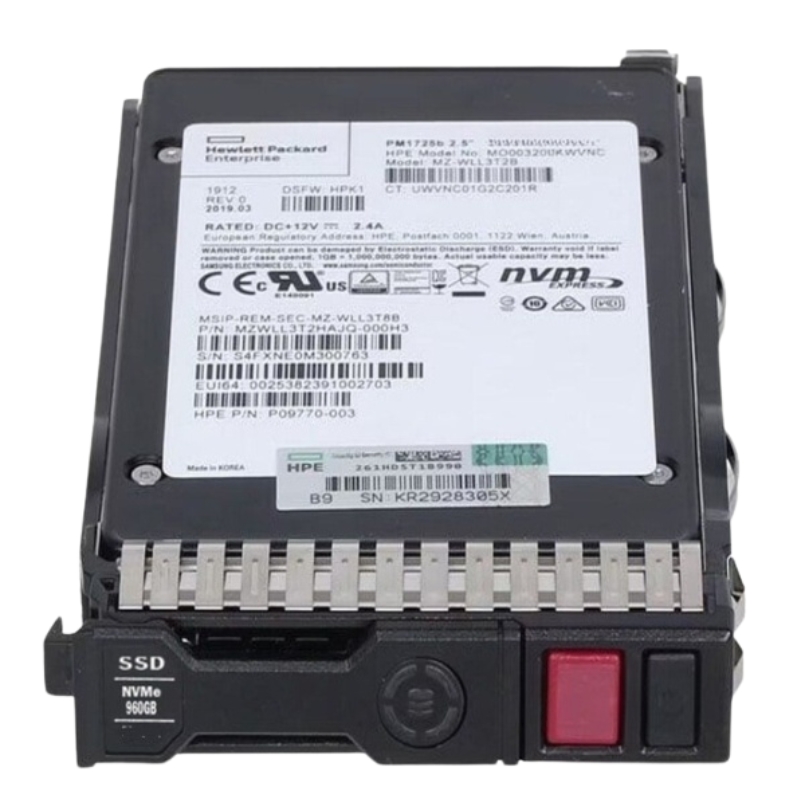


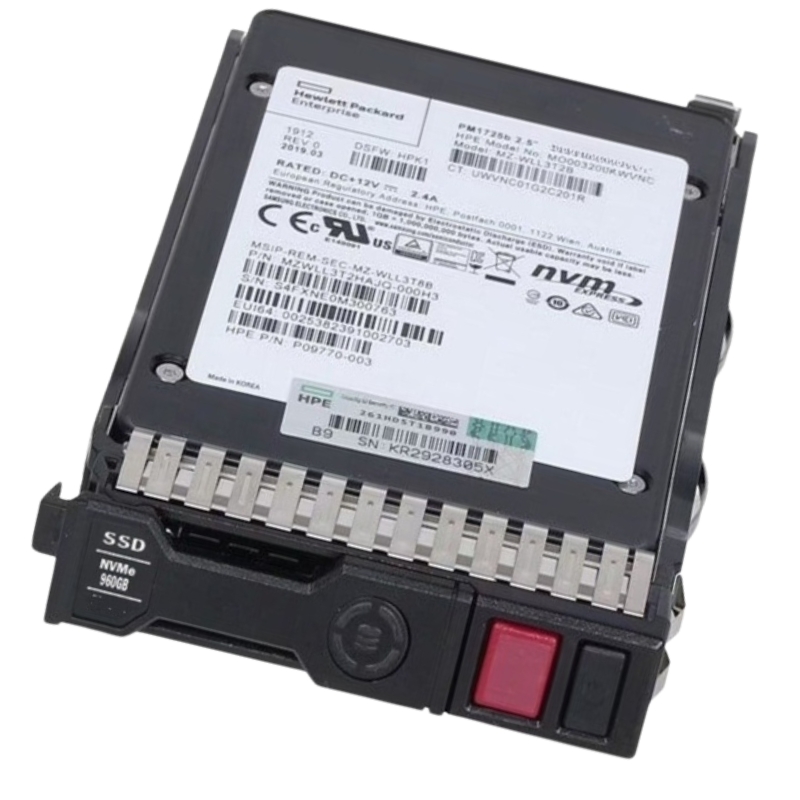
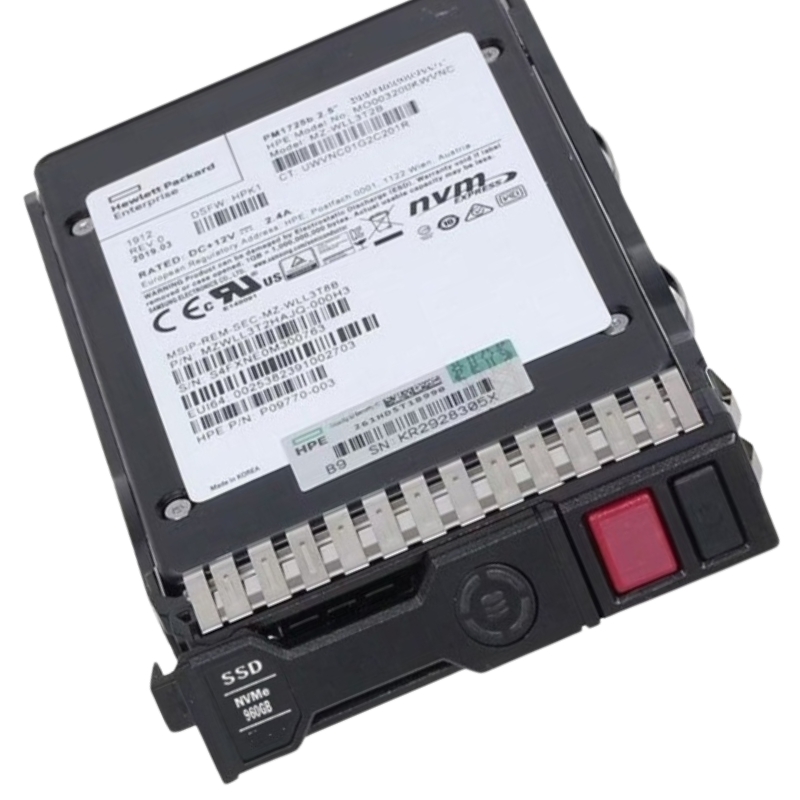
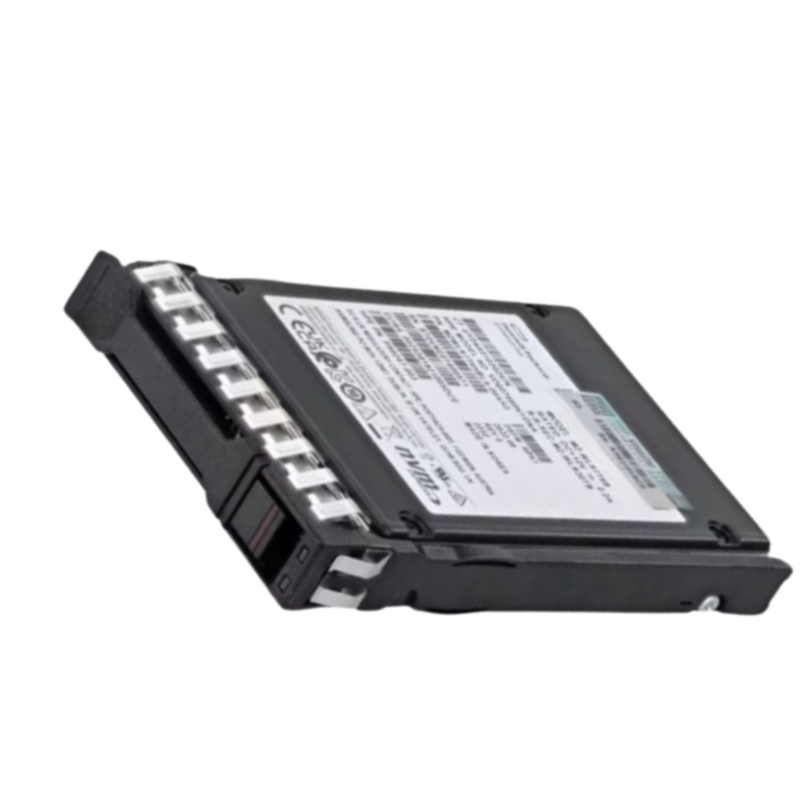
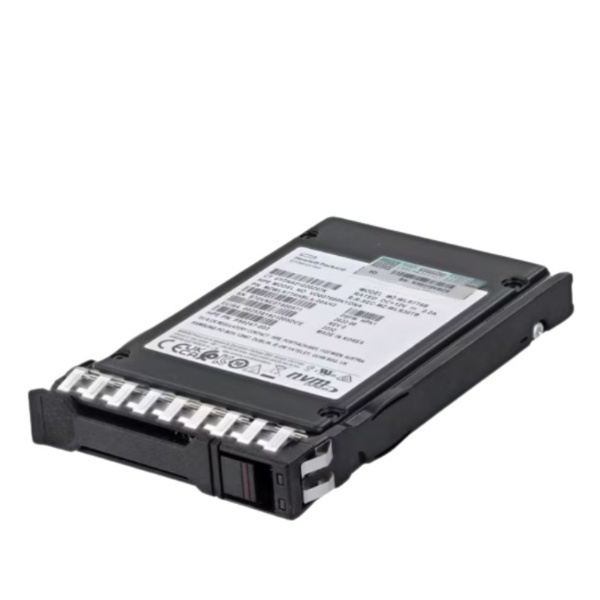
HPE P19807-K21 960GB 2.5Inch NVME PCIE Read Intensive SSD. New (System) Pull with 1 year replacement warranty
The HPE P19807-K21 960GB SFF DS NVMe PCI-E SCN Read Intensive Server SSD is positioned as an enterprise-grade, mainstream performance NVMe drive engineered for read-heavy server workloads. This drive adopts a 2.5-inch small form factor (SFF) with a dual-sided (DS) layout and connects via NVMe over PCIe lanes to deliver dramatically lower latency compared with traditional SAS device.
The HPE P19807-K21 960GB SFF DS NVMe PCI-E SCN Read Intensive Server SSD is positioned for enterprise environments where predictable read performance, low latency, and a compact 2.5-inch small form factor are required to accelerate server workloads. Designed as a purpose-built storage component for modern data centers, this product sits at the intersection of high throughput NVMe flash technology and the operational expectations of Hewlett Packard Enterprise customers: long service life, manageability, and integration with server ecosystems. As a read-intensive drive, it is optimized for workloads where read operations dominate I/O patterns, delivering high sustained read throughput, consistent low latency under load, and firmware features that prioritize read data integrity and availability.
The small form factor (SFF) 2.5-inch design of the P19807-K21 allows dense packing in server chassis and storage arrays that accept 2.5-inch drives, maximizing storage capacity per rack unit without compromising cooling or serviceability. The term DS in the model nomenclature references a dual-sided component layout that concentrates flash and controller components across both sides of the drive assembly to achieve a high capacity in a compact envelope. The SFF design ensures compatibility with standard drive carriers, sleds, and hot-swap bays used across a wide range of HPE ProLiant and HPE Apollo servers and facilitates straightforward replacement and upgrades during routine maintenance windows.
With 960GB of raw user capacity, the P19807-K21 sits in the sweet spot between cost per gigabyte and usable capacity for many enterprise applications. It is classified as a Read-Intensive (RI) drive in HPE’s Mainstream Performance (MP) family, indicating that it has been tuned and endurance-rated for workloads dominated by read operations: content delivery, web serving, large-scale analytics reads, database OLAP queries and many caching/tiering roles. The read-optimized firmware behavior favors higher read IOPS and sustained sequential read throughput while providing a durable and predictable quality of service under heavy read patterns. This workload targeting makes it an economical choice when read activity is substantially higher than write activity and when customers want NVMe latency and throughput without the cost premium of mixed-use or write-intensive enterprise SSDs.
At the protocol level, the P19807-K21 implements the NVMe stack, which communicates directly over the PCI-Express bus to minimize software and hardware latency. NVMe’s streamlined command set and parallelization advantages enable multiple queues and deep queue depths to be exploited by modern multi-core server CPUs, resulting in significantly greater IOPS for parallel workloads than legacy SAS or SATA SSDs. The PCI-E physical interface provides the necessary bandwidth for NVMe to deliver high sequential transfer rates and sub-millisecond random read latency, making the drive well suited for database indexes, virtualization boot volumes, and read caching layers.
When evaluating the P19807-K21 for a deployment, it is important to consider its typical latency characteristics under realistic queue depths and mixed I/O patterns. NVMe drives achieve low single-digit microsecond command latencies at low queue depths and maintain competitive performance as queue depth increases thanks to NVMe’s multi-queue architecture. The read-focused tuning ensures that random read IOPS remain stable and predictable under sustained load, which is crucial for latency-sensitive applications such as OLTP databases and real-time analytics. Sequential throughput for large transfers also benefits from the PCI-E link and controller optimizations, enabling fast streaming of datasets with minimal CPU overhead.
The HPE P19807-K21 960GB read-intensive NVMe SSD is ideal for caching layers in hybrid storage architectures, read caches in database systems, virtual desktop infrastructure (VDI) boot storms, content delivery nodes, and analytics where hot datasets are read frequently. It is also commonly used as an acceleration tier in storage tiering strategies, where frequently accessed data is promoted to NVMe for low latency while less active data remains on lower-cost media. In virtualization clusters, the drive can host read-heavy VM images and templates, reducing boot and provisioning times while freeing higher-endurance drives for write-heavy VM workloads.
When integrating the P19807-K21 into larger arrays or server, administrators should consider whether to use hardware RAID, software RAID, or NVMe namespaces for pooling and redundancy. NVMe drives can participate in software-defined storage pools managed by host software that understands NVMe semantics, and they can also be combined with NVMe-aware RAID controllers or external NVMe storage enclosures. For maximum flexibility, modern orchestration and hyper converged solutions can map NVMe devices directly into virtualized environments, use namespaces to subdivide capacity for multi-tenant isolation, and exploit NVMe-over-Fabrics to extend the NVMe performance model across networked fabrics.
Firmware is a critical component that affects drive behavior, compatibility, and security. HPE provides validated firmware bundles and compatibility matrices that indicate which server models, BIOS versions, and storage controllers are supported with specific firmware revisions for the P19807-K21. Administrators should plan firmware updates during maintenance windows, follow HPE’s recommended upgrade paths to avoid incompatibilities, and use management tools to roll out updates at scale. Staying current with firmware can improve drive stability, broaden feature support, and address security or performance issues identified post-release.


 Contact Us
 Information
 Catalog
 Solid State Drives (SSD)
 Network Switches
 Hard Disk Drives
 HBA & Controllers
 PC & Servers
 PC & Server Memory
 CPU & Processors
 Network Routers
 Power Supplies
 Tape Drives & Libraries
 Network Devices
 Computer & Network Cables