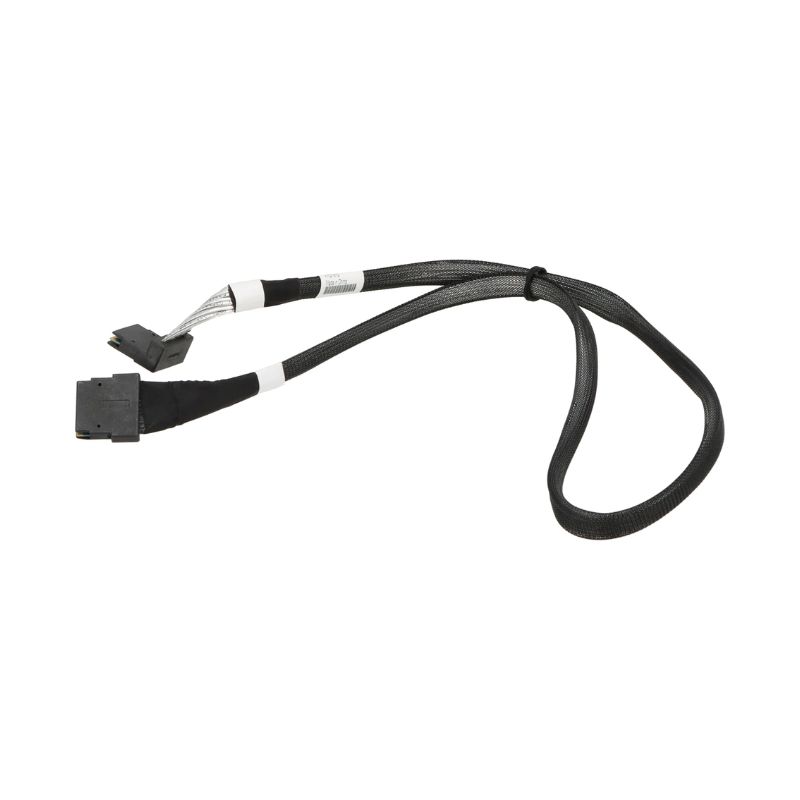
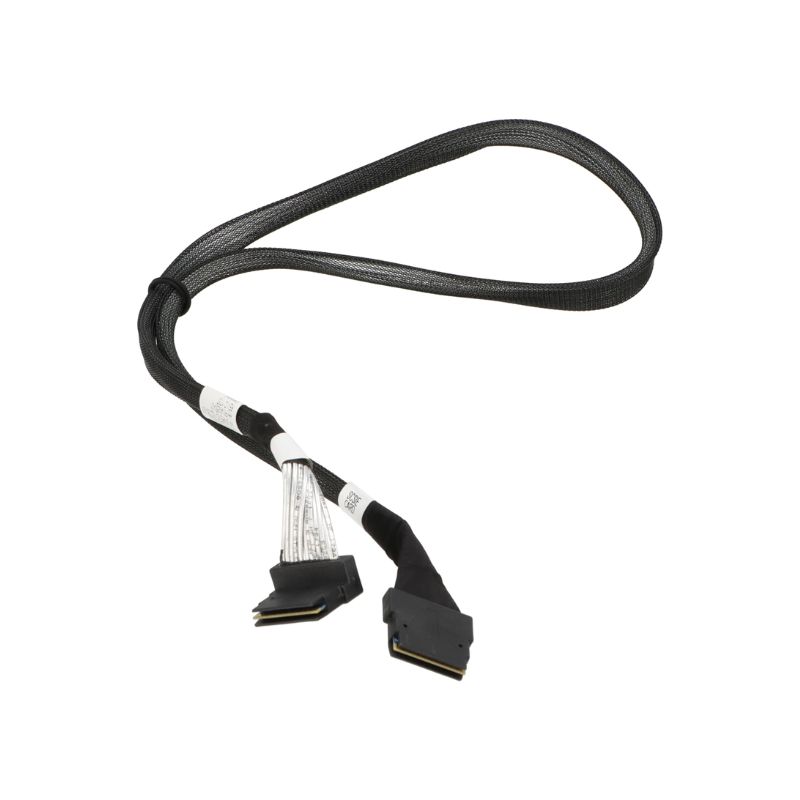
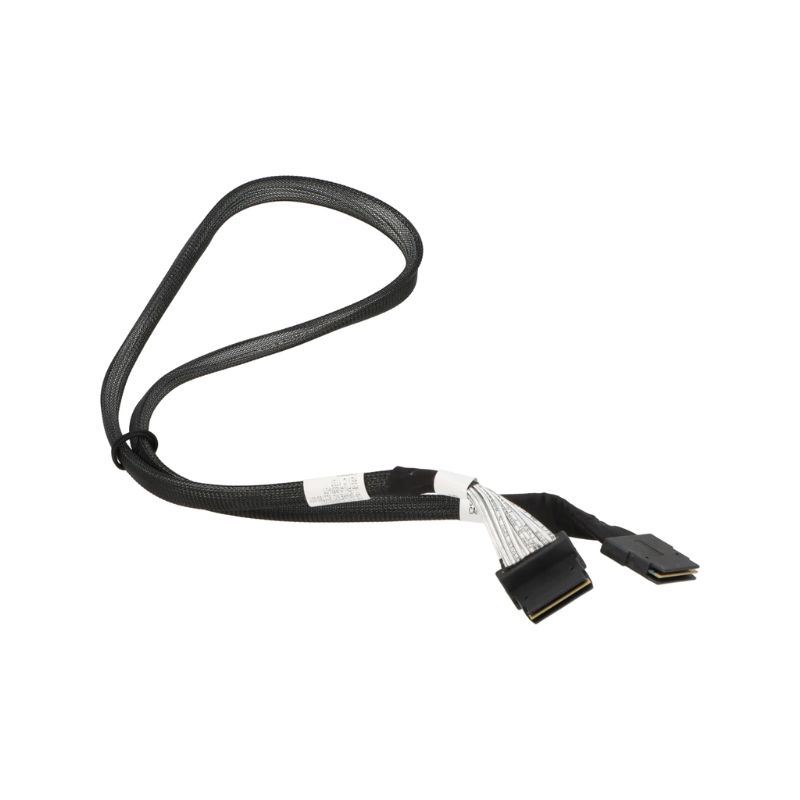
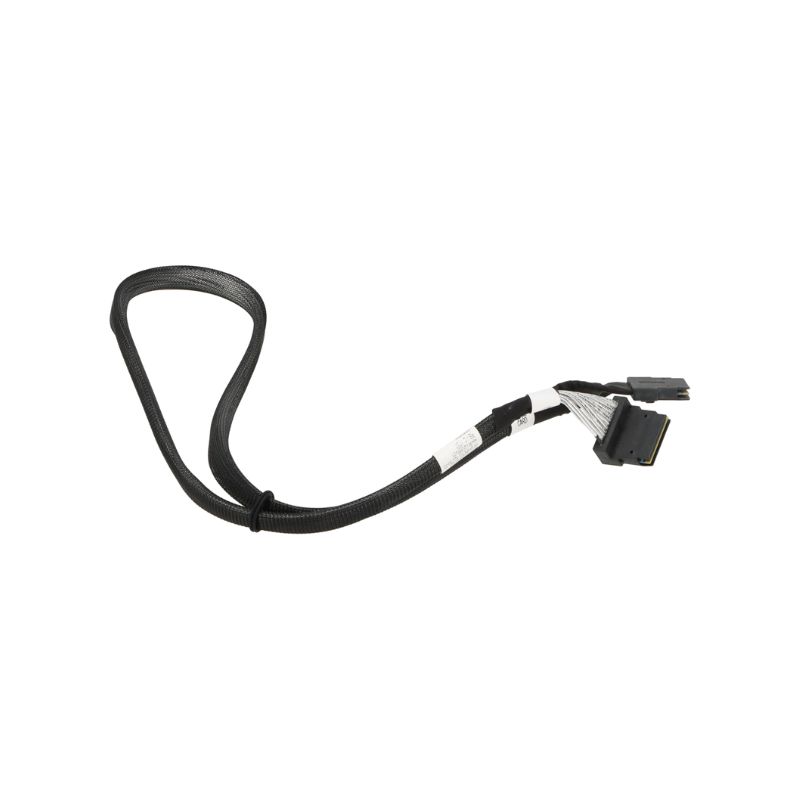
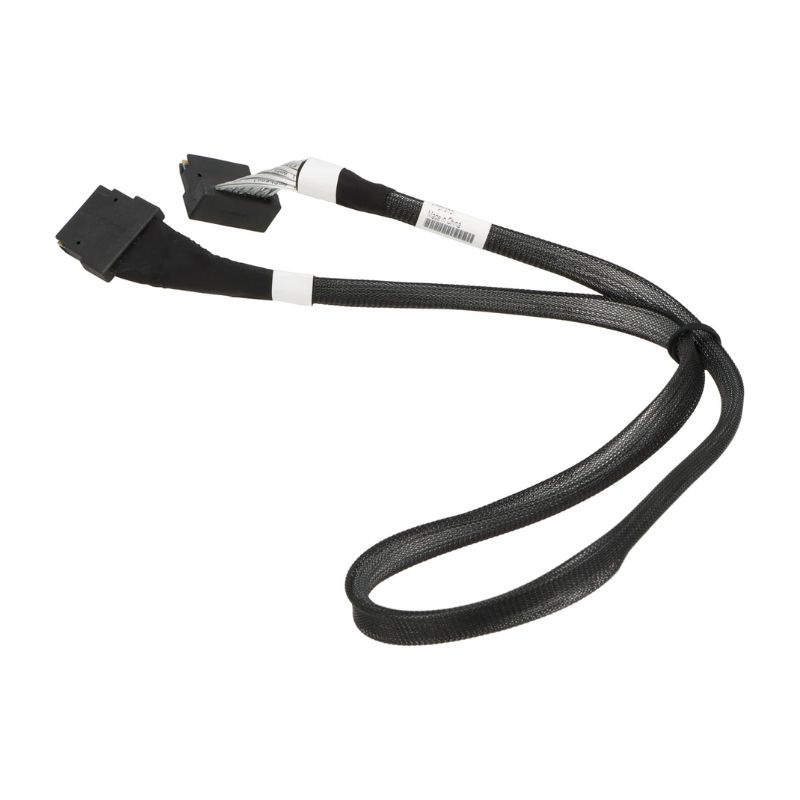
HPE P24128-001 OCP Pass Through NVMe Cable Overview
The HPE P24128-001 OCP pass-through NVMe cable is designed to provide seamless, high-performance connectivity between servers and storage devices.
Engineered by Hewlett Packard Enterprise, this component ensures reliable data transfer speeds, optimized compatibility, and stability for demanding
enterprise workloads. With advanced engineering, it meets the rigorous standards of modern data center operations, ensuring long-term performance
and reduced downtime.
Key Attributes of the HPE P24128-001
- Authentic HPE part engineered for OCP architecture.
- Supports fast NVMe connectivity with minimal latency.
- Enhances server performance by enabling direct pass-through data transmission.
- Durable and robust construction for extended life cycle.
- Optimized for scalability and high-efficiency workloads.
Technical Specifications
This cable integrates seamlessly into HPE systems, offering enterprise-grade reliability and efficiency.
Below are the details for quick reference:
- Brand: Hewlett Packard Enterprise (HPE)
- Part Number: P24128-001
- Category: OCP Pass Through NVMe Cable
- Use Case: Data center, server connectivity, high-speed storage applications
Advantages of Using the P24128-001 NVMe Cable
Leveraging this HPE cable in server environments ensures efficiency and reliability in enterprise infrastructure.
Its purpose-built design enables organizations to maximize server capacity and improve data throughput while maintaining system stability.
Performance Benefits
- Delivers consistent throughput for mission-critical operations.
- Reduces bottlenecks through direct NVMe pass-through design.
- Enhances virtualization and high-capacity storage solutions.
- Ensures lower latency compared to traditional connectivity options.
Compatibility and Integration
The P24128-001 is specifically designed for seamless integration with HPE servers, ensuring plug-and-play functionality.
Its OCP compliance means it can fit into industry-standard infrastructures without additional modifications, making it versatile and efficient.
Server and Storage Compatibility
- Optimized for HPE ProLiant server platforms.
- Compatible with Open Compute Project (OCP) architectures.
- Works effectively with enterprise-level NVMe storage arrays.
Durability and Build Quality
Built to withstand constant operation in mission-critical data centers, the P24128-001 ensures long-term resilience.
Its sturdy materials reduce wear, making it dependable for organizations that require non-stop performance.
Design Features
- High-grade materials for extended cable life.
- Secure connector design to prevent disconnections.
- Shielding to minimize electromagnetic interference (EMI).
Choose the HPE P24128-001 OCP NVMe Cable?
Selecting the correct NVMe cable is vital for sustaining enterprise workloads. The P24128-001 is more than a simple connector—
it is an enabler of next-level efficiency, scalability, and consistency across server infrastructures. Organizations that require
performance-driven environments will benefit significantly from its implementation.
Highlights
- Direct pass-through technology ensures high efficiency.
- Enterprise-tested for resilience under heavy workloads.
- Compatible with multiple HPE platforms and OCP frameworks.
- Optimized for storage, compute, and virtualization solutions.
Best Use Scenarios
- High-capacity cloud storage infrastructure.
- Enterprise-grade data processing environments.
- Virtualized server applications requiring low latency.
- Mission-critical workloads where uptime is essential.
Added Value for Businesses
Deploying the HPE P24128-001 not only enhances technical performance but also contributes to
operational efficiency by minimizing downtime, lowering latency, and improving scalability.
For businesses looking to strengthen their IT backbone, this cable is a strategic choice.
HPE P24128-001 OCP Pass Through NVMe Cable — Product overview
The HPE P24128-001 OCP pass through NVMe cable is a purpose-built interconnect designed for Open Compute Project (OCP) compliant servers and storage enclosures that require direct, low-latency NVMe device connections. This category of cable — often referred to as an OCP pass-through NVMe cable, NVMe passthrough cable, or OCP-compatible NVMe interposer cable — enables a point-to-point PCIe/NVMe connection between a host board (or OCP mezzanine), backplane, or adapter card and an NVMe U.2/U.3 or M.2 device slot. Engineered for enterprise and hyperscale data centers, the HPE P24128-001 fits into rack-scale architectures where predictable signal integrity, standardized pinouts, and mechanical compatibility are mandatory.
Core selling points and target environments
- Engineered specifically for OCP form-factor servers and storage platforms where standardized pass-through NVMe connectivity is required.
- Optimized for low-latency PCIe ×4 or ×8 NVMe lanes, making it ideal for high-performance computing (HPC), virtualization hosts, and latency-sensitive storage appliances.
- Designed to minimize insertion loss and preserve signal integrity across short to moderate cable runs inside a server chassis or directly to a backplane.
- Meets mechanical and electrical standards expected by HPE and OCP partners, simplifying procurement and lifecycle management for enterprise IT teams.
Key features and benefits
Electrical and protocol support
The HPE P24128-001 typically supports PCIe Gen3 and Gen4 NVMe signaling (verify product revision for explicit Gen4/Gen5 compatibility). It carries dedicated PCIe lanes required by NVMe drives, preserving low-latency access patterns and high IOPS. The cable’s internal construction (shielding, differential pair routing, and impedance control) is optimized to avoid crosstalk and jitter which could otherwise degrade NVMe performance.
Latency and throughput advantages
- Direct passthrough architecture eliminates intermediate bridging chips, reducing latency relative to active interposers.
- Maintains the full bandwidth of the allotted PCIe lanes, beneficial for NVMe SSDs that saturate single-lane or four-lane links.
- Minimizes protocol translation and firmware complexity compared to solutions that rely on SAS/SATA translation layers.
Mechanical design and reliability
Constructed with robust connectors and keyed housings to guarantee correct mating orientation, the HPE P24128-001 addresses the mechanical demands of hot-swap bays and high-density chassis environments. The cable jacket materials and connector retention mechanisms comply with HPE’s durability expectations for repeated insertions and vibrations typical in rack-mounted servers.
Durability attributes
- High-cycle mating connectors suitable for serviceable drive trays and frequent maintenance operations.
- Shielded construction to protect against electromagnetic interference (EMI) within crowded server racks.
- Thermally rated materials for operation within the standard data center temperature ranges defined by server OEMs.
Compatibility & supported topologies
OCP form factor and server compatibility
The HPE P24128-001 is targeted to OCP-compliant server platforms and OCP NIC/flasher bays where pass-through NVMe connectivity is specified. This means it commonly supports OCP NIC 3.0 or OCP mezzanine connector styles used by HPE and other OEMs implementing OCP standards. Customers should confirm mechanical compatibility (connector type and latch orientation) with their specific chassis and motherboard layout.
Storage enclosure and backplane topologies
In typical deployments the cable is used to connect:
- An OCP mezzanine/adapter card to a backplane port dedicated to NVMe U.2/U.3 devices.
- A chassis-side NVMe breakout (pass-through) connector to individual drive sleds or sled backplanes.
- Direct host board to drive sled connections in storage-dense enclosures for minimal path length and maximum performance.
Use cases by workload
- High-frequency trading and financial services — workloads that require the lowest possible I/O latency.
- Database acceleration (OLTP, NoSQL) where NVMe SSD performance is a bottleneck.
- Hyper-converged infrastructure and virtualization clusters requiring direct NVMe access for caching or tiering.
- AI/ML inference nodes where local NVMe storage accelerates model loading and data staging.
Technical specifications (what to confirm before purchase)
Signal and protocol specs
- PCI Express lane count (e.g., ×4, ×8) — verify whether the cable passes four or eight PCIe lanes and the exact lane mapping.
- PCIe generation support — confirm Gen3, Gen4, or Gen5 compatibility depending on drive and host requirements.
- NVMe protocol pass-through — ensure the cable preserves NVMe command and fabric integrity without protocol conversion.
Mechanical and physical specs
- Connector types and keying — OCP connector variant on one end and U.2/U.3 or M.2 host interface on the other end where applicable.
- Cable length options — common internal lengths (e.g., 0.15m to 0.5m) are selected to minimize signal loss while fitting typical chassis layouts.
- Bend radius and flex ratings — adhere to specified minimum bend radius to avoid conductor stress and signal degradation.
Environmental and operational limits
- Operating temperature range — usually aligned to server internal ambient specifications (for example 0°C to 50°C, but check HPE datasheet for exact range).
- Humidity and altitude tolerances — follow OEM guidance for deployment in standard data center environments.
- MTBF and lifecycle cycles — review rated mating cycles if frequent servicing is expected.
Best practices for internal routing
To maintain signal integrity and ensure long-term reliability follow these handling best practices:
- Avoid tight bends — keep cable bends above the manufacturer’s minimum radius.
- Minimize cable length — use the shortest cable that permits clean routing to reduce insertion loss.
- Separate high-current power cables from NVMe data cables where possible to avoid EMI coupling.
- Use cable ties and routing clips only at recommended intervals to avoid pinching or over-constraining the cable jacket.
Performance, signal integrity and validation
Why signal integrity matters for NVMe passthrough
NVMe devices rely on high-speed serial differential signaling. The electrical performance of the cable determines whether the drive operates at full speed or falls back to a lower link rate. HPE’s P24128-001 family should be validated for:
- Insertion loss across the supported frequency band.
- Return loss and impedance matching to minimize reflections.
- Crosstalk control across adjacent pairs to preserve bit error rates (BER).
Laboratory and system validation steps
When integrating into a new system, validate using:
- Link training and enumeration tests — confirm the NVMe drive and host enumerate at expected speeds (Gen3/Gen4).
- Throughput benchmarks — check sustained read/write throughput and IOPS under representative workload patterns.
- BER and error counters — monitor PCIe lane error counters during stress tests to confirm cable integrity.
Troubleshooting and diagnostics
Common issues and their resolution
- Drive not detected: Confirm connector seating, check BIOS/firmware NVMe passthrough settings, and swap with a known-good cable to isolate the fault.
- Link trained at lower generation: Check cable length and verify Gen4/Gen5 capability; verify host and drive firmware support.
- Intermittent disconnects: Inspect latch retention, replace cable if contact surfaces show wear, and check for EMI sources causing transient errors.
Diagnostic tools and logs
Use these tools and logs to identify cable-related issues:
- System event logs and UEFI/BIOS logs for link training errors.
- Operating system NVMe drivers and SMART logs from the SSD for media errors versus link-level errors.
- Oscilloscope or signal analyzer (for lab use) to measure eye diagrams and confirm acceptable jitter and amplitude.
Regulatory, safety, and environmental compliance
Industry and safety standards
Enterprise-grade interconnects such as the HPE P24128-001 generally conform to a set of industry standards and safety regulations including RoHS for hazardous substances, and various IEC/UL ratings for flame retardancy and material safety. Confirm the vendor datasheet for specific certifications and compliance statements before large-scale deployments.
Environmental and sustainability considerations
For organizations tracking sustainability metrics, consider:
- Materials used in the cable and connector housings (lead-free solder, recyclable plastics).
- Packaging minimization for bulk orders to reduce waste.
- Vendor take-back programs for end-of-life recycling of cables and connectors where available.
Comparison: passthrough cables vs breakout and active interposers
Pass-through NVMe cables (like HPE P24128-001)
- Simple, low-latency point-to-point connection.
- No active logic between host and drive — fewer failure points and lower latency.
- Best for direct attach topologies and OCP-compliant chassis.
Breakout cables
- Convert a high-density connector into multiple lower-density device connections (e.g., splitting PCIe ×16 into multiple ×4 links).
- Useful when consolidating bandwidth from a single host port to several devices, but may introduce complexity in lane mapping.
Active interposers and adapters
- Contain logic or protocol translation to support features like NVMe over Fabrics conversion or protocol bridging.
- Can add flexibility but also introduce latency and additional points of failure.
- Often used in complex storage arrays where protocol conversion or multipathing is required.
Buying guide and checklist
Before you add HPE P24128-001 to cart
- Confirm chassis and OCP connector mechanical compatibility and latch orientation.
- Verify PCIe generation and lane count — match to both host board and NVMe drive capabilities.
- Determine the required cable length and factor in routing for airflow and serviceability.
- Check warranty, OEM support, and return policies for high-volume purchases.
Questions to ask your vendor
- Is this the exact HPE P24128-001 part or a cross-referenced equivalent?
- What PCIe generation is guaranteed by this cable revision?
- What is the rated mating cycle and environmental spec for this cable?
- Does the vendor provide end-to-end validation or compatibility matrices for specific HPE chassis and server SKUs?
Best practices for large-scale deployments and hyperscale environments
Standardize on part numbers and inventory
Hyperscale operators should harmonize on a single cable variant across a server fleet or clearly document mapping differences between chassis models. A consistent part number reduces errors during replacement and streamlines logistics.
Labeling, tracing and documentation
Tag each cable with a clear identifier that maps to the server chassis, bay position and CMDB entry. Maintain diagrams showing lane mapping, connector orientation, and routing paths to reduce service time during maintenance.
Change management and firmware alignment
Ensure BIOS/firmware changes are tested with the cable in place. Firmware updates that alter link training behavior or lane retraining logic should be validated to ensure there are no regressions in NVMe detection or performance.
Glossary — quick reference terms
OCP (Open Compute Project)
An industry initiative focused on open-source hardware design standards for data center servers, storage and networking.
NVMe (Non-Volatile Memory Express)
A high-performance, scalable host controller interface designed specifically for PCIe-connected SSDs.
PCIe (Peripheral Component Interconnect Express)
A high-speed serial computer expansion bus standard used by NVMe devices for data transport.
Pass-through cable
A cable that provides a direct electrical connection between host and device without active electronics in the signal path.
Content optimized metadata suggestions
- Page title suggestion: HPE P24128-001 OCP Pass Through NVMe Cable — Specs, Compatibility & Buying Guide.
- Meta description suggestion: Discover the HPE P24128-001 OCP pass through NVMe cable: technical specs, compatibility, installation guidance, troubleshooting tips, and procurement checklist for enterprise and hyperscale data centers.
- Primary keywords: HPE P24128-001, OCP pass through NVMe cable, NVMe passthrough cable, OCP NVMe cable, HPE NVMe cable.
- Secondary keywords: PCIe passthrough cable, NVMe cable installation, data center NVMe interconnect, OCP cable compatibility.
Final actionable checklist (quick reference)
- Verify exact P24128-001 revision and PCIe generation support before ordering.
- Confirm mechanical fit and latch orientation for your chassis model.
- Choose the shortest cable length that supports clean routing to minimize signal loss.
- Stock spares and document cable-to-chassis mappings in the CMDB.
- Test link training and throughput in a staging environment prior to production rollout.
- Follow OEM ESD and hot-swap procedures during service operations.
Appendix: sample validation tests to include in acceptance criteria
Electrical validation
- Link training success at the expected generation (e.g., Gen4 ×4) under ambient and elevated temperatures.
- Eye diagram measurement within target mask at the required BER for each lane.
- Insertion/return loss traces across the supported frequency band matching vendor specifications.
System-level validation
- Endurance and sustained I/O tests (e.g., sustained sequential and random workloads) without link errors for 72 hours.
- SMART and NVMe logs show no link-related errors after stress testing and power cycling.
- Operational test that simulates service actions (hot-swap, drive replace) to ensure retention mechanisms and service procedures are validated.
Contact and support guidance
For enterprise deployments, always coordinate with HPE support or an authorized reseller to validate compatibility with specific server SKUs and to obtain the latest firmware or compatibility advisories. When using third-party cables, request test reports from the vendor demonstrating compliance with PCIe/NVMe signaling and provide those artifacts to your systems validation team prior to deployment.





 Contact Us
 Information
 Catalog
 Solid State Drives (SSD)
 Network Switches
 Hard Disk Drives
 HBA & Controllers
 PC & Servers
 PC & Server Memory
 CPU & Processors
 Network Routers
 Power Supplies
 Tape Drives & Libraries
 Network Devices
 Computer & Network Cables