(7% discount is applied at checkout)
Cart is empty
Your go-to destination for cutting-edge server products
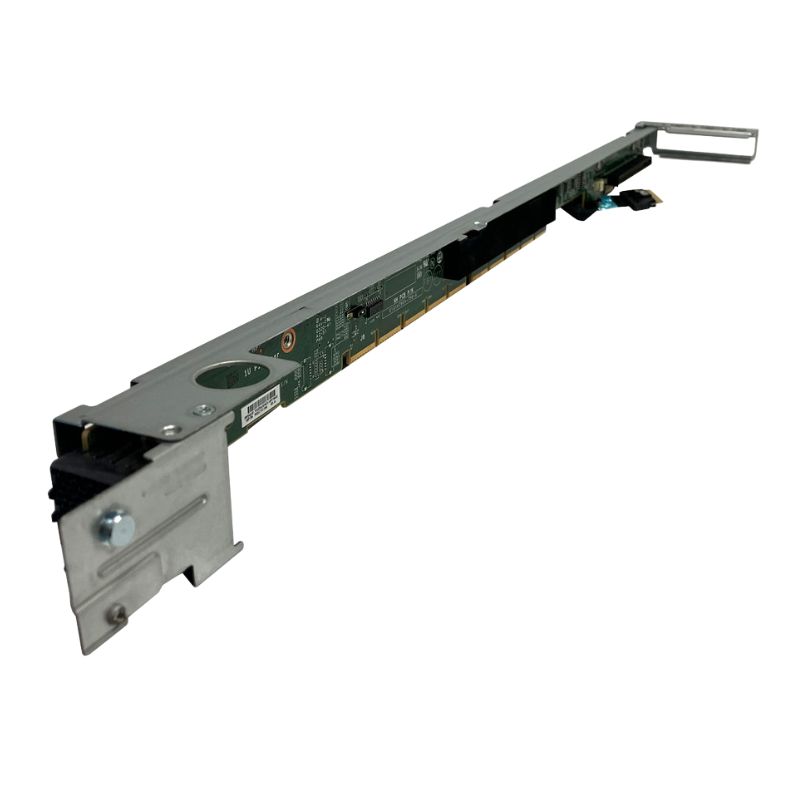


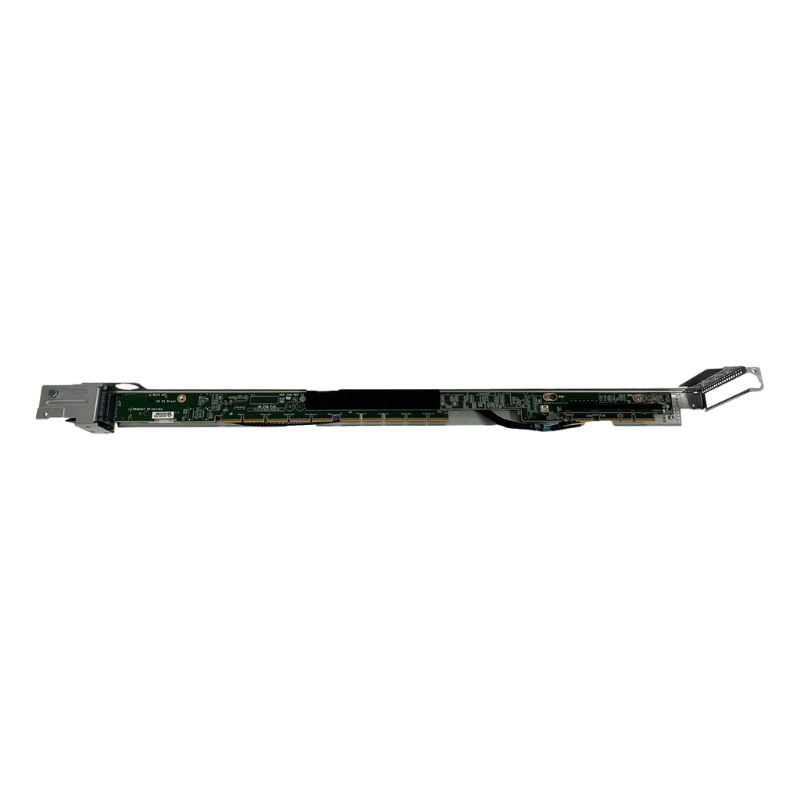
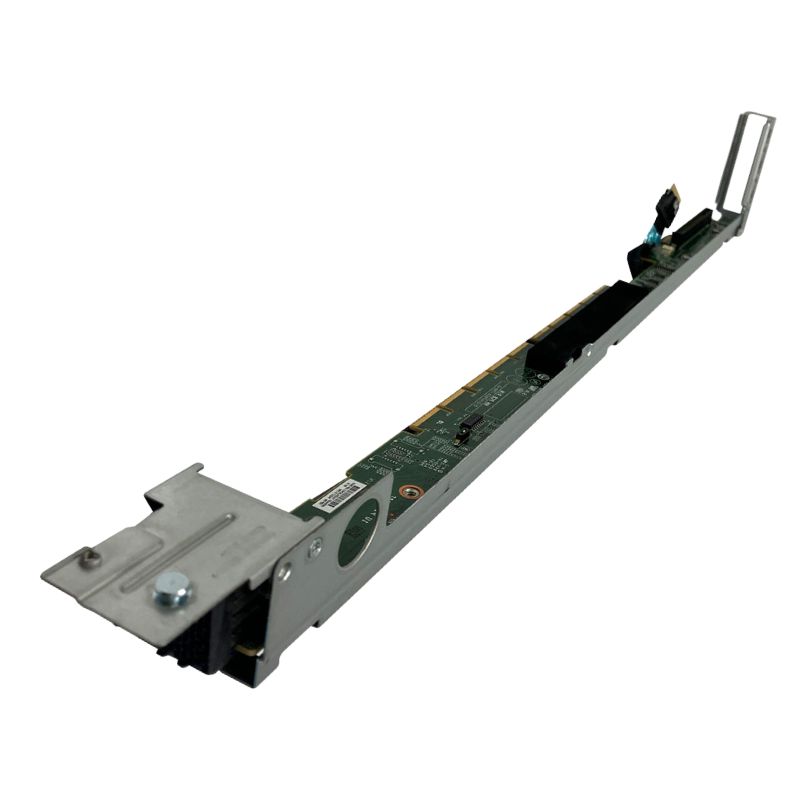
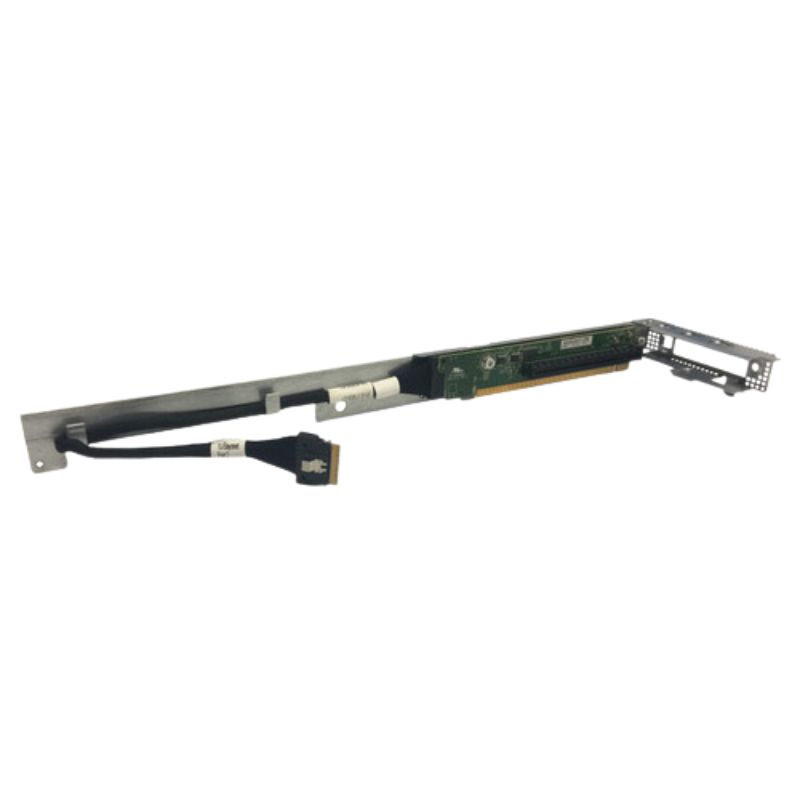
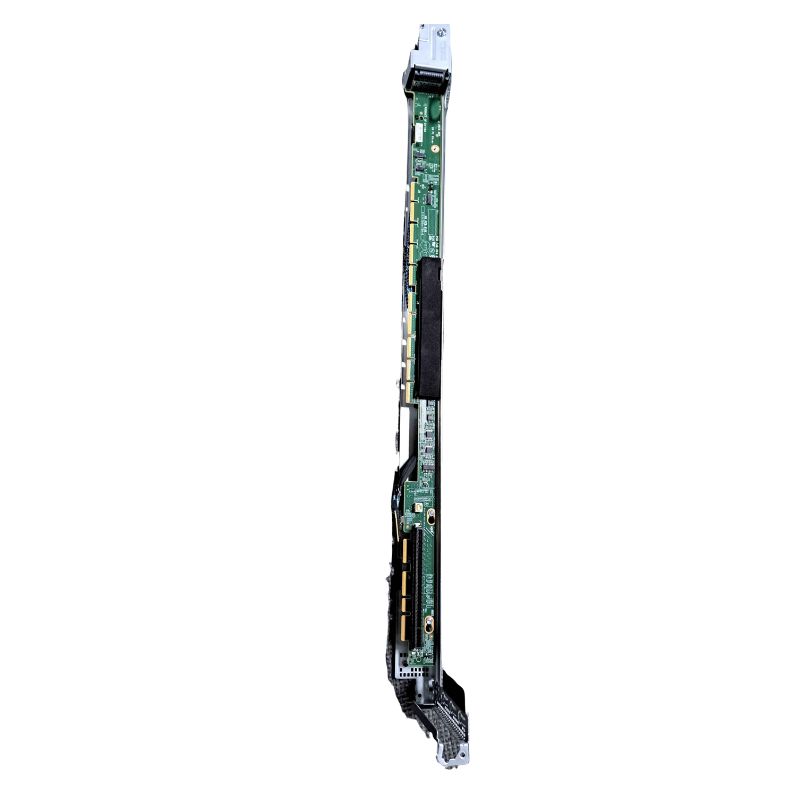
HPE P25451-001 XL225n Gen10 Plus Low Profile CPU1 NVMe Right Riser. New Sealed with 1-Year Replacement Warranty
The HPE P25451-001 XL225n Gen10 Plus Low Profile CPU1 NVMe Right Riser is an advanced networking accessory engineered to deliver superior compatibility, increased flexibility, and optimized system performance. Designed by Hewlett Packard Enterprise (HPE), this part offers seamless integration with enterprise-class infrastructure.
Built for enterprise efficiency, the HPE P25451-001 riser card provides a reliable connection for NVMe storage devices while maintaining a compact low-profile design. Its architecture supports smooth scalability and high-speed data throughput, ensuring system stability under demanding workloads.
Integrating the HPE P25451-001 XL225n Gen10 Plus riser into your server setup allows for enhanced flexibility and scalability. It helps businesses maximize storage potential without compromising system footprint.
The P25451-001 riser module is precisely tailored for HPE XL225n Gen10 Plus servers. Its installation provides IT departments with greater flexibility when configuring storage layouts, ensuring systems are ready for evolving enterprise workloads.
The HPE P25451-001 XL225n Gen10 Plus Low Profile CPU1 NVMe Right Riser is a specialized server riser card designed to expand NVMe connectivity in HPE Gen10 Plus platforms, providing high-density storage interface options while preserving a low-profile footprint for constrained server chassis. This riser caters to customers seeking to add direct-attach NVMe capability to the CPU1 zone of Gen10 Plus multi-socket servers, and it is often used in enterprise datacenter, virtualization, high-performance computing, and hyper-converged infrastructure environments where fast, low-latency storage paths are essential. The product is consistently referenced by its OEM part number and descriptive family name—HPE P25451-001, XL225n Gen10 Plus NVMe Right Riser—so search engines and procurement systems can easily match listings, compatibility notes, and replacement guides to the hardware it supplements.
At its core, the P25451-001 XL225n Right Riser is engineered to route PCIe lanes from the CPU1 complex to additional NVMe devices located on the right-hand expansion area of the server chassis. Its low-profile design minimizes vertical clearance needs, enabling NVMe expansion even in slim or short-depth servers. Unlike standard full-height risers, this low-profile riser balances thermal, mechanical, and electrical constraints while preserving system airflow and serviceability. The riser is optimized for Gen10 Plus server architectures and adheres to HPE's platform signaling, mechanical alignment, and firmware expectations, which reduces integration issues and simplifies firmware-level device enumeration and boot-time configuration for NVMe drives.
Compatibility is a primary consideration when selecting a riser card for production servers. The P25451-001 is purpose-built for HPE Gen10 Plus systems, and while it is often cross-referenced in documentation for specific models, administrators should always verify compatibility using the server model's maintenance and service guide. In many HPE configurations, riser placement and CPU-based lane mapping differ between CPU1 and CPU2 zones, so selecting the CPU1 NVMe Right Riser means the NVMe devices will be mapped to CPU1 PCIe lanes and will be subject to the performance and NUMA behaviors of that CPU. For environments with particular throughput or NUMA-affinity requirements, this is an essential design choice. OEM part governance, such as HPE spare part lists and platform release notes, should be consulted for the exact chassis and system board revisions that support P25451-001.
When NVMe devices are attached via the XL225n Low Profile Right Riser, they benefit from native PCIe connectivity and the reduced protocol overhead that NVMe provides. The number of available PCIe lanes, their generation (for example, PCIe Gen3, Gen4 depending on platform generation), and whether lanes are bifurcated or routed directly affect achievable bandwidth and latency. Because the riser occupies the CPU1 lane allocation, administrators must account for how many lanes remain for other devices, network adapters, and GPU or accelerator cards. For performance-sensitive workloads such as database acceleration, real-time analytics, or software-defined storage, the riser's direct CPU1 mapping can be advantageous because it reduces intermediate switching and provides predictable latency characteristics. That said, proper balancing of lanes across CPU sockets and careful placement of other expansion cards are recommended to avoid oversubscription scenarios that might impair throughput under peak load.
The "low profile" attribute is critical in HPE chassis designs where vertical clearance is limited. The XL225n right riser conforms to reduced height constraints while still maintaining PCIe connector alignment and retention mechanisms compatible with HPE tool-less service trays. Because risers sit within the server's airflow path, they must be designed to minimize airflow disruption. The P25451-001 incorporates cutouts and component placements that aim to preserve consistent cooling across NVMe drives and adjacent components. However, when designing NVMe-dense configurations, system engineers must consider the cumulative thermal output: NVMe SSDs can generate significant heat under sustained I/O, and low-profile risers can affect local airflow patterns. It is therefore important to follow HPE thermal de-rating guidance, confirm fan and heatsink populating instructions, and, if needed, employ enterprise-class NVMe media with power-management features to sustain thermal margins.
Serviceability is another differentiator: the P25451-001 is intended to be field-replaceable, enabling technicians to swap risers during maintenance windows with minimal disruption. HPE's documented service procedures typically include step-by-step removal and reinstallation instructions for risers, including securing the riser retention latch and reconnecting any mezzanine connectors or signal cables. Since the riser interacts with CPU1 lanes, proper anti-static handling, seating torque, and screw sequences are recommended to ensure signal integrity and chassis grounding. Additionally, because some customers maintain spare part inventories, the precise OEM part number is important for procurement and warranty tracking, and replacement units should match firmware and hardware revision levels where HPE requires such parity for published compatibility matrices.
The XL225n Low Profile CPU1 NVMe Right Riser is especially well-suited for workloads that require local high-performance storage directly accessible to host processors. Use cases include NVMe boot volumes for low-latency OS and hypervisor operations, direct-attached NVMe caches for accelerating database I/O, and high-throughput local scratch space for data processing pipelines. In virtualized environments, NVMe devices accessible through CPU1 can be assigned to VMs with direct pass-through, enabling near-native device performance for latency-sensitive virtual machines. For hyper-converged infrastructure nodes, the riser allows denser NVMe integration without sacrificing drive bay availability, which can be essential in achieving targeted capacity and performance profiles in space-constrained racks.
Edge and enterprise colocation deployments often prioritize compactness and power efficiency. The low-profile nature and focused mapping of the P25451-001 make it an excellent fit for edge servers that must balance compute and storage density within tight form-factor shells. In high-density rack scenarios where air flow, weight, and cable management are critical, the riser's form factor contributes to streamlined system assembly and predictable field maintenance procedures. Because many edge servers operate in less-controlled ambient environments, administrators should validate part-level thermal tolerances and, where possible, choose NVMe drives with enterprise-rated endurance and thermal protection features to match the operational profile the riser enables.
Installing the HPE P25451-001 XL225n riser requires adherence to platform-specific steps to ensure correct operation and avoid damage. Before installation, technicians should power down the system, disconnect power sources, and observe ESD precautions. During installation, ensure that the riser is fully seated into its motherboard connector and that retention clips are engaged to maintain signal integrity. After reseating, a firmware check during system POST is recommended to verify that attached NVMe devices are recognized and that no lane errors are reported. In complex installations with multiple risers or additional mezzanine cards, documenting slot-to-function mapping is advantageous for long-term maintenance and for troubleshooting NUMA affinity or bandwidth allocation issues that may arise in production loads.
Firmware compatibility between the server BIOS, platform controller hub, and NVMe devices is critical. HPE typically releases platform firmware updates and advisories that can include changes to lane mapping, device enumeration, or NVMe hot-plug behavior. When integrating a new riser, administrators should review release notes for the target server model and apply recommended BIOS and firmware updates to ensure the system properly enumerates NVMe devices attached via CPU1. HPE's system management tools, such as the iLO interface and SPP bundles, simplify firmware consolidation and ensure that platform-level updates are applied in a coordinated manner. Following HPE's firmware guidance reduces the risk of unexpected behavior and ensures that NVMe devices operate with maximum stability and performance.
From a procurement perspective, buying the correct OEM part number—HPE P25451-001—ensures that customers receive a riser that meets factory specifications and warranty provisions. HPE-authorized resellers and supply-chain partners typically provide original-equipment spares with warranty coverage, and organizations should verify serial number registration and spare-part documentation upon receipt. Lifecycle management includes maintaining an inventory of compatible spares, tracking firmware revision parity across systems, and recording replacement dates. Manufacturers may announce end-of-support or superseded part numbers; therefore, IT asset managers should periodically audit their HPE spares to ensure they maintain compatibility with current server fleets and to plan for phased upgrades when platforms transition through their end-of-life cycles.
While some organizations consider aftermarket or third-party risers to reduce initial capital outlay, the choice to adopt non-OEM components has trade-offs. OEM parts like the P25451-001 typically come with technical support, verified firmware behavior, and formal compatibility validation. Third-party risers may function in certain server revisions, but they might lack the firmware testing, mechanical tolerances, or warranty assurances that original HPE parts provide. For mission-critical deployments where service-level agreements and predictable behavior are essential, OEM spares and certified-refurbished HPE components are often the recommended path to minimize risk and enable direct support channels for troubleshooting and RMA processes.
Maintenance of riser-equipped servers includes periodic verification of connector seating, inspection for physical wear or bent pins, and monitoring system logs for PCIe or device errors. Common issues that involve risers include device enumeration failures, lane errors during POST, or degraded performance caused by incorrect seating or mismatched firmware. Troubleshooting steps usually start with reseating the riser and NVMe devices, verifying firmware versions, and inspecting the system event logs for error codes. In some cases, swapping the riser to a known-good unit can isolate the problem to the riser or the attached NVMe media. HPE support documentation and knowledgebase articles often provide targeted diagnostic traces and LED error interpretations that expedite root cause analysis.
Integrating the riser into the broader monitoring strategy helps preserve uptime and prevents service interruptions. HPE's integrated management tools—such as iLO for server health telemetry and agents for hardware monitoring—can surface NVMe temperature, SMART attributes, and PCIe error counters. Combining platform telemetry with higher-level monitoring solutions enables proactive alerts for thermal excursions, increasing write latencies, or impending device failures. Instrumenting servers that host NVMe devices attached through the P25451-001 ensures that administrators can correlate application-level performance anomalies to hardware-level indicators and take preemptive remediation actions to avoid data path disruptions.
NVMe devices connected via the riser may hold critical system images, caches, or sensitive data. Securing physical access to server racks and ensuring appropriate encryption at rest for NVMe media are essential controls. Many enterprise NVMe drives offer hardware-based encryption or support for OPAL/TCG standards; integrating these capabilities with platform key management and HPE firmware settings helps maintain data confidentiality. From a regulatory standpoint, organizations operating under data residency or compliance mandates should enforce procedures for secure data destruction or authenticated drive retirement when decommissioning servers. The riser itself does not alter encryption capabilities, but the increased density of NVMe devices it supports does heighten the importance of strict asset lifecycle protocols.
Deploying dense NVMe configurations can impact power consumption and cooling budgets. The energy profile of enterprise NVMe drives, coupled with the riser's contribution to overall system density, should be evaluated during capacity planning to ensure alignment with sustainability goals and datacenter PUE targets. When planning large-scale rollouts that employ the P25451-001 riser, factoring in consolidated power requirements and efficient cooling strategies can reduce operational costs and environmental impact. Additionally, choosing drives with favorable endurance-per-watt characteristics and adopting intelligent power management policies can extend component lifetime and reduce replacement frequency, contributing to a more sustainable hardware lifecycle.


 Contact Us
 Information
 Catalog
 Solid State Drives (SSD)
 Network Switches
 Hard Disk Drives
 HBA & Controllers
 PC & Servers
 PC & Server Memory
 CPU & Processors
 Network Routers
 Power Supplies
 Tape Drives & Libraries
 Network Devices
 Computer & Network Cables