(7% discount is applied at checkout)
Cart is empty
Your go-to destination for cutting-edge server products
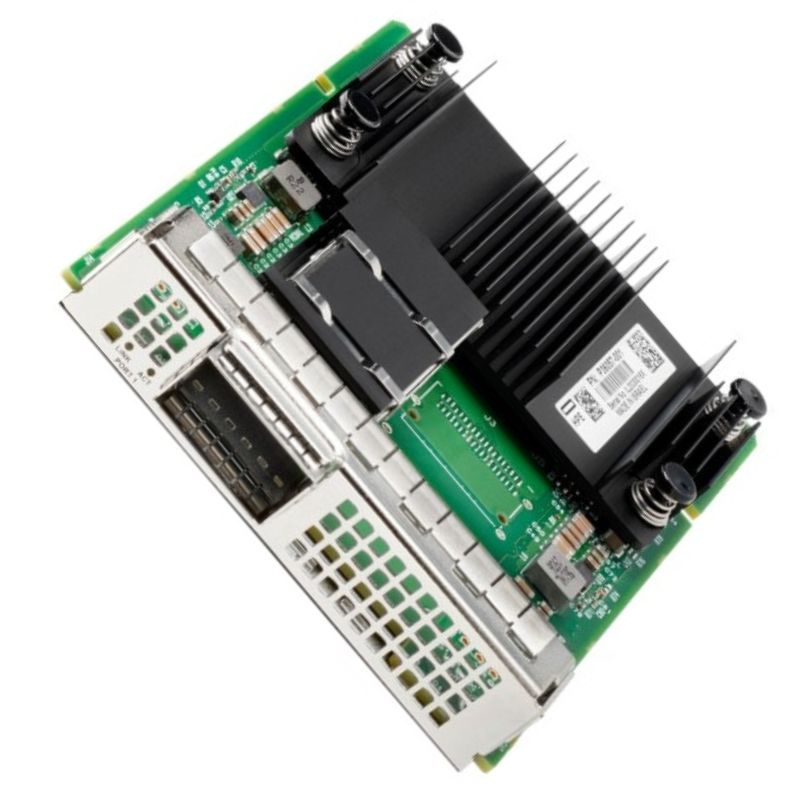


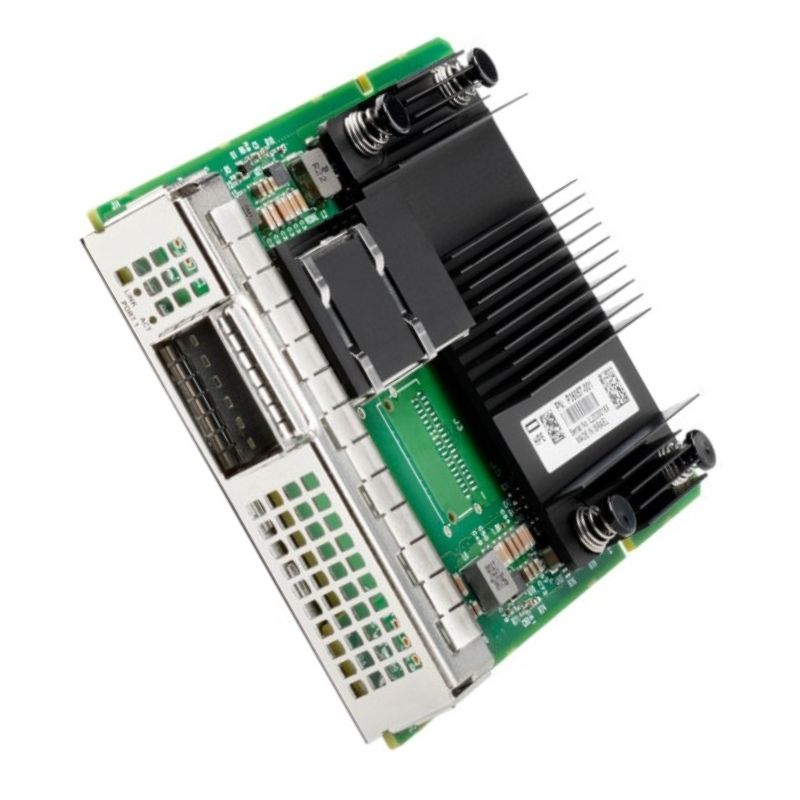
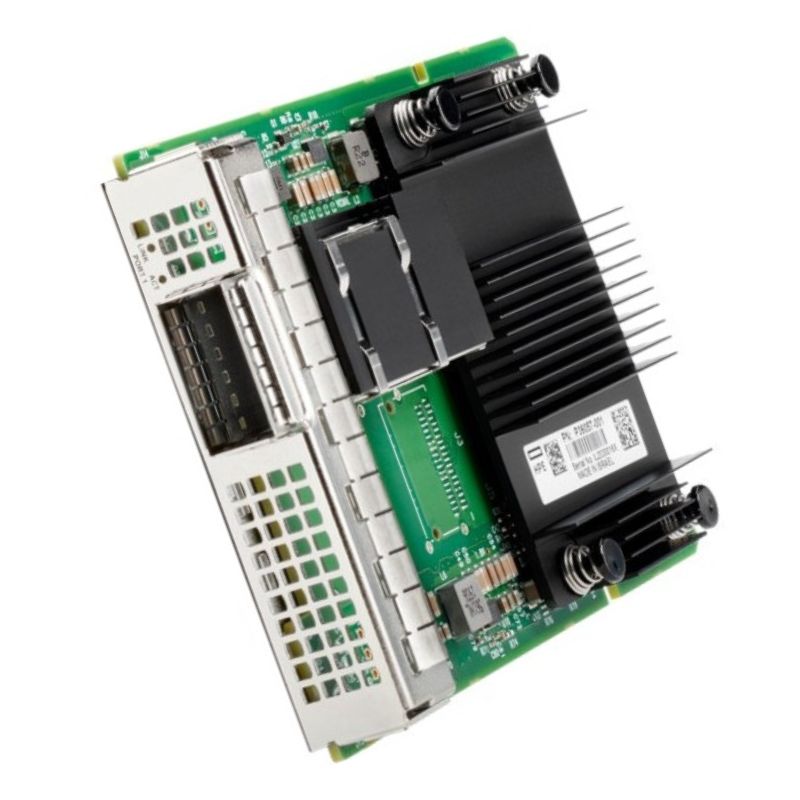
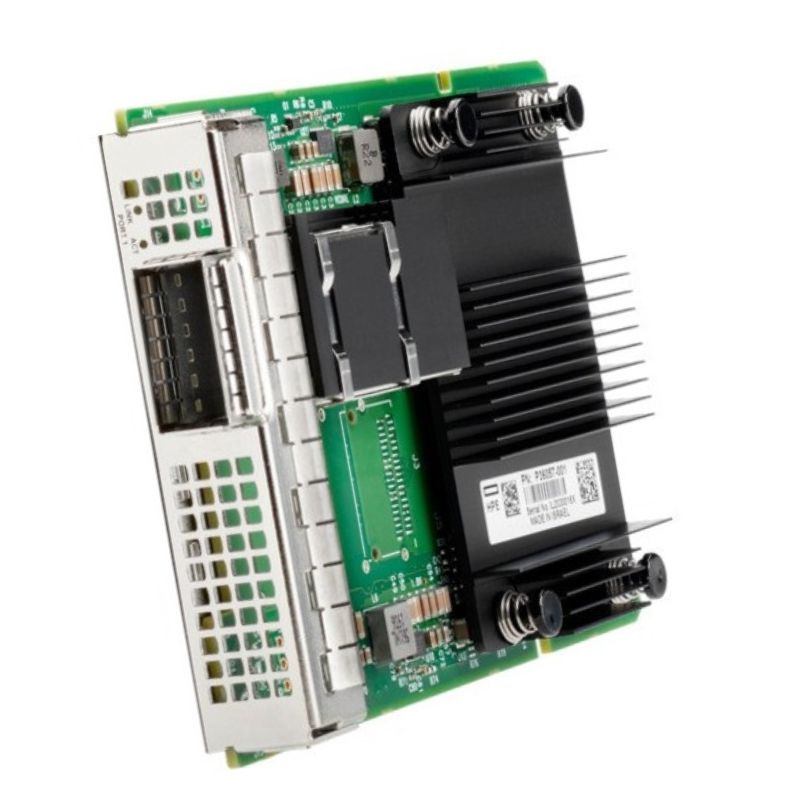
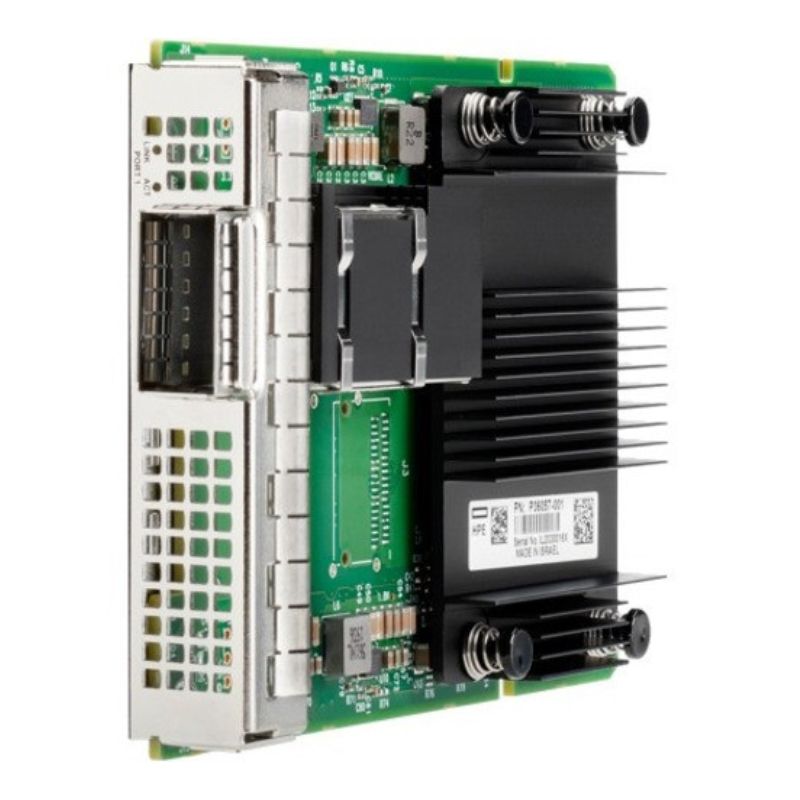
HPE P31323-B21 InfiniBand HDR-Ethernet 200GB 1-Port QSFP56 PCIe4 x16 OCP3 MCX653435A-HDAI Adapter. Excellent Refurbished with 1 year Replacement Warranty
This category encompasses enterprise-grade high-speed network adapters designed to support next-generation data center workloads that demand extreme bandwidth, ultra-low latency, and protocol flexibility. Products in this category, including the P31323-B21 HPE InfiniBand HDR-Ethernet 200GB 1-Port QSFP56 PCIe4 x16 OCP3 Adapter, are purpose-built for environments where compute density, accelerated networking, and scalable fabric architectures are critical. These adapters are typically deployed in high-performance computing clusters, artificial intelligence and machine learning platforms, cloud-native infrastructure, and large-scale virtualization stacks.
A defining characteristic of this category is dual-protocol support, allowing a single network interface to operate seamlessly across InfiniBand HDR and high-speed Ethernet fabrics. This capability enables organizations to unify networking strategies while maintaining flexibility for evolving workloads. InfiniBand HDR delivers deterministic performance, advanced congestion control, and native Remote Direct Memory Access (RDMA), while Ethernet at 200Gb provides compatibility with modern IP-based data center designs. Adapters in this segment are engineered to dynamically adapt to either protocol without sacrificing throughput or reliability.
PCI Express Gen4 x16 connectivity is another cornerstone of this category. With significantly increased lane bandwidth compared to previous generations, PCIe 4.0 ensures that the network adapter is never bottlenecked by the host interface. This is especially important for workloads such as GPU-to-GPU communication, distributed storage, and real-time analytics, where sustained line-rate performance is essential. The OCP 3.0 form factor further optimizes server integration by improving airflow, reducing cabling complexity, and enabling modular network upgrades across compatible platforms.
From a design perspective, this category emphasizes hardware offloads and intelligent acceleration. Advanced adapters integrate features such as RDMA over Converged Ethernet (RoCE), adaptive routing, packet pacing, and inline encryption support. These capabilities reduce CPU overhead, improve application responsiveness, and allow infrastructure teams to scale services without linear increases in compute resources. As data center architectures continue to shift toward disaggregated and software-defined models, adapters in this category play a central role in maintaining predictable performance.
Reliability and enterprise lifecycle support are also key attributes. Products aligned with this category are rigorously validated for compatibility with leading server platforms and operating systems. They are commonly offered with long-term firmware support, secure boot features, and robust diagnostics. This ensures consistent operation in mission-critical environments where downtime or packet loss can have significant operational impact. As such, this category represents the foundation of high-speed interconnect strategy for modern IT organizations.
The InfiniBand HDR and 200Gb Ethernet segment within this category focuses on delivering uncompromising performance for data-intensive workloads. InfiniBand HDR technology provides up to 200 gigabits per second of throughput with exceptionally low latency, making it the preferred choice for tightly coupled compute clusters and parallel processing applications. Adapters supporting HDR enable advanced features such as hardware-based congestion control, lossless transport, and scalable collective operations, all of which are critical in high-performance computing environments.
Simultaneously, native 200Gb Ethernet support ensures seamless integration into modern IP-based data centers. Ethernet at this speed tier is increasingly adopted for AI training fabrics, high-speed storage networks, and cloud-scale east-west traffic. The ability to operate at 200Gb allows organizations to consolidate network links, reduce switch port counts, and improve overall fabric efficiency. This category supports both traditional Ethernet networking and advanced RDMA-enabled Ethernet deployments, bridging the gap between performance and interoperability.
QSFP56 connectivity is a standard feature across this category, enabling high-density port configurations while maintaining signal integrity at extreme speeds. QSFP56 modules support both copper and optical cabling options, allowing data centers to tailor connectivity based on distance, power consumption, and cost considerations. Adapters designed for QSFP56 ensure backward compatibility with lower-speed modules where applicable, providing additional deployment flexibility.
A significant advantage of this category is protocol convergence. By supporting both InfiniBand and Ethernet on a single adapter, organizations can standardize on one hardware platform while serving multiple network roles. This reduces inventory complexity and simplifies server provisioning. Firmware-level configurability allows administrators to select the desired operating mode based on workload requirements, making these adapters highly adaptable to changing infrastructure needs.
Security and isolation are increasingly important at these speeds, and this category addresses those concerns through features such as secure firmware update mechanisms, traffic isolation, and support for encrypted transport where applicable. Combined with deterministic performance characteristics, InfiniBand HDR and 200Gb Ethernet adapters form the backbone of next-generation data movement strategies in enterprise and research environments alike.
The Open Compute Project (OCP) 3.0 form factor represents a major evolution in server networking design, and this category fully embraces its advantages. OCP 3.0 adapters are designed to integrate directly into compatible server platforms, eliminating the need for traditional PCIe riser cards and reducing internal cabling. This results in improved airflow, better thermal characteristics, and easier serviceability, all of which are essential in high-density data center deployments.
Within this category, PCIe Gen4 x16 connectivity ensures maximum host-to-adapter bandwidth. PCIe 4.0 effectively doubles the per-lane throughput of PCIe 3.0, providing ample headroom for 200Gb networking without contention. This is particularly important for applications that rely on direct memory access and low-latency data paths, such as GPU acceleration, NVMe over Fabrics, and distributed in-memory databases.
OCP 3.0 also enables standardized mechanical and electrical interfaces, allowing network adapters to be easily swapped or upgraded across different server models that adhere to the specification. This modularity aligns with modern data center strategies focused on composability and lifecycle optimization. By decoupling networking from proprietary expansion slots, organizations gain greater flexibility in scaling and refreshing infrastructure components.
Thermal efficiency is another critical consideration addressed by this category. OCP 3.0 adapters are positioned to take advantage of front-to-back airflow patterns common in contemporary server designs. High-performance network controllers generate significant heat under sustained load, and optimized airflow ensures consistent performance without thermal throttling. This contributes to predictable behavior even in demanding, always-on environments.
From an operational standpoint, OCP 3.0 integration simplifies deployment and maintenance. Tool-less installation, standardized connectors, and clear status indicators reduce the time required for hardware servicing. When combined with PCIe Gen4 performance characteristics, this form factor enables network adapters in this category to deliver maximum value across the entire infrastructure lifecycle.
This category is tailored to support a wide range of enterprise and hyperscale workloads that depend on fast, reliable data movement. High-performance computing remains a primary use case, where InfiniBand HDR fabrics enable tightly synchronized parallel processing across thousands of nodes. Scientific simulations, financial modeling, and engineering analysis all benefit from the low latency and high bandwidth characteristics provided by these adapters.
Artificial intelligence and machine learning platforms also rely heavily on this category. Distributed training of large models requires rapid exchange of gradients and parameters between GPUs and nodes. Adapters supporting 200Gb throughput and RDMA capabilities significantly reduce training time and improve resource utilization. Inference workloads similarly benefit from high-speed networking when deployed at scale across multiple servers.
In cloud and virtualization environments, this category supports dense multi-tenant workloads with consistent performance. Features such as SR-IOV, traffic isolation, and hardware offloads allow network resources to be efficiently shared among virtual machines or containers. This ensures predictable network behavior even under heavy load, which is essential for service-level agreements and customer satisfaction.
Storage architectures also leverage adapters in this category, particularly for NVMe over Fabrics and distributed file systems. High-throughput, low-latency networking enables storage nodes to deliver performance comparable to local devices, while maintaining the scalability and resilience of networked storage. This is increasingly important as organizations move toward software-defined storage models.
Overall, this category is defined by its ability to scale alongside growing data demands. Whether deployed in a research cluster, enterprise data center, or cloud service provider environment, these network adapters provide the performance, flexibility, and reliability required to support current and future workloads. Their role as a foundational infrastructure component makes them a strategic investment for organizations focused on long-term performance and scalability.
The category encompassing the P31323-B21 HPE InfiniBand HDR-Ethernet 200GB 1-Port QSFP56 PCIe Gen4 x16 OCP3 MCX653435A-HDAI Adapter represents the highest tier of modern data center interconnect technology. This category focuses on ultra-low latency, extremely high throughput networking adapters designed for advanced enterprise, cloud, and high-performance computing (HPC) environments. Products in this category are engineered to support converged network fabrics, combining InfiniBand HDR and high-speed Ethernet capabilities within a single, compact adapter form factor.
Networking adapters in this segment are purpose-built to address the exponential growth of data movement driven by AI workloads, machine learning training, real-time analytics, distributed storage, and containerized microservices. As enterprises scale horizontally across clusters and racks, the need for deterministic latency, massive bandwidth, and protocol flexibility becomes critical. This category exists to fulfill those requirements with precision and reliability.
A defining feature of this category is native support for both InfiniBand HDR and Ethernet protocols on the same hardware platform. InfiniBand HDR delivers up to 200Gb/s of throughput with extremely low latency, making it the preferred interconnect for HPC clusters, GPU-accelerated computing, and AI model training environments. Ethernet support ensures compatibility with traditional IP-based networking infrastructures, enabling seamless integration into existing data center architectures.
By offering dual-protocol functionality, adapters in this category eliminate the need for separate network interface cards for storage, compute, and management traffic. This convergence reduces hardware complexity, lowers power consumption, and simplifies network design while maintaining optimal performance across diverse workloads.
Protocol flexibility is essential in hybrid environments where legacy applications coexist with next-generation workloads. Adapters within this category support RDMA over Converged Ethernet (RoCE), InfiniBand verbs, and advanced Ethernet offloads. This ensures that applications can leverage zero-copy data transfers, kernel bypass, and hardware-accelerated packet processing regardless of the chosen fabric.
Such flexibility enables data centers to evolve incrementally rather than undergoing disruptive network overhauls. Organizations can deploy high-speed adapters today while retaining the freedom to transition between InfiniBand and Ethernet fabrics as workload requirements change.
The 200Gb/s bandwidth supported by this category represents a significant leap over previous generations of networking adapters. This level of throughput is critical for data-intensive workloads where bottlenecks at the network layer can severely impact overall system performance. Whether moving large datasets between compute nodes or synchronizing distributed storage systems, these adapters ensure that the network keeps pace with CPU and GPU advancements.
Equally important is the use of PCIe Gen4 x16 interfaces, which provide sufficient host bandwidth to sustain full line-rate performance. PCIe Gen4 doubles the per-lane throughput of PCIe Gen3, ensuring that the adapter can fully utilize its 200Gb/s network capacity without contention or saturation at the system bus level.
Adapters in this category integrate advanced offload engines to reduce CPU overhead and improve application efficiency. Hardware-based packet steering, checksum offloads, and encryption acceleration allow servers to dedicate more CPU cycles to application processing rather than network management tasks.
This optimization is particularly valuable in virtualized and containerized environments where multiple workloads share the same physical resources. By offloading network functions to dedicated hardware, these adapters help maintain predictable performance even under heavy multi-tenant loads.
The adoption of the OCP 3.0 (Open Compute Project) form factor is another defining characteristic of this category. OCP 3.0 adapters are designed for modern server architectures that prioritize airflow efficiency, serviceability, and dense component integration. This form factor enables direct installation into compatible server platforms without consuming traditional PCIe slots, freeing space for additional accelerators or storage devices.
For hyperscale and enterprise data centers alike, OCP 3.0 compatibility translates into improved thermal management and simplified cabling. The standardized design also ensures broad compatibility across a range of server models, reducing procurement complexity and deployment time.
Adapters in this category are engineered with advanced thermal solutions to handle sustained high-bandwidth operation. Efficient heat sinks, optimized airflow paths, and low-power silicon processes ensure reliable performance even in dense server configurations.
Mechanical robustness is equally important, as these adapters are often deployed in mission-critical environments with continuous uptime requirements. High-quality connectors, reinforced PCB designs, and rigorous validation processes contribute to long-term reliability and operational stability.
QSFP56 connectivity is a core attribute of this category, enabling support for 200Gb/s links over a variety of cable types. QSFP56 ports are backward compatible with lower-speed QSFP standards, providing additional flexibility during network upgrades. This allows organizations to reuse existing cabling infrastructure where appropriate while still preparing for future bandwidth demands.
The QSFP56 ecosystem includes passive and active copper cables, as well as optical transceivers for short- and long-reach connections. This versatility ensures that adapters in this category can be deployed across diverse data center topologies, from tightly coupled compute clusters to geographically distributed systems.
Maintaining signal integrity at 200Gb/s requires precise engineering and strict adherence to industry standards. Adapters in this category incorporate advanced equalization and error correction technologies to ensure reliable data transmission even over longer cable runs.
These features reduce the risk of packet loss, retransmissions, and latency spikes, which can be detrimental to performance-sensitive applications such as real-time analytics and financial trading platforms.
The category represented by the P31323-B21 adapter serves a wide range of industries and deployment scenarios. In high-performance computing, these adapters enable fast inter-node communication for parallel simulations, scientific research, and weather modeling. In artificial intelligence and machine learning environments, they facilitate rapid data exchange between GPUs, accelerating training times and improving model scalability.
Enterprise data centers leverage this category to support high-throughput storage networks, including NVMe over Fabrics deployments, where low latency and high bandwidth are essential. Cloud service providers benefit from the ability to offer high-performance networking as a service, supporting demanding customer workloads with consistent performance guarantees.
Modern applications increasingly rely on virtualization and container orchestration platforms such as Kubernetes. Adapters in this category are optimized for these environments, offering features like SR-IOV, hardware-based traffic isolation, and accelerated virtual switching.
These capabilities enable cloud-native workloads to achieve near-bare-metal network performance while maintaining the flexibility and scalability of virtualized infrastructure. This makes the category particularly attractive for organizations adopting hybrid and multi-cloud strategies.
Security and manageability are critical considerations in high-speed networking environments. Adapters within this category include support for secure boot, firmware authentication, and encrypted communication channels to protect against unauthorized access and data breaches.
Centralized management tools allow administrators to monitor performance metrics, update firmware, and configure network parameters across large deployments. This simplifies operational workflows and reduces the risk of configuration errors that could impact availability or performance.
Advanced telemetry features provide real-time insights into network performance, including latency, throughput, and error rates. This data enables proactive troubleshooting and capacity planning, helping organizations maintain optimal network health as workloads evolve.
By integrating with existing monitoring platforms, adapters in this category contribute to a holistic view of data center operations, supporting informed decision-making and continuous optimization.
Scalability is a core principle of this category. As data center demands continue to grow, networking adapters must be capable of scaling alongside compute and storage resources. Support for emerging standards, firmware upgradability, and modular design elements ensure that these adapters remain relevant over extended deployment lifecycles.
Future-proof design also includes readiness for next-generation processors, accelerators, and network fabrics. By investing in this category, organizations position themselves to adopt new technologies with minimal disruption, protecting their infrastructure investments over time.
Interoperability is essential in heterogeneous environments where equipment from multiple vendors must coexist. Adapters in this category adhere to industry standards for InfiniBand, Ethernet, PCIe, and OCP, ensuring seamless integration with switches, cables, and management platforms from a wide range of manufacturers.
This standards-based approach reduces vendor lock-in and provides organizations with greater flexibility in designing and evolving their network architectures.


 Contact Us
 Information
 Catalog
 Solid State Drives (SSD)
 Network Switches
 Hard Disk Drives
 HBA & Controllers
 PC & Servers
 PC & Server Memory
 CPU & Processors
 Network Routers
 Power Supplies
 Tape Drives & Libraries
 Network Devices
 Computer & Network Cables