(7% discount is applied at checkout)
Cart is empty
Your go-to destination for cutting-edge server products
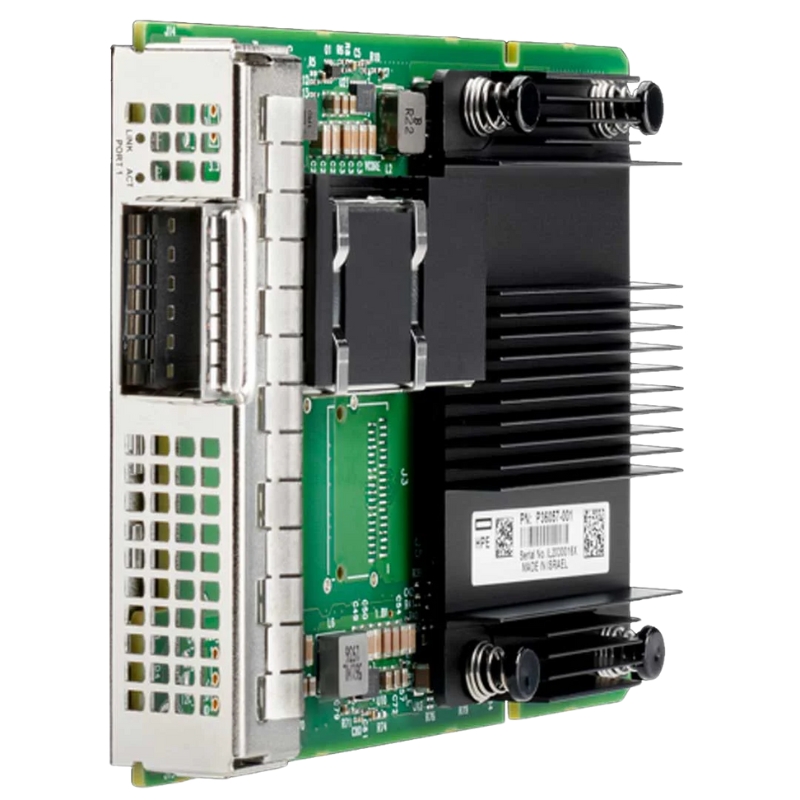


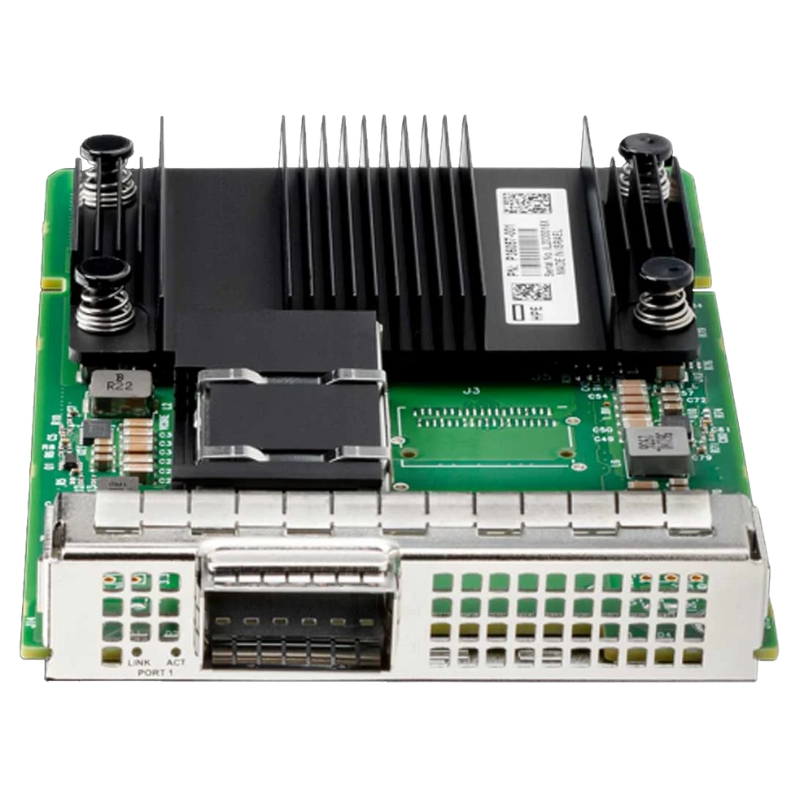
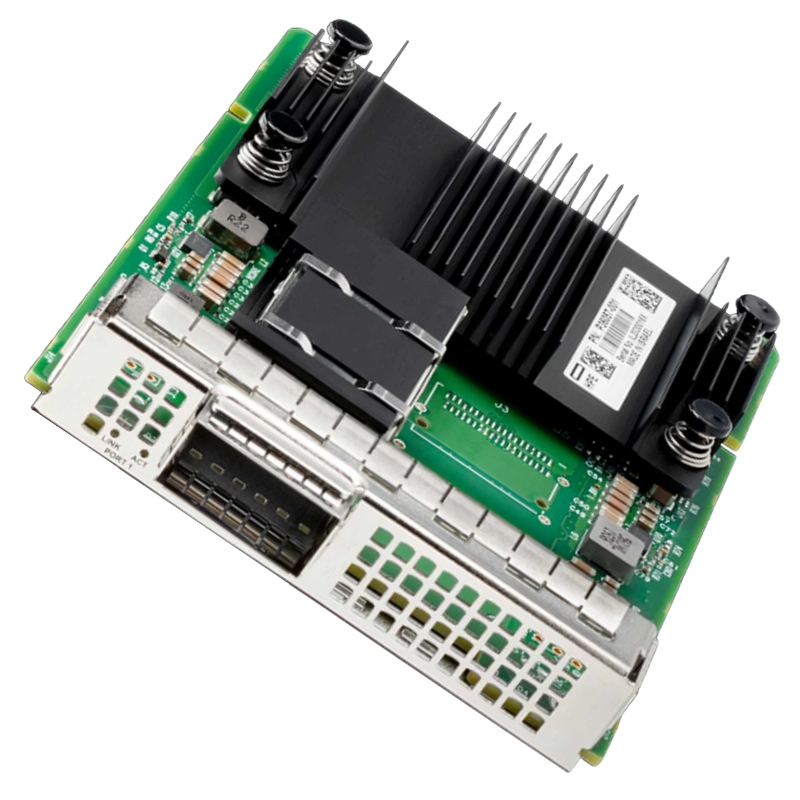
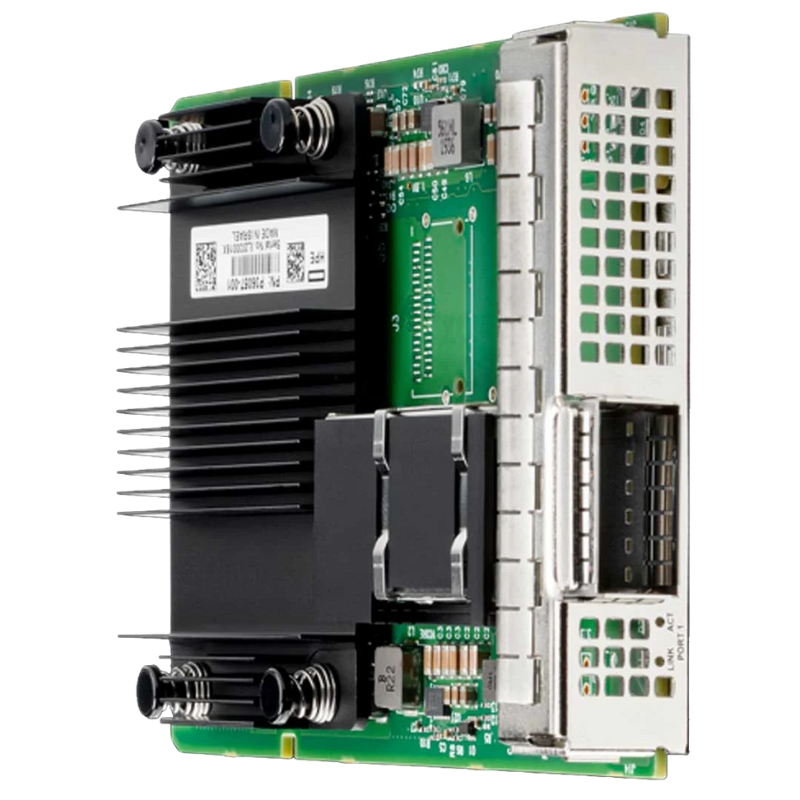
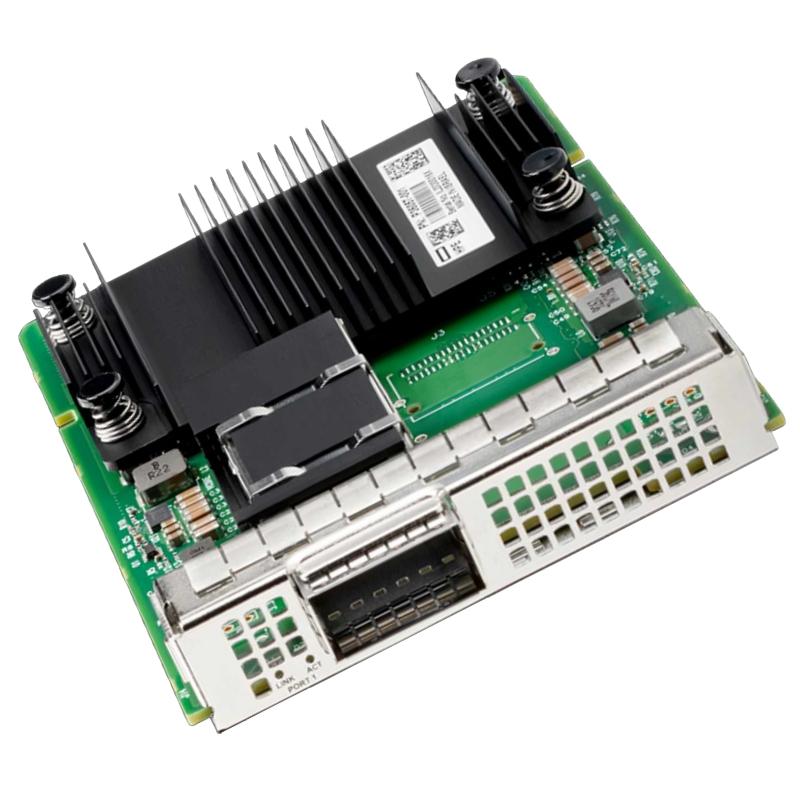
HPE P36053-001 InfiniBand HDR 200GB Ethernet 1 Port QSFP56 PCI-E 4 x16 OCP3 MCX653435A-HDAI Network Adapter. Excellent Refurbished with 1 Year Replacement Warranty
The HPE P36053-001, based on the Mellanox MCX653435A-HDAI adapter, represents a pinnacle of network interface card (NIC) technology, engineered for the most demanding data center and high-performance computing (HPC) environments. This OCP 3.0-compliant, single-port HDR 200Gb/s InfiniBand and Ethernet converged network adapter delivers breakthrough performance, ultra-low latency, and exceptional flexibility.
The HPE P36053-001, based on the NVIDIA Mellanox MCX653435A-HDAI network adapter, represents a pinnacle of high-performance interconnect technology. This category of network adapters, specifically the InfiniBand HDR 200Gb/s over a single-port QSFP56 form factor, is engineered for the most demanding, data-intensive computing environments. It transcends traditional networking by providing the ultra-low latency, extreme bandwidth, and advanced in-network computing capabilities required for High-Performance Computing (HPC), Artificial Intelligence (AI), Machine Learning (ML), and high-frequency trading. As an OCP 3.0 compliant card, it is designed for integration into modern, hyperscale-inspired infrastructure, offering a future-proof solution for accelerating data movement—the new bottleneck in computational workflows.
This adapter category is built upon a foundation of cutting-edge standards and silicon, each component meticulously chosen to maximize throughput and efficiency. Understanding this architecture is key to appreciating its performance capabilities.
InfiniBand HDR (High Data Rate) operates at 200 gigabits per second per port. Unlike traditional Ethernet, InfiniBand is a channel-based, lossless fabric protocol engineered from the ground up for high-throughput, low-latency cluster communication. It features Remote Direct Memory Access (RDMA) as a native capability, allowing data to move directly from the memory of one server to another without involving the CPU. This dramatically reduces latency and CPU overhead, freeing processors to focus on computation rather than data movement.
The InfiniBand architecture embedded in this adapter provides several distinct advantages. Its congestion control mechanism is proactive, preventing packet loss before it occurs and maintaining consistent performance under load. Adaptive routing dynamically selects paths within the fabric to balance traffic and avoid hotspots. Furthermore, InfiniBand's Scalable Hierarchical Aggregation and Reduction Protocol (SHARP) enables in-network computation, offloading collective operations (like MPI reductions) from the server nodes to the network switches, drastically accelerating HPC and AI workloads.
The adapter utilizes a full PCI Express 4.0 x16 lane host interface. This provides a theoretical bidirectional bandwidth of approximately 64 GB/s (256 GT/s), which is more than sufficient to handle the full bidirectional bandwidth of the 200Gb/s (25 GB/s) network port without becoming a bottleneck. This ensures that the immense data flow from the network can be efficiently delivered to the server's memory and processors.
The HPE P36053-001 adheres to the Open Compute Project (OCP) 3.0 specification. This is a critical design consideration for modern data center deployment.
OCP 3.0 is a standardized form factor for network adapters, championed by the Open Compute Project Foundation. It defines a compact, efficient, and mechanically robust design intended for high-density servers, particularly those used in large-scale cloud and hyperscale data centers. An OCP 3.0 card is smaller than a traditional PCIe add-in card and is designed to plug directly into a dedicated slot on the server motherboard, often with improved thermal and power delivery characteristics.
Using the OCP 3.0 form factor, this adapter enables cleaner server builds with reduced cabling complexity inside the chassis. It typically allows for more efficient airflow and cooling compared to standard PCIe cards. Integration is streamlined in OCP-compliant servers, such as many modern HPE ProLiant and cloud-optimized platforms, ensuring reliable mechanical fit and electrical connection. It is essential to verify server compatibility, as OCP 3.0 slots are not mechanically interchangeable with PCIe slots or earlier OCP form factors.
The HPE P36053-001 encapsulates a specific set of technical specifications that define its performance envelope and capabilities.
The adapter features a single QSFP56 (Quad Small Form-factor Pluggable 56) cage. This cage supports a QSFP56 transceiver or direct-attach copper (DAC) cable for HDR 200Gb/s InfiniBand connectivity. It is also backward compatible with QSFP28 (EDR 100Gb/s InfiniBand) and QSFP+ (FDR/QDR 40/56Gb/s InfiniBand) optics and cables, providing investment protection and flexibility in multi-speed fabrics. The single-port design optimizes for maximum per-stream bandwidth, which is ideal for applications requiring the highest possible point-to-point transfer rates.
To activate the adapter, a compatible HDR InfiniBand cable is required. Options include passive or active Direct Attach Copper (DAC) cables for short reaches (typically up to 3 meters) or active optical cables (AOCs) and optical transceivers with single-mode or multimode fiber for longer distances, connecting to HDR InfiniBand switches like the NVIDIA Mellanox Quantum series.
The performance of this adapter category is measured in microseconds and gigabytes per second. Latency is typically sub-microsecond for switch-to-switch hops and can be as low as 0.6 microseconds for end-to-end application latency. The sustained bandwidth can achieve near line-rate 200Gb/s (25 GB/s) depending on host system configuration and workload. These metrics are paramount for tightly coupled parallel jobs where synchronization delays can cripple overall application performance.
The unique capabilities of the HDR 200Gb/s InfiniBand adapter make it indispensable for specific, performance-critical use cases.
In traditional HPC simulations—such as computational fluid dynamics, weather modeling, and seismic analysis—thousands of server nodes work in concert. The MPI traffic between these nodes is immense and sensitive to latency and bandwidth. The HPE P36053-001 adapter minimizes the time nodes spend waiting for data, accelerating time-to-solution. Its support for SHARP in-network aggregation can reduce MPI collective operation times by up to 50%, directly translating to faster simulation completion.
As the industry moves towards exascale computing, the interconnect is the central nervous system of the supercomputer. Adapters of this class form the endpoints of that system, enabling the coherent operation of millions of cores. Their reliability, performance predictability, and advanced offloads are non-negotiable requirements for building the world's most powerful computers.
The adapter fully supports NVIDIA GPUDirect RDMA technology. This allows data to be transferred directly from the network adapter's buffer to GPU memory, bypassing the host CPU and system memory entirely. This is a critical optimization for AI and HPC workloads where data needs to flow from the network directly to the accelerator, shaving off additional microseconds of latency and further reducing CPU load.
In financial markets, microseconds can equate to millions of dollars. Trading algorithms and risk analysis models require the fastest possible access to market data and the swiftest execution of transactions. The sub-microsecond latency provided by this InfiniBand adapter ensures the fastest possible data feed processing and order execution within a trading rack or between proximate data centers, providing a competitive edge.
Understanding the position of this adapter requires a comparison with other prevalent interconnect options.
While high-speed Ethernet (particularly RoCEv2 - RDMA over Converged Ethernet) has made strides, native InfiniBand still holds advantages in extreme performance environments. InfiniBand's lossless fabric, built-in congestion control, and advanced offloads like SHARP are inherent and uniformly implemented. Ethernet fabrics, especially multi-vendor ones, can require careful configuration (Priority Flow Control, ECN) to achieve a lossless state for RDMA. For the most deterministic, high-performance workloads, InfiniBand often provides a simpler, more performant out-of-the-box experience.
The HPE P36053-001 is a single-port adapter. This contrasts with dual-port HDR adapters (like the MCX653106A). The single-port design dedicates the full PCIe 4.0 x16 bandwidth to one 200Gb/s stream, which is ideal for applications requiring maximum host-to-fabric throughput. Dual-port adapters provide flexibility for multipath I/O or connection to two separate fabric spines but may share host bandwidth between the two ports. The choice depends on the network topology and redundancy requirements of the cluster.
Successfully integrating this advanced hardware requires attention to several key factors beyond raw performance.
The primary requirement is a server with an available OCP 3.0 mezzanine slot. The server must also support PCI Express 4.0 in its system architecture to unlock the full bandwidth potential. Sufficient cooling airflow across the OCP module is vital, as high-performance adapters generate significant heat. On the software side, a modern Linux distribution with appropriate kernel support is necessary.
An InfiniBand adapter does not operate in isolation; it is part of a fabric. Deploying HDR 200Gb/s endpoints necessitates a compatible HDR InfiniBand switch infrastructure, such as the NVIDIA Mellanox Quantum series. The fabric can be designed in non-blocking fat-tree topologies or other patterns to meet the cluster's bisection bandwidth requirements. Proper subnet management, using an InfiniBand Subnet Manager (part of the OFED software), is essential for fabric initialization and health.


 Contact Us
 Information
 Catalog
 Solid State Drives (SSD)
 Network Switches
 Hard Disk Drives
 HBA & Controllers
 PC & Servers
 PC & Server Memory
 CPU & Processors
 Network Routers
 Power Supplies
 Tape Drives & Libraries
 Network Devices
 Computer & Network Cables