(7% discount is applied at checkout)
Cart is empty
Your go-to destination for cutting-edge server products


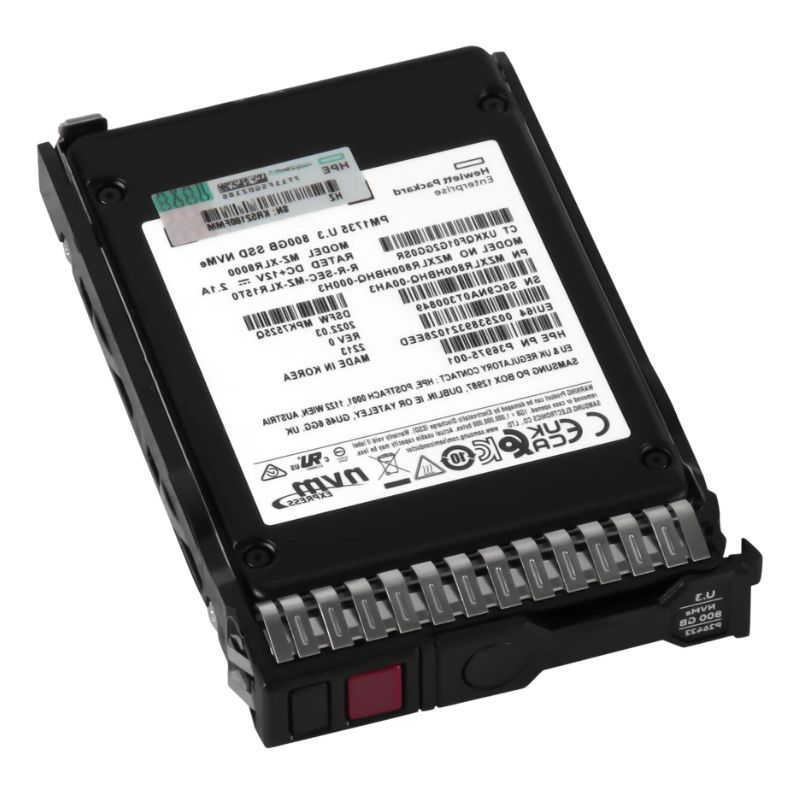
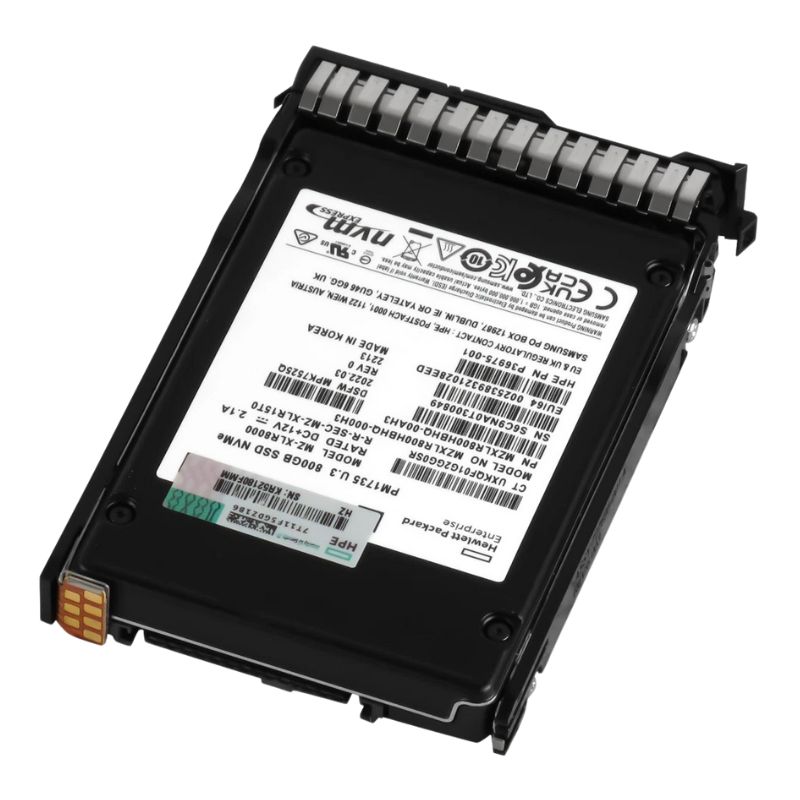
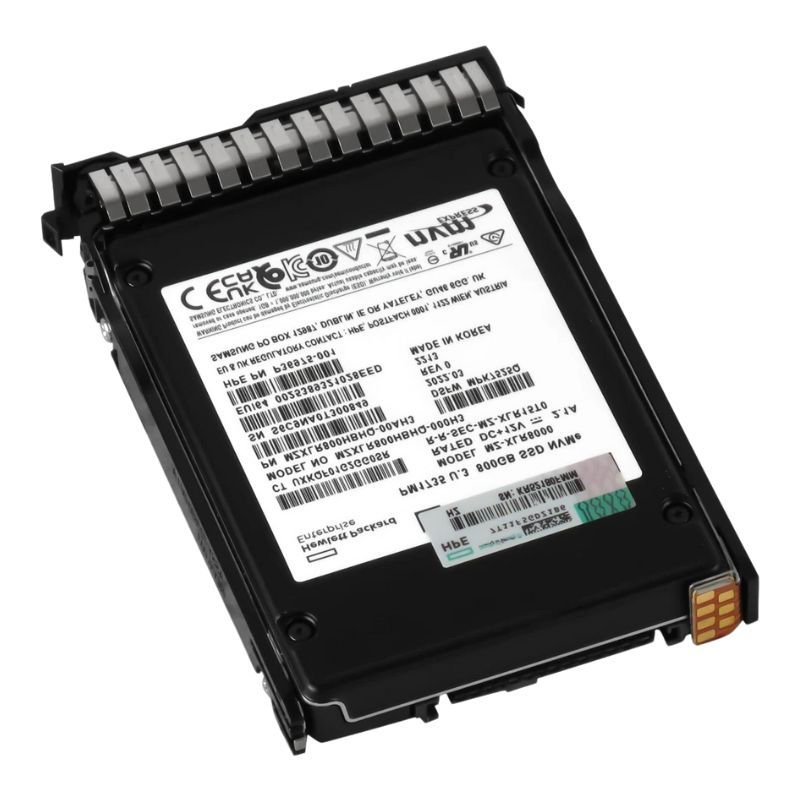
HPE P36975-003 3.2TB Mixed Use U.3 2.5inch SSF PCI Express 3.0 X8 NVMe Bc Enterprise Internal Solid State Drive. Excellent Refurbished with 1 Year Replacement Warranty
This high-efficiency HPE P36975-003 solid-state drive delivers robust mixed-use performance, ensuring consistent throughput, rapid responsiveness, and dependable data handling for modern business infrastructures.
The drive is specially crafted for environments requiring consistent durability, endurance, and 24/7 data operations. Advanced NVMe architecture helps reduce latency while improving responsiveness across mission-critical applications.
Developed to handle intensive workloads, this SSD enhances application performance, data access speeds, and system responsiveness.
With exceptional IOPS handling and impressive sequential throughput, this SSD supports:
The HPE P36975-003 3.2TB Mixed Use U.3 2.5-inch SSF PCI Express 3.0 x8 NVMe Enterprise Internal Solid State Drive represents a class of enterprise storage designed to balance sustained throughput, low latency, and endurance suitable for a wide range of data center workloads. This continuous category description examines the technical characteristics, deployment scenarios, operational best practices, compatibility considerations, and procurement guidance for the HPE P36975-003 and closely related Mixed Use U.3 NVMe 2.5-inch drives. The focus here is on the specific blend of performance and endurance that Mixed Use drives provide: significantly higher write endurance than read-intensive parts while retaining cost-efficiency compared with all-flash, write-intensive models. For search engines and site visitors alike, emphasis is placed on keyword-rich descriptions such as "3.2TB Mixed Use U.3", "PCIe 3.0 x8 NVMe", "2.5-inch SSF enterprise SSD", "internal server drive", and "HPE P36975-003".
The HPE P36975-003 falls into the U.3 (SFF-4) form factor family for 2.5-inch enterprise SSF drives. U.3 connectors allow the same drive bay to support NVMe and SAS/SATA interfaces when paired with suitable backplanes and controller hardware, simplifying inventory and hot-swap servicing. Physically the 2.5-inch SSF dimension supports high-density server and storage chassis where space and airflow are optimized. Electrically the drive leverages PCI Express 3.0 with an x8 lane allocation, enabling aggregate NVMe bandwidth that is well suited for mixed workloads — simultaneous reads and writes — common in virtualized environments, database caching layers, analytics nodes, and mixed transactional/file workloads. The 3.2TB capacity point sits in a practical sweet spot for many enterprise scenarios: large enough to contain meaningful datasets while delivering predictable performance and endurance attributes.
Enterprise NVMe drives such as the P36975-003 use controllers tuned to deliver consistent IOPS and low latency under sustained load, while enterprise-grade NAND and firmware implement wear-leveling algorithms, power-loss protection, and advanced error correction. Mixed Use models typically use TLC NAND with firmware settings that trade some peak throughput for higher drive write endurance (measured in drive writes per day — DWPD) and predictable performance under mixed read/write mixes. The firmware provides SMART reporting, namespace management, and secure erase capabilities; it may also include telemetry functions that integrate with HPE management tools to enable proactive monitoring and firmware lifecycle management. Because firmware versions can materially affect performance and stability, enterprises should incorporate firmware review and update policies into their storage maintenance processes.
Mixed Use NVMe drives are characterized by a performance profile that emphasizes sustained I/O performance and deterministic latency more than absolute sequential bandwidth. For the P36975-003 class, typical enterprise benchmarks demonstrate strong random read and write IOPS at low queue depths, with latency measured in sub-millisecond ranges under optimized conditions. In real-world deployments, these drives excel in virtual machine storage for hosts running mixed workloads, persistent caching tiers for database systems, and as boot and log devices in storage arrays. Performance tuning at the host level — including NVMe driver selection, interrupt moderation, and CPU affinity — will influence measured throughput. Thermal throttling behavior under continuous heavy load is another factor to account for; proper server airflow and heat dissipation maintain consistent performance over long periods.
IOPS performance for Mixed Use U.3 NVMe drives typically yields high random read IOPS and comparatively strong random write IOPS, with the drive's firmware enforcing quality-of-service behaviors to avoid long-tail latency spikes. Enterprise environments that demand predictable service levels benefit from these QoS characteristics. Capacity planning should account for the drive's IOPS per terabyte metric which helps in mapping the number of drives required to meet application-level requirements. The P36975-003 class is often chosen where IOPS delivery must be balanced against cost per gigabyte and endurance rather than where ultra-low single-digit microsecond latency is the prime objective.
Endurance is a critical consideration for mixed use drives. Mixed Use drives are specified with DWPD and total bytes written (TBW) metrics that indicate the expected write lifecycle over the warranty period. The P36975-003 is engineered to provide multi-year endurance suitable for enterprise mixed workloads, offering a compromise between the higher DWPD of write-intensive drives and the lower cost of read-intensive offerings. Reliability is expressed through MTBF (mean time between failures) and enterprise-grade features such as enhanced ECC, background media scans, and consistent power-loss protection to reduce risk of data corruption during unexpected power events. Operational teams should monitor SMART attributes and use vendor tools to track remaining endurance and to plan replacement before a drive approaches its TBW limits.
Enterprise-grade NVMe drives include on-board capacitors or equivalent mechanisms that provide enough energy to flush volatile write caches to NAND in the event of power loss. The P36975-003 category supports these protections and often integrates with server-level power-loss mitigation strategies. Coupled with RAID or erasure coding at the array level, these drives contribute to a resilient storage stack where data integrity is preserved through both hardware and software layers. System architects must account for the entire stack — drive, backplane, RAID controller (if present), and operating system — to ensure that power-loss protection functions as intended in their specific configuration.
The U.3 form factor was designed for flexibility: it allows the same physical bay to accept NVMe and legacy SAS/SATA devices with proper backplane support. The P36975-003 3.2TB Mixed Use NVMe drive is commonly validated for HPE ProLiant servers, HPE storage systems, and compatible third-party chassis that support U.3 backplanes and NVMe-capable BIOS/firmware. When integrating into heterogeneous environments, administrators should verify platform support lists and firmware compatibility. BIOS/UEFI settings, NVMe hotplug behavior, and driver stacks differ across server families, and ensuring compatibility prevents issues such as incorrect device presentation, suboptimal performance, or unsupported configurations that negate warranty coverage.
2.5-inch SSF U.3 drives are designed for hot-swap serviceability in enterprise racks and blades. The physical trays and caddies used by HPE simplify replacement operations, and service indicators on drive carriers assist technicians in rapid identification. Because the drive interfaces with NVMe namespaces and can be part of multi-drive arrays, proper procedures must be followed to retire or replace drives. For example, in a software-defined storage cluster, drives must be evacuated at the software layer before physical removal to avoid rebuilds or data loss. Documentation and runbooks should include step-by-step procedures for safe drive replacement and for handling drive failures in ways that align with both hardware warranties and software data redundancy mechanisms.
The Mixed Use profile of the P36975-003 makes it well suited for a spectrum of enterprise workloads. These drives are an excellent fit for virtual desktop infrastructure (VDI) where boot storms and mixed read/write access patterns occur. They are highly effective as tier 1 storage for small to medium databases, application logging volumes, message queues, and caching layers that require moderate-to-high write endurance. Content management systems, analytics ingestion nodes, and distributed storage metadata tiers also benefit from mixed-use drives because they combine capacity and sustained performance without the premium of highest-end write-intensive NVMe models. In multi-tenant hosting, they offer a compelling balance between performance isolation and cost efficiency.
NVMe drives are sensitive to temperature and many enterprise models implement thermal throttling to protect NAND and controller components from overheating. The P36975-003 category requires careful thermal planning: chassis airflow patterns, drive slot placement, and ambient datacenter temperature all affect sustained performance. Administrators should consult HPE thermal guidelines and validate that drive bays receive adequate airflow. In high-density deployments, consider leveraging active cooling strategies or drive trays that enhance convection. Monitoring drive temperature attributes in SMART telemetry allows operations teams to detect hotspots and remediate before throttling impacts application performance.
High-density chassis delivering large numbers of 2.5-inch U.3 drives require a balance between cooling efficiency and acoustic or power constraints. Mounting drives near intake faces with unobstructed air channels yields the best thermal performance. In quieter environments where acoustic noise and fan RPM need to be controlled, tradeoffs may arise that require additional monitoring. Power consumption per drive also accumulates at scale; power provisioning and HVAC planning must consider both peak and average thermal loads to prevent throttling and reduce the risk of early wear due to elevated operating temperatures.
Security is a primary concern for enterprise storage. Many HPE-class NVMe drives support self-encrypting drive (SED) capabilities, leveraging hardware-based AES encryption to protect data-at-rest without imposing CPU overhead. The P36975-003 product family may include SED variants that support Opal or other TCG standards; these should be validated against an organization’s key management and secure erase policies. Secure erase features allow rapid, cryptographically secure decommissioning of drives prior to disposal or re-use. When combined with array-level encryption and proper key lifecycle management, hardware encryption significantly reduces exposure from lost or stolen assets.
For regulated industries, using drives with verifiable encryption and secure erase capabilities simplifies compliance and audit tasks. Documentation that maps drive serial numbers to lifecycle events (installation, replacement, secure erase, disposal) helps maintain chain-of-custody records. When deploying the P36975-003 class, IT teams should maintain an auditable log of firmware versions, encryption states, and capacity allocations to satisfy regulatory requirements for data protection and retention.


 Contact Us
 Information
 Catalog
 Solid State Drives (SSD)
 Network Switches
 Hard Disk Drives
 HBA & Controllers
 PC & Servers
 PC & Server Memory
 CPU & Processors
 Network Routers
 Power Supplies
 Tape Drives & Libraries
 Network Devices
 Computer & Network Cables