(7% discount is applied at checkout)
Cart is empty
Your go-to destination for cutting-edge server products
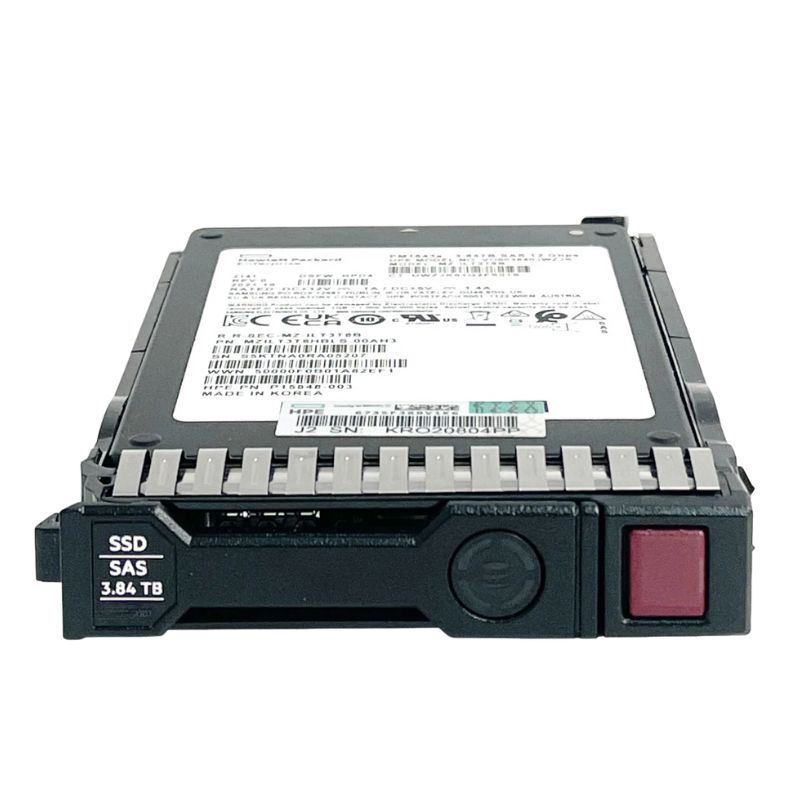


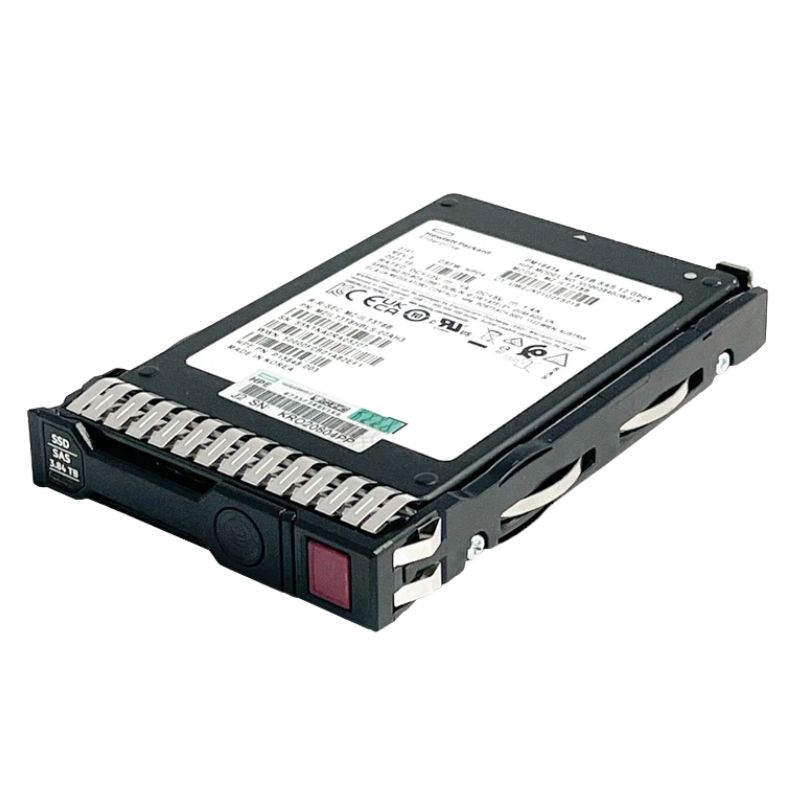
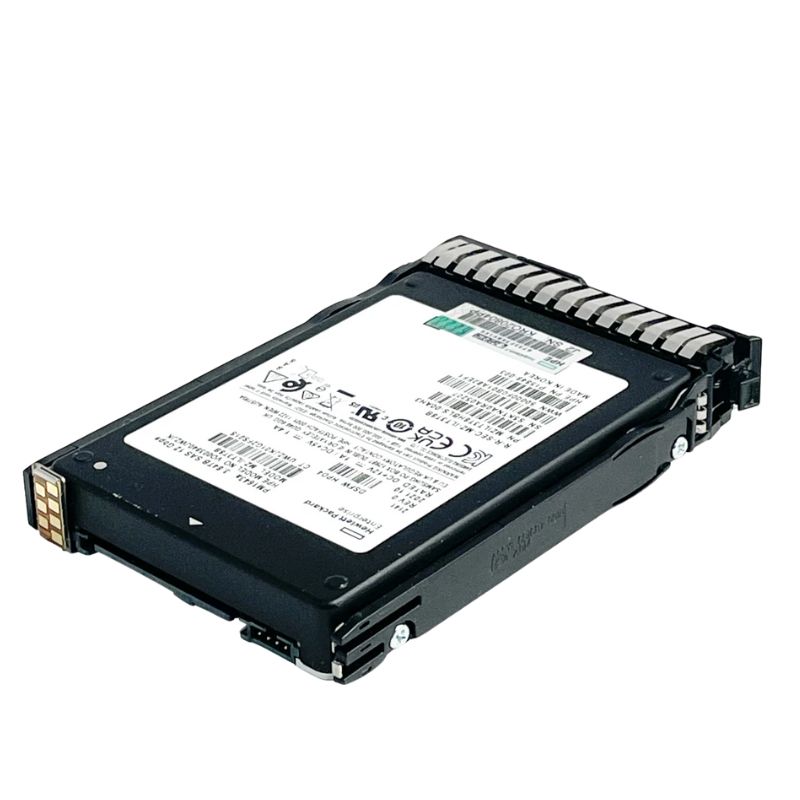
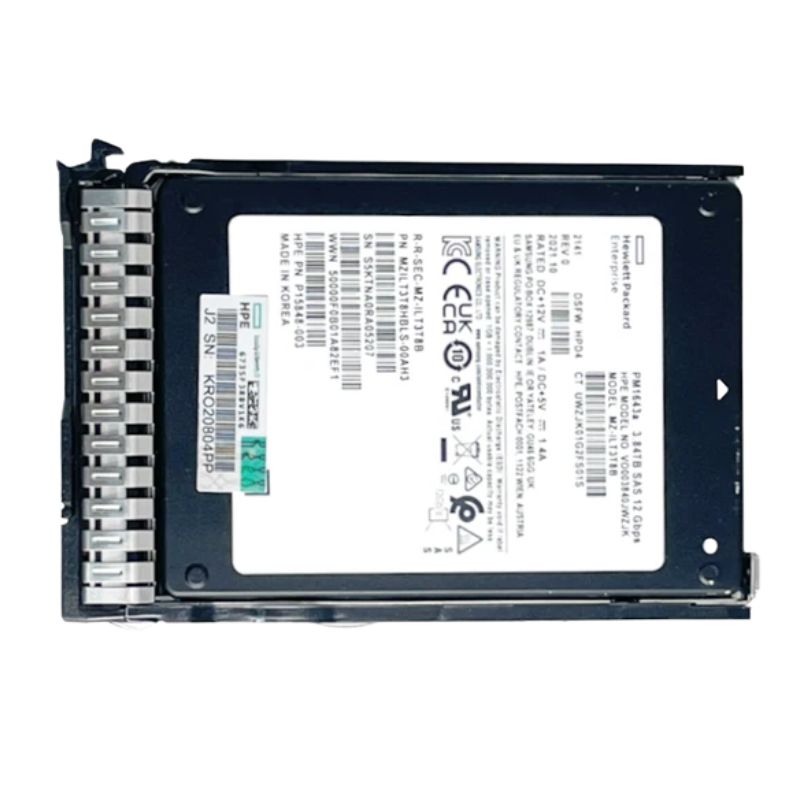
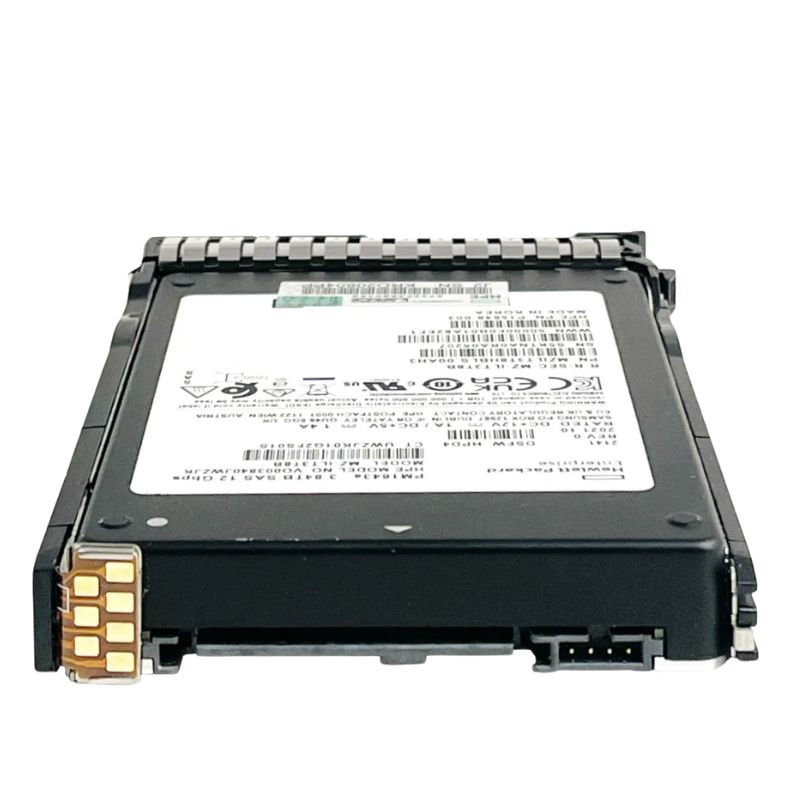
HPE P37021-003 3.84TB SAS 12GBPS Read Intensive 2.5inch SFF Bc Value SAS Multi Vendor Solid State Drive. Factory-Sealed New in Original Box (FSB) with 3 Years Warranty
The HPE P37021-003 is a high-efficiency 2.5-inch SFF solid-state drive built to deliver reliable performance in enterprise environments. Crafted for read-focused workloads and equipped with digitally signed firmware, this storage solution ensures integrity, rapid access, and seamless operation across supported HPE ProLiant and Synergy platforms.
This model offers a sizeable 3.84TB capacity, enabling organizations to accommodate expansive datasets while maintaining exceptional read speeds. Its hot-plug design supports easy replacement without interrupting ongoing operations.
The drive is optimized for environments needing fast access with moderate write activity. Its endurance and transfer rates make it ideal for virtualized applications, analytics, and high-volume query workloads.
Typical Operational Power Consumption: 7.82W—engineered for efficient performance in dense compute environments.
Offering a single SAS 12Gb/s interface, the drive fits seamlessly into HPE server infrastructures requiring 2.5-inch SFF drive bays.
This SSD integrates smoothly with a broad portfolio of HPE ProLiant and Synergy systems. It is validated for multiple generations, ensuring long-term infrastructure flexibility.
The HPE P37021-003 3.84TB SAS 12Gbps Read Intensive 2.5-inch SFF BC Value SAS Multi Vendor Solid State Drive represents a pragmatic balance between cost-conscious procurement and enterprise-grade reliability. Designed for mixed workload data centers that need predictable read performance, this series addresses the performance gap between entry-level SATA SSDs and mainstream NVMe drives by delivering consistent low-latency access over the familiar SAS fabric. The 3.84TB capacity and 2.5-inch small form factor make it ideal for high-density chassis and blade servers where space is at a premium but sustained read throughput remains a priority.
The 2.5-inch small form factor (SFF) balances density and thermal characteristics; it fits in modern server sleds and dense storage arrays while still providing adequate surface area for heat dissipation. Using the SAS 12Gbps interface ensures backward compatibility with existing SAS infrastructures and HBA cards, offering plug-and-play upgrades in environments where NVMe slots are limited or unsupported. The SAS protocol also carries benefits around enterprise-grade error handling, dual-port redundancy for high availability, and proven interoperability with RAID controllers and storage enclosures.
Read Intensive classification describes the drive’s optimized firmware and flash management for workloads dominated by read operations. Where database or analytics workloads frequently reference large datasets without writing at the same rate, read-optimized SSDs provide a more cost-effective total cost of ownership than general-purpose or write-intensive drives. The HPE P37021-003 delivers consistent sequential and random read performance across typical queue depths seen in server-based application stacks and caching layers. Predictability of latency under sustained loads reduces application jitter and improves user experience for latency-sensitive services.
Latency characteristics matter in real deployments where multiple VMs, containers, or database threads access the storage concurrently. The drive’s firmware is tuned to prioritize read command paths and minimize background housekeeping during peak read windows so that tail latencies remain low. In practical terms, this means smoother performance for read-heavy operations such as search indexes, content repository retrieval, and streaming content distribution. Administrators replacing rotating media with this SSD will notice drastically lower seek times and a significant increase in IOPS for read operations, translating into faster query responses and higher overall throughput.
Although classified as read intensive, the HPE P37021-003 still includes the enterprise-level features expected in modern SSDs to protect data and ensure operational continuity. On-board error correction, power-loss protection mechanisms, and robust wear-leveling algorithms extend media life and guard against data corruption. Endurance ratings are tuned to the expected write patterns of read-dominant workloads; administrators should still assess drive TBW (terabytes written) and DWPD (drive writes per day) metrics relative to their specific write amplification patterns. For most caching and read replica use cases, the endurance envelope offered by this model provides a cost-effective service life measured in multiple years under normal operating profiles.
Data integrity features such as end-to-end data path protection and advanced BCH/LDPC error correction reduce the risk of silent data corruption. The drive’s firmware includes adaptive garbage collection and background media management that prioritize host-visible performance during business-critical periods. Combined with firmware revision management processes supported by HPE and multi-vendor platforms, administrators can deploy the drive into production confidently, knowing that in-field updates and troubleshooting are supported across a wide range of controllers and management consoles.
One of the strongest selling points of the HPE P37021-003 is its multi-vendor compatibility matrix. The drive has been engineered and validated to work across numerous HPE ProLiant servers, MSA arrays, and various SAS RAID controllers. For environments that maintain a heterogeneous hardware inventory or that plan phased upgrades, this compatibility reduces the need for platform-specific purchasing and simplifies spares inventory. Compatibility testing typically includes power-on tests, SMART attribute handling, and error condition responses to ensure predictable behavior across vendor controllers and firmware revisions.
Deploying the P37021-003 into an existing SAS fabric is a straightforward exercise: drives slot into standard 2.5-inch bays and present LUNs through established RAID or HBA paths. The dual-port SAS interface enables multi-path configurations and supports controller failover scenarios, which is a key enterprise capability not available in older SATA SSDs. Storage architects can use these drives for cache acceleration in hybrid arrays, create high-speed read pools for analytics nodes, or deploy them as hot-spare components in multi-tier storage arrays to improve rebuild performance when drive replacements occur.
This value SAS drive is optimized for specific workload patterns. Typical use cases include read cache for virtualized infrastructures, persistent storage for read replicas of databases, high-density web and content delivery servers, and indexing/search appliances that perform many reads against large datasets. It also serves well in archival systems that transition from spinning disks to flash for faster retrieval times without incurring the premium cost of NVMe. The drive’s balance of capacity, performance, and cost makes it well-suited for large-scale rollouts where uniform read performance across many nodes is more critical than peak write throughput.
In VDI deployments, storage is often the bottleneck due to boot storms and high-concurrency read patterns. The P37021-003’s optimized read performance mitigates boot storm effects and improves login times by leveraging predictable read IOPS and reduced latency. Administrators can design pools of these drives to serve user profile databases and OS image repositories, yielding a more responsive virtual desktop experience and simpler capacity planning for large user counts.
For database architectures that rely on read replicas to scale read traffic, this drive offers a cost-effective platform to host read-only copies. Analytics applications that execute large numbers of random read queries benefit from the SSD’s improved random read performance over HDDs. By placing hot datasets on the P37021-003, organizations can accelerate report generation and interactive analytics while avoiding the higher cost of NVMe for the entire fleet.
High-density deployment of SSDs can create localized heat pockets in front-accessible bays or blade enclosures. The 2.5-inch SFF design of the P37021-003 helps mitigate thermal constraints by occupying less volume than 3.5-inch options and allowing efficient airflow pathways. Nevertheless, administrators should follow best practices for airflow management, ensure firmware is up to date for thermal throttling behavior, and place monitoring in place to react to any prolonged elevated temperatures. Proper chassis fan curves and enclosure baffles configured by server OEMs typically handle these requirements when drives are installed according to vendor guidance.
SAS SSDs typically draw more idle and active power than SATA drives but provide substantially higher performance per watt under read-heavy workloads when measured against spinning disks performing equivalent operations. The HPE P37021-003 has been optimized to reduce idle power consumption without compromising responsiveness, which is important for large-scale fleet deployments where cumulative power draw matters. Power provisioning and rack-level capacity planning should account for the increased density of flash and the associated cooling needs to avoid thermal or power constraints during peak operations.


 Contact Us
 Information
 Catalog
 Solid State Drives (SSD)
 Network Switches
 Hard Disk Drives
 HBA & Controllers
 PC & Servers
 PC & Server Memory
 CPU & Processors
 Network Routers
 Power Supplies
 Tape Drives & Libraries
 Network Devices
 Computer & Network Cables