(7% discount is applied at checkout)
Cart is empty
Your go-to destination for cutting-edge server products
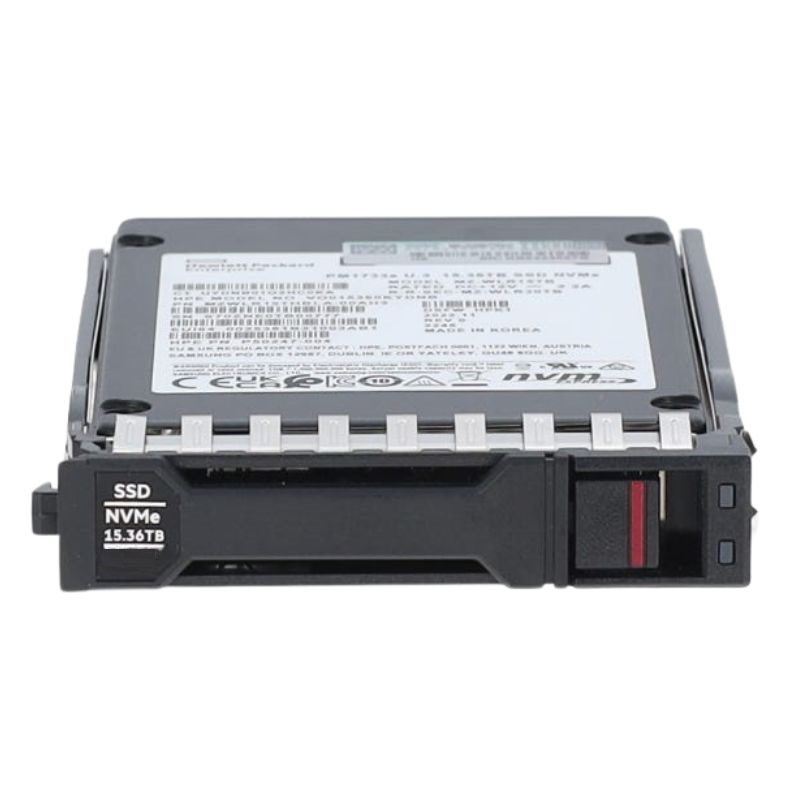


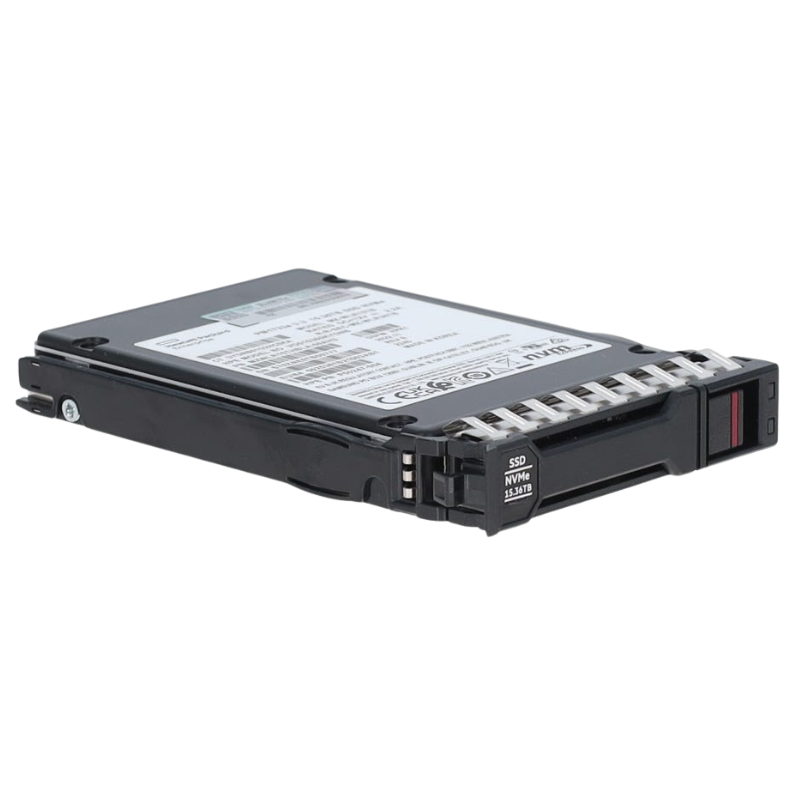
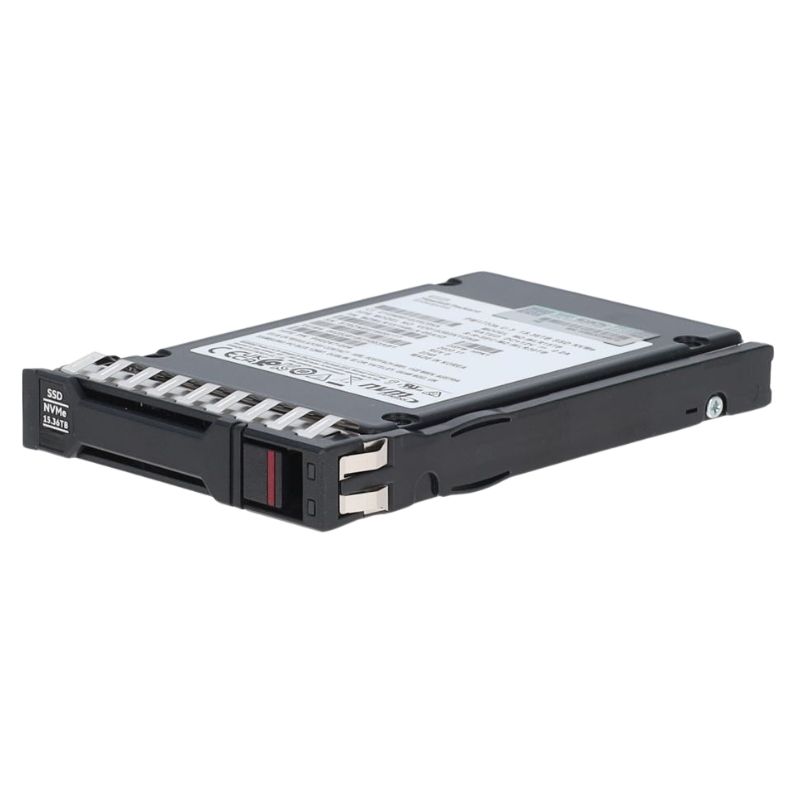
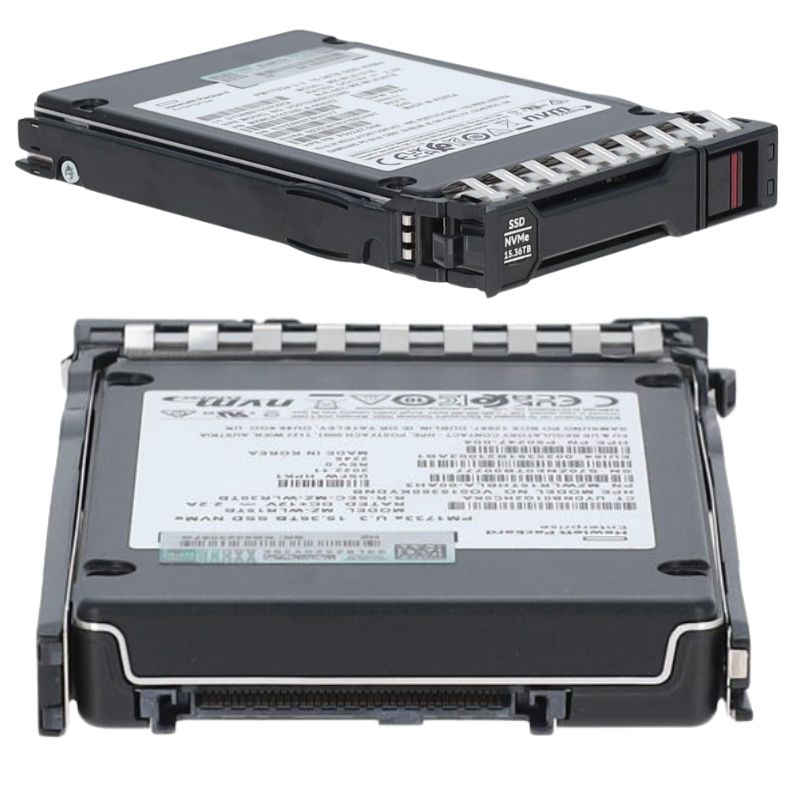
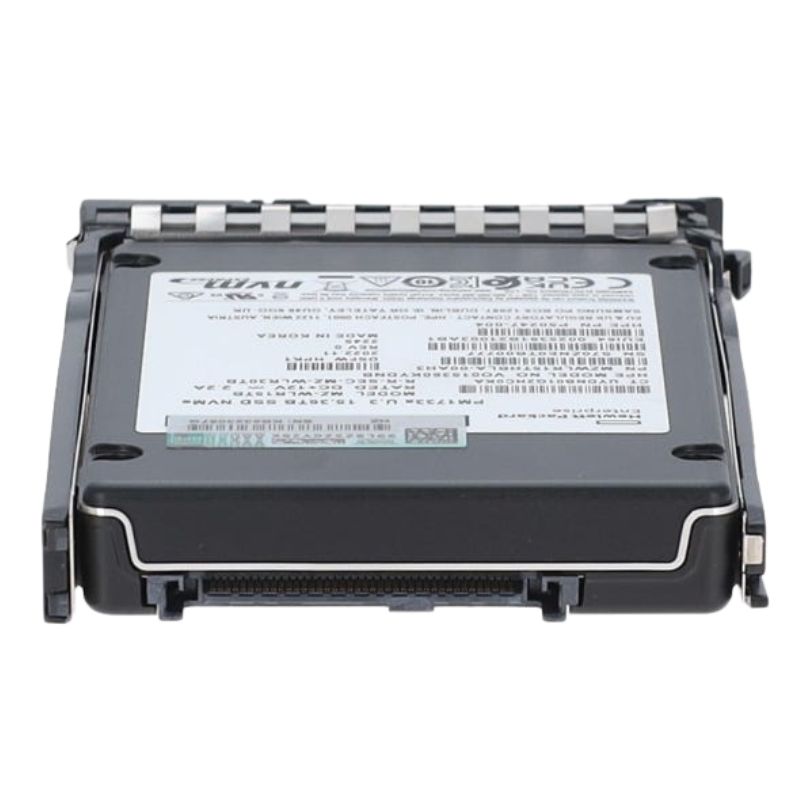
HPE P40568-B21 15.36TB NVMe Gen4 High Performance Read Intensive 2.5 Inch SFF Bc U.3 Pm1733 Solid State Drive. Excellent Refurbished with 1 Year Replacement Warranty
This enterprise-grade storage module is crafted for demanding data environments, offering rapid response times, dependable endurance, and seamless integration with modern HPE infrastructures.
The drive is engineered for read-intensive scenarios, maximizing throughput and ensuring rapid accessibility for data-heavy applications.
Virtual desktop infrastructure (VDI) and server virtualization environments benefit from fast reads for boot storms, OS image streaming, and application launches. Deploying large-capacity read-optimized SSDs as caching tiers or read caches in hyperconverged infrastructure allows administrators to reduce cold-start latencies and improve user experience without provisioning excessive RAM or over-scaling compute nodes.
Analytics pipelines, data lakes, and performance file systems such as Lustre or BeeGFS frequently read large datasets for processing. A 15.36TB NVMe Gen4 drive can serve as a dense, fast storage tier for hot datasets, enabling faster ingest and query cycles, and reducing the network traffic associated with fetching data from slower tiers. This density-to-performance ratio is particularly valuable in GPU-accelerated clusters where data-fed compute must keep pace with processing throughput.
Selecting an enterprise SSD requires careful attention to host compatibility, firmware certification, and integration with storage controllers and management stacks. The PM1733 family is broadly supported across modern server platforms and storage arrays that expose native NVMe connectivity or use U.3 backplanes. IT teams should confirm BIOS/UEFI and HBA driver compatibility, validate hot-swap semantics with the chassis vendor, and coordinate firmware revision policies to prevent microcode mismatches that can affect device enumeration or performance.
Enterprise deployments demand disciplined firmware lifecycle management. While vendors release firmware updates to improve stability and performance, administrators should follow vendor-specific qualification processes—testing updates in staging environments before mass rollouts. Firmware can affect features such as thermal throttling profiles, power management, and telemetry granularity; understanding these impacts is essential to preserve SLAs and predictable behavior under load.
Security capabilities in enterprise NVMe drives often include TCG Opal or IEEE-based self-encrypting drive (SED) support, secure erase commands, and cryptographic key management integrations. For regulated environments that require data-at-rest protections, choosing models that explicitly support hardware encryption and that integrate with existing key management systems simplifies compliance with standards such as GDPR, HIPAA, or industry-specific regulations.
Hardware encryption reduces CPU overhead compared to software-based encryption and ensures that, when drives are decommissioned, secure erase procedures can render data unrecoverable quickly. Operations teams should document key custody procedures, test secure erase sequences, and combine drive-level encryption with system-level access controls for layered security.
Observability into drive health and performance underpins reliable operation. NVMe SMART attributes, vendor-specific telemetry endpoints, and telemetry export via systems management tools enable administrators to monitor wear levels, thermal trends, media and controller errors, and endurance estimates. Built-in diagnostic tools help isolate failing components and preemptively plan replacements before service-impacting failures occur.
SMART data for NVMe offers numerous attributes that correlate to media health, such as percentage used, unsafe shutdown count, and media errors. Integrating SMART polling into centralized monitoring stacks and setting alert thresholds based on vendor guidance allows teams to act on indicators of wear or anomalies. Predictive alerts can be tied to automated runbooks for graceful removal and data migration to minimize downtime.
Telemetry that reports queue depths, outstanding I/O per namespace, and latency histograms empowers performance engineers to tune host-side queues, scheduler settings, and application-level I/O patterns. These adjustments can reduce tail latencies and improve throughput consistency, particularly in multi-tenant deployments where noisy-neighbor effects are a concern.
When operating high-capacity NVMe drives, holistic lifecycle planning improves ROI and reduces operational risk. Best practices include right-sizing capacity for data retention policies, implementing wear-leveling aware provisioning, scheduling maintenance windows for firmware and firmware rollback testing, and keeping spare inventory of the same validated part numbers to accelerate replacements and maintain consistent performance characteristics across the fleet.
High-performance NVMe devices can generate significant heat under sustained load. Ensuring correct airflow within server chassis, using manufacturer-recommended heat sinks, and adhering to ambient temperature guidelines preserves performance and extends device life. Thermal throttling can protect the device at the cost of reduced throughput; therefore proper cooling is a critical part of predictable performance delivery.
Although RAID provides redundancy, architects should consider the balance between rebuild times, rebuild impact on performance, and rebuild-induced wear. Using erasure coding at higher layers or combining high-capacity NVMe drives with distributed redundancy techniques reduces rebuild windows and improves data durability with fewer physical spindles. Aligning redundancy approaches with the drive's endurance profile and expected failure rates will yield the most cost-effective resilience strategy.


 Contact Us
 Information
 Catalog
 Solid State Drives (SSD)
 Network Switches
 Hard Disk Drives
 HBA & Controllers
 PC & Servers
 PC & Server Memory
 CPU & Processors
 Network Routers
 Power Supplies
 Tape Drives & Libraries
 Network Devices
 Computer & Network Cables