(7% discount is applied at checkout)
Cart is empty
Your go-to destination for cutting-edge server products
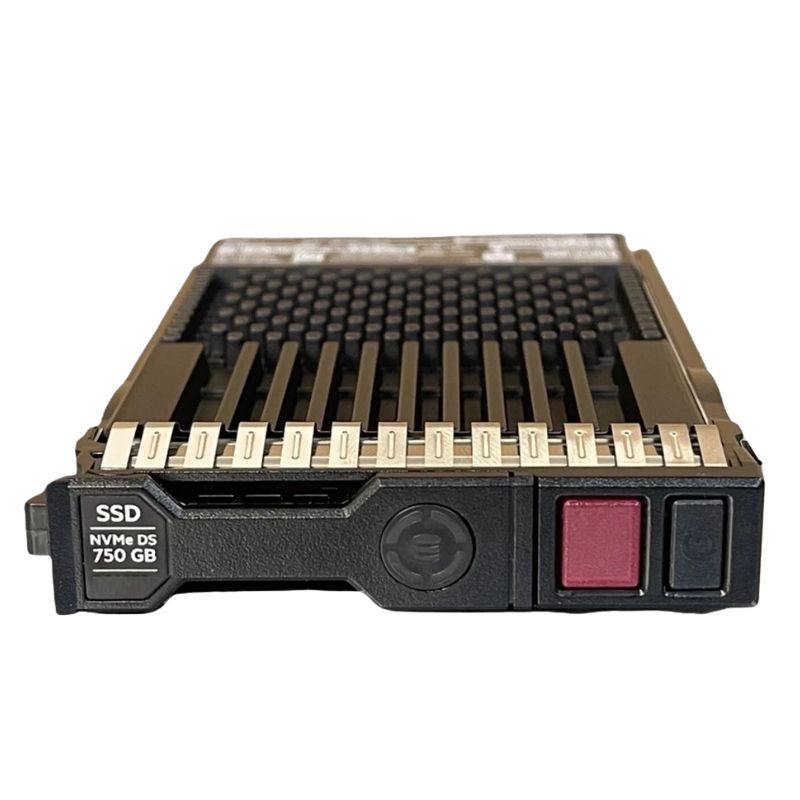


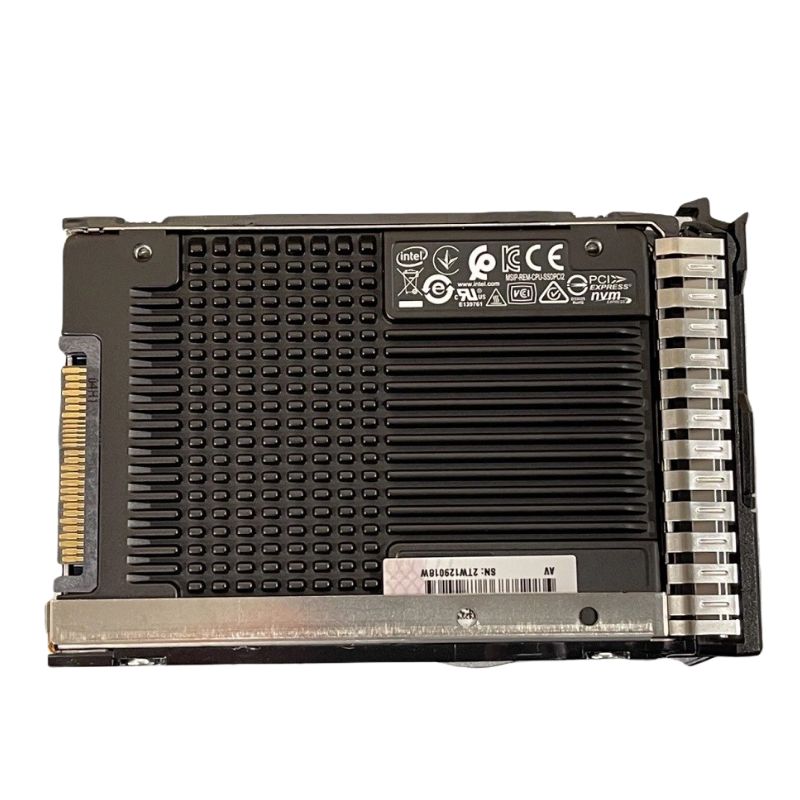
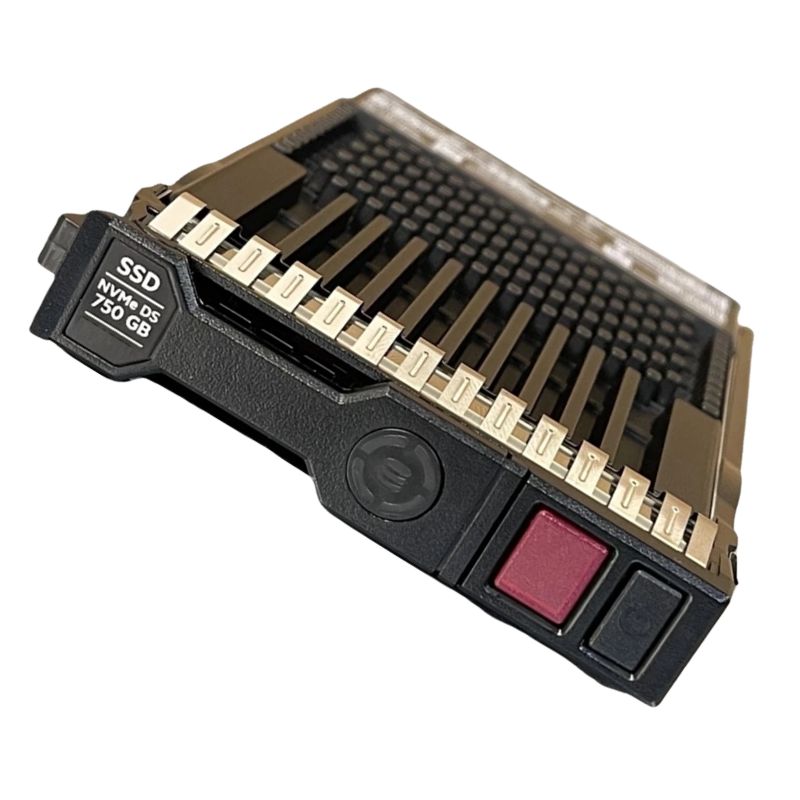
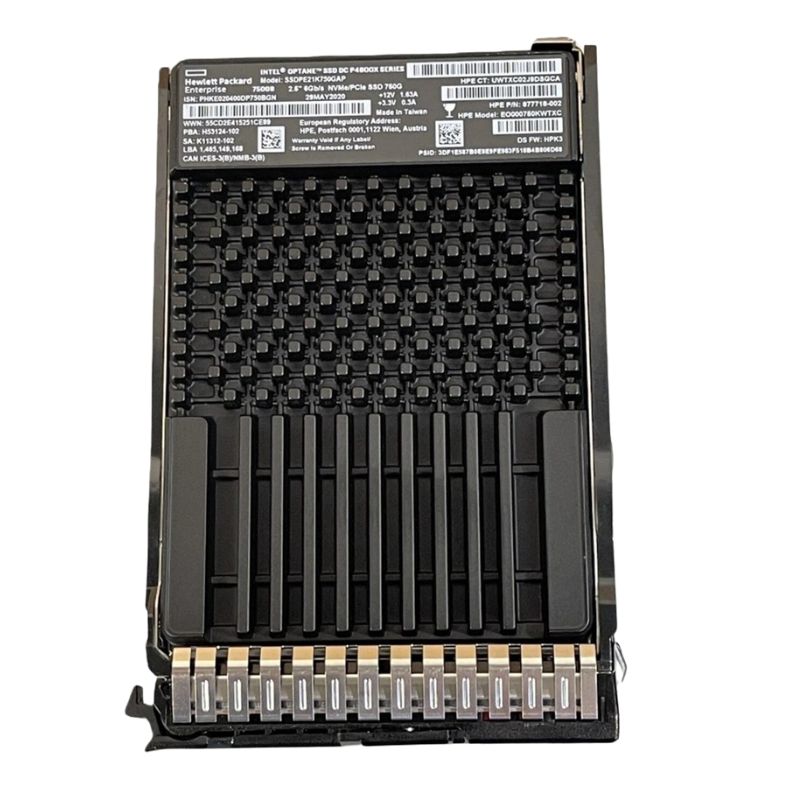
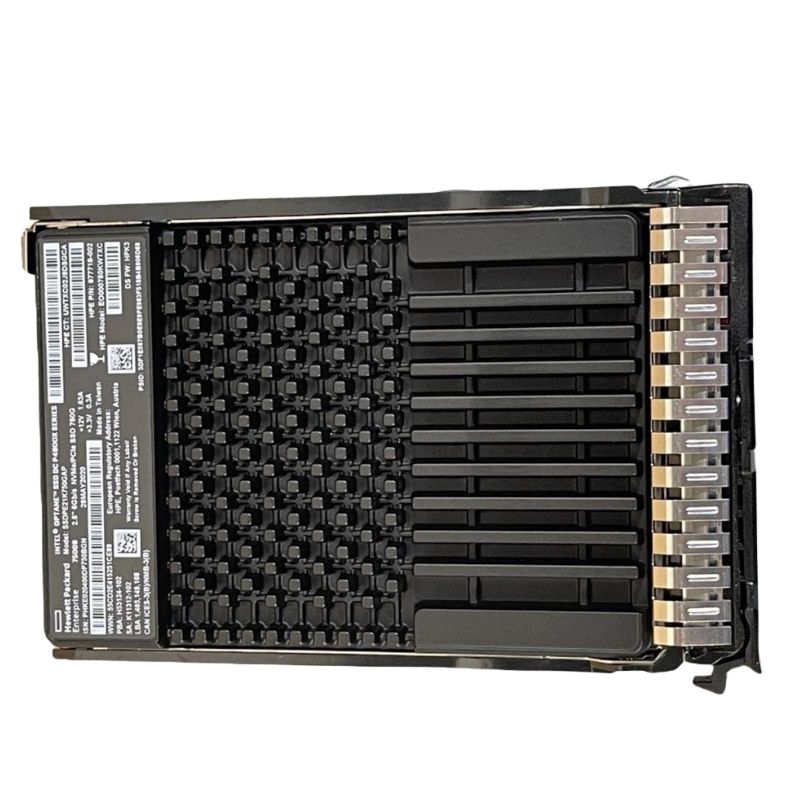
HPE P40951-001 P4800x 750GB Write Intensive 2.5Inch SFF U.2 PCI Express 3.0 NVMe Bc Digitally Signed Firmware Solid State Drive. Excellent Refurbished with 1 Year Replacement Warranty
The HPE P40951-001 P4800x 750GB Write Intensive NVMe drive delivers exceptional speed, remarkable durability, and ultra-low latency, making it ideal for mission-critical environments. Designed for seamless integration into ProLiant systems, this storage solution ensures consistent throughput, secure firmware, and unwavering reliability for modern data-driven operations.
The HPE P40951-001 P4800x 750GB Write Intensive 2.5 inch SFF U.2 PCI Express 3.0 NVMe solid state drive stands as a purpose-built enterprise storage component engineered for consistent high-write workloads, low-latency storage stacks, and modern NVMe-optimized server and storage arrays. Within this category and its subcategory of enterprise write-intensive NVMe U.2 drives, the P4800x model emphasizes sustained IOPS delivery, deterministic QoS characteristics, data-path integrity with digitally signed firmware, and form-factor flexibility that makes it suitable for hyper-converged infrastructure, storage arrays, and high-throughput database servers. The category page content below dives deep into technical attributes, deployment scenarios, performance expectations, firmware and security attributes, compatibility notes, endurance metrics, monitoring and management recommendations, thermal and power considerations, and buyer-focused comparisons to help procurement, IT operations, and systems architects make a confident selection for workloads that demand consistent write performance and enterprise-grade reliability.
The P4800x 750GB is a U.2 2.5-inch small form factor NVMe device that communicates over PCIe Gen3 lanes using the NVMe protocol for direct, efficient access to NAND media. Architecturally, this model is tuned for write-intensive service classes through firmware algorithms that prioritize write performance, garbage collection scheduling, and wear-leveling techniques optimized for high host write volumes. The drive pairs enterprise-grade NAND flash with controller logic and enterprise firmware that has been digitally signed to protect the integrity of the firmware image and to satisfy secure supply-chain and field-update requirements. The U.2 connector and 2.5-inch SFF profile allow the P4800x to integrate into a broad range of rack servers, storage enclosures, and HPE-specific platforms, providing hot-swap capability and serviceability expected in datacenter operations.
This write-intensive NVMe category is designed for workloads that present continuous or bursty heavy writes with a necessity for predictable throughput and low tail latency. Typical workload profiles that map well to the P4800x include transactional databases with heavy update patterns, logging and persistent journal storage for distributed systems, real-time analytics ingest, caching tiers backed by endurance-optimized media, and virtualization environments requiring high sustain write bandwidth for many VMs. The drive’s NVMe command set, with its efficient queuing model and reduced protocol overhead, enables low-latency responses for both small-block random operations and larger sequential streams. When deployed as part of an NVMe-oF or high-performance server array, the P4800x contributes to strong aggregate IOPS and low 99th-percentile latency, which is critical for tail-latency sensitive applications.
Endurance is a defining characteristic for write-intensive drives. The P4800x 750GB is specified with higher drive-write-ability (DWPD) or terabytes written (TBW) ratings relative to mainstream consumer or read-optimized enterprise media. The firmware’s wear-leveling algorithms and enhanced error-correction strategies are tuned to distribute writes evenly across the flash pools to prolong service life. In addition, the drive uses advanced over-provisioning and background housekeeping to maintain performance under sustained write pressure. When sizing for endurance, it is important to compare the manufacturer’s TBW or DWPD numbers alongside realistic workload write amplification estimates derived from the application layer; enterprise storage administrators should factor in host-side compression, deduplication, and RAID/erasure code overhead when calculating effective endurance consumption over the planned service horizon.
One of the notable features of the HPE P40951-001 P4800x product family is the presence of digitally signed firmware. Digitally signed firmware is a security measure that cryptographically validates firmware images before installation, protecting devices from unauthorized or tampered updates. This is particularly critical in enterprise environments where supply chain protection, regulatory compliance, and zero-trust firmware practices are required. Digitally signed firmware reduces the risk of malicious code making its way into the drive’s low-level software and ensures that only vendor-authorized updates are permitted. For systems administrators, the presence of a signed firmware model simplifies compliance reporting and aligns with security policies that mandate firmware provenance checks during maintenance windows or automated update workflows.
Managing firmware for a fleet of NVMe drives should follow a disciplined lifecycle process. Administrators should always test firmware updates in a representative staging environment that mirrors the production topology and workload, because even signed firmware may introduce behavioral changes under certain workload mixes. Scheduled maintenance windows and pre-update snapshots or replication reduce risk. Where available, use the vendor’s server management and storage management tools for orchestrated updates, and consult vendor release notes for fixed issues, performance improvements, and known limitations. Maintain change control documentation and retain previous firmware images per compliance needs so that rollbacks, if required, are repeatable and auditable.
The U.2 2.5-inch format used by the P4800x is widely adopted in enterprise servers and storage arrays and supports hot-swap trays. Integration considerations include verifying that the hosting chassis or HBA/RAID controller supports NVMe in U.2, confirming mechanical clearance for 2.5-inch drives, and ensuring that the server firmware (BIOS/UEFI) and OS NVMe drivers are up to date to fully exploit NVMe features. HPE platforms typically provide validated compatibility matrices; referencing those before procurement reduces integration risk. When used within HPE storage arrays or as acceleration tiers for HPE servers, administrators should consult HPE’s interoperability documentation for firmware bundle compatibility and performance tuning parameters specific to the P4800x series.
NVMe support across modern operating systems is mature, but performance and feature parity are influenced by driver maturity and NVMe stack configuration. Linux kernels with contemporary NVMe drivers deliver excellent throughput and low overhead. Windows Server and virtualization hypervisors also provide NVMe drivers, but administrators should verify queuing depth settings, multipathing configurations, and NUMA affinity to avoid CPU or I/O contention. When deploying multiple NVMe drives in a single server, consider interrupt mitigation and CPU affinity rules to maximize parallelism and minimize latency spikes.
Enterprise NVMe deployments must pay attention to the server’s PCIe topology and NUMA configuration. NVMe devices connected to different CPU sockets can experience asymmetric latency and throughput, so software stacks and storage orchestration should be NUMA-aware. Placing compute processes and their associated NVMe storage on the same NUMA node reduces cross-node memory and I/O costs. Workload placement policies, container orchestration affinity rules, and virtualization storage placement should all consider the physical location of U.2 NVMe devices within the platform architecture to achieve consistent performance.
When integrating the P4800x within an enterprise architecture, choose deployment patterns that leverage the drive’s strengths. Use these drives for metadata and journaling volumes in distributed file systems, for write-back cache layers in hybrid storage architectures, for high-transaction database log volumes, and for application tiers where write predictability is essential. Avoid using an exclusively write-intensive drive for cold, read-dominant data where a read-optimized or mainstream NVMe part might achieve better value. Align drive selection with storage tiering policies, performance SLAs, and capacity economics to ensure that the cost per IOPS and cost per useful TB are optimized for the specific workload.
A common pattern places a small set of P4800x drives as an acceleration or write-log tier in front of a larger capacity array. Incoming writes are acknowledged on the low-latency NVMe drives to speed transaction acknowledgement and then asynchronously persisted to higher-capacity media according to the application’s resilience model. This architecture reduces perceived latency for end-users while allowing retention and archival on more cost-effective media. Ensure replication or redundancy at the NVMe tier matches the overall durability and RPO requirements for the application.


 Contact Us
 Information
 Catalog
 Solid State Drives (SSD)
 Network Switches
 Hard Disk Drives
 HBA & Controllers
 PC & Servers
 PC & Server Memory
 CPU & Processors
 Network Routers
 Power Supplies
 Tape Drives & Libraries
 Network Devices
 Computer & Network Cables