(7% discount is applied at checkout)
Cart is empty
Your go-to destination for cutting-edge server products
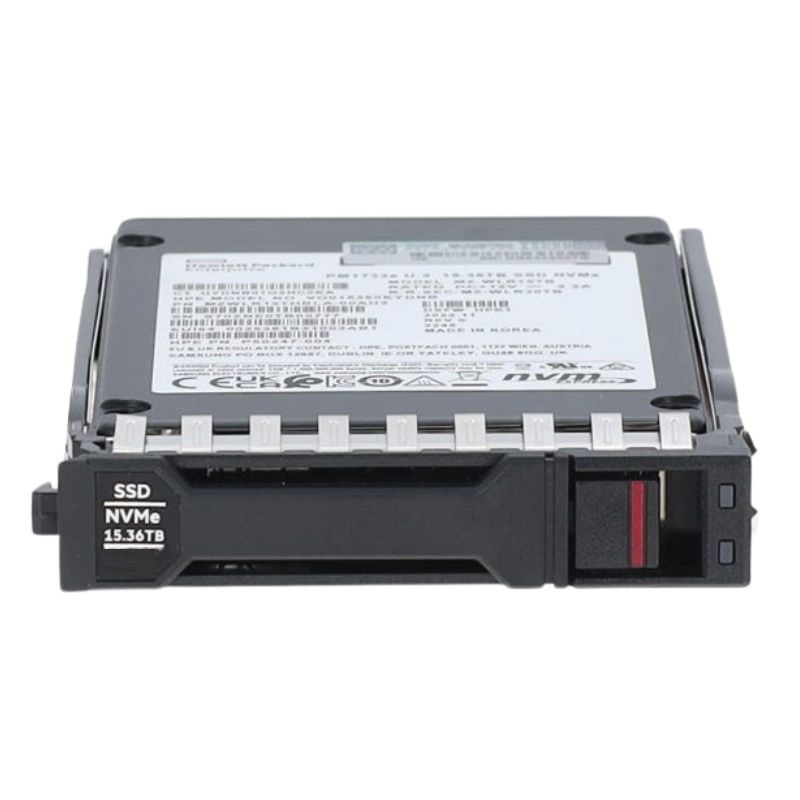


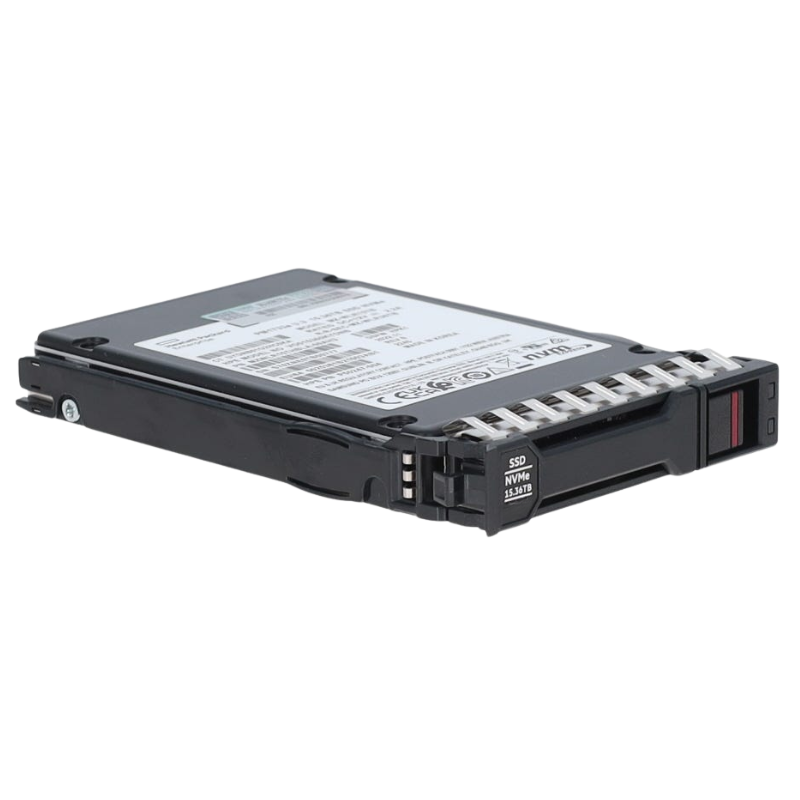
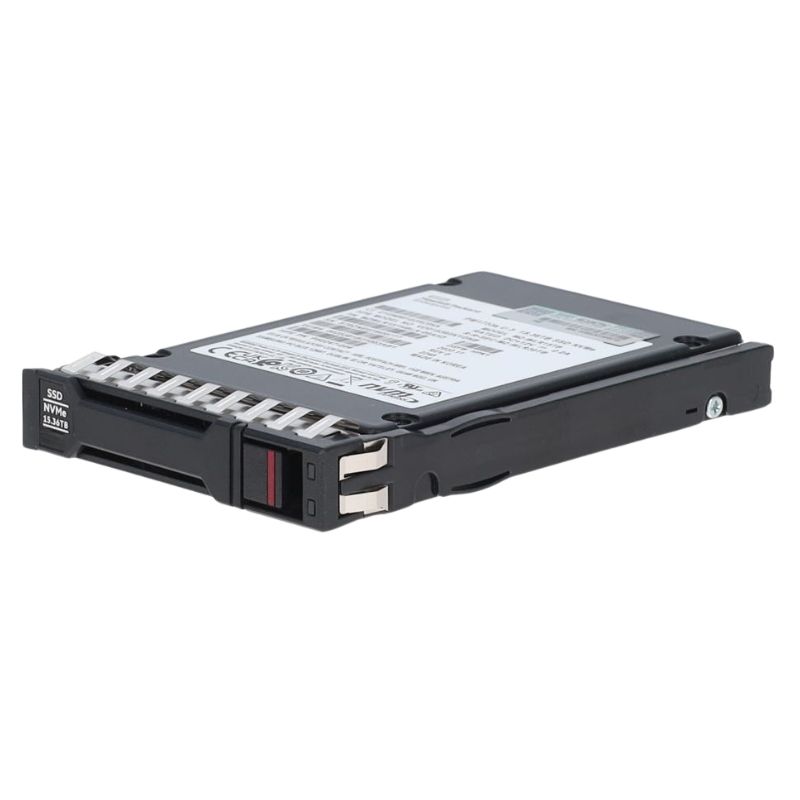
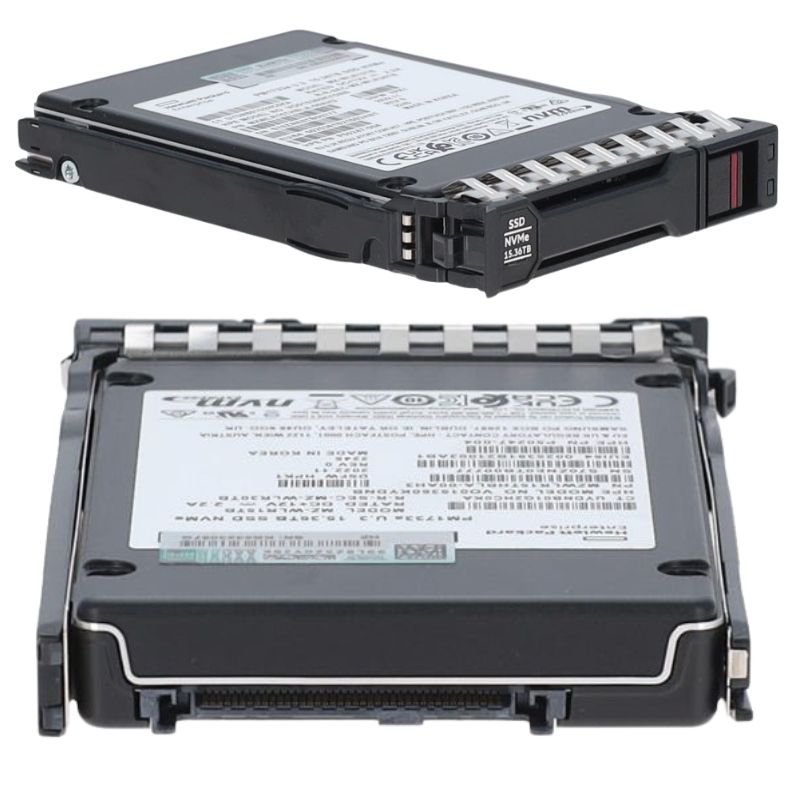
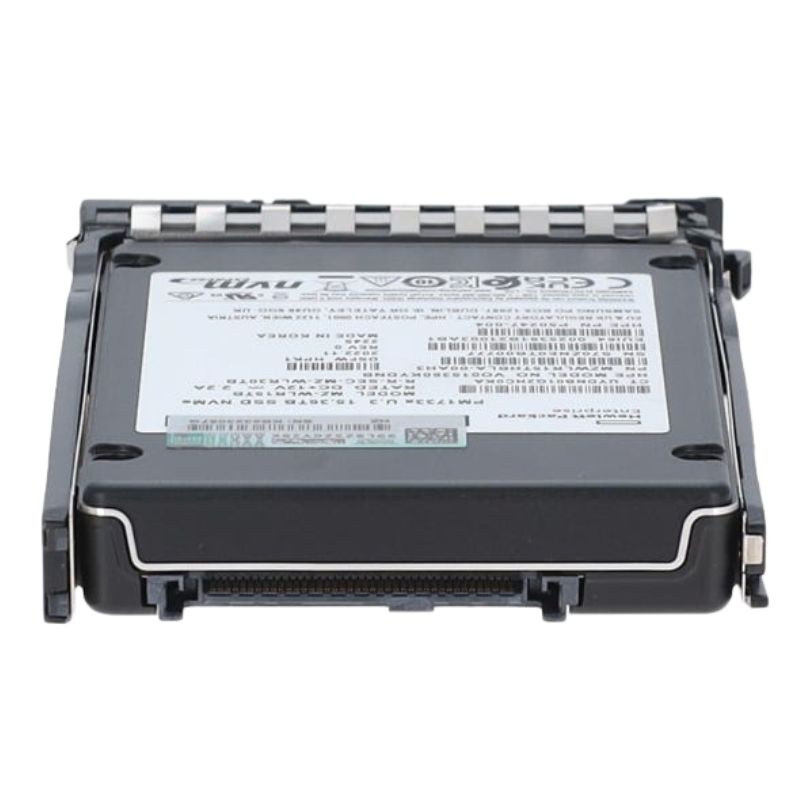
HPE P40996-001 Pm1733 15.36TB PCI Express 4.0 X4 NVMe 2.5inch SFF Enterprise Internal Solid State Drive. Excellent Refurbished with 1 Year Replacement Warranty
The HPE P40996-001 PM1733 15.36TB PCIe 4.0 x4 NVMe SSD is engineered for datacenters that require high durability, ultra-fast throughput, and consistent enterprise-class performance. Designed to meet intensive workloads, it blends advanced flash technology with seamless integration into 2.5-inch SFF environments.
This drive enables stable and predictable operation across heavy enterprise workloads, ensuring reliability in high-demand infrastructures.
With its enterprise endurance profile, the 1 DWPD rating supports continuous data transactions, making it ideal for virtualization, mixed workloads, and high-volume application hosting.
The HPE P40996-001 PM1733 15.36TB PCI Express 4.0 x4 NVMe 2.5-inch SFF enterprise internal solid state drive represents a class of high-capacity, low-latency storage designed for modern datacenter workloads. This category description focuses on the characteristics that define this drive and comparable entries in the same product family: ultra-high capacity in a compact 2.5-inch small form factor, PCIe Gen4 NVMe connectivity for significantly improved throughput and IOPS over previous generations, and enterprise-grade endurance and manageability that align with mission-critical server and storage array deployments. The language below is optimized to help buyers, IT architects, and procurement teams quickly understand the product’s strengths while improving search discoverability for terms such as "HPE P40996-001", "PM1733", "15.36TB NVMe", "PCIe 4.0 enterprise SSD", "2.5-inch SFF U.2/NVMe", and related long-tail queries.
The 2.5-inch small form factor (SFF) is the physical profile that makes drives in this category especially attractive for dense server configurations and storage arrays. Customers seeking to maximize capacity per rack unit will value the balance of physical size and storage density offered by a 15.36TB NVMe SFF module. In addition to physical density, the standard 2.5-inch profile supports common enterprise connectors and enclosures, simplifying rollouts and part replacements in a broad range of HPE servers and third-party systems. When evaluating compatibility, procurement teams typically review firmware and platform support matrices to ensure the drive integrates seamlessly with RAID controllers, HBA firmware, and vendor-specific management tools; drives in this category are intended to meet those enterprise expectations.
At 15.36TB, this drive is part of a capacity class that lets system architects consolidate warm and hot data tiers, reduce the number of physical drives needed to meet storage requirements, and lower overhead for power, cooling, and enclosure management. The pragmatic advantage is clear: fewer drives to manage while retaining the speed characteristics of NVMe flash. For deployments where space and power are at a premium — such as edge datacenters, colocation cabinets, or blade chassis — the high-capacity 2.5-inch NVMe option reduces complexity and improves serviceability.
The defining technical attribute of this category is the PCI Express 4.0 x4 interface paired with the NVMe protocol. PCIe Gen4 doubles the per-lane bandwidth compared with the previous generation, enabling much higher sustained throughput and peak IOPS when the storage, controller, and host are all Gen4-capable. NVMe is optimized for parallelism and low-latency access to NAND flash, reducing CPU cycles wasted on legacy storage protocols and improving the responsiveness of high-concurrency applications. For enterprises running virtualization platforms, distributed databases, real-time analytics, or large-scale caching layers, these drive characteristics translate into measurable improvements in application performance and user experience.
Enterprise NVMe drives in this category are engineered to deliver a blend of sequential throughput and mixed random I/O performance. This balance supports both large block transfers, such as media streaming or backup staging, and small, high-concurrency transactions typical of databases and virtual machine boot storms. The result is a single storage tier that can reduce the need for separate high-performance caching or tiering appliances, simplifying architecture and lowering total cost of ownership.
One of the most important considerations for enterprise procurement is endurance — the drive’s ability to sustain writes over its lifecycle without performance degradation. Products in this category are specified with enterprise endurance ratings and over-provisioning to maintain consistent performance under heavy write workloads. Enterprise-grade SSDs also include power-loss protection, advanced wear-leveling algorithms, and robust error correction to prevent data corruption and extend usable life. When deployed in redundant architectures with monitoring, these drives deliver predictable service levels suitable for mission-critical applications.
Data integrity features such as end-to-end data path protection and capacitive power-loss safeguards are typical in this product class. These mechanisms ensure that in the event of unexpected power events, in-flight data can be safely committed and drive metadata remains consistent, preventing long rebuild times or data loss scenarios. For IT operations teams, these protections reduce the risk of service interruptions during maintenance windows or unplanned outages.
Advanced firmware controls and telemetry make it possible to monitor drive health and predict end-of-life behavior, enabling proactive replacement policies that minimize the chance of field failures. Smart wear indicators and SMART logs allow storage administrators to schedule maintenance before drives reach critical thresholds, ensuring sustained performance and availability.
The HPE P40996-001 PM1733 15.36TB class of drives is targeted at a set of demanding enterprise workloads. These include primary storage for latency-sensitive databases, boot and runtime storage for large virtualized clusters, high-performance caching layers in hyper-converged infrastructure, and high-density capacity pools for mixed read/write workloads. The combination of NVMe protocol efficiency and Gen4 bandwidth also makes these drives a strong choice for high-performance compute environments where storage can become the limiting factor in application scaling.
For virtual desktop infrastructure (VDI) and dense virtual machine deployments, the ability to serve many concurrent small I/O operations with minimal latency is critical. Drives in this category substantially reduce login storms and improve virtual machine responsiveness, allowing IT teams to increase consolidation ratios without sacrificing user experience. The large capacity permits storage-heavy desktop images, persistent user data, and application caches to coexist on the same tier, simplifying storage management.
Databases, both relational and NoSQL, benefit from low-latency random I/O and high IOPS. This category of NVMe SSDs is engineered to handle sustained transactional loads and mixed read/write patterns common in OLTP and similar applications. The improved latency profile reduces query response times and increases transaction throughput, which translates into better application performance and lower infrastructure footprint for a given capacity.
Analytics pipelines and machine learning workflows frequently demand high sequential throughput for large dataset ingest and fast random access for training and inference stages. The PCIe 4.0 NVMe interface helps minimize data movement bottlenecks, enabling faster time-to-insight for data scientists and HPC teams. Drives in this class are particularly useful when local NVMe storage is used for scratch space, dataset staging, or model checkpoints where speed and capacity are both critical.
Security features at the drive level complement broader data protection strategies. Drives in this category can participate in encryption architectures and secure erase procedures that support compliance requirements for data-at-rest protections. For environments with strict regulatory obligations, pairing enterprise NVMe drives with key management and logging solutions ensures an auditable chain of custody for sensitive data. Additionally, data protection architectures such as erasure coding, replication, and snapshots should be designed to take full advantage of the drive’s capacity and throughput characteristics.
Where drive-level encryption is used, verify integration with the chosen key management infrastructure to ensure encryption does not introduce performance regressions or complicate maintenance. Secure erase and cryptographic erase features simplify decommissioning and repurposing drives while maintaining compliance with data sanitization policies.
High-capacity NVMe drives should be part of a comprehensive backup and disaster recovery plan. Rapid snapshotting coupled with efficient replication mechanisms helps ensure that the speed of primary storage does not become a risk point; it should instead accelerate recovery operations. When designing backup windows and replication timing, account for the drive’s ability to service backups without unduly impacting application SLAs.


 Contact Us
 Information
 Catalog
 Solid State Drives (SSD)
 Network Switches
 Hard Disk Drives
 HBA & Controllers
 PC & Servers
 PC & Server Memory
 CPU & Processors
 Network Routers
 Power Supplies
 Tape Drives & Libraries
 Network Devices
 Computer & Network Cables