(7% discount is applied at checkout)
Cart is empty
Your go-to destination for cutting-edge server products
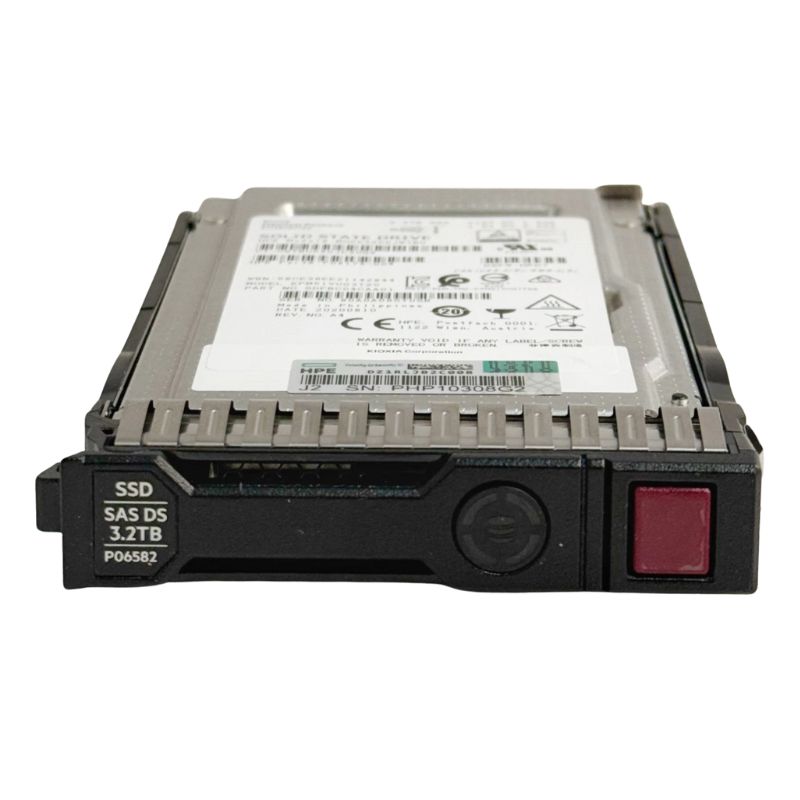


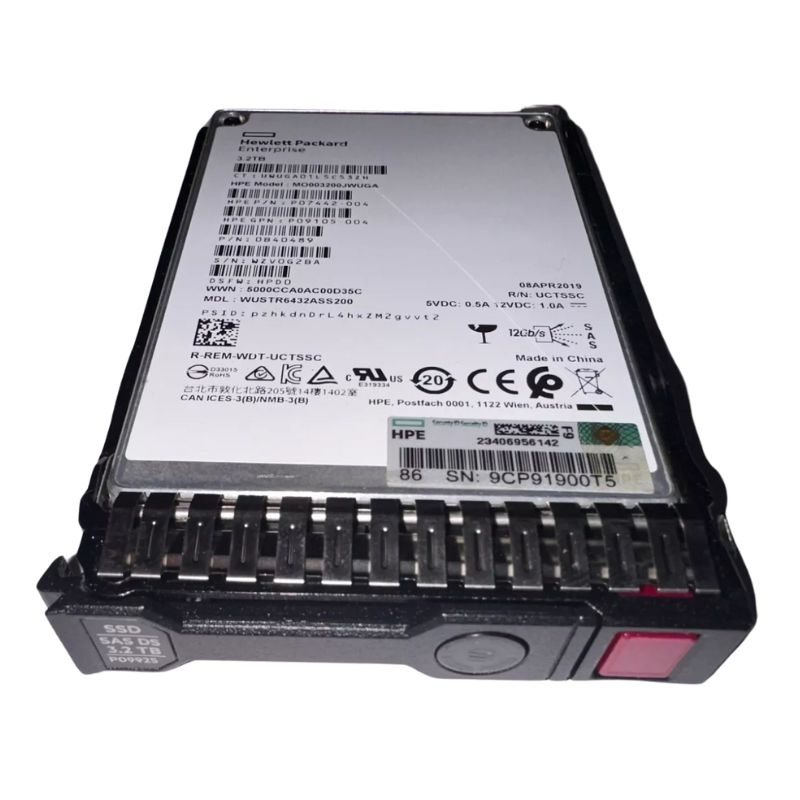
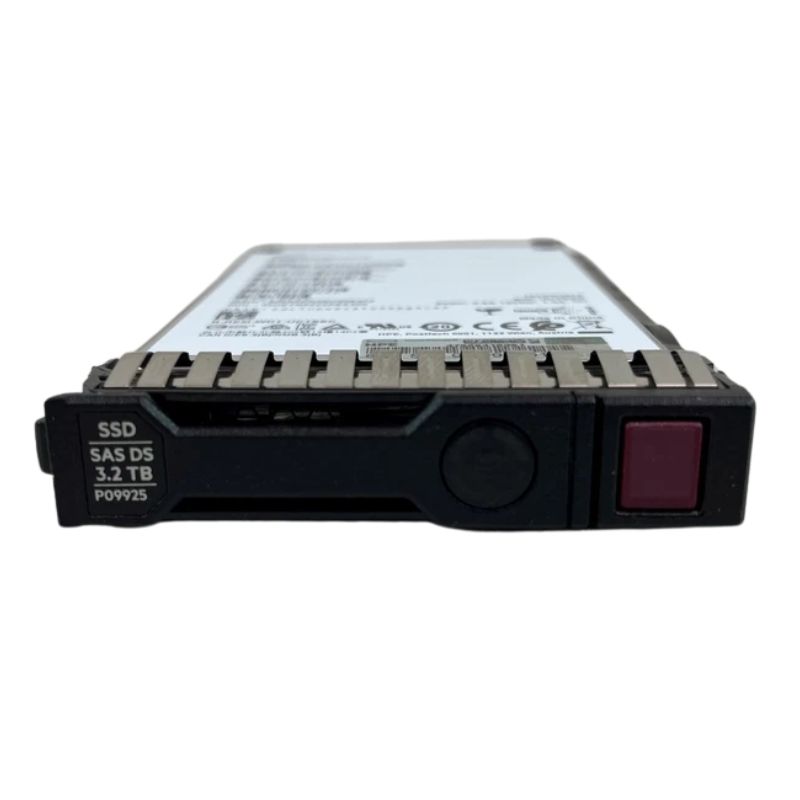
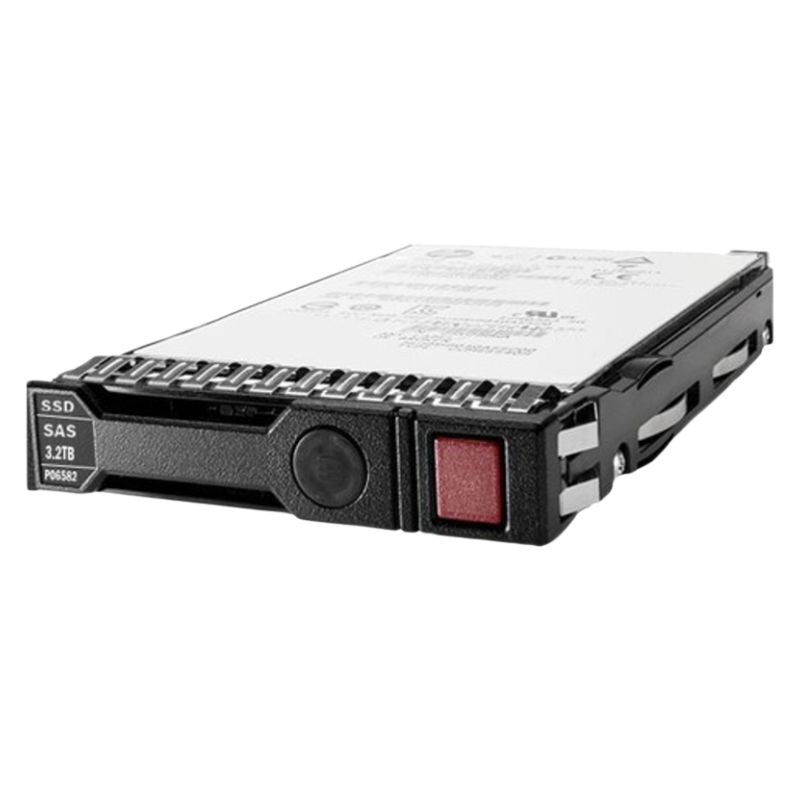
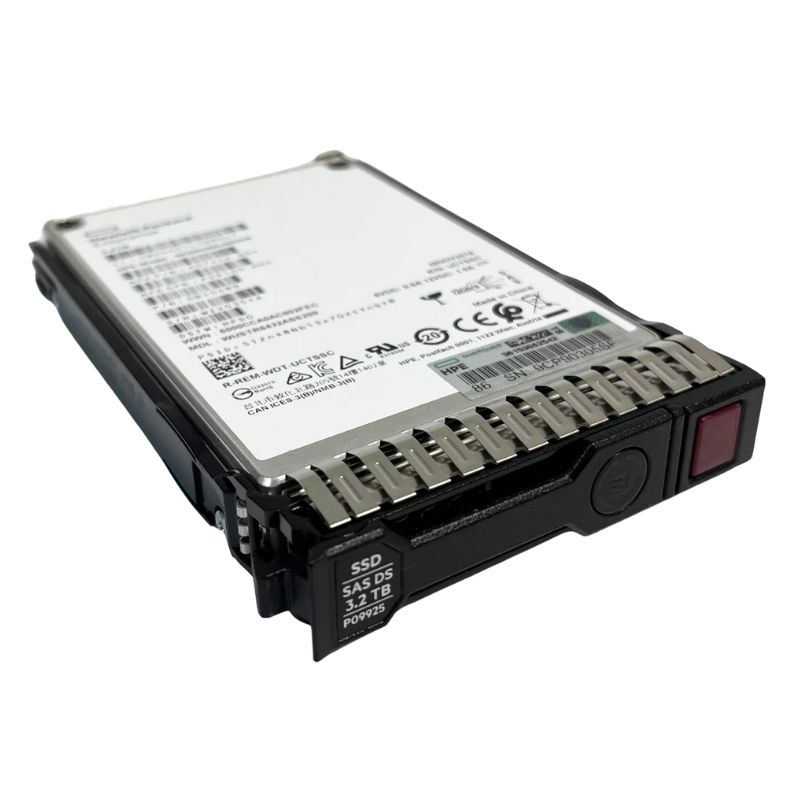
HPE P41035-001 3.2TB Mixed Use SAS 24GBPS 2.5inch SFF BC TLC Digitally Signed Firmware Solid State Drive for Proliant Gen10 Plus Server. Factory-Sealed New in Original Box (FSB) with 3 Years Warranty
The P41035-001 HPE 3.2TB Mixed Use SAS 24Gbps 2.5-inch Small Form Factor (SFF) BC TLC SSD belongs to a class of server-grade solid state drives designed for data center and enterprise deployments that demand a balance of capacity, performance, and endurance. This category targets mixed workload environments where read and write activity coexist—virtualized servers, database servers, transactional applications, cloud service backends, and general-purpose storage tiers that require consistent low-latency performance at scale. The drive's SAS interface at 24Gbps and the robust triple-level cell (TLC) flash configuration make it an optimal fit for customers who need moderate to high capacity per bay while preserving acceptable write endurance and total cost of ownership.
The 2.5-inch small form factor (SFF) is industry-standard for modern servers and storage arrays. The P41035-001 is designed to plug into HPE-compatible carriers and sleds supporting SAS signaling. Leveraging SAS at 24Gbps provides a balanced path for dense I/O, combining the enterprise features of the SAS protocol—such as dual-port redundancy and superior error handling—with high raw throughput. This protocol-level robustness is critical for mission-critical installations where link resiliency and dual-controller topologies are used to guarantee availability.
The drive uses TLC NAND to achieve a high-capacity-per-die economy, enabling the 3.2TB usable capacity within the SFF mechanical envelope. Modern SSD controller architectures in this category include multi-core controllers with sophisticated firmware for wear leveling, garbage collection, and background optimization tasks. The controller for the P41035-001 family implements enterprise-grade error correction, power-loss protection mechanisms, and optimized IO scheduling to sustain consistent latency under mixed workload patterns. These controller-level features are fundamental to achieving predictable quality of service in multi-tenant or heavily concurrent I/O environments.
Mixed-use SSDs strike a middle ground between read-optimized drives and write-intensive endurance drives. Endurance is specified by drive write allowances over warranty periods, and these drives typically offer endurance figures calibrated for mixed transactional workloads. Over-provisioning—both factory and administrator-adjustable—ensures that spare capacity is available for block remapping and background maintenance, directly impacting drive longevity and sustained performance. The category emphasizes predictable performance over long duty cycles, leveraging reserved flash pools and firmware heuristics to prevent sudden performance degradation during steady-state operation.
Drives in the P41035-001 class are engineered to deliver strong random IOPS for mixed read/write workloads while maintaining competitive sequential throughput for large file transfers and bulk background tasks. The SAS 24Gbps interface supports higher queue depth and enterprise-level command sets that allow hosts to extract maximum parallelism from the controller and NAND arrays. Typical latency profiles are tuned for sub-millisecond responses on random reads and predictable write latencies under sustained loads thanks to write buffering and intelligent wear-leveling. This combination makes the category suitable for database indices, virtual machine boot storms, caching layers, and mixed OLTP/OLAP workloads.
Real-world deployments commonly place these drives in mixed-tier arrays where some bays are reserved for high-performance flash and others for archival HDD storage. For many organizations, the P41035-001 category becomes the workhorse tier providing primary storage for medium-to-high-demand services: mail servers, web application backends, containerized microservices, and analytics nodes that process steady streams of transactional data. Enterprises also deploy these SSDs as read-write caches in hybrid arrays to accelerate mechanical disk tiers, or as fleet drives in converged infrastructure where predictable behavior and compatibility with HPE servers are valuable.
Being an HPE-designated module, P41035-001 drives are pre-qualified for many HPE ProLiant, Apollo, and Synergy platforms. Integration considerations include caddy compatibility, backplane interconnects, and firmware revision matching. Enterprises standardizing on HPE hardware benefit from vendor-level support bundles that simplify firmware updates and hardware replacement. This category is designed to align with HPE's storage firmware and management toolchains, enabling predictable deployment procedures and integration with HPE Smart Storage, system health alerts, and drive lifecycle monitoring.
Serviceability is a critical factor for datacenter operations, and 2.5-inch SFF enterprise SSDs in this category typically support hot-swap replacement and standardized carrier sleds. The mechanical design enables rapid field replacement without requiring extended downtime. Drive health metadata, SMART attributes, and vendor-specific telemetry are used by orchestration systems to automate replacements or trigger pre-failure alerts. This reduces mean time to repair and supports high-availability architectures where uninterrupted service is required.
Drives in this class rely on periodic firmware updates for bug fixes, performance tuning, and security patches. Firmware management is often centralized through HPE's management stack, which schedules and orchestrates updates across large fleets while preserving application availability. Administrators should follow tested update paths, validate firmware compatibility against server BIOS and HBA/RAID controller revisions, and leverage non-disruptive update mechanisms when available. Proper firmware hygiene preserves predictable performance and extends the functional lifespan of the storage medium.
Enterprise SSDs may include self-encrypting drive (SED) features and support for TCG Opal or similar standards. Data-at-rest protection provides an additional compliance layer for environments subject to regulatory controls or sensitive data handling policies. When supported, encryption offloads protect data without impacting host CPU utilization and integrate with key management systems to enable secure erase, cryptographic erase, or decommissioning workflows. For security-conscious deployments, choosing drives with native encryption and HPE-compatible key management integrations is a recommended practice.


 Contact Us
 Information
 Catalog
 Solid State Drives (SSD)
 Network Switches
 Hard Disk Drives
 HBA & Controllers
 PC & Servers
 PC & Server Memory
 CPU & Processors
 Network Routers
 Power Supplies
 Tape Drives & Libraries
 Network Devices
 Computer & Network Cables