(7% discount is applied at checkout)
Cart is empty
Your go-to destination for cutting-edge server products
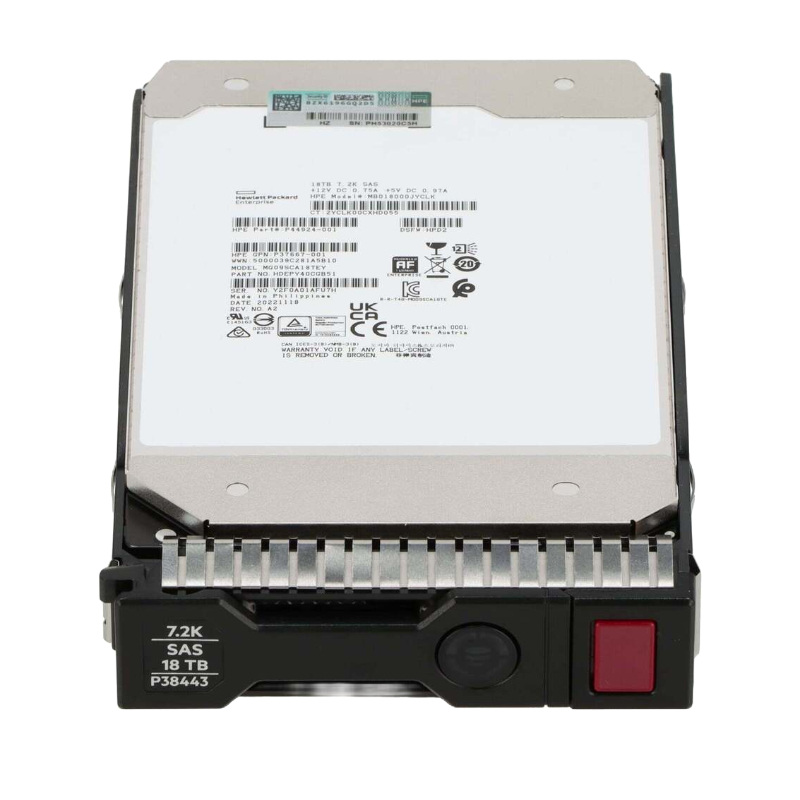


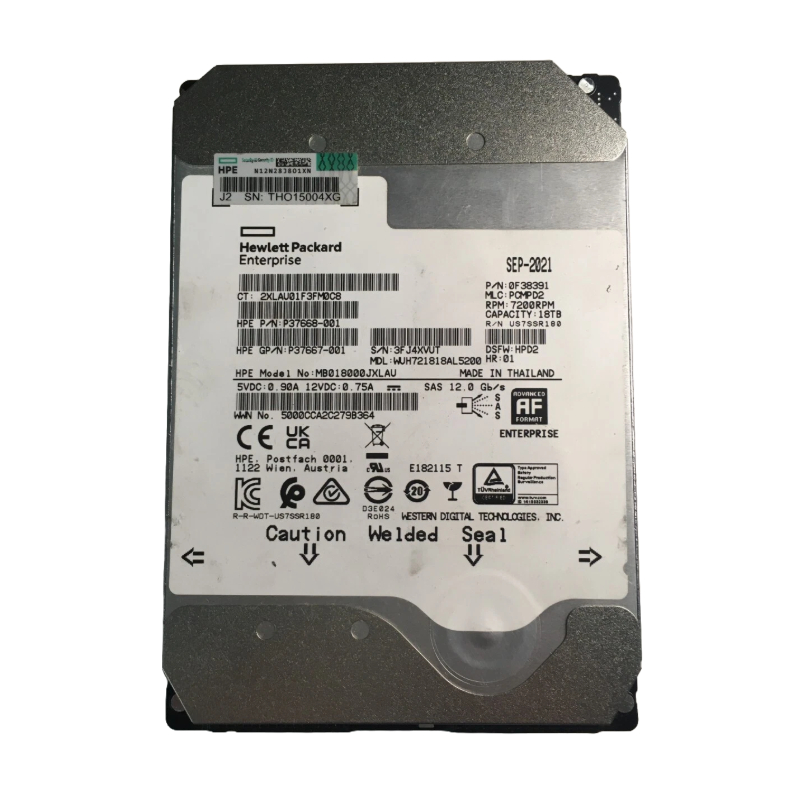
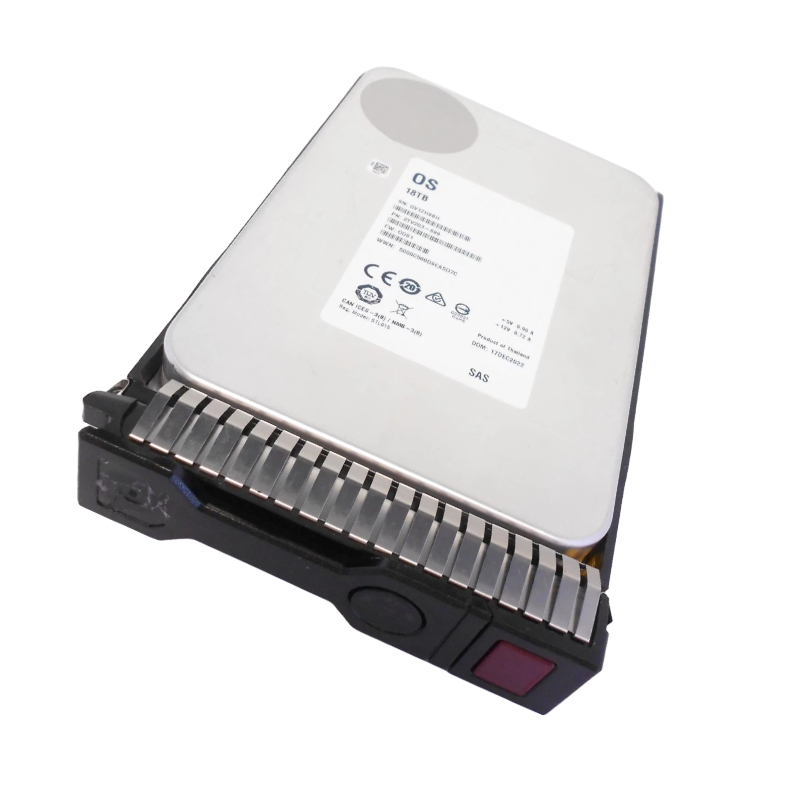
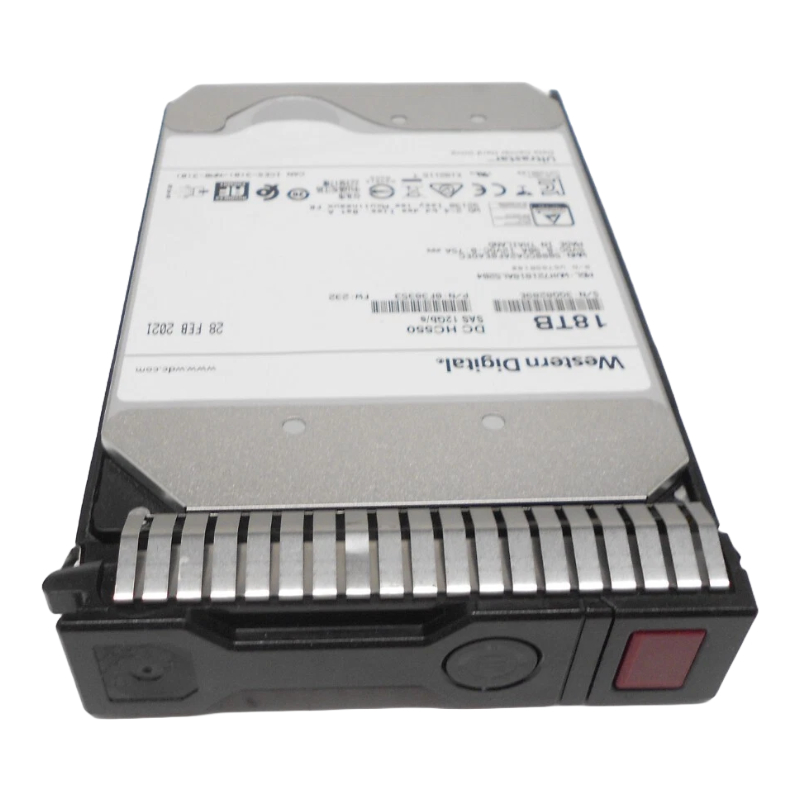
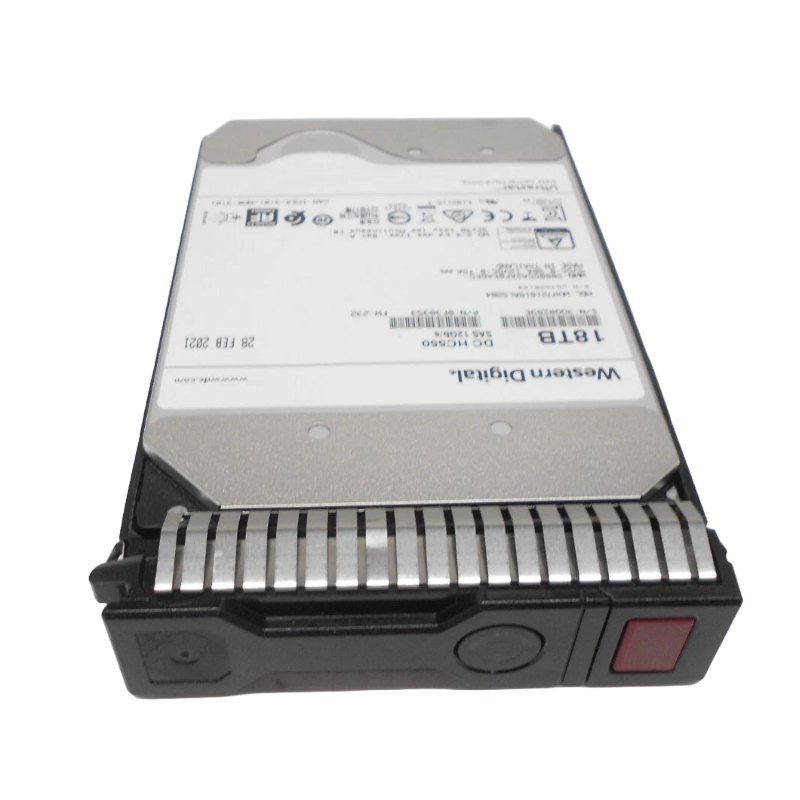
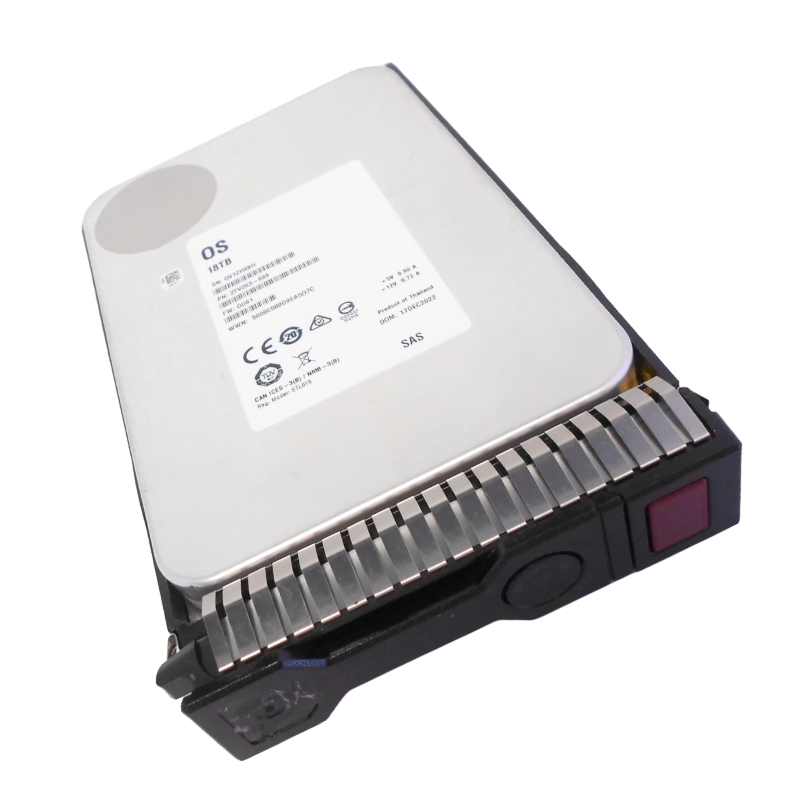
HPE P42803-001 SAS 12GBPS 18TB 7.2K RPM Internal Hard Drive With Tray. New Sealed in Box (NIB) with 3 Years Warranty
The HPE P42803-001 internal hard drive is a high-capacity enterprise storage solution designed for demanding data environments that require reliability, scalability, and consistent performance. Built with a large 18TB storage capacity and a robust SAS 12Gbps interface, this midline hard disk drive is engineered to support modern data center workloads, virtualization platforms, and bulk data storage applications.
Featuring a 3.5-inch Large Form Factor (LFF), a 7200 RPM spindle speed, and hot-swap capability with an included tray, this drive is optimized for seamless integration into compatible HPE storage systems. It delivers a balance of capacity, performance, and enterprise-grade durability, making it suitable for both primary and secondary storage tiers.
The architecture of the HPE P42803-001 hard drive is built around enterprise-grade mechanical storage technology combined with advanced SAS interface communication. Designed for long-term durability and consistent throughput, this drive integrates firmware-level optimization, vibration resistance engineering, and digitally signed validation mechanisms that ensure compatibility and security within HPE server environments. The inclusion of a pre-mounted tray enhances hot-swap capability and simplifies deployment in rack-mounted systems, allowing seamless replacement without service interruption.
At the core of this storage device lies the SAS 12Gbps interface, which provides significantly higher bandwidth compared to previous generation SAS and SATA standards. This interface ensures rapid data exchange between the drive and the host controller, supporting enterprise workloads that require sustained sequential throughput and reliable random access performance. The SAS architecture also enables dual-port connectivity, which improves redundancy and fault tolerance in clustered storage environments.
The 12Gbps SAS protocol enhances full-duplex communication, allowing simultaneous read and write operations without performance degradation under heavy workloads. This capability is particularly beneficial in database-driven systems, virtualization hosts, and high-availability storage arrays where latency sensitivity is critical. The improved command queuing system also ensures optimized workload distribution across multiple drives in RAID configurations, reducing bottlenecks in large-scale deployments.
The 18TB storage capacity of the HPE P42803-001 hard drive positions it as a high-density solution for modern data centers requiring efficient rack space utilization. With exponential growth in unstructured data, enterprises rely on high-capacity drives to reduce physical footprint while increasing total storage availability. This drive supports large-scale backup repositories, compliance archives, surveillance data retention systems, and cloud object storage layers where capacity scaling is more critical than ultra-low latency.
High-capacity drives such as the 18TB SAS model significantly reduce the number of physical drives required to achieve petabyte-scale storage infrastructures. This reduction not only minimizes power consumption and cooling requirements but also simplifies RAID management and storage pool configuration. The high-density architecture allows data centers to maximize storage-per-rack-unit efficiency, improving overall infrastructure economics.
The 7,200 RPM rotational speed of this enterprise drive reflects a balance between energy efficiency, heat management, and sustained throughput. Unlike higher-speed enterprise drives that prioritize latency reduction, the 7.2K RPM class focuses on delivering stable sequential performance over long operational cycles. This makes it suitable for archival workloads, backup systems, and cloud storage tiers where consistency and endurance are more important than ultra-high IOPS performance.
Operating at 7.2K RPM allows the drive to maintain lower operating temperatures, which directly contributes to improved longevity and reduced failure rates in densely populated server chassis. Reduced mechanical stress also enhances vibration tolerance, especially in multi-drive arrays where resonance effects can impact long-term reliability. This makes the drive particularly suitable for 24/7 enterprise workloads.
One of the defining features of the HPE P42803-001 storage device is its integration with a pre-installed hot-swap tray. This design enables rapid installation and removal without shutting down the system, significantly improving maintenance efficiency in mission-critical environments. The tray mechanism ensures secure physical alignment with backplane connectors, reducing the risk of insertion errors and improving operational safety.
The tray system is engineered specifically for compatibility with HPE server chassis and storage backplanes, ensuring seamless integration across supported platforms. This eliminates the need for additional mounting hardware or manual configuration, allowing IT administrators to deploy storage at scale with minimal operational overhead. The standardized design also ensures consistent airflow management within the server enclosure.
Hot-swap capability is essential in environments that require continuous uptime, such as financial systems, cloud service providers, and enterprise virtualization clusters. The ability to replace or upgrade storage drives without service interruption ensures uninterrupted application performance and data accessibility, which is a core requirement in modern IT infrastructure design.
Digitally signed firmware plays a crucial role in ensuring that only verified and authentic firmware updates are applied to the drive. This protects enterprise systems from unauthorized modifications and firmware-level vulnerabilities. It also ensures compatibility with HPE server ecosystems, maintaining system integrity across firmware updates and lifecycle management operations.
Advanced error recovery mechanisms embedded within the drive firmware help detect and correct data inconsistencies before they impact system performance. These systems work in conjunction with RAID controllers to ensure that data remains consistent even under heavy read/write cycles. Endurance optimization algorithms further extend the operational lifespan of the drive by balancing workload distribution across physical sectors.
Modern data centers demand scalable storage solutions that can expand without disrupting existing infrastructure. The HPE P42803-001 hard drive supports this requirement through modular deployment capabilities and standardized integration with HPE storage systems. Its high capacity and SAS interface make it suitable for both scale-up and scale-out storage architectures.
By reducing the number of drives required to achieve large storage capacities, this category of enterprise hard drives contributes significantly to energy efficiency. Fewer drives result in lower power consumption, reduced cooling requirements, and simplified infrastructure management. These factors collectively reduce total cost of ownership for enterprise storage deployments.
High-capacity drives enable data centers to maximize storage density per rack unit, allowing more data to be stored in a smaller physical footprint. This is particularly important in colocation facilities and enterprise environments where space optimization directly impacts operational costs. The HPE P42803-001 drive supports dense configurations without compromising reliability or performance stability.
This enterprise SAS hard drive is optimized for a wide range of workloads, including archival storage, cloud backup systems, virtualization storage pools, and media content repositories. Its balanced performance profile ensures consistent throughput across sequential and mixed workloads, making it suitable for hybrid infrastructure environments.
In virtualization environments, storage performance directly impacts virtual machine responsiveness and workload efficiency. The HPE P42803-001 supports multi-tenant storage architectures commonly used in private and hybrid cloud deployments. Its large capacity allows for consolidation of virtual machine disks, reducing storage fragmentation and improving management efficiency.
Backup and archival systems require high-capacity storage with long-term reliability rather than extreme performance. This drive category is well-suited for such environments, where data retention policies demand durability and cost efficiency. Its stable throughput ensures consistent backup windows and reliable restore operations when required.
Within the enterprise SAS hard drive category, the HPE P42803-001 distinguishes itself through its combination of high capacity, balanced rotational speed, and integrated hot-swap tray design. Compared to lower-capacity drives, it reduces infrastructure complexity, while compared to performance-optimized SSDs, it offers significantly higher cost efficiency per terabyte.
While solid-state drives offer superior latency and IOPS performance, mechanical SAS drives remain dominant in high-capacity storage tiers due to their cost-effectiveness and scalability. The HPE P42803-001 serves as a foundational component in tiered storage architectures where SSDs handle high-speed operations, and SAS HDDs manage bulk data storage.
In hybrid storage configurations, this drive category is often paired with SSD caching layers to optimize performance while maintaining cost efficiency. Frequently accessed data is stored on faster media, while large datasets reside on high-capacity SAS drives, ensuring balanced system performance and storage economics.


 Contact Us
 Information
 Catalog
 Solid State Drives (SSD)
 Network Switches
 Hard Disk Drives
 HBA & Controllers
 PC & Servers
 PC & Server Memory
 CPU & Processors
 Network Routers
 Power Supplies
 Tape Drives & Libraries
 Network Devices
 Computer & Network Cables