(7% discount is applied at checkout)
Cart is empty
Your go-to destination for cutting-edge server products
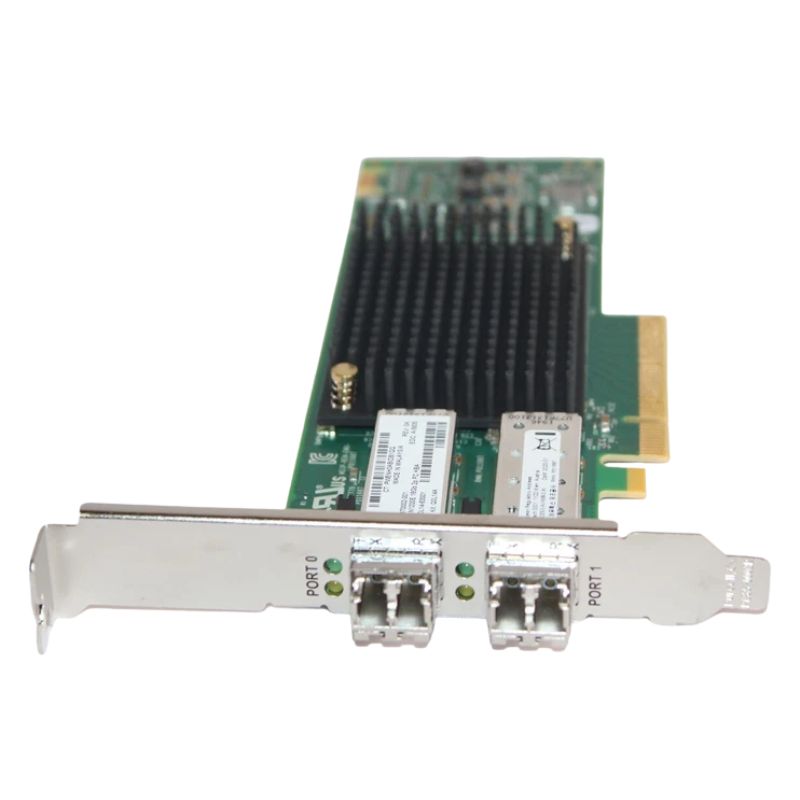


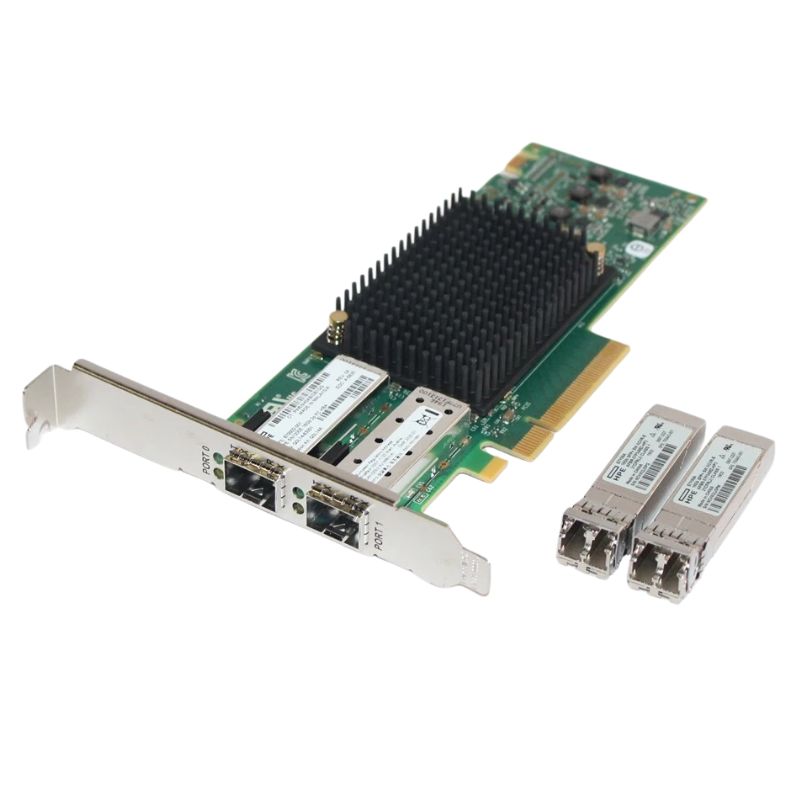
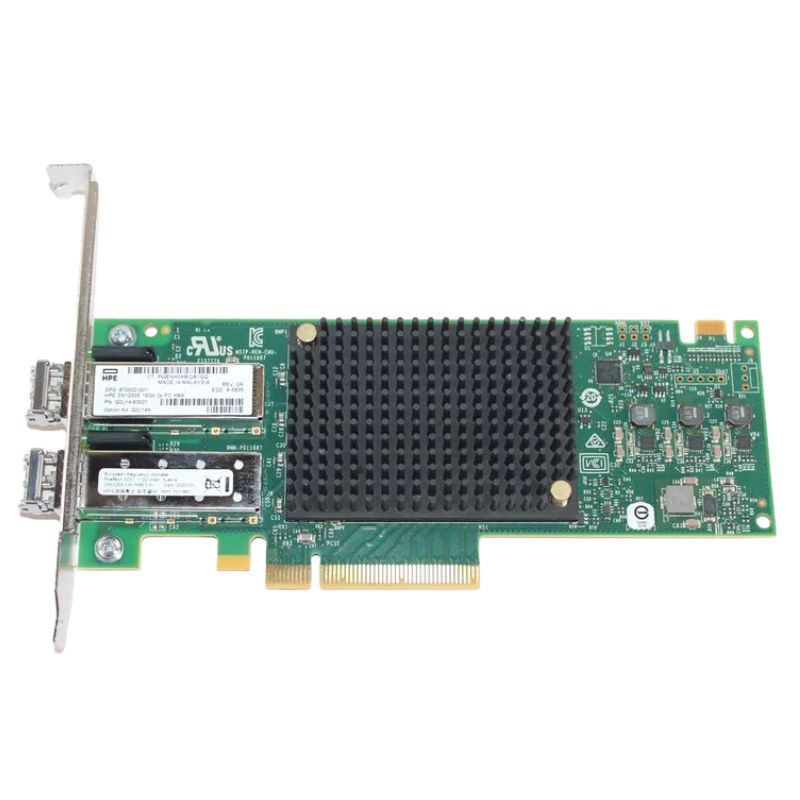
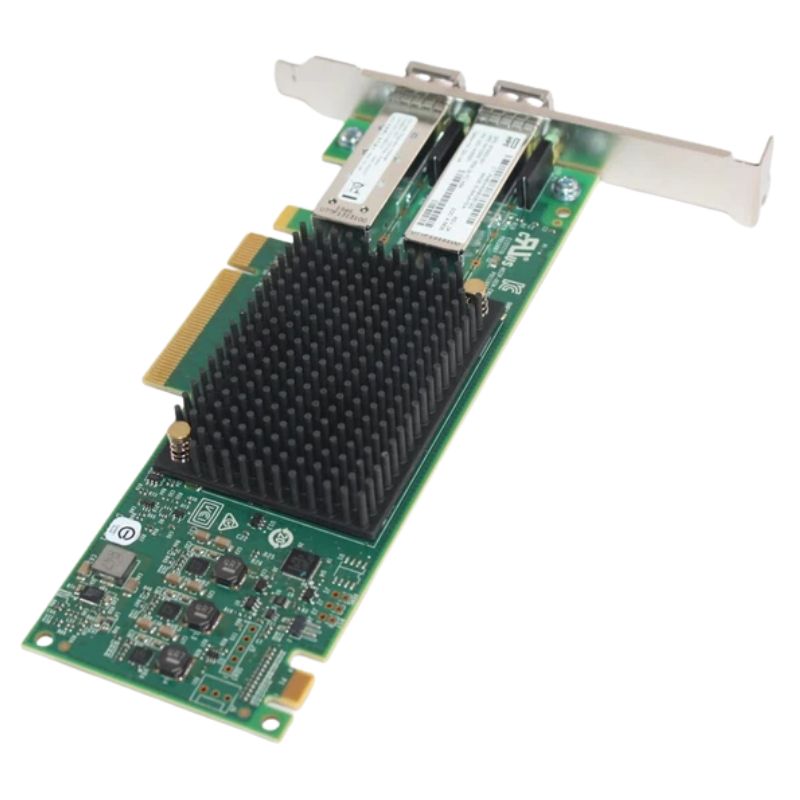
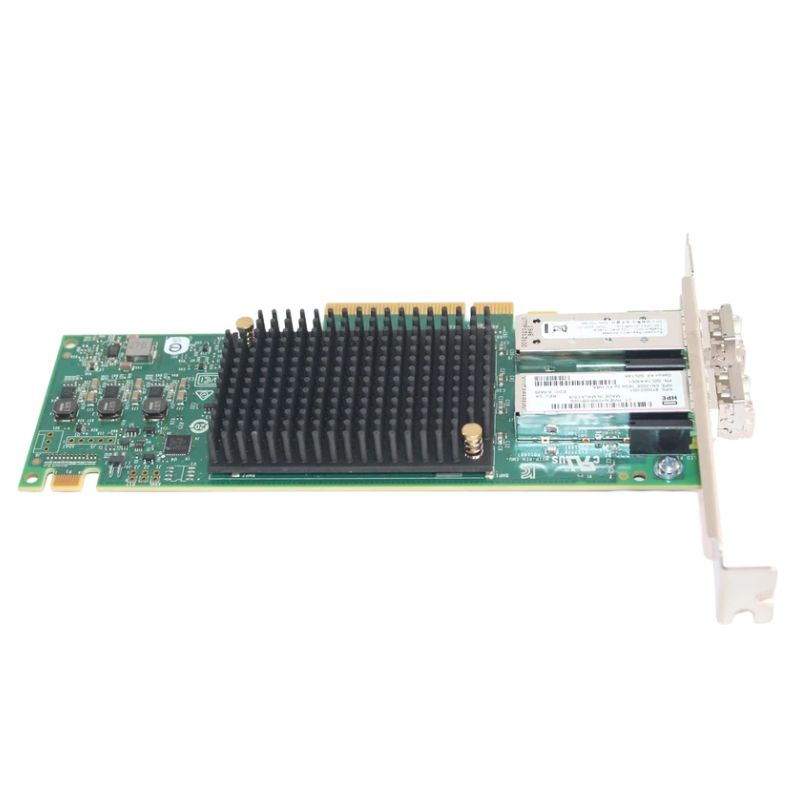
HPE P43136-001 Sn1700e 64GB 2 Ports Fibre Channel Host Bus Adapter. Factory-Sealed New in Original Box (FSB) with 3 Years Warranty
Optimize storage connectivity and accelerate data-intensive workloads with the HPE P43136-001 SN1700E 64GB 2-Port Fibre Channel Host Bus Adapter. Designed for modern HPE servers, this PCIe Gen4 adapter delivers high throughput, low latency, and reliable SAN access for virtualization, databases, and enterprise backup environments.
The HPE P43136-001 SN1700e 64GB 2-Port Fibre Channel Host Bus Adapter category centers on high-performance converged storage connectivity designed for enterprise-class storage area networks (SANs). This category covers 64Gb Fibre Channel host bus adapters with two physical ports, adapters engineered to deliver deterministic low-latency connectivity between servers and storage arrays. The descriptive content below expands on product attributes, deployment patterns, integration details, performance expectations, management and firmware considerations, virtualization and cloud use cases, reliability and maintenance implications, and buying guidance for IT procurement teams. Keywords emphasized across this category page include HPE P43136-001, SN1700e, 64Gb Fibre Channel, 2-port HBA, Fibre Channel HBA, SAN connectivity, enterprise storage networking and high-throughput host bus adapter.
Each port in the 2-port configuration supports 64Gb Fibre Channel links, achieving theoretical line rates that are appropriate for distributed storage clusters, high-performance databases, backup targets and block-storage tiers used in virtualization and containerized environments. The HPE P43136-001 SN1700e category emphasizes sustained throughput rather than bursty peaks, which benefits backup windows, large-scale replication jobs, and storage migrations. Frame handling efficiencies and advanced buffering strategies minimize latency under mixed I/O patterns. In real-world deployments, these adapters are chosen where predictable low-latency paths to storage are necessary and where consolidated server architectures demand high per-node bandwidth.
Products under the HPE P43136-001 SN1700e umbrella are positioned to integrate seamlessly with HPE servers and HPE storage arrays as well as numerous third-party SAN vendors. Compatibility points to consider include operating system driver support (modern enterprise Linux distributions, VMware ESXi, Microsoft Windows Server editions), firmware and driver version alignment with server BIOS/firmware, and certified SAN switch interoperability with major switch vendors. Properly validated driver and firmware combinations reduce the risk of compatibility issues and enable higher feature sets such as fabric-based virtualization, enhanced error reporting, and vendor-specific management integrations. When selecting a 64Gb 2-port HBA, teams often prioritize HBAs with broad vendor support and long-term firmware update roadmaps to maintain compatibility throughout multi-year storage refresh cycles.
In virtualized environments, the 64Gb 2-port Fibre Channel HBA category addresses the need for dedicated, high-bandwidth connectivity to SAN-backed datastores. The SN1700e adapters are suitable for densely consolidated hypervisor hosts running large numbers of virtual machines where IO contention is a concern. These HBAs support features that optimize VM storage performance such as NPIV (N-Port ID Virtualization), allowing multiple virtual ports to be exposed to the SAN fabric and simplifying zoning and LUN assignment without additional physical hardware. For private cloud and hybrid cloud architectures where on-premises block storage remains essential, these adapters provide the deterministic performance required for tiered storage policies and service-level agreements (SLAs).
Common use cases for the HPE P43136-001 SN1700e 64GB 2-Port Fibre Channel HBA category include high-performance databases, virtual desktop infrastructure (VDI), transactional e-commerce platforms, backup and replication targets, and high-throughput analytics clusters. In two-node or multi-node clusters, the adapter’s two ports are frequently attached to separate fabric switches to provide redundancy and fabric path separation. For larger fabrics, administrators may compartmentalize traffic by dedicating one port for primary I/O and the second port for replication, backup, or management traffic. The flexibility of two high-speed ports allows architecture teams to plan for both immediate performance needs and future scaling without committing multiple adapter slots per server.
Topologies commonly used with this category include dual-fabric SANs for high availability, single-fabric configurations for smaller environments, and direct attach in specific use cases where a point-to-point connection to storage is required. Dual-fabric topologies using two independent switches are a recommended best practice for enterprise deployments because they provide hardware-level redundancy and enable non-disruptive maintenance. The SN1700e series supports seamless multipathing configurations so hosts can continue I/O operations even if one fabric experiences a failure. In direct attach scenarios, the adapter’s two ports may be used to link to two separate storage controllers to parallelize traffic and increase aggregate bandwidth to a single host.
Tuning the HBA and host OS improves the real-world performance of workloads. Administrators should align queue depths, scatter/gather settings, and multipath policies with underlying storage performance characteristics. Properly sizing the HBA queues and adjusting host-side parameters for large-block transfers yields noticeable throughput benefits for backup and replication tasks. When colocating compute and storage-intensive workloads on a single host, balancing CPU, memory and HBA throughput avoids resource contention. Benchmarking with realistic application workloads rather than synthetic tests yields the most operationally relevant data: this category content encourages proof-of-concept testing that mirrors production I/O patterns before rolling the adapters into large-scale production fleets.
Reliability in this adapter category is anchored on redundant fabrics, proven firmware, and vendor-backed support. Two physical ports enable immediate redundancy without requiring a second adapter, reducing capital and rack space footprint. Serviceability considerations include hot-swap capability of the servers, documented rollback procedures for firmware, and accessible vendor support channels for RMA or troubleshooting. The HPE P43136-001 SN1700e family is commonly chosen by teams that require enterprise warranty terms and predictable support windows to align with maintenance windows and compliance requirements.
Lifespan planning for 64Gb HBAs should factor in a multi-year roadmap that accounts for emerging protocols, increases in storage density, and planned server refresh cycles. Lifecycle policies benefit from keeping spare adapters on hand and ensuring firmware repositories are archived with documented compatibility matrices. When replacing or upgrading adapters, mapping WWNs, zoning and LUN assignments carefully prevents accidental data exposure or loss. The SN1700e category content encourages explicit documentation of SAN topologies, adapter firmware versions, and host driver revisions as part of standard operational runbooks.
While this category focuses on Fibre Channel HBAs, organizations frequently integrate these adapters with modern storage technologies including all-flash arrays, hybrid arrays, and converged infrastructure. Features such as end-to-end data integrity, flow control and hardware offload complement storage arrays that provide deduplication, compression and inline data services. In environments adopting NVMe technologies, there are hybrid architectures where block-level Fibre Channel access remains necessary; in such mixed environments, HBA performance continuity is essential to maintain consistent application SLAs during phased migrations.
When procuring HBAs in this category, buyers should consider total cost of ownership including initial acquisition, expected firmware and driver maintenance, support contracts, and spare parts strategy. Two-port 64Gb adapters offer a cost-efficient way to provide redundancy and high throughput without occupying multiple PCIe slots, and they simplify cabling compared to multi-adapter approaches. Purchasing decisions should weigh the importance of vendor certification with existing server and storage platforms, the availability of lifecycle firmware updates, and price-performance tradeoffs for the planned workload mix. For organizations standardizing on HPE infrastructure, selecting an HPE-branded SN1700e adapter often streamlines support and simplifies cross-product compatibility management.
Buyers should validate operating system compatibility, driver and firmware release notes, certified switch interoperability lists, and any required licensing for advanced features. Checking the host server’s available PCIe slot type and physical clearance avoids installation surprises. If the environment uses virtualization, verify NPIV support and hypervisor-certified driver packages. For high-availability deployments, ensure the fabric switch configurations support dual-fabric zoning and that the storage array accepts simultaneous connections from both fabrics. The checklist mentality ensures that the HPE P43136-001 SN1700e adapter deploys smoothly into the target infrastructure.


 Contact Us
 Information
 Catalog
 Solid State Drives (SSD)
 Network Switches
 Hard Disk Drives
 HBA & Controllers
 PC & Servers
 PC & Server Memory
 CPU & Processors
 Network Routers
 Power Supplies
 Tape Drives & Libraries
 Network Devices
 Computer & Network Cables