(7% discount is applied at checkout)
Cart is empty
Your go-to destination for cutting-edge server products
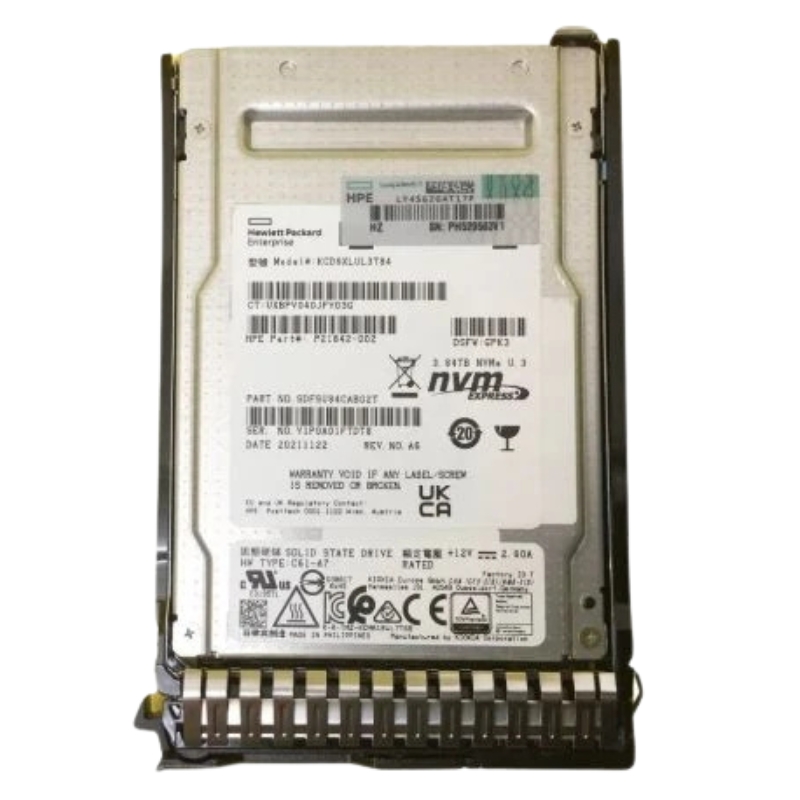


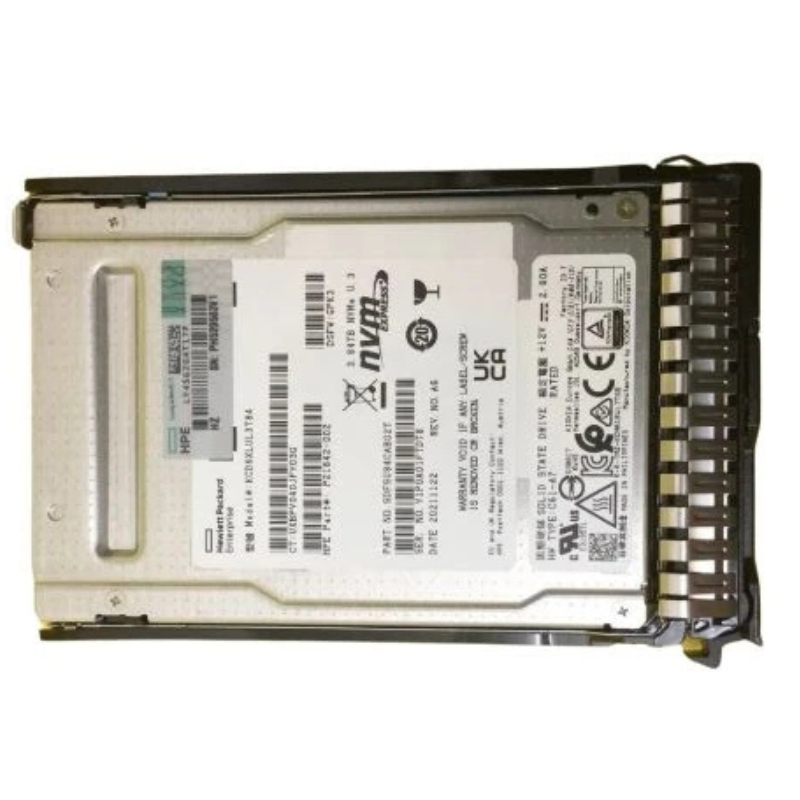
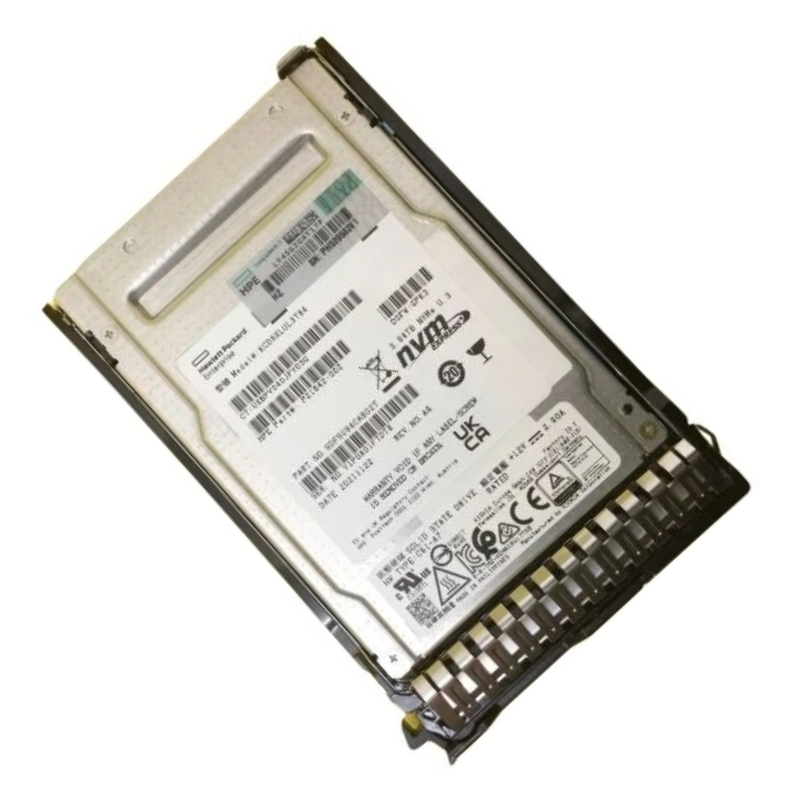
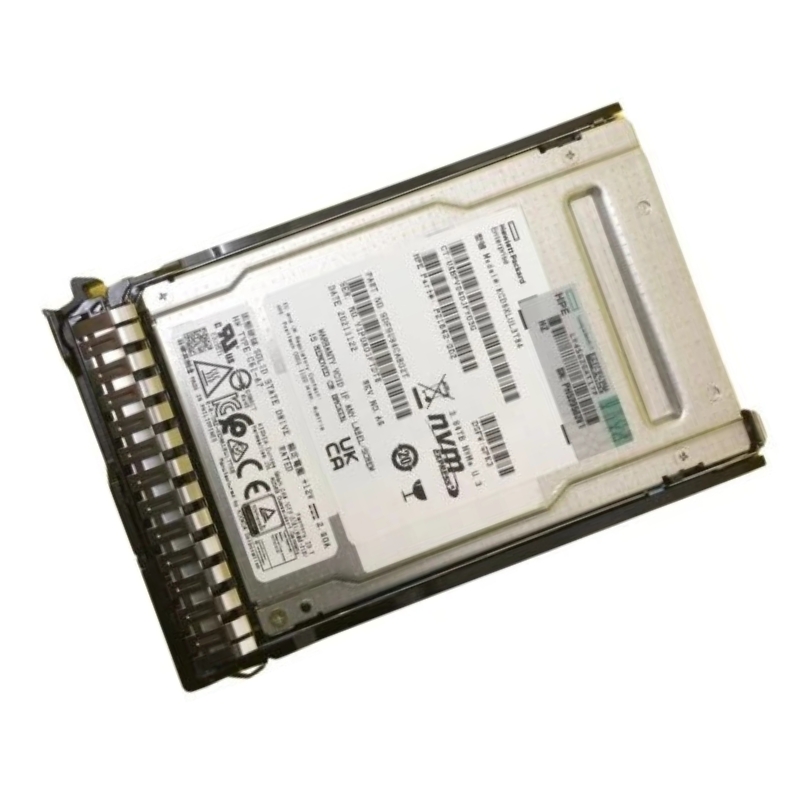
HPE P47824-B21 3.84TB PCI Express 3.0 X4 (nvme) Mainstream Performance RI U.2 2.5inch SFF Scn Multi Vendor With Tray For Gen10 Server SSD. Excellent Refurbished with 1 year replacement warranty
Product Overview Of HPE P47824-B21 3.84TB SSD
Elevate your ProLiant and Synergy platforms with a hot-swappable 2.5-inch SFF NVMe solid-state drive designed for dependable, read-centric workloads. This model delivers a balanced blend of capacity and efficiency at 3.84 TB, uses the U.2 (SFF-8639) PCIe 3.0 interface for low-latency access, and ships with digitally signed firmware for enhanced supply-chain trust and lifecycle assurance. Bundled in the familiar HPE Smart Carrier NVMe caddy, it slots straight into compatible bays for quick scaling without downtime.
The Datacenters Choose This Drive
Designed for select HPE ProLiant Gen10 and HPE Synergy systems with 2.5-inch NVMe bays. Popular examples include:
Always confirm backplane, controller, and bay-level NVMe support for your exact SKU and firmware baseline before purchase. Feature sets and compatibility can vary by region and build.
In high-density sleds, budget approximately 14.6 W per active drive and follow HPE thermal best practices. Airflow-aware placement and staggered spin-up analogs (for SSD bring-up) help maintain stable inlet temperatures across NVMe backplanes.
The drive uses digitally signed firmware to verify integrity during updates, helping protect against tampering. Standardize firmware windows, validate checksums, and keep a golden image policy to maintain compliance across racks and sites.
It can support mixed activity, but its endurance and write IOPS are tuned for read-heavy roles. For continuous high write rates, consider a mixed-use or higher-DWPD NVMe SKU.
Yes—when installed in supported HPE NVMe bays and following vendor hot-plug procedures. Always ensure the target slot is prepared and that data paths are quiesced or redundant.
Absolutely. It helps validate authenticity and reduce the risk of compromised images during updates, supporting better security posture and audit readiness.
Performance figures and features reflect typical values for this class and capacity point and may vary by exact part number and firmware revision. Always consult the official quick-specs for your SKU.
The HPE P47824-B21 SSD delivers mainstream performance with consistent low latency, making it suitable for a wide range of enterprise applications. Its NVMe interface significantly reduces I/O overhead compared to traditional SATA or SAS interfaces, enabling faster data access and improved system responsiveness.
With sequential read speeds up to 3,200 MB/s and write speeds up to 2,000 MB/s, this SSD can handle large file transfers and data-intensive operations with ease. The high random read IOPS of 500,000 ensures excellent performance in database and virtualization environments where multiple simultaneous accesses are common.
The NVMe protocol and PCIe interface provide significantly lower latency compared to traditional storage interfaces. This results in faster response times for critical applications, improving overall system performance and user experience.
The HPE P47824-B21 utilizes the U.2 (formerly SFF-8639) form factor in a 2.5-inch small form factor (SFF) design. This allows for high-density storage configurations in server environments while maintaining compatibility with existing drive bays and enclosures.
The drive measures 2.75 inches in width, 3.94 inches in length, and 0.59 inches in height, conforming to the standard 2.5-inch form factor. It includes a tray for easy installation in multi-vendor environments, though it's optimized for HPE Gen10 servers.
Enterprise SSDs generate significant heat during operation, and the P47824-B21 incorporates advanced thermal management features. These include temperature monitoring and throttling mechanisms to prevent overheating and ensure consistent performance under heavy workloads.
The P47824-B21 includes multiple data protection features such as end-to-end data path protection, power-loss protection, and advanced error correction algorithms. These features ensure data integrity and prevent corruption in the event of unexpected power loss or system errors.
Despite its high performance, this SSD is designed with power efficiency in mind. It includes multiple power states that allow it to conserve energy during periods of low activity, reducing overall power consumption in data center environments.
The HPE P47824-B21 is designed for compatibility with HPE Gen10 servers but can also work in multi-vendor environments with appropriate hardware support.
For optimal performance and compatibility, ensure that your system has the latest HPE NVMe drivers and firmware installed. These can be downloaded from the HPE Support Center website.
The HPE P47824-B21 3.84TB NVMe SSD is suitable for a wide range of enterprise applications that require high-speed storage and large capacity.
The low latency and high IOPS performance make this SSD ideal for database applications such as Microsoft SQL Server, Oracle Database, and MySQL, where fast data access is critical for transaction processing and query performance.
In virtualized environments using VMware vSphere, Microsoft Hyper-V, or KVM, this drive can support a high number of virtual machines with demanding storage requirements, reducing storage bottlenecks and improving VM performance.
For HPC applications that require rapid access to large datasets, such as scientific simulations, financial modeling, and genomic research, this SSD provides the necessary bandwidth and capacity.
The high sequential read performance makes this drive well-suited for content delivery networks where large files need to be served quickly to multiple users simultaneously.
The HPE P47824-B21 utilizes 3D NAND technology, which provides higher density and better reliability compared to planar NAND technology. The drive controller is optimized for the NVMe protocol, reducing command overhead and enabling parallel processing of I/O operations.
The NVMe (Non-Volatile Memory Express) protocol is designed specifically for flash storage, unlike SATA and SAS which were originally developed for mechanical hard drives. NVMe supports up to 64,000 commands in a single queue and can handle 65,535 commands per queue, significantly reducing I/O latency.
The PCI Express 3.0 x4 interface provides a bandwidth of up to 4GB/s (32Gbps), which is substantially higher than the 600MB/s offered by SATA III or the 1.5GB/s provided by SAS 12Gbps. This high bandwidth ensures that the SSD can operate at its full potential without being bottlenecked by the interface.
The P47824-B21 includes several enterprise-grade features that enhance reliability, manageability, and serviceability in data center environments.
The drive supports Self-Monitoring, Analysis, and Reporting Technology (SMART), which monitors various indicators of drive reliability and predicts potential failures. This allows administrators to proactively replace drives before they fail, reducing the risk of data loss and downtime.
HPE provides comprehensive monitoring tools through its iLO (Integrated Lights-Out) management platform. These tools can track drive health, temperature, performance metrics, and usage statistics, providing valuable insights for capacity planning and maintenance.
The drive implements end-to-end data protection, which means that data is protected from the moment it leaves the host system until it is written to the NAND flash, and again when it is read back. This ensures data integrity throughout the entire data path.
Understanding how the P47824-B21 compares to other storage technologies helps in making informed decisions about storage infrastructure.
NVMe SSDs like the P47824-B21 offer significantly higher performance than SATA SSDs. While a high-end SATA SSD might reach 550MB/s read speeds, the P47824-B21 can achieve up to 3,200MB/s - nearly 6 times faster. Additionally, NVMe provides much lower latency and higher IOPS.
Compared to SAS SSDs, which typically max out at around 1,500MB/s, NVMe drives offer more than double the bandwidth. The NVMe protocol also has lower protocol overhead than SAS, resulting in better efficiency, especially for small block random I/O operations.
Compared to traditional hard disk drives (HDDs), the P47824-B21 offers dramatically faster performance, lower power consumption, better reliability (no moving parts), and silent operation. While HDDs still offer better $/GB for bulk storage, SSDs are superior for performance-sensitive applications.
Proper installation and maintenance are crucial for optimal performance and longevity of the SSD.
To install the P47824-B21, power off the server, locate an available U.2 bay, insert the drive into the tray (if not pre-installed), and slide it into the bay until it clicks into place. Ensure the drive is properly connected to both power and the PCIe interface.
Regularly check for firmware updates through the HPE Support Center. Firmware updates can improve performance, fix bugs, and address security vulnerabilities. Always follow HPE's instructions carefully when updating firmware to avoid potential data loss.
Regularly monitor the health of the drive using HPE's management tools. Pay attention to metrics such as wear level, temperature, and available spare blocks. Replace the drive if critical thresholds are approached.
The HPE P47824-B21 comes with a standard limited warranty. The duration and terms of the warranty may vary by region and distributor. HPE typically offers a 3-year warranty for enterprise SSDs, but it's important to verify the specific terms for your purchase.
HPE provides comprehensive technical support for this product through various channels including phone, email, and online resources. Customers with active warranties or support contracts can access HPE's global support network for assistance with installation, configuration, and troubleshooting.
In the event of a drive failure, HPE's warranty includes replacement services. The RMA (Return Merchandise Authorization) process can be initiated through the HPE Support Center. HPE typically offers advanced replacement options for critical systems, where a replacement drive is shipped before the faulty drive is returned.


 Contact Us
 Information
 Catalog
 Solid State Drives (SSD)
 Network Switches
 Hard Disk Drives
 HBA & Controllers
 PC & Servers
 PC & Server Memory
 CPU & Processors
 Network Routers
 Power Supplies
 Tape Drives & Libraries
 Network Devices
 Computer & Network Cables